RTICO
RTICO

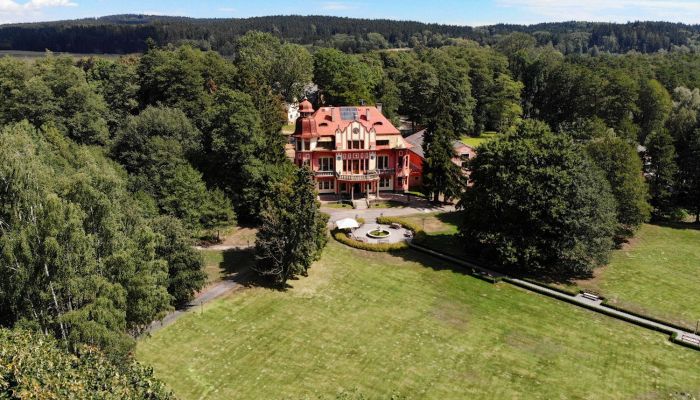
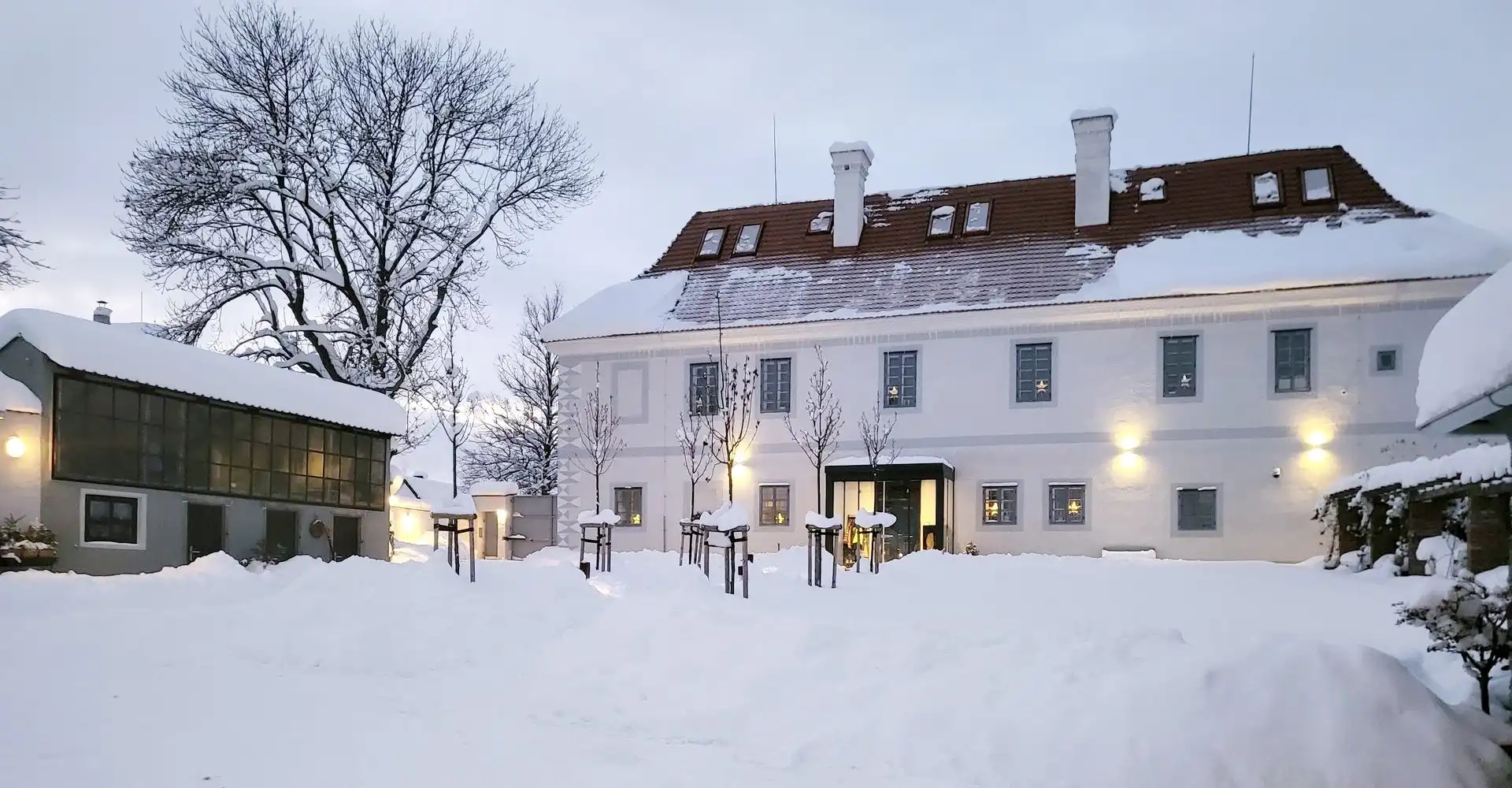
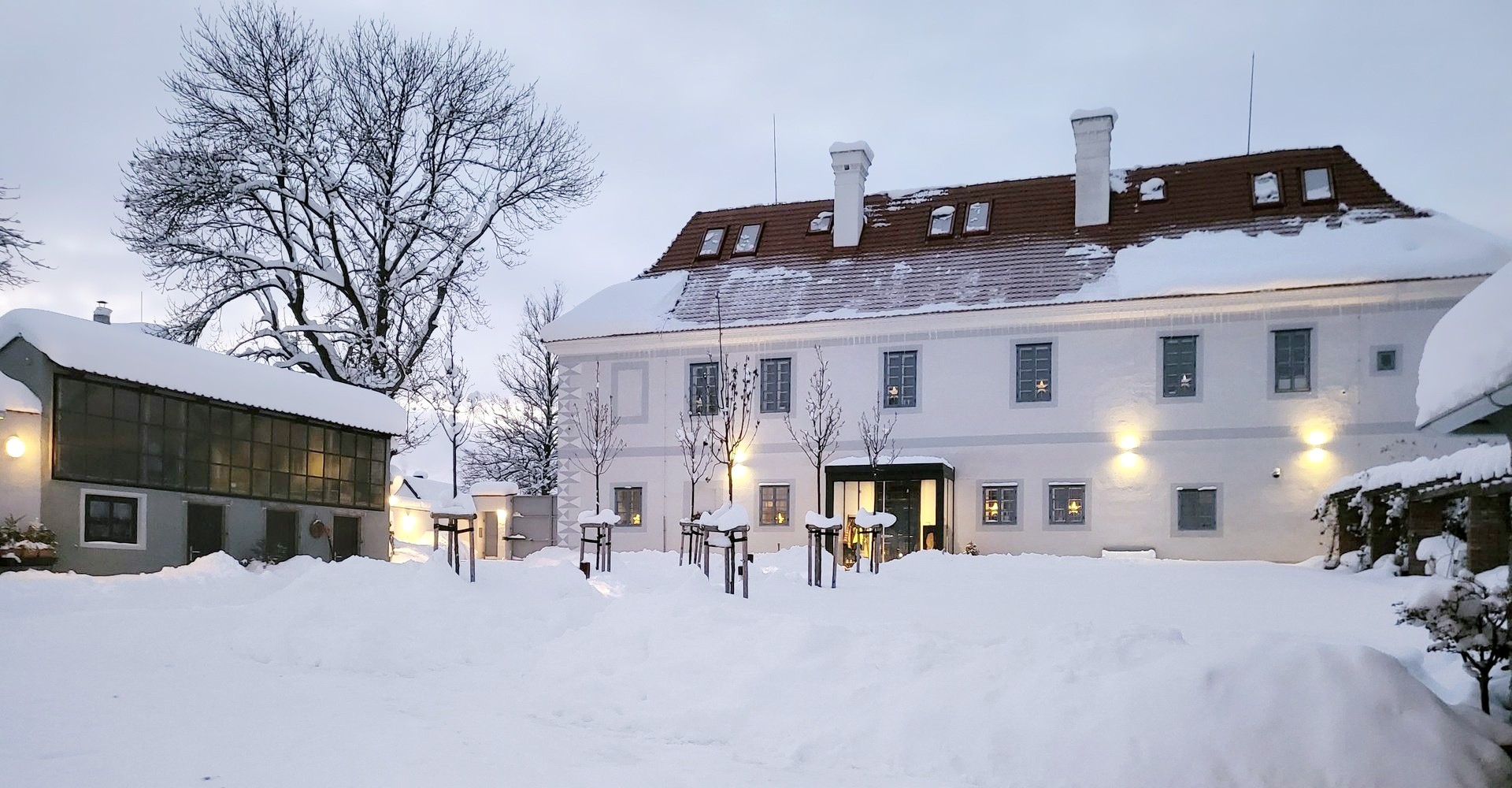
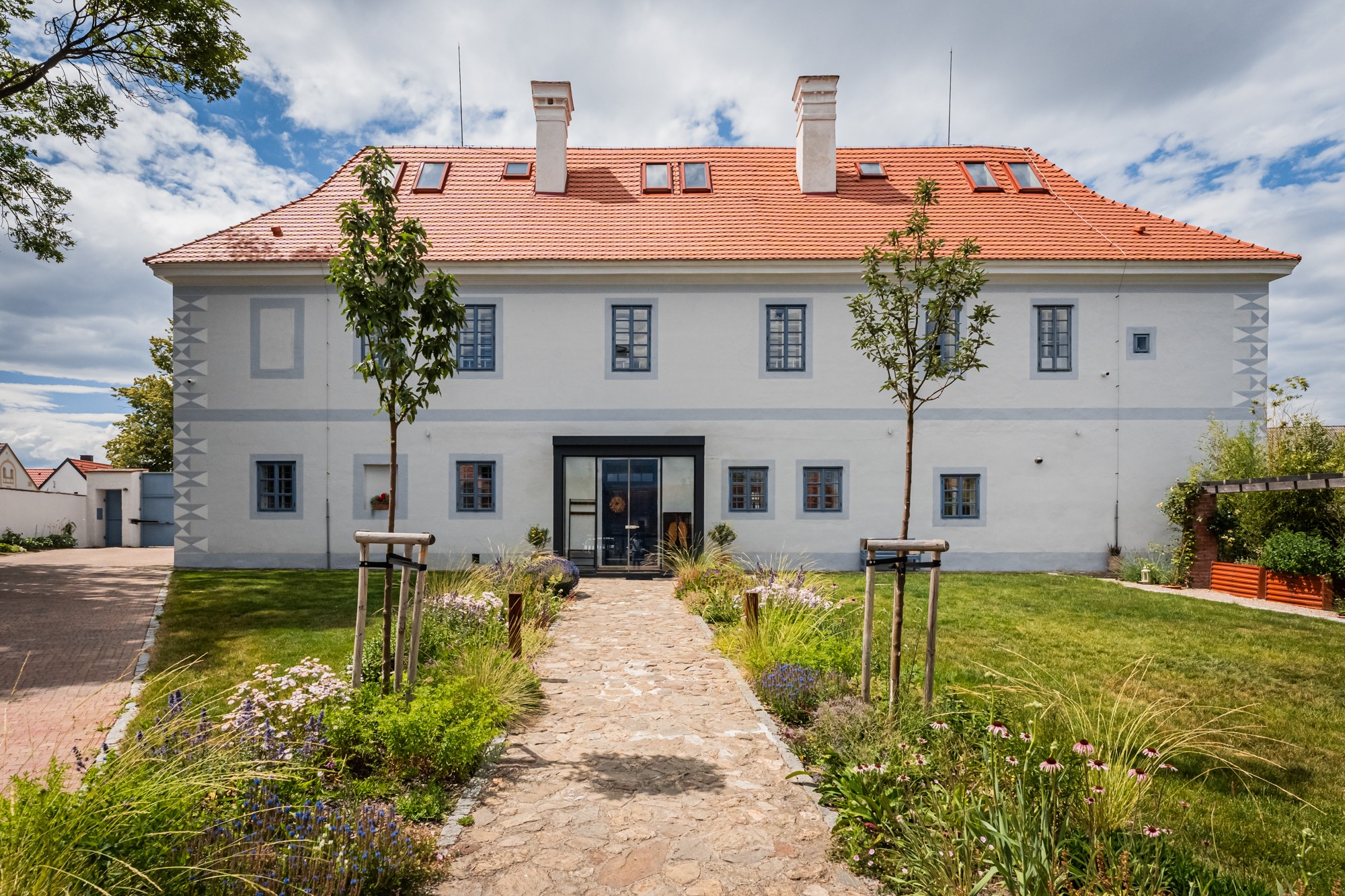
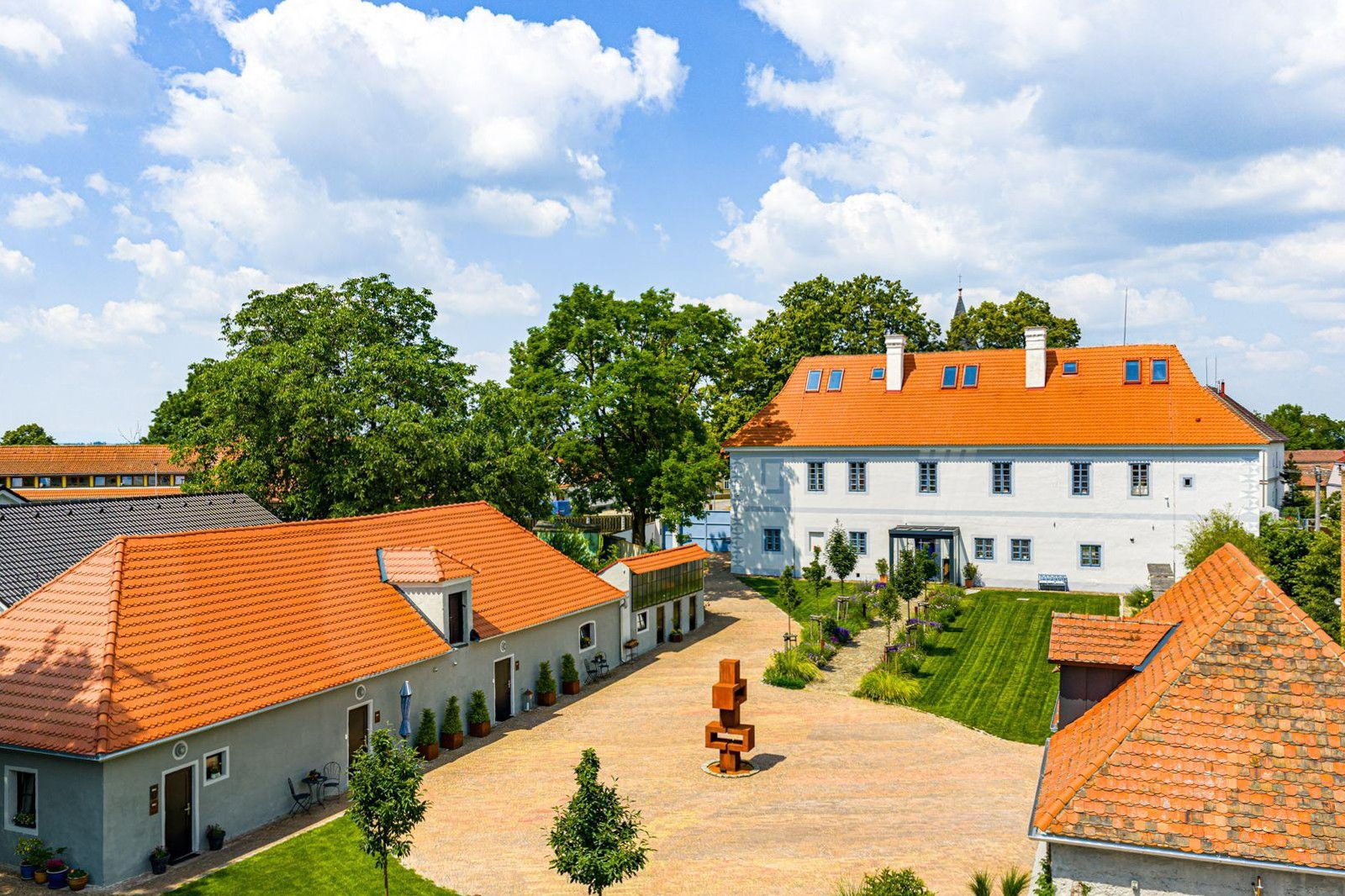
A castle with the running costs of an average single-family home – what sounds like a marketing promise is a reality in Modrá Hůrka, South Bohemia. With 540 square meters of living space, it was still a ruin in the 1990s and was revived in 2023 in the spirit of the Renaissance and early Baroque. Its energy consumption is on par with an average Prague single-family home. No compromises were made on the historical fabric, no visible building systems, and no museum-like dormancy. This project proves that historic architecture and modern efficiency can go hand in hand.
Once owned by the Schwarzenberg family, Modrá Hůrka is considered a reference point in South Bohemia. Much of the rural heritage of large landowners still awaits revitalization. Since the political transition, there have been many positive developments despite declining subsidies and rising costs, yet not all grand residences have been fortunate. According to Prague-based project developer Petr Zikmund, some properties were further alienated and neglected by irresponsible owners in the post-transition years, making them impossible to restore even for experienced investors.
The situation was similar for his own castle (zámeček) north of České Budějovice. With careful planning and a clear concept, seven years of work produced a functional residence with real substance - achieving the effect of a historically sensitive restoration, all without any heritage restrictions.
In Czech Republic, large aristocratic castles are referred to as zámek, while smaller residences of the landed gentry are usually called zámeček. Similar to other European countries, these terms are often used interchangeably, regardless of their precise cultural-historical classification.
People grow and change, and it is therefore not unusual to eventually pass on projects that one has long nurtured and shaped - to like-minded individuals who do not want to spend the next years dealing with restoration, calculations, and heating issues. His castle for sale has been carefully prepared and is technically up to date. In the following interview, Zikmund explains how to demystify a castle without losing its character - and why 540 square meters of living space today matter less than the right heating plan.
- Between shock and fascination
- Rational calculation or emotional attachment?
- Without heritage protection – Freedom and responsibility
- Historical fidelity: intentional or natural?
- Restoration: who Sets the course?
- Current usage concept of the castle
- Low consumption thanks to heat pumps
- Large rooms, modest demands
1. Mr. Zikmund, your castle shared the fate of many castles in former socialist countries: neglected, alienated, plundered. What did you find during your first visit?
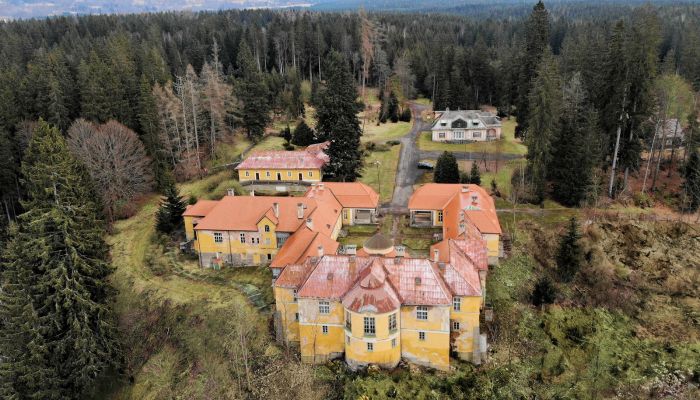
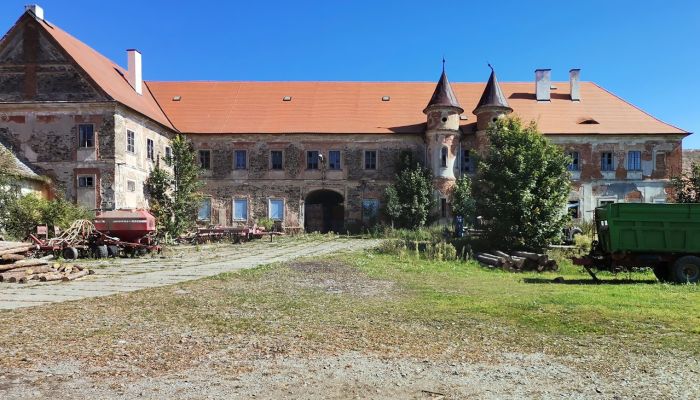
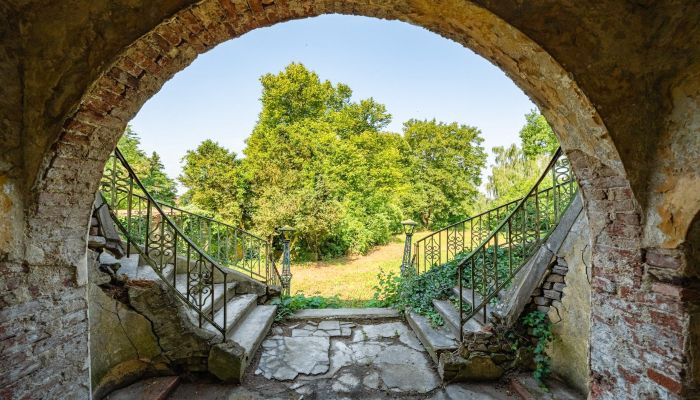
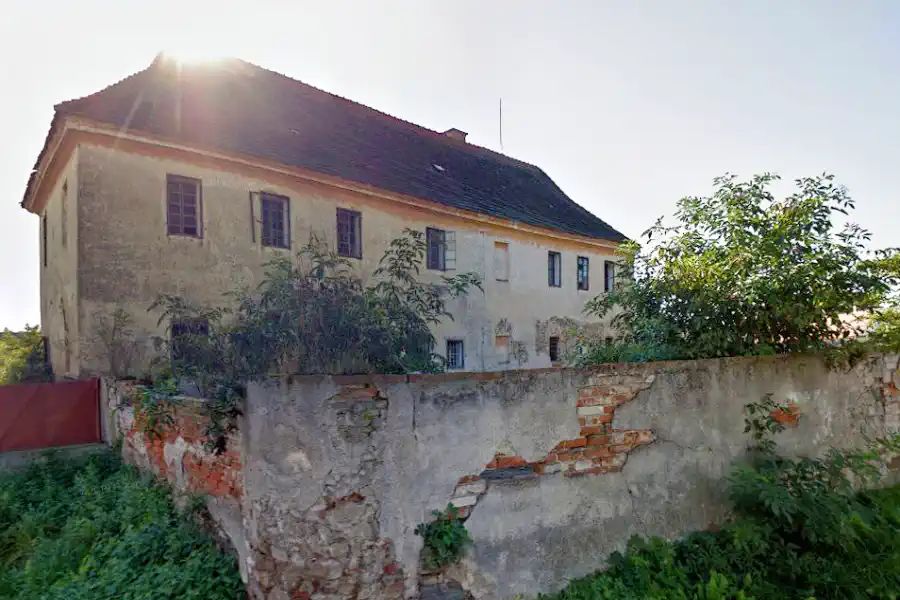
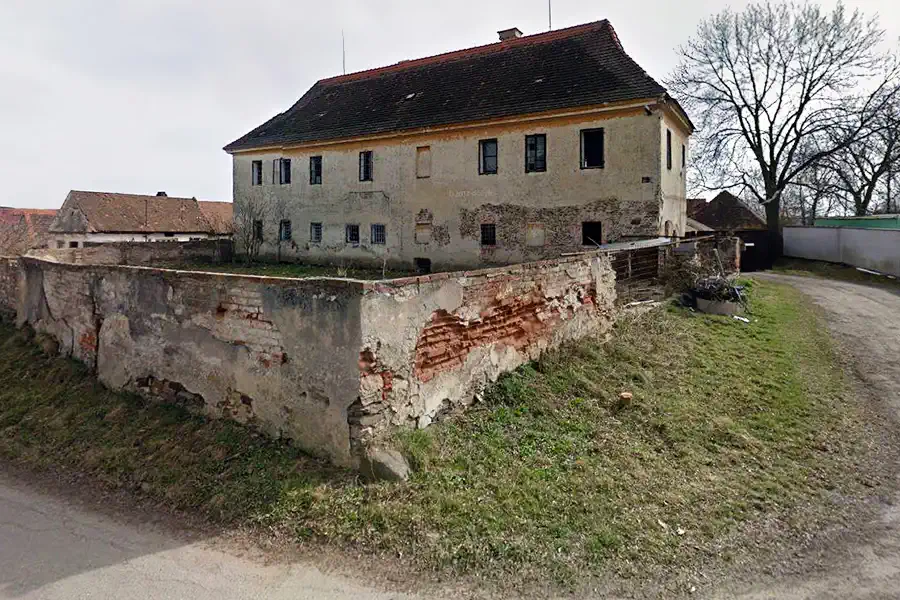
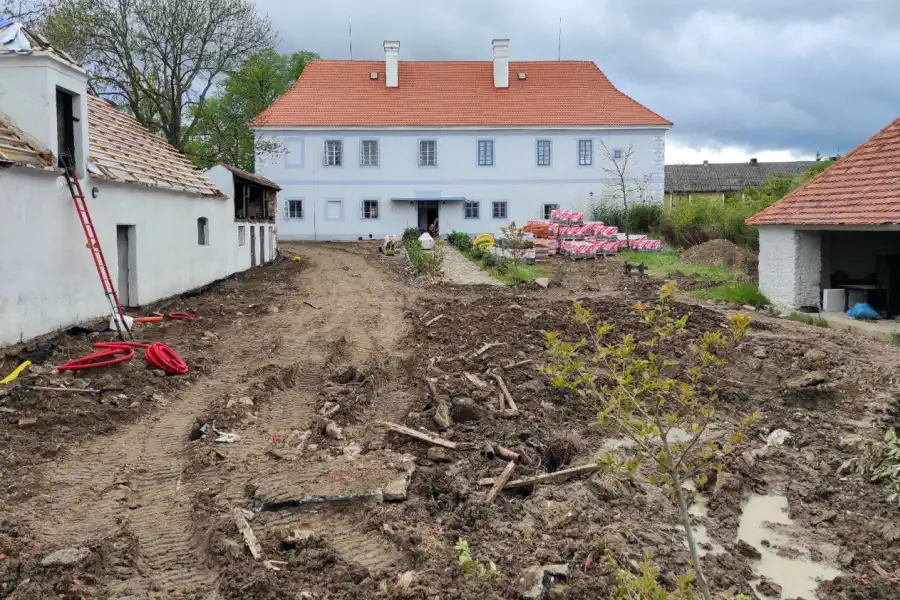
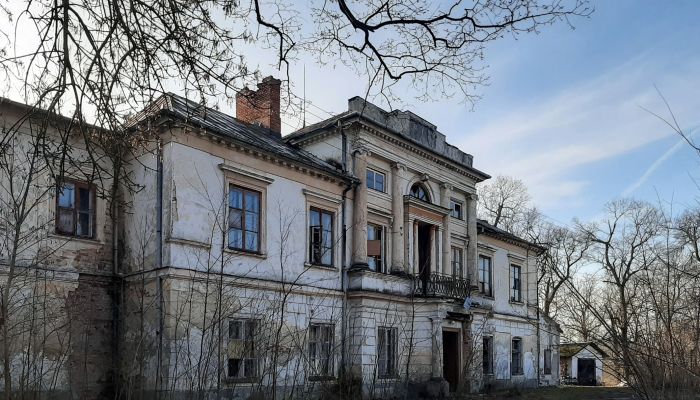
During my first visit, the castle and its grounds were in a desolate state. Paradoxically, this was less due to the socialist past and more a result of the post-transition period, when the property passed into private hands following church restitution. In the 1990s, many castles in the Czech Republic were sold for very little - ownership often changed frequently, and only rarely did anyone recognize the value of these properties, let alone have a plan for their use or restoration. Instead, they often remained purely speculative investments; existing structures were destroyed, and inventory such as fireplaces or fittings was literally stripped out. In Modrá Hůrka, dark window openings created a grim impression that concealed the site’s real value. The ground floor was even temporarily used as a pigsty. And yet, the genius loci was palpable.
spirit of the place
Refers to the special atmosphere or character inherent to a location - regardless of its physical condition. In architecture and heritage conservation, genius loci describes the elusive quality of historic buildings or landscapes: their history, impact, and emotional resonance. A place can be in decay and still feel strongly present.
2. What kept you at this place – rational calculation or emotional attachment?
As I began to delve more deeply into the history, I studied old archival documents and was amazed at what the site looked like in the mid-13th century: the lower nobility had built a Gothic manor with a church, and the village was fortified. Today, nearly eight centuries of history are still visible in many places, with distinctive features from various eras - from Gothic through Renaissance to Baroque. At the beginning of the 18th century, the Renaissance building, which had fallen into poor condition after the devastations of the Thirty Years’ War, was expanded with a Baroque wing by the Schwarzenbergs. This traceable evolution provided an excellent foundation for any kind of planning or consideration. The name Schwarzenberg also influenced the purchase decision: a prominent Bohemian family whose cultural-historical impact is still palpable today and which decisively shaped the development of the region.
Having previously restored old houses in Prague and confident in my financial planning, it quickly became clear to me: after 800 years, life here must continue, and this place must not lose its history.
3. Your castle was removed from the heritage list. When and why did this happen, and was it an advantage for you - because you could decide freely - or a disadvantage? How did you finance the restoration: with subsidies or entirely privately?
The property was removed from the heritage register in the 1950s. This step was purely ideological, intended to demystify the old feudal symbolism. Additionally, the authorities prioritized functional use over the preservation of the historical fabric.
Being removed from the heritage list was certainly advantageous, as it eliminated the need for official coordination processes. From my experience restoring listed buildings in Prague, I know that such procedures are usually cooperative, but for heritage sites they often drag on and are very bureaucratically demanding.
Nevertheless, we did not view the lack of restrictions as a free pass. On the contrary: even without official requirements, we felt obliged to respect the historical fabric and proceed in a manner consistent with heritage conservation. Freedom came with responsibility.
We did not make use of subsidies or any other financial support for the restoration. Although funding could have been possible under certain conditions, we wanted to remain flexible regarding future use and therefore financed everything ourselves.
4. Those walking through the rooms today are struck by the presence of the Renaissance and early Baroque spirit – was historical fidelity a conscious goal?
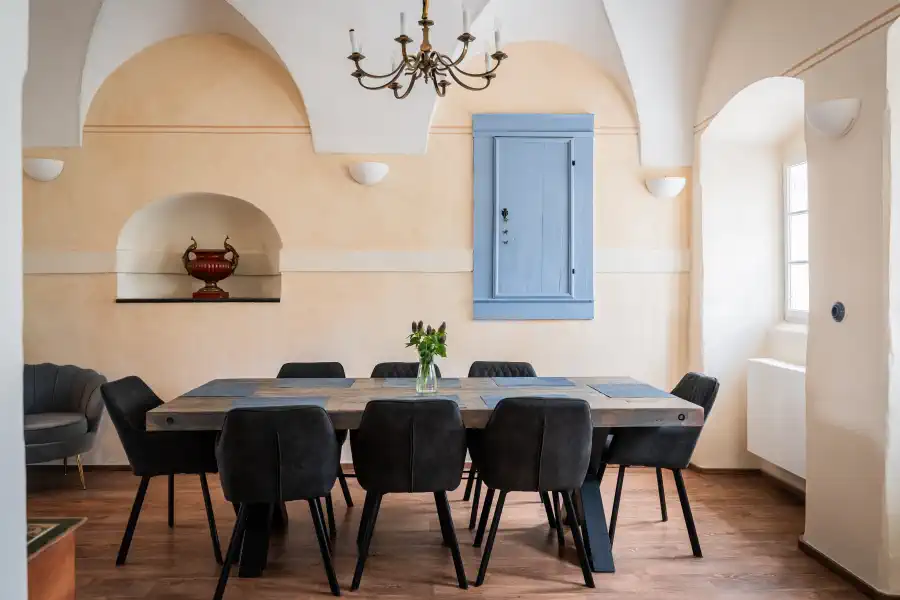
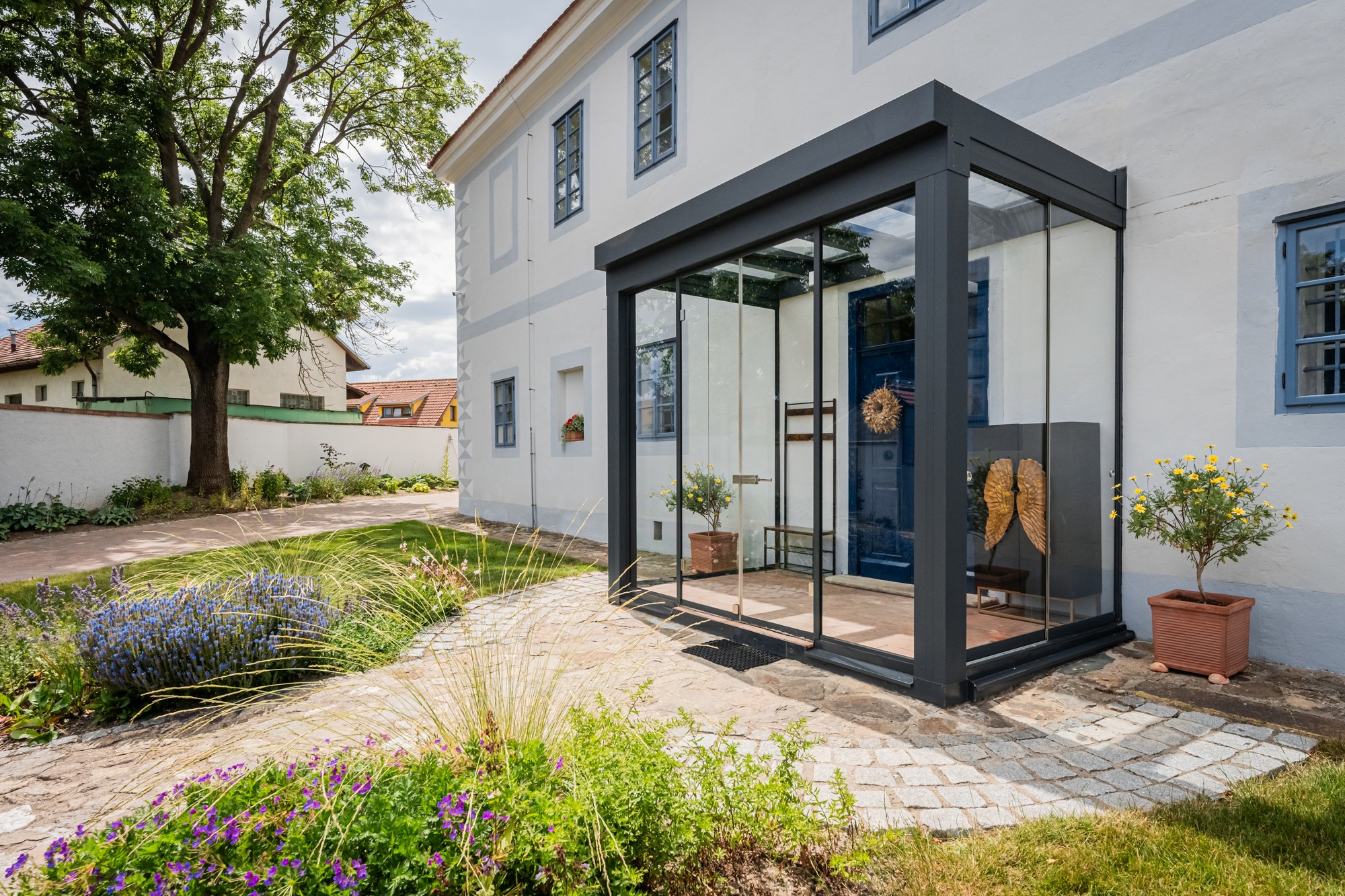
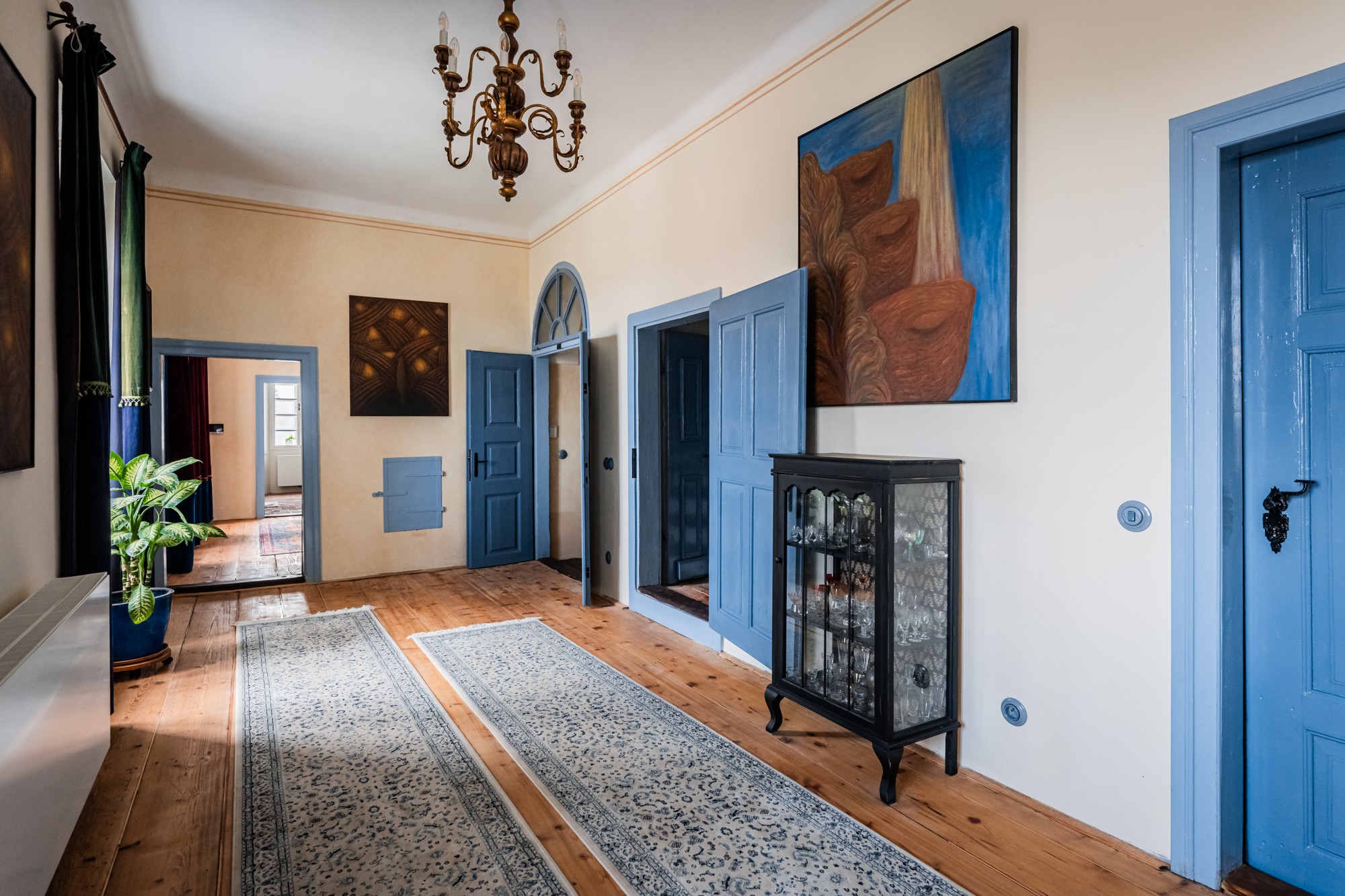
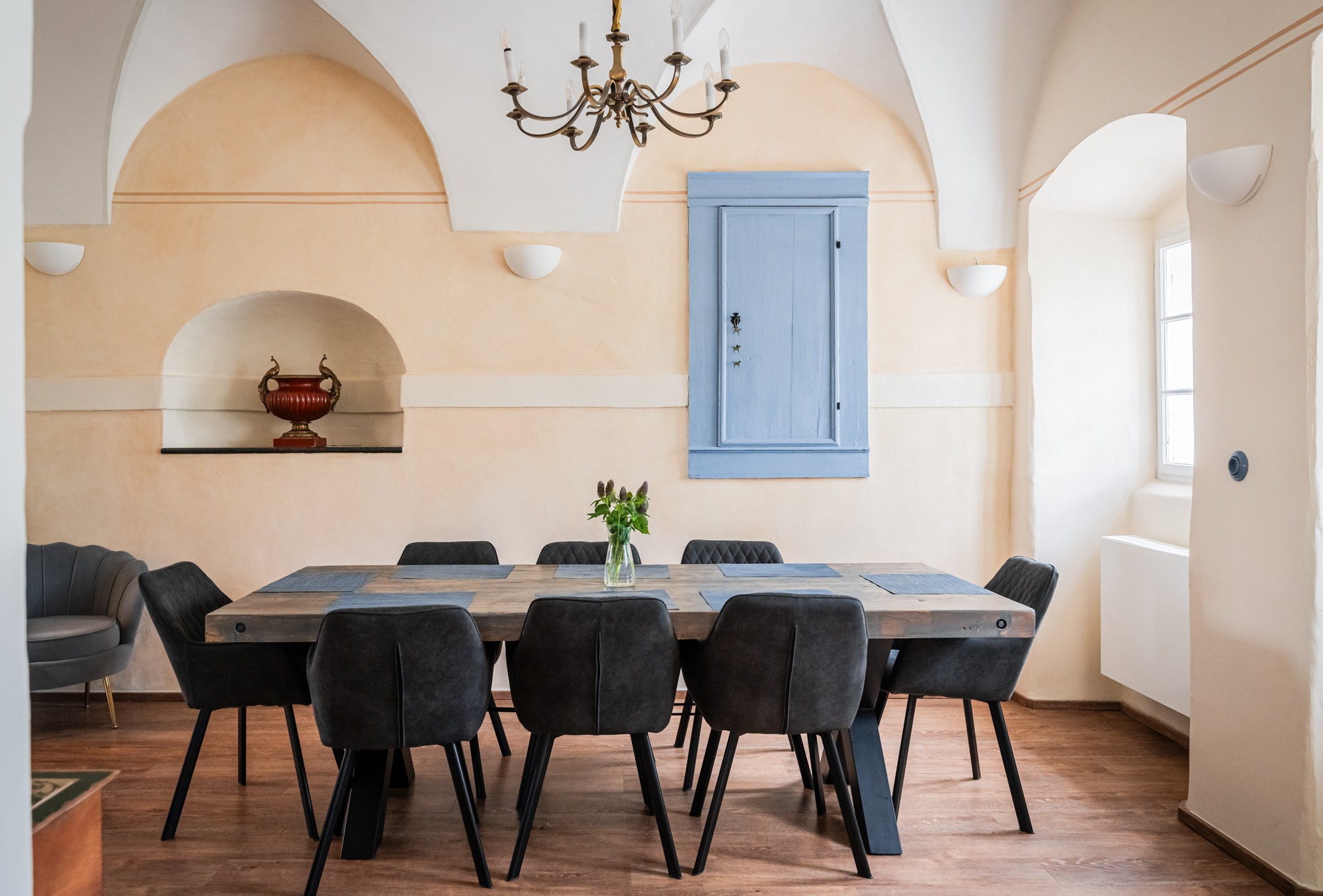
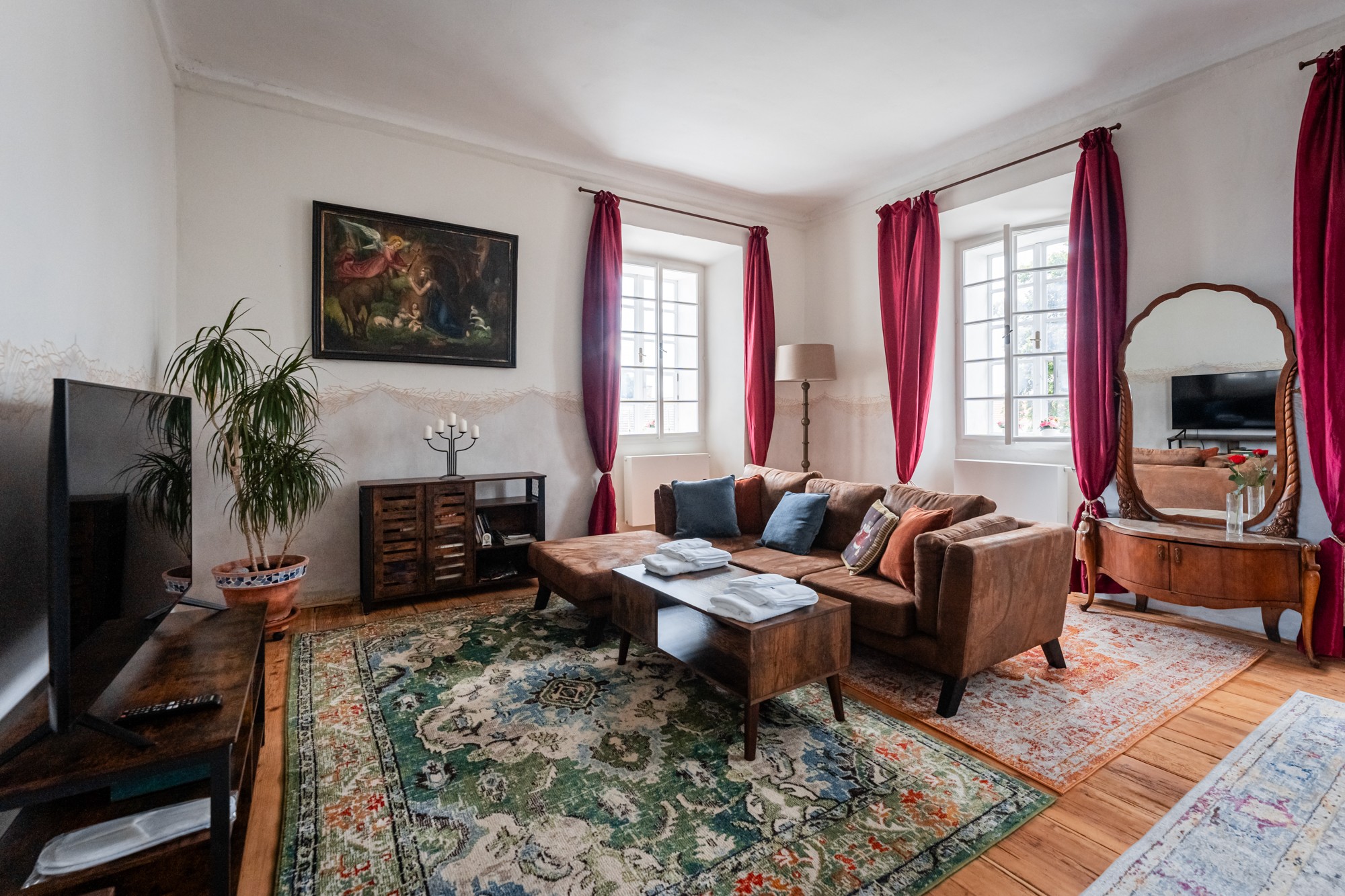
Absolutely! One of our main objectives was to preserve the historical authenticity of the house and keep its raw details visible – doors, floors, plaster, and façade. In our view, the emotional impact of the place, the experience of its history, lies precisely in this roughness, in the small, unaltered details. We did not aim to create a polished, inauthentic style; we wanted the house’s history to be palpable in every corner.
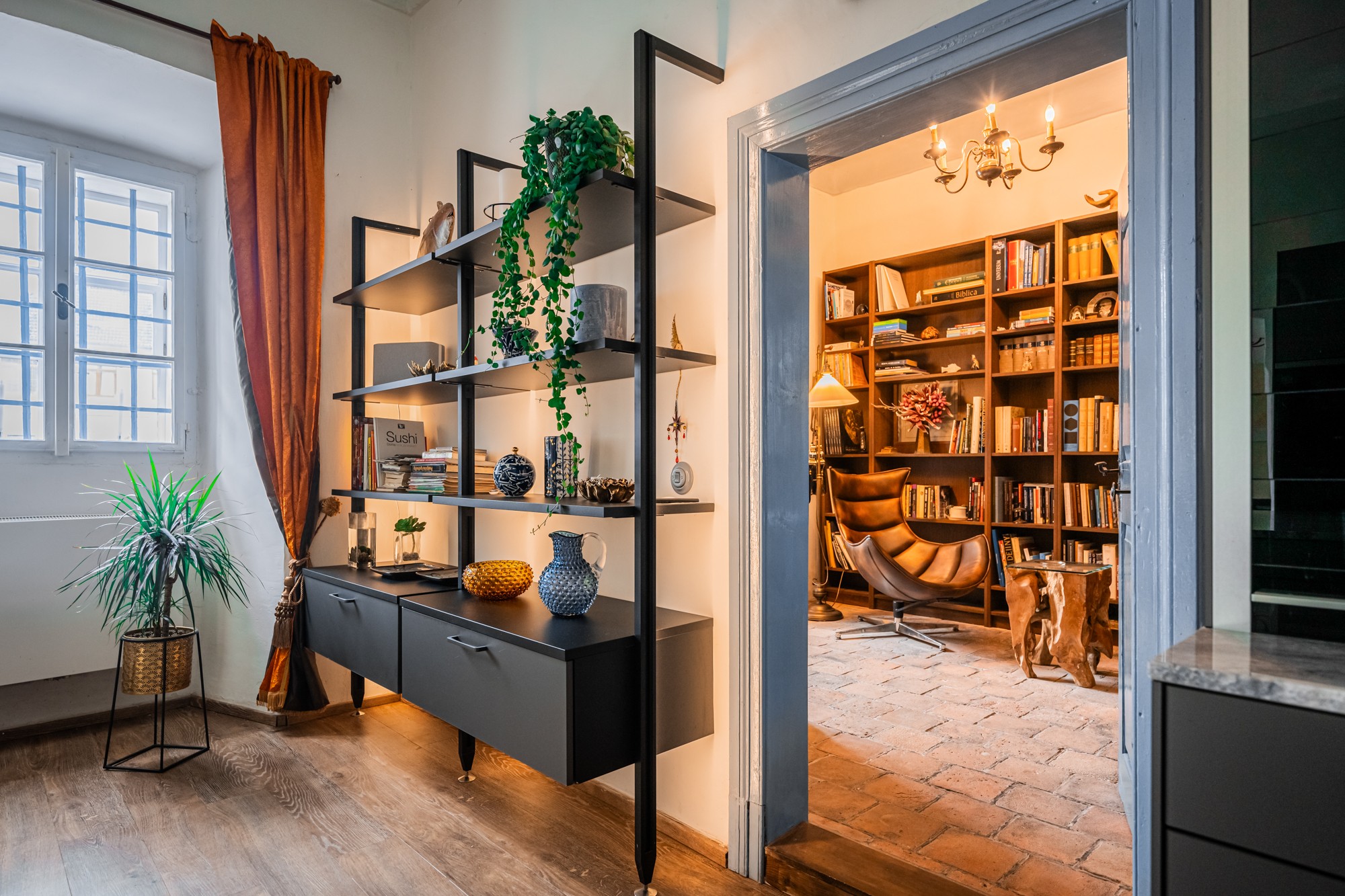
Despite its poor condition at the time, I was amazed to discover that the 400-year-old wooden floors on the upper floor were still intact. We simply sanded them lightly and oiled them. The staircase also dates back to the 16th century, and on the landing, the brick tiles were left untouched – after four centuries, some areas are heavily worn. These traces are symbols, witnesses to the passage of time.
The castle was decorated in gray-blue tones – a characteristic color of the rugged South Bohemian Renaissance and also of the Schwarzenbergs, the property’s historical owners. This too leaves a tangible imprint of history, visible in every room.
5. The restoration took place from 2016 to 2023. Who directed the project, and who was your key advisor throughout the process?
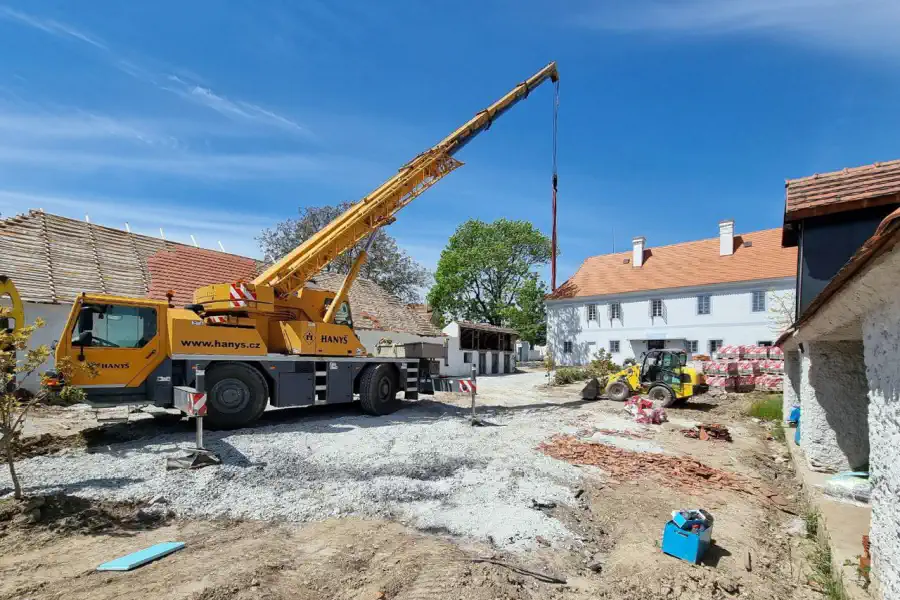
As with our previous projects, my wife and I largely directed the restoration ourselves as architect and interior designer – effectively serving as our own principal advisors and decision-makers for all design and architectural choices. The work was carried out by trusted craftsmen with whom we had already collaborated successfully in Prague. I personally supervised the construction, commuting four to five times a week between Prague and the castle.
Maintaining full control was essential – from budget management to scheduling to quality oversight. This approach had proven effective in the past and again ensured smooth progress. Although the restoration spanned several years, strict organization allowed each phase to run efficiently, without unnecessary delays, and to be completed on schedule while meeting our quality standards.
6. Many castles combine private use with public offerings. How do you use yours?
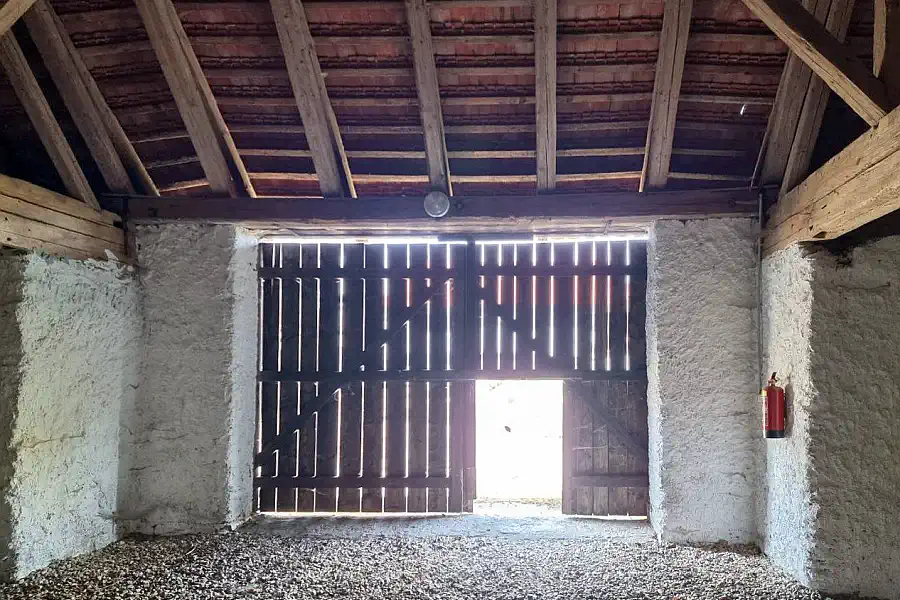
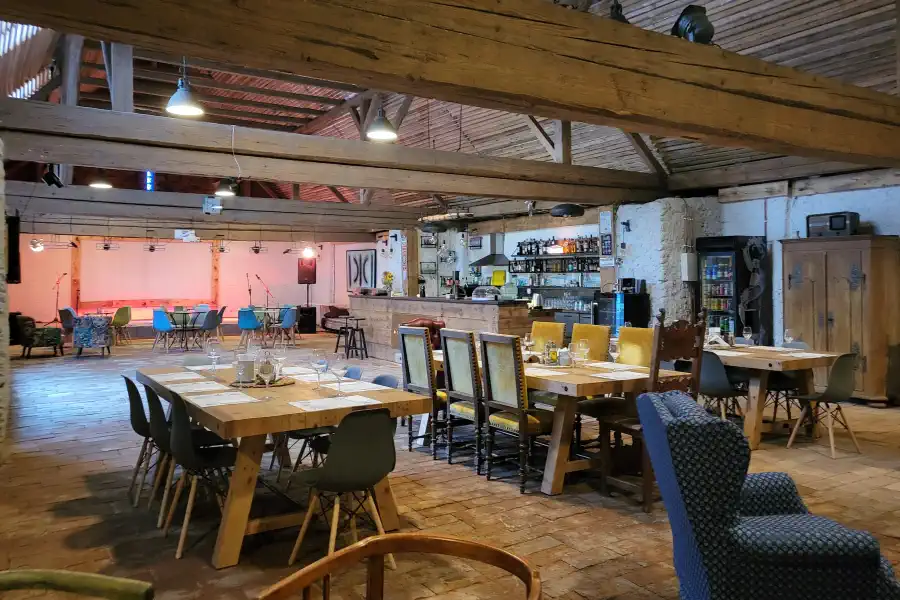
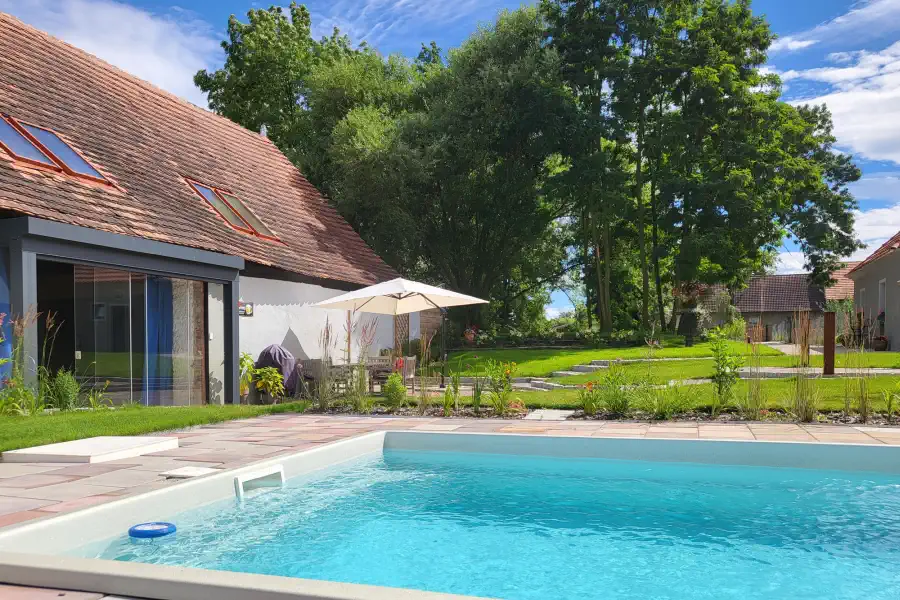
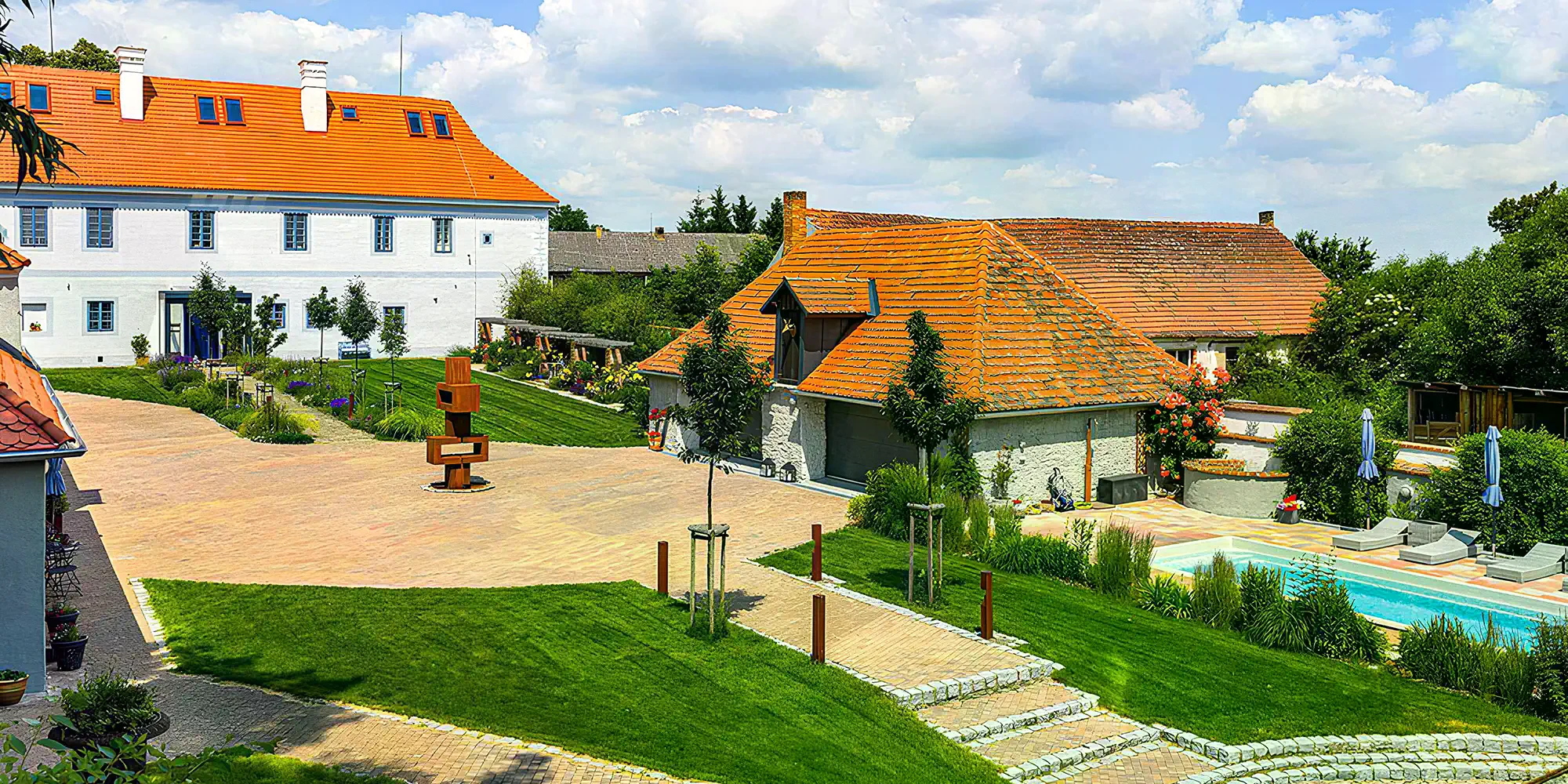
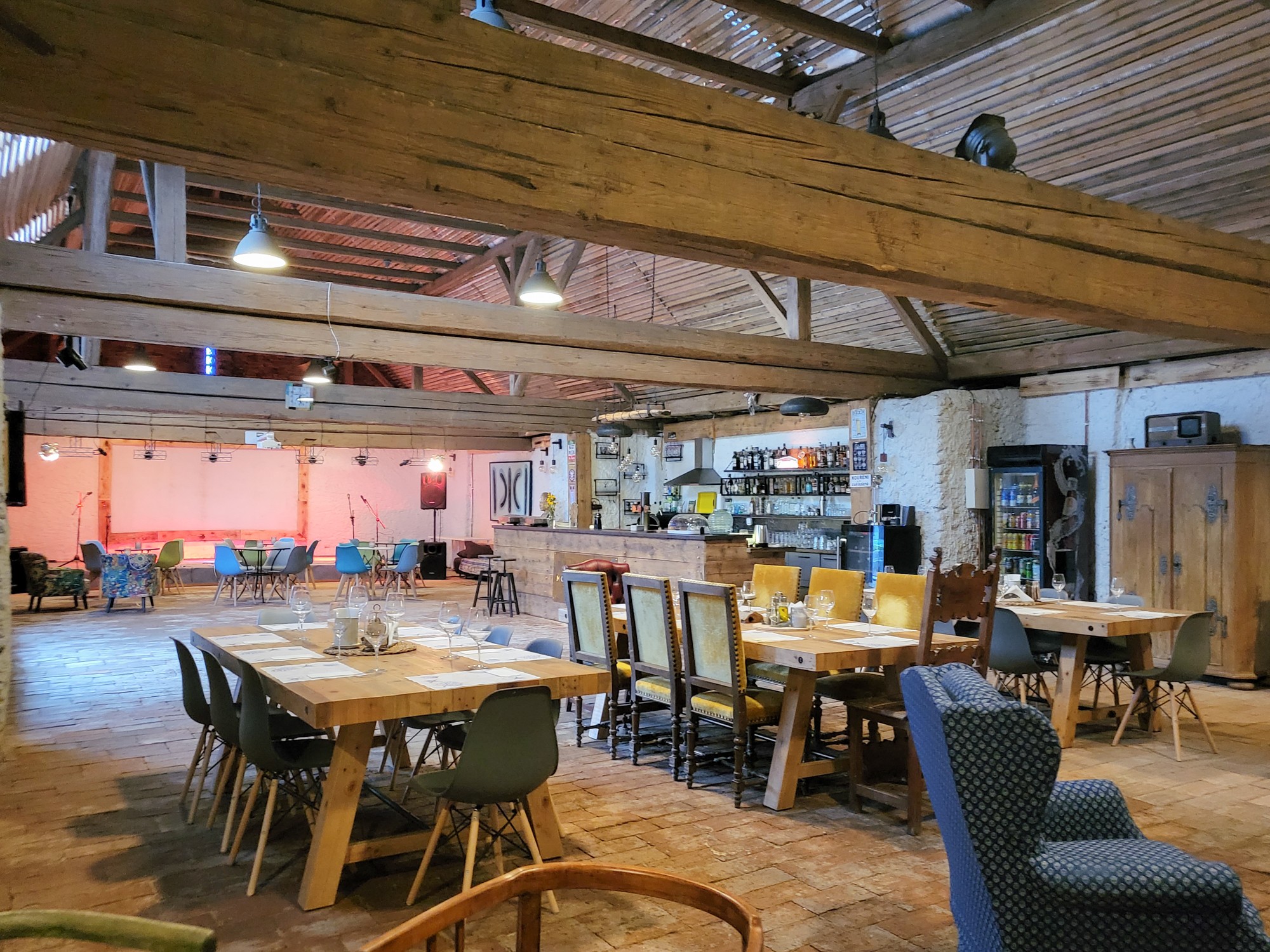
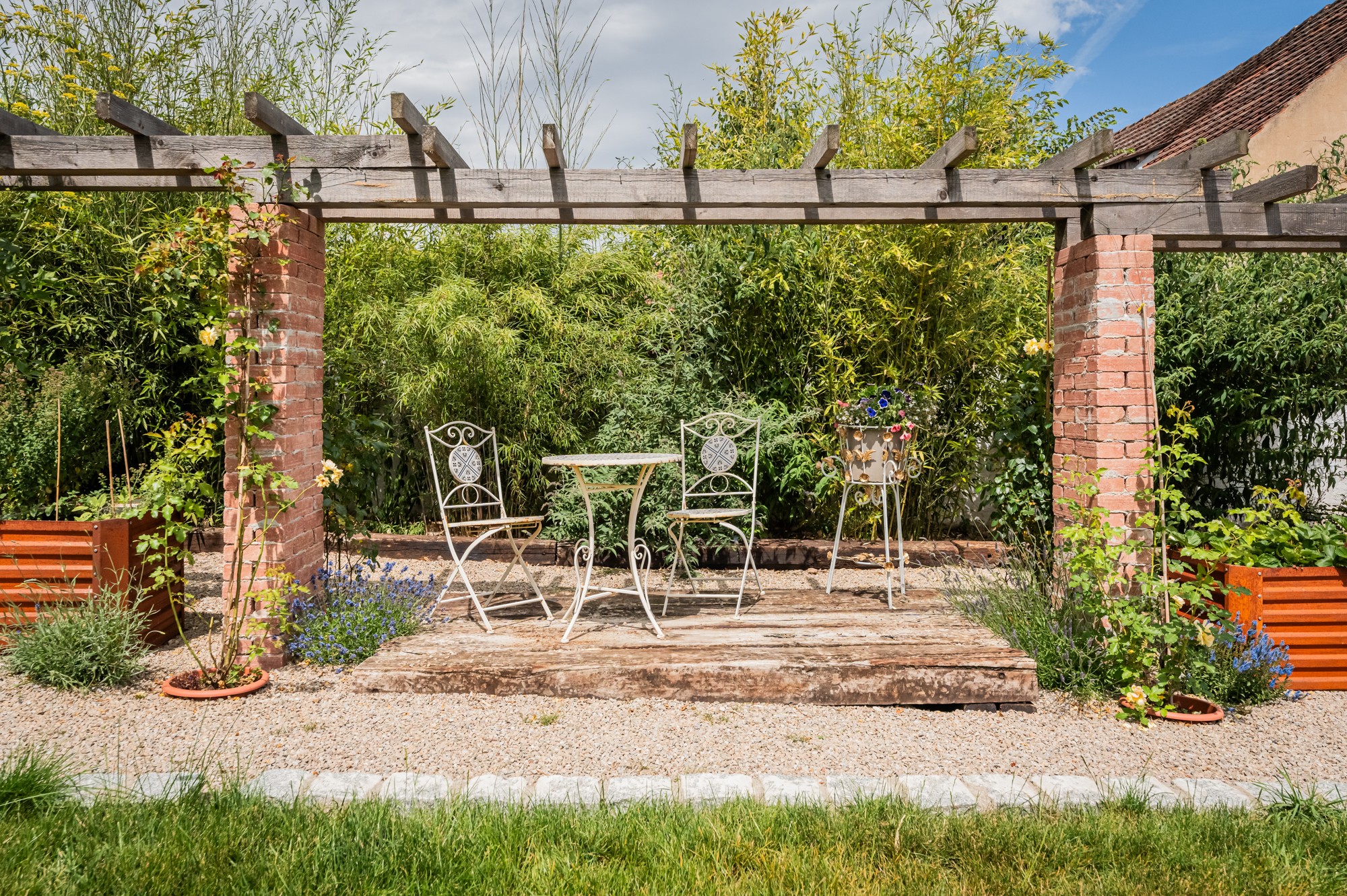
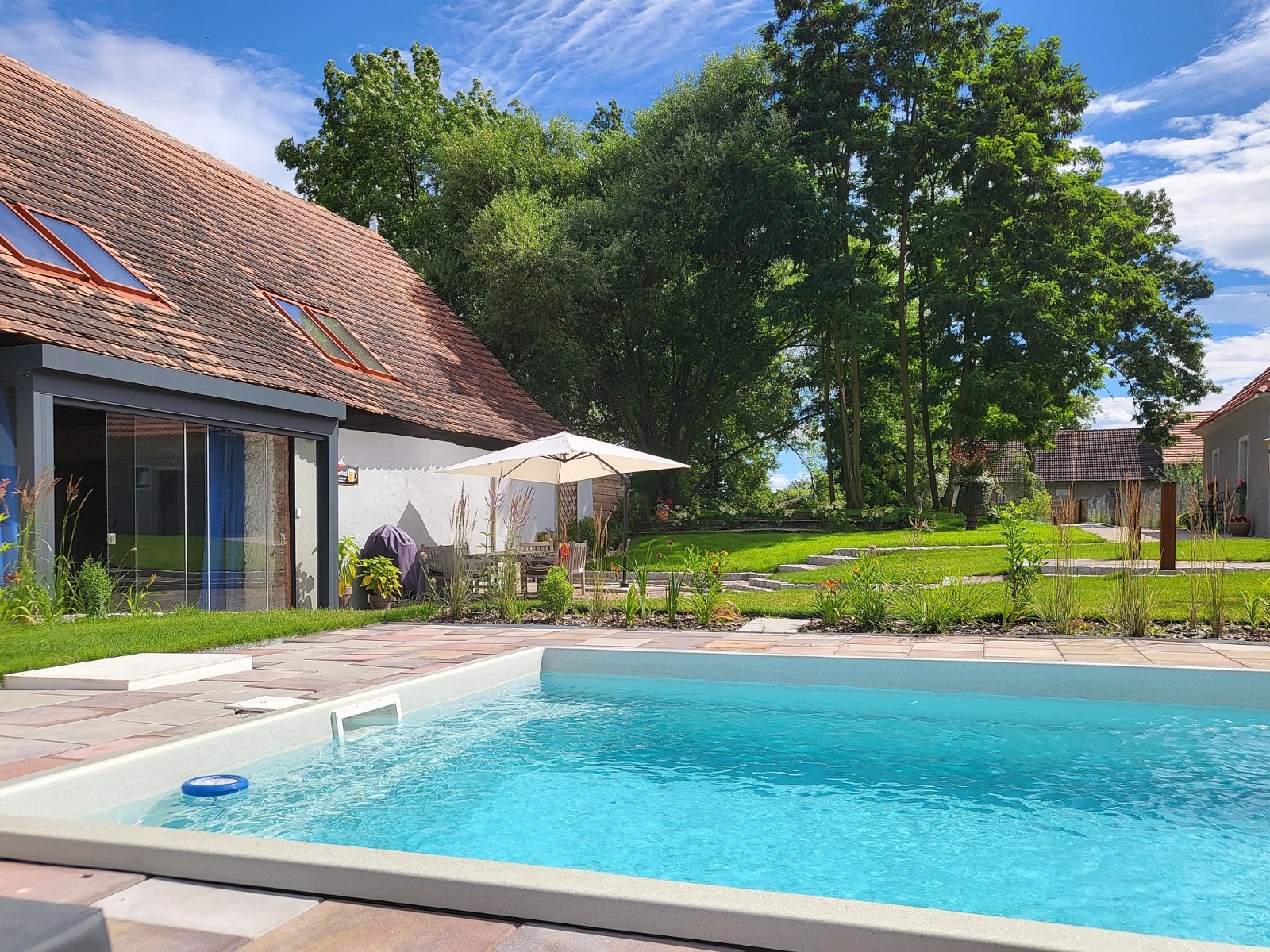
From the very beginning, our goal was to keep the property purely private – which is also why we declined subsidies. Given our large family, the castle was conceived as a private retreat, with the flexibility to welcome family, friends, and guests at any time. Hosting is a pleasure for us, so it was important to make the grand historic spaces both comfortable and inviting, ensuring everyone feels at home. The restored barn plays a special role: thanks to its size and location, it could easily accommodate commercial use if needed. Meanwhile, the heated outdoor pool and the adjacent historic castle pond with its green corners create a harmonious blend of old and new.
7. Castles are usually energy guzzlers, yet yours consumes hardly more than a Prague terraced house. What’s the secret?
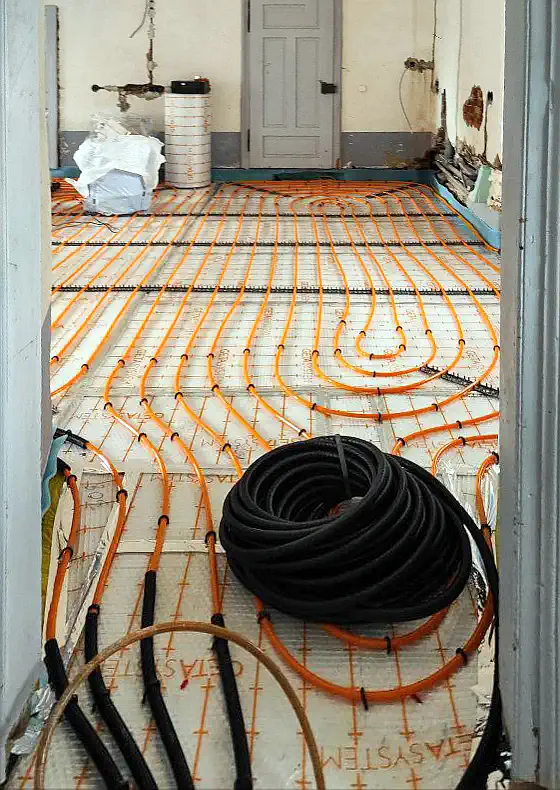
We take pride in the heating system, as it was a major focus for us and even among experts opinions vary. It is arguably the most important feature of the castle and forms the basis for modern comfort. With massive stone exterior walls, a conventional system would have been inefficient or prohibitively expensive. That’s why we invested in a state-of-the-art solution: water-to-water heat pumps connected to several geothermal wells, each 200 meters deep.
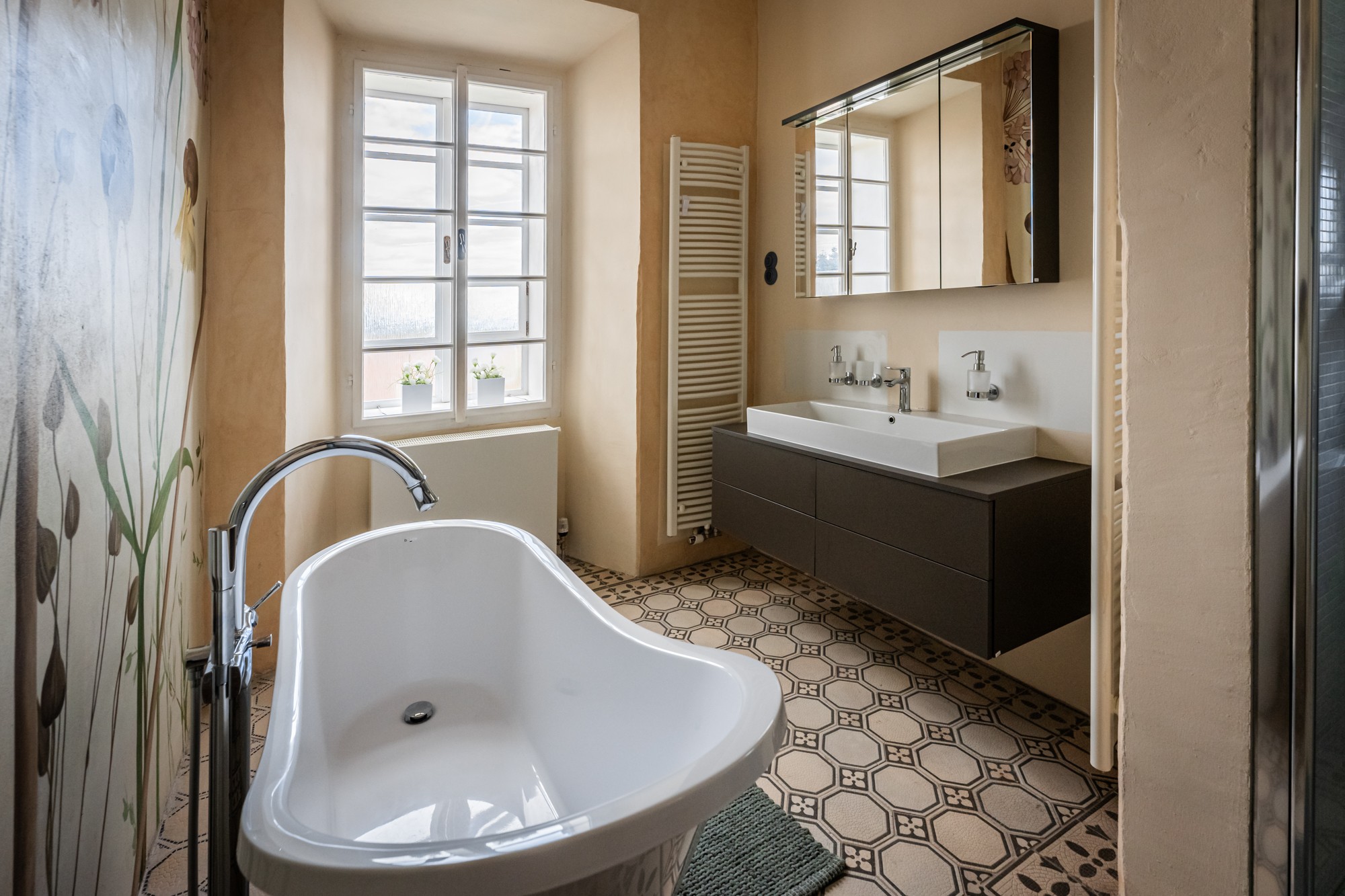
The heat pumps feed an almost comprehensive underfloor heating system, complemented by radiators, ensuring consistently comfortable temperatures throughout the castle. Operating from early autumn to late spring, the walls retain heat effectively. Guests who arrive expecting cold floors are often surprised to find a constant 20–22 °C. In summer, the geothermal wells also provide cooling for the attics.
The running costs challenge a common assumption: electricity usage for the entire property is comparable to that of a larger Prague terraced house. The initial investment was significant, but the system has proven exceptionally efficient for a historic castle. In my experience, few historic properties combine such comprehensive heating efficiency with heritage-sensitive restoration.
8. As you prepare to hand over your work: how would you inspire someone to live in a large but purposeful castle?
A castle is not just a house – it is an attitude. Living here is not about more square meters, but about a different quality of space: proportions that distinguish generosity from waste, ceiling heights that let the rooms breathe, and light that shifts over hours to shape the day.
We restored Modrá Hůrka so that every area serves a purpose – no empty representative rooms, no corridors of unused spaces. Technology operates efficiently in the background, and the layout is thoughtfully planned. Living in 540 m² is no different than 200 m² – only more intentional. And it offers more possibilities: a room for guests, one for work, one for retreat. Flexibility without compromise.
The interiors were furnished eclectically – no museum-like rigidity, but playful blends of eras, colors, and styles. The goal was not historical purity, but liveliness. Anyone entering immediately senses that this home has not been staged, but lived in.
A castle does not demand staff or self-sacrifice. It asks only for one thing: the willingness to experience space not as luxury, but as a way of life. Those who understand this will not just live here – they will arrive.


 Praha, Prague