
European landmark estates. New custodians.
Historic properties for sale: France
Historic properties for sale: France
In terms of real estate, the French heritage database Base Mérimée lists over 100,000 properties of historical significance. Around two fifths of these can be attributed to castles, châteaux, manor houses and stately country residences. In addition, the private project Châteauthèque documents approximately 32,000 castles and châteaux in France.
However, only a portion of this historic building stock is actually available on the property market. Taking into account condition, private usability and current availability, this results in an estimated figure of around 20,000 stately properties that are relevant for buyers and investors.
The main property types in France
Château castle, fortress, palace, manor house
The term Château
is used broadly in France and may refer, depending on region and period, to fortified medieval castles as well as grand, representative palaces and country estates of the nobility. Terms such as Manoir or Domaine are also used for smaller stately residences or agriculturally oriented estate structures. Châteaux forts or châteaux médiévaux refer specifically to the earlier fortified buildings.
Manoir manor house
A Manoir refers to a rural manor house, smaller than a château but still of stately character. Manoirs typically date from the 15th to 18th centuries and are often surrounded by agricultural land.
Domaine estate, agricultural property
A Domaine refers to a larger estate, often including vineyards, forestry or leased farmland. Acquisition requires careful due diligence, particularly regarding existing tenancy agreements.
Demeure representative residence
Demeure refers to a high-standard representative residence and serves as an umbrella term for architecturally refined homes in rural or urban settings, without being tied to a specific typology, era or social status of the original owner.
Unlike in German usage, the term Villa
in French generally has a modern connotation and typically refers to detached residential houses in the upper segment without necessarily implying a historic or aristocratic origin.
Hôtel particulier town palace
The Hôtel particulier is a detached, representative townhouse-like building of the French nobility and wealthy urban elites. It developed mainly between the 17th and 19th centuries and is found in many historic city centres such as Paris, Bordeaux or Lyon.
Unlike the Maison de Maître, it is not a bourgeois rural house but a clearly defined representative residence with internal courtyards, a set-back street façade and often generous reception and salon areas.
Functionally and typologically, the Hôtel particulier is comparable to the Italian Palazzo or the town palace in Central European contexts.
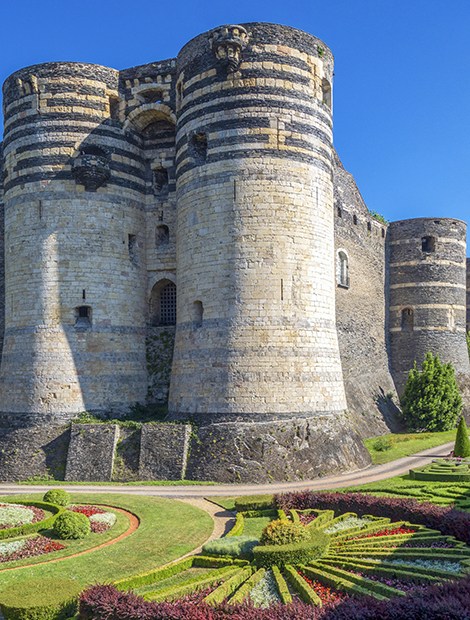
Château fort / medieval château
Castle
Castle
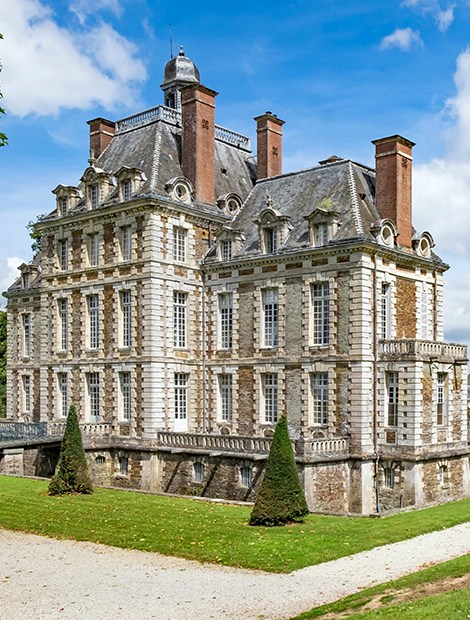
Château
Castle
Castle

Domaine, Manoir
Estate, manor house
Estate, manor house
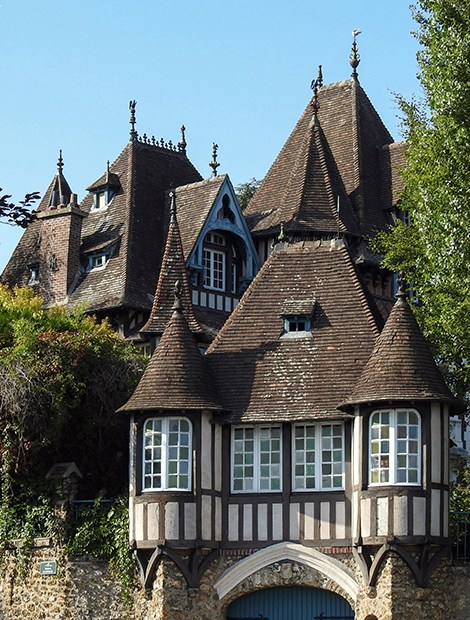
Demeure
Residence
Residence
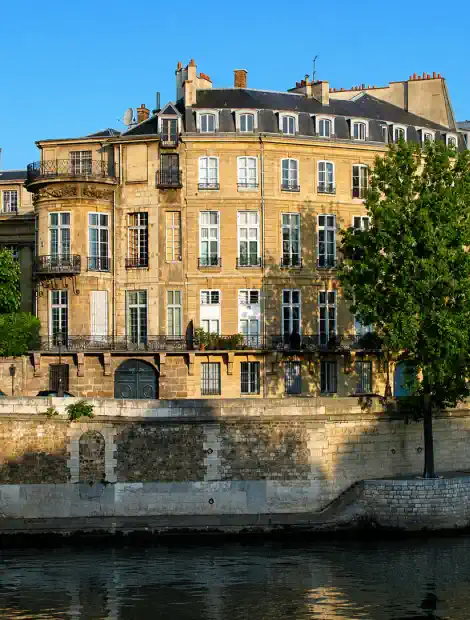
Hôtel particulier
Town palace
Town palace
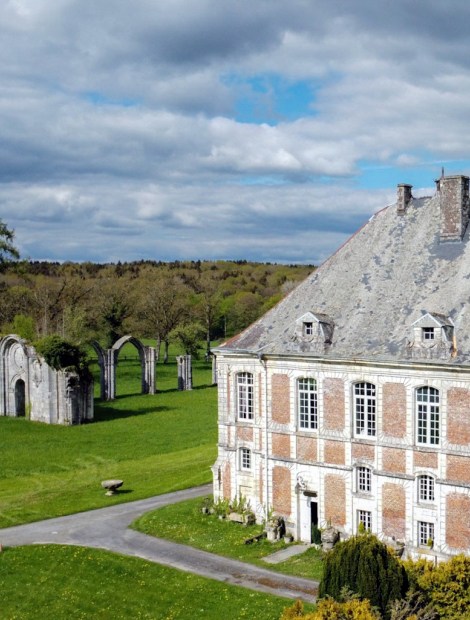
Abbey, monastery
Monastery
Monastery
Other property types and regional terms
Maison de Maître master house / bourgeois manor
In contrast to the Manoir, a Maison de Maître refers to a representative residence, usually located in urban or rural settings, dating from the 18th to early 20th century. Developed in the context of affluent bourgeois owners such as notaries, merchants or industrialists, these houses are characterised by symmetrical façades and a functional internal layout.
Unlike aristocratic country estates, a Maison de Maître typically does not include large agricultural operations or extensive park and estate grounds, but stands as an independent residential and representative building.
Propriété property, estate
Propriété
is a general French term for a property, derived from the Latin proprietas
(ownership). In common usage, it refers to an estate of any type, regardless of period or architectural classification.
Gîte holiday cottage
A Gîte is an independent holiday or guest accommodation, often located in historic rural buildings and frequently operated by the owners themselves. Gîte for sale
refers to such a property offered for sale, either independently or as part of a larger estate.
Mas rural farmhouse
The Mas is the traditional stone farmhouse of Provence and southern France, characterised by robust construction and simple architecture, often associated with olive, lavender or wine cultivation.
Bastide country house
The Bastide is related to the Mas but generally larger, with a symmetrical façade and garden layout. It was built mainly between the 17th and 19th centuries as a country residence for wealthy families. The term also historically refers to fortified medieval planned towns.
Moulin mill
A Moulin is a historic mill, usually built in stone and located along rivers, streams or on hillsides. Many have been converted into residential homes or holiday properties.
Pigeonnier dovecote
A Pigeonnier is a tower-like structure used for pigeon keeping, commonly found in regions such as Normandy, Dordogne and Provence. Historically, the right to keep pigeons was reserved for the nobility, making it a symbol of status. Today, well-preserved examples are often used as guest houses or studios.
Buying a château in France: Buyer guidance
France offers a wide range of historic properties, and many appear attractive at first glance in terms of value. Prospective buyers should consider several key factors in advance.
Understanding taxe foncière (property tax)
The taxe foncière is an annual property tax levied on all built and buildable land in France. It varies significantly depending on region, municipality and property type. Condition and classification, such as Monument Historique
, may also influence the tax level. The exact amount should be clarified before purchase to realistically assess ongoing costs.
Owners of listed heritage properties may, under certain conditions, benefit from tax advantages if restoration work contributes to the preservation of cultural heritage. This should also be verified in advance.
Heritage protection requirements
When acquiring a Monument Historique
, restoration work must be carried out exclusively by certified companies. This should be taken into account both in terms of contractor availability and overall renovation costs.
Existing lease agreements
Castles and large estates are often surrounded by farmland that is fully or partially leased to farmers. Rental income is typically low and agreements are long-term and difficult to terminate. Such arrangements can significantly limit personal use and should be carefully reviewed before purchase.
Networks and experience sharing
Anyone restoring a historic property in France benefits from exchanging experiences with other owners undertaking similar projects. Practical insights on contractors, authorities, funding programmes and construction processes are often more valuable than general advice. Relevant networks can be found in professional associations and online communities.
Selling a castle or historic property in France
List a historic property in France in just a few minutes and reach European and Asian buyers.