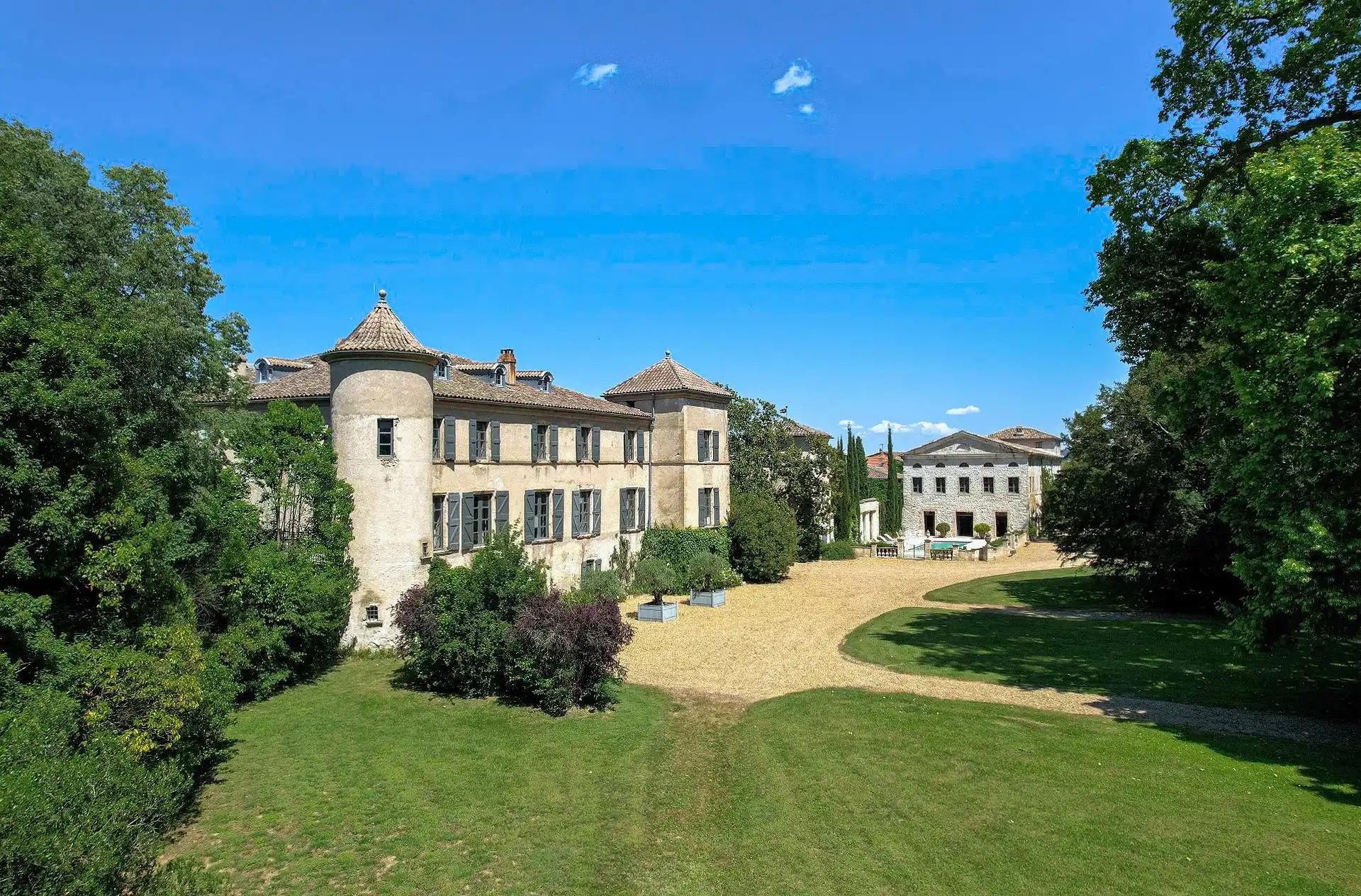
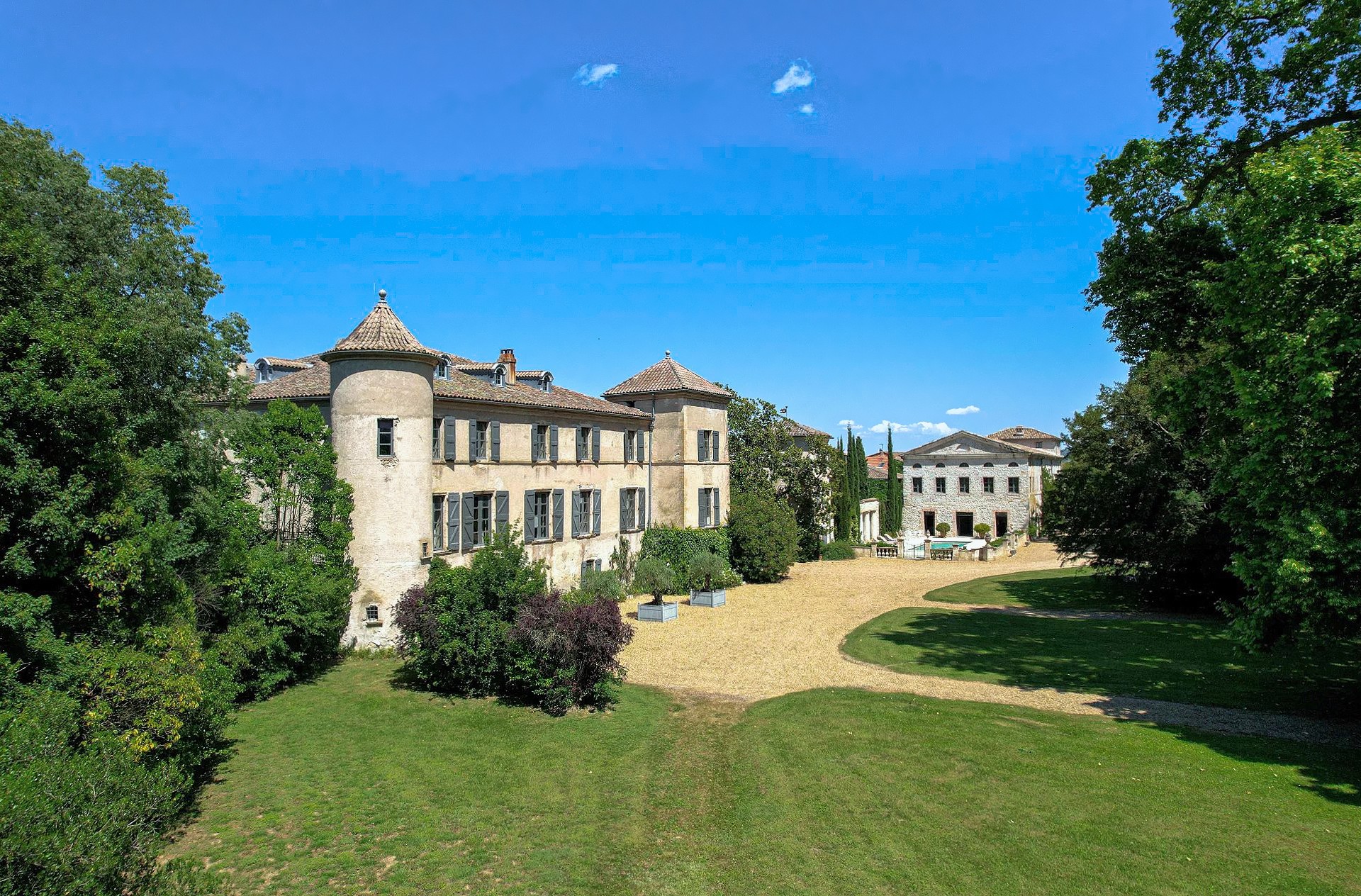
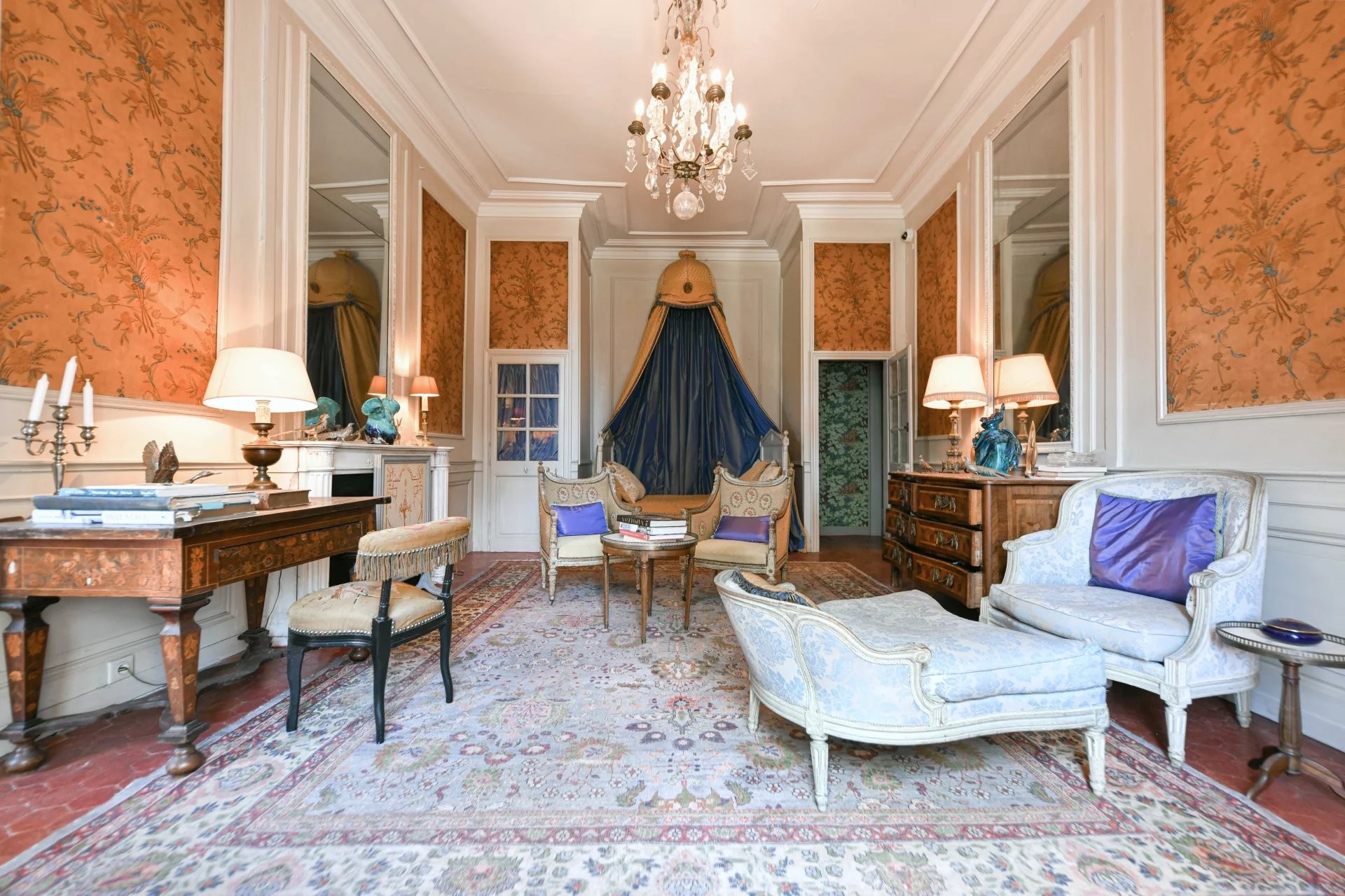
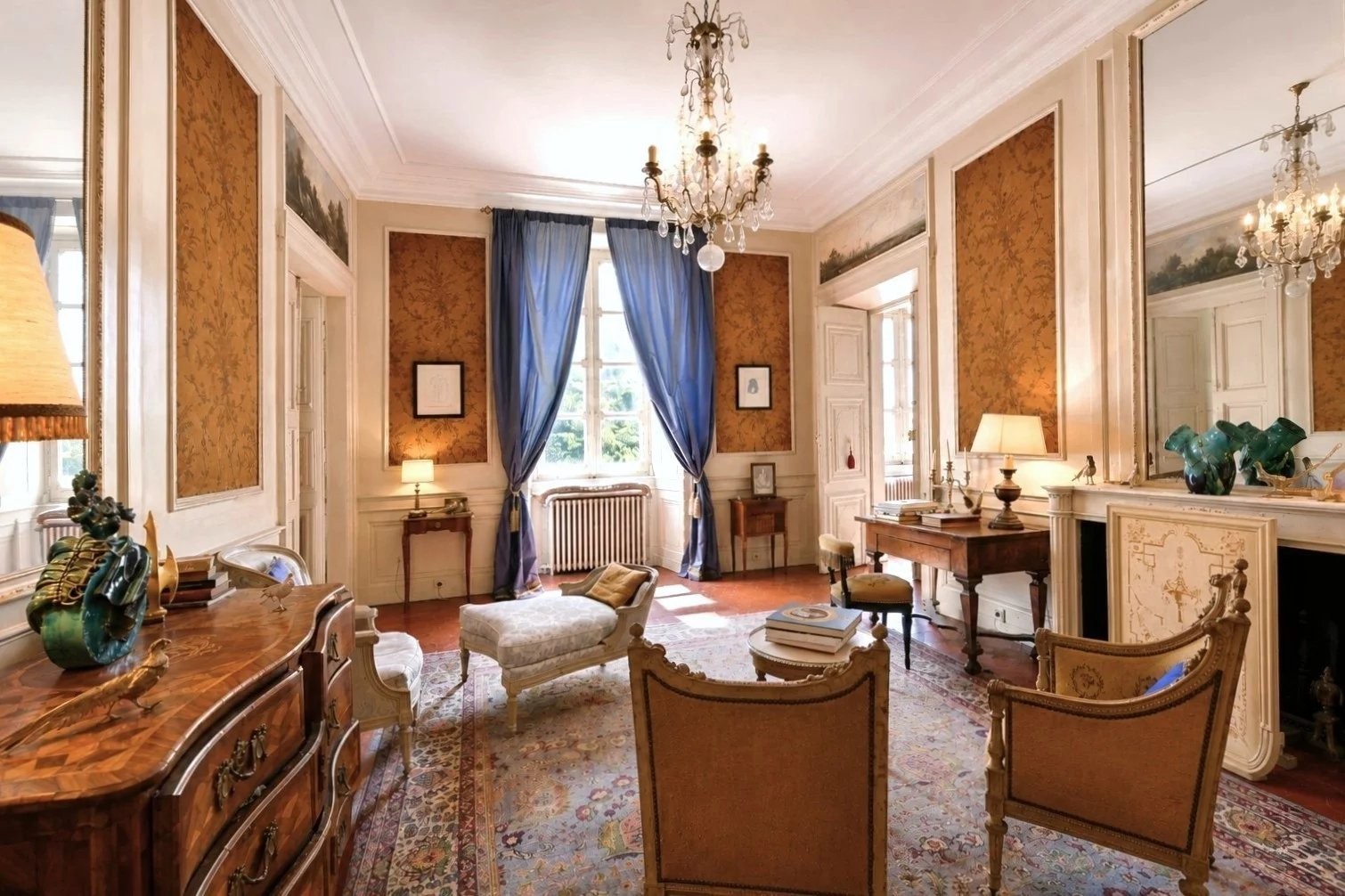
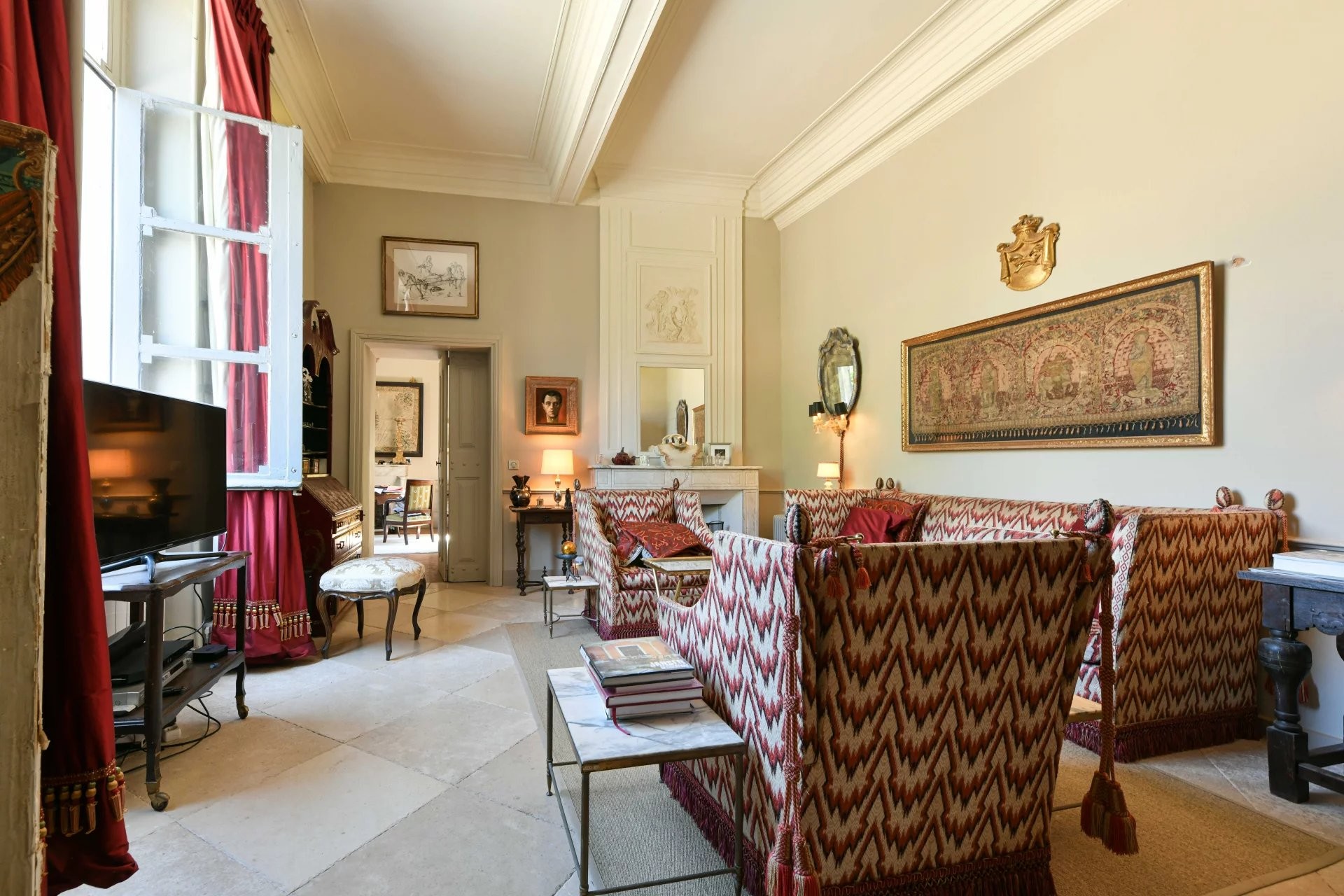
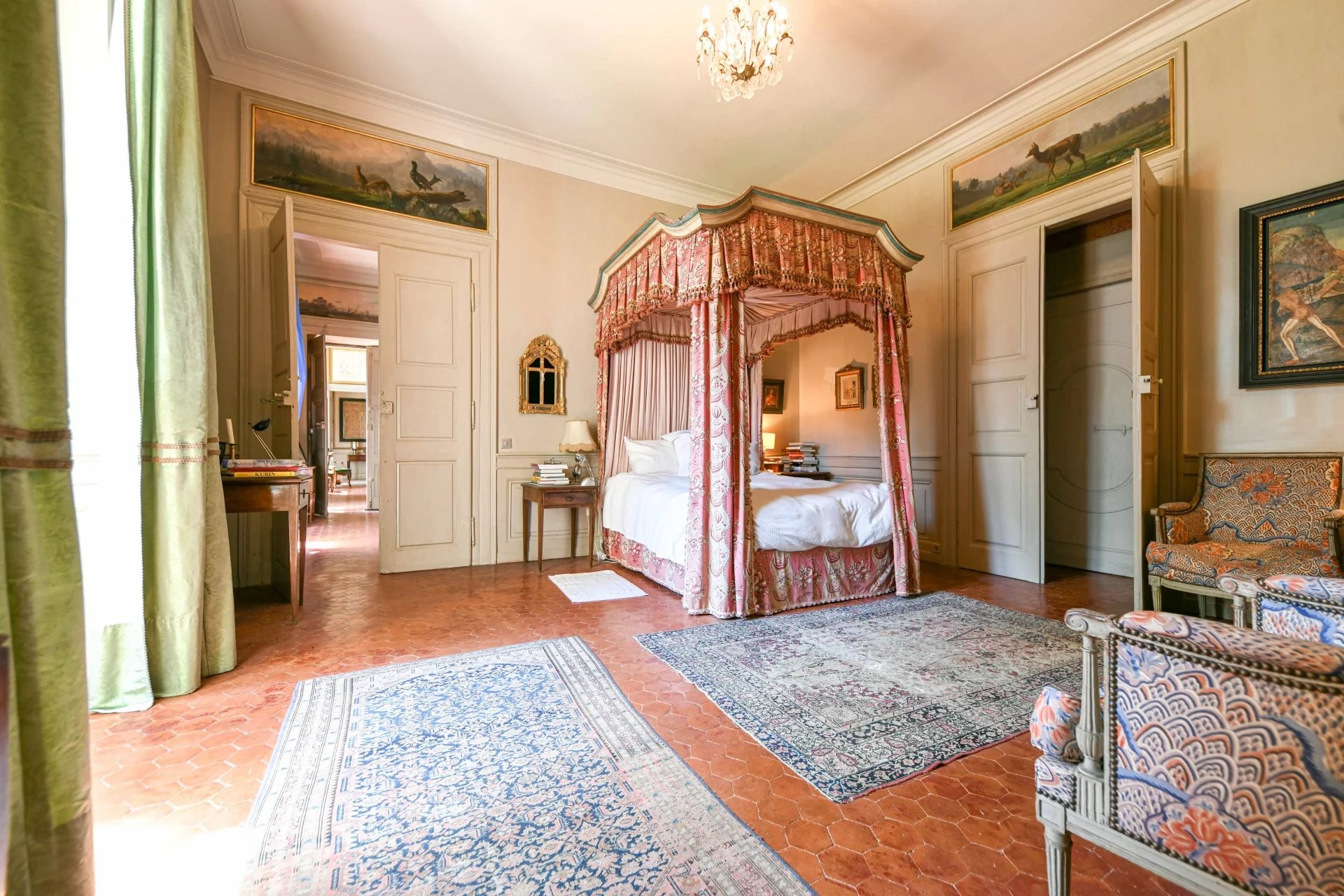
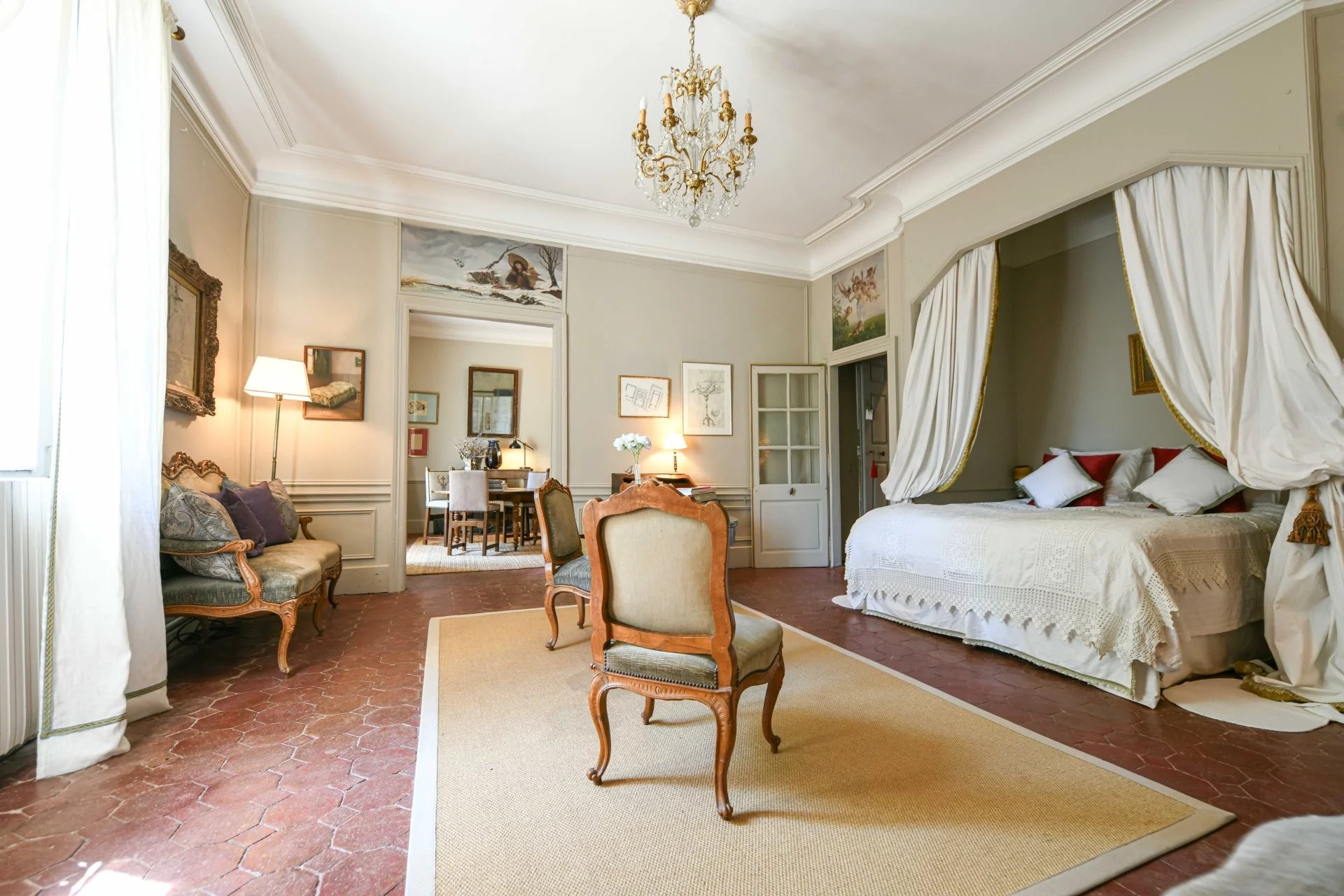
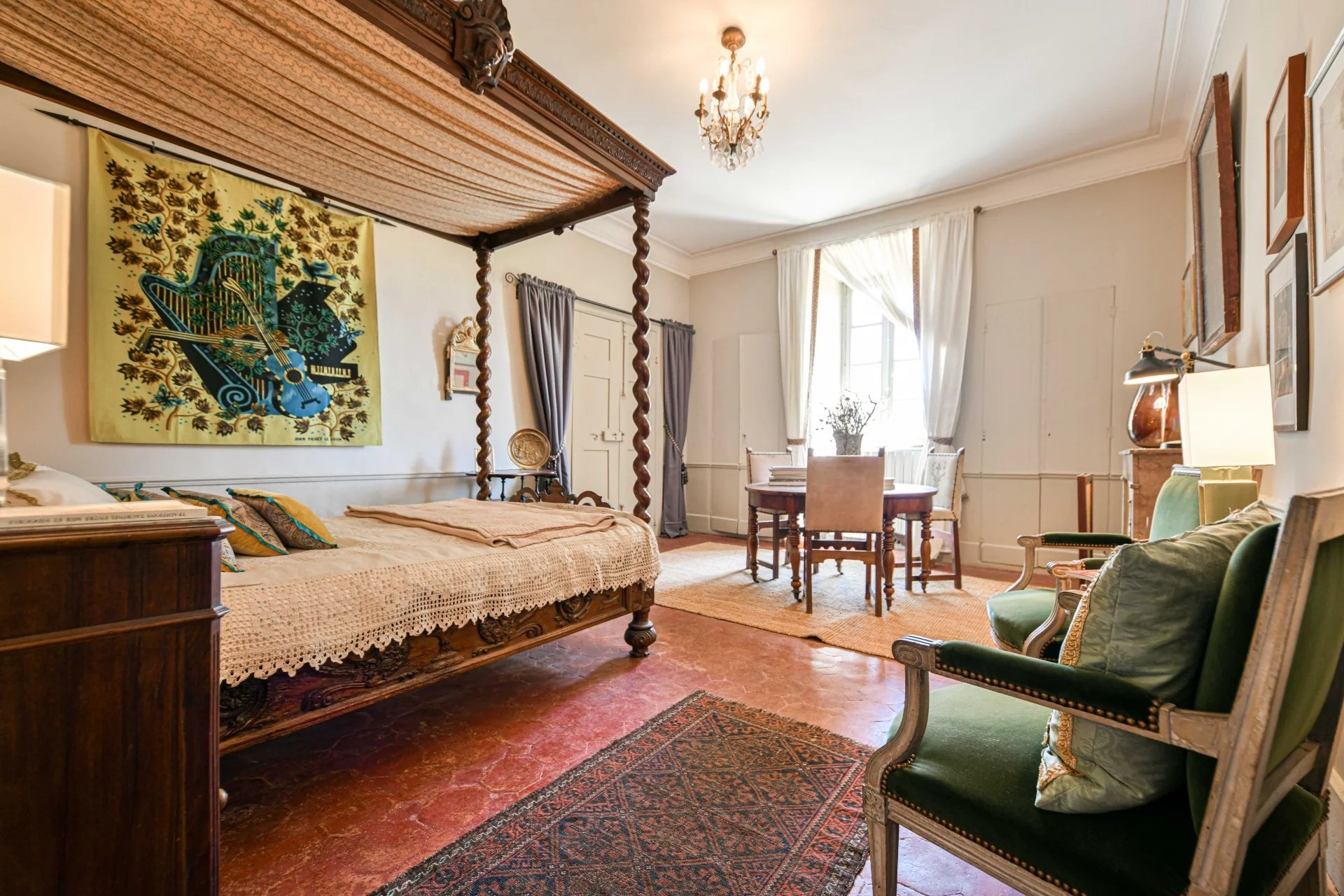
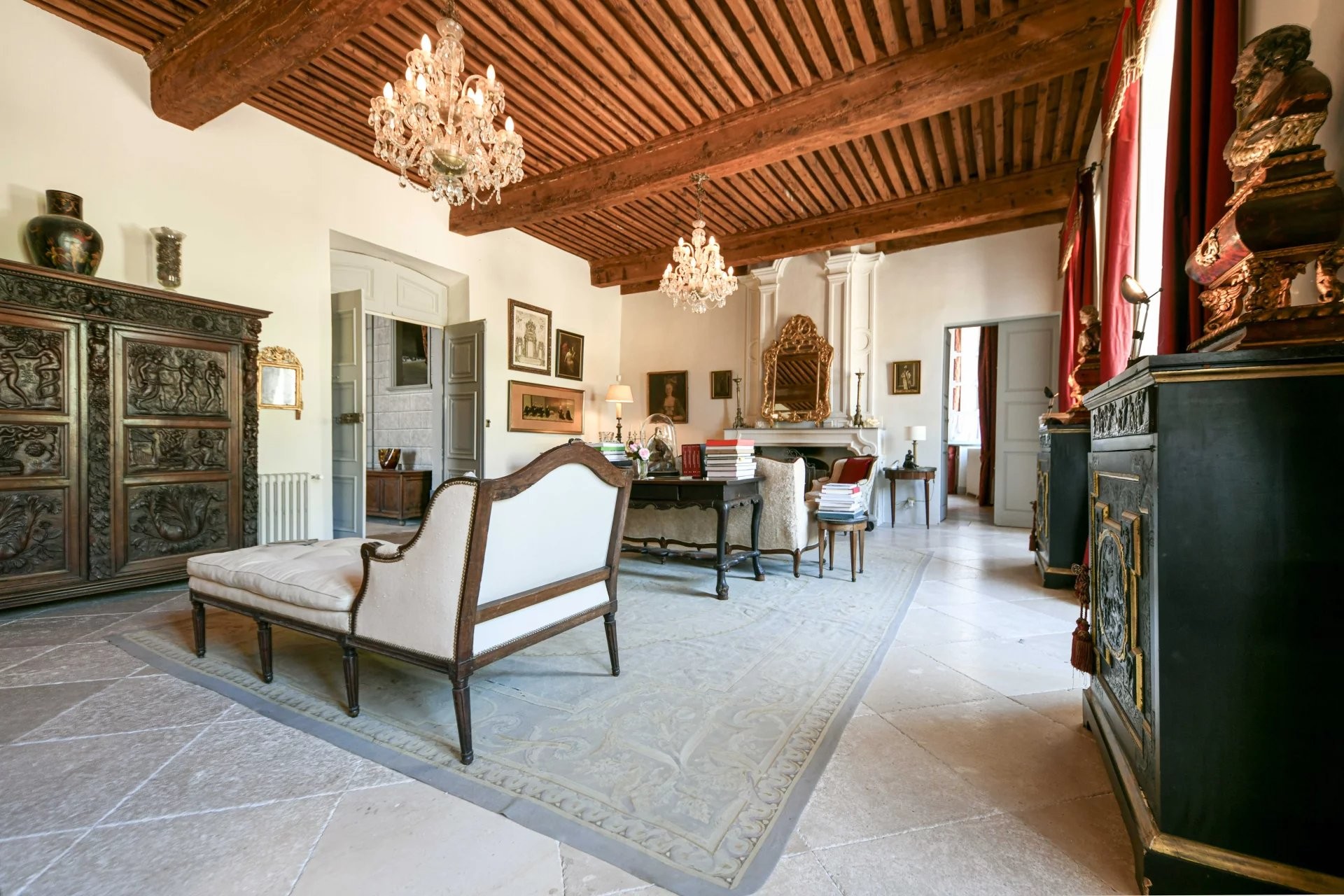
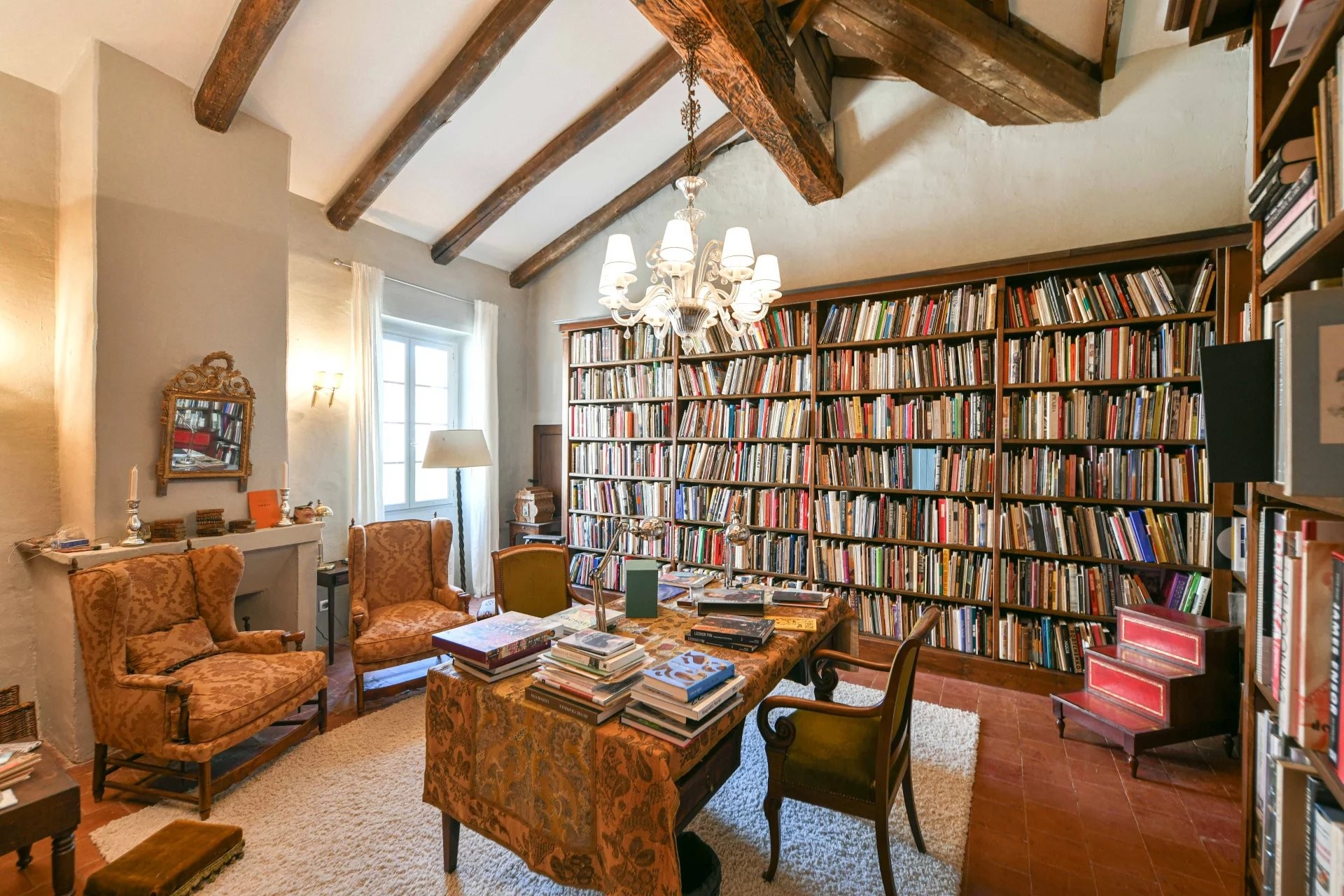
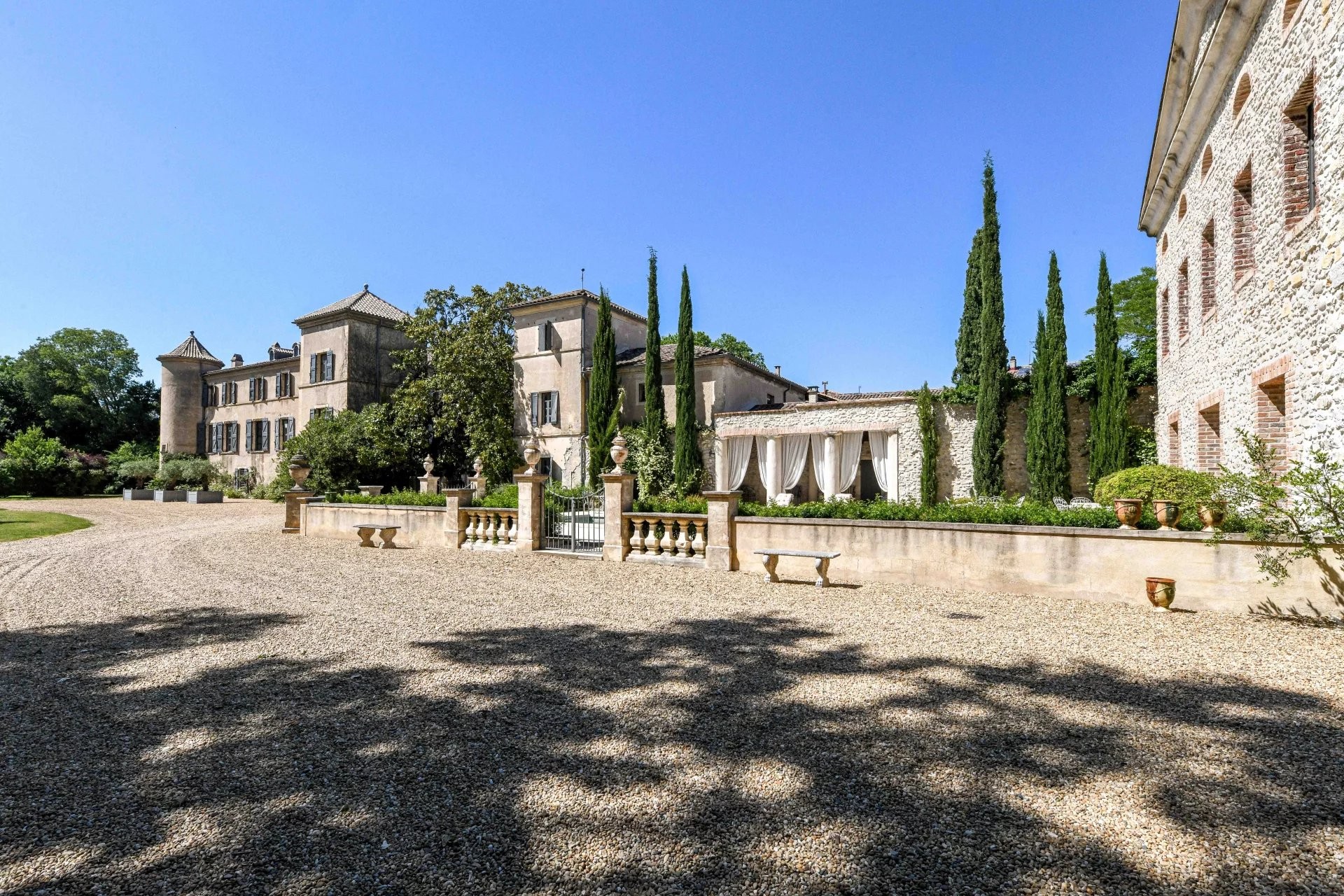
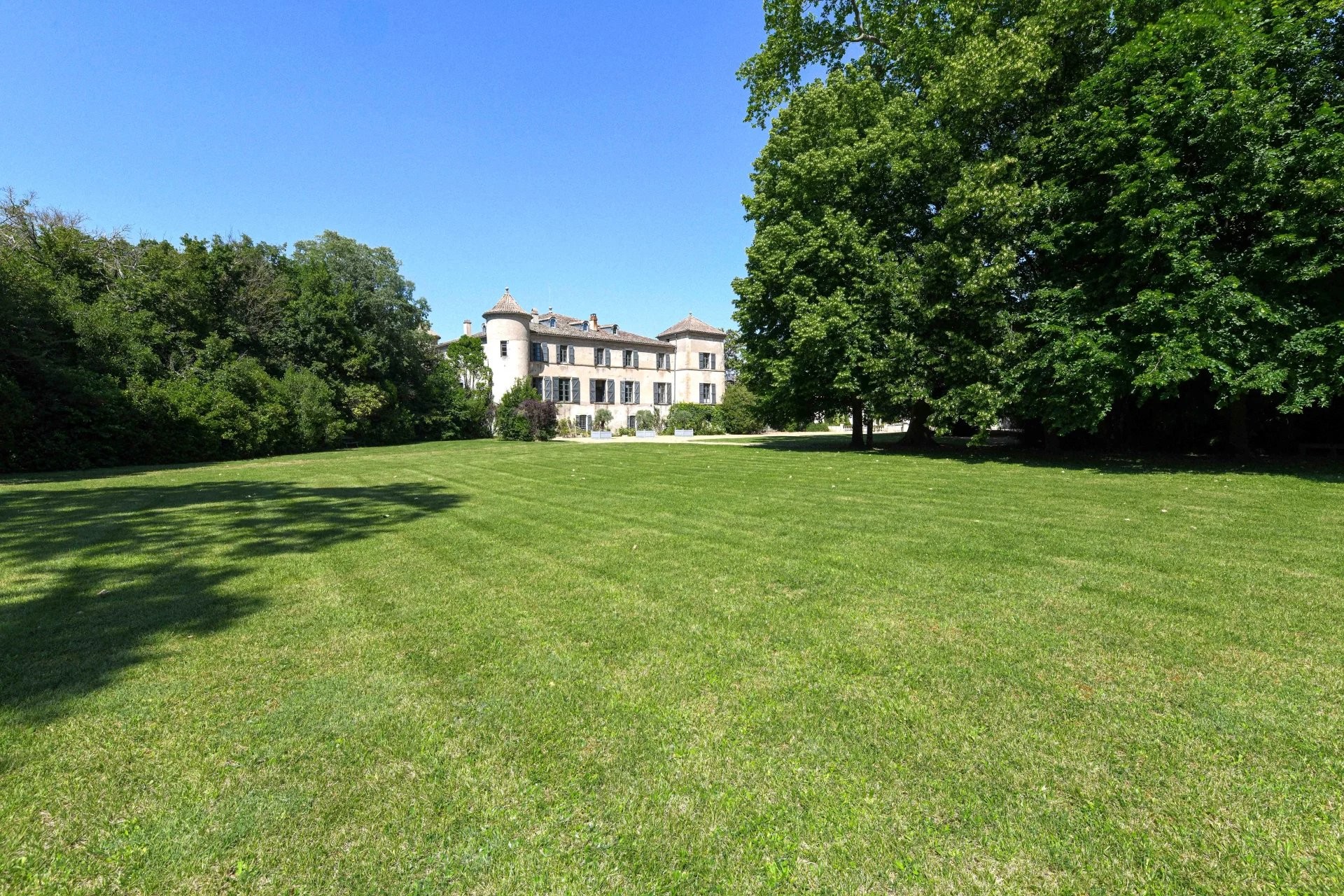
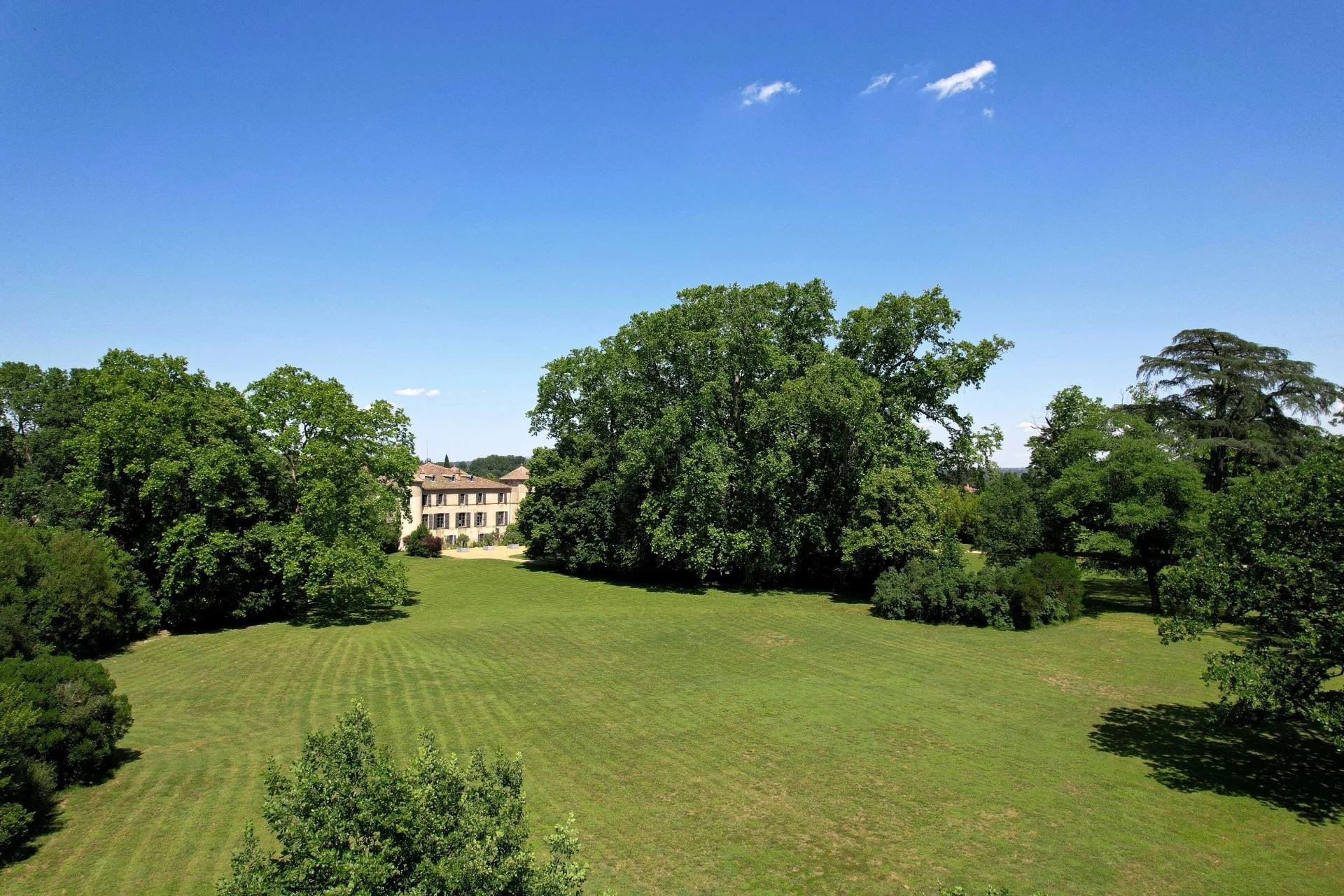
Set at the centre of a historic village in Occitanie, this 14th century château forms part of a protected Monument Historique estate extending to 17.3 acres. The property includes the château, former agricultural buildings and an orangery with silkworm house. Ownership remained within the same family for almost seven centuries until the late 20th century.
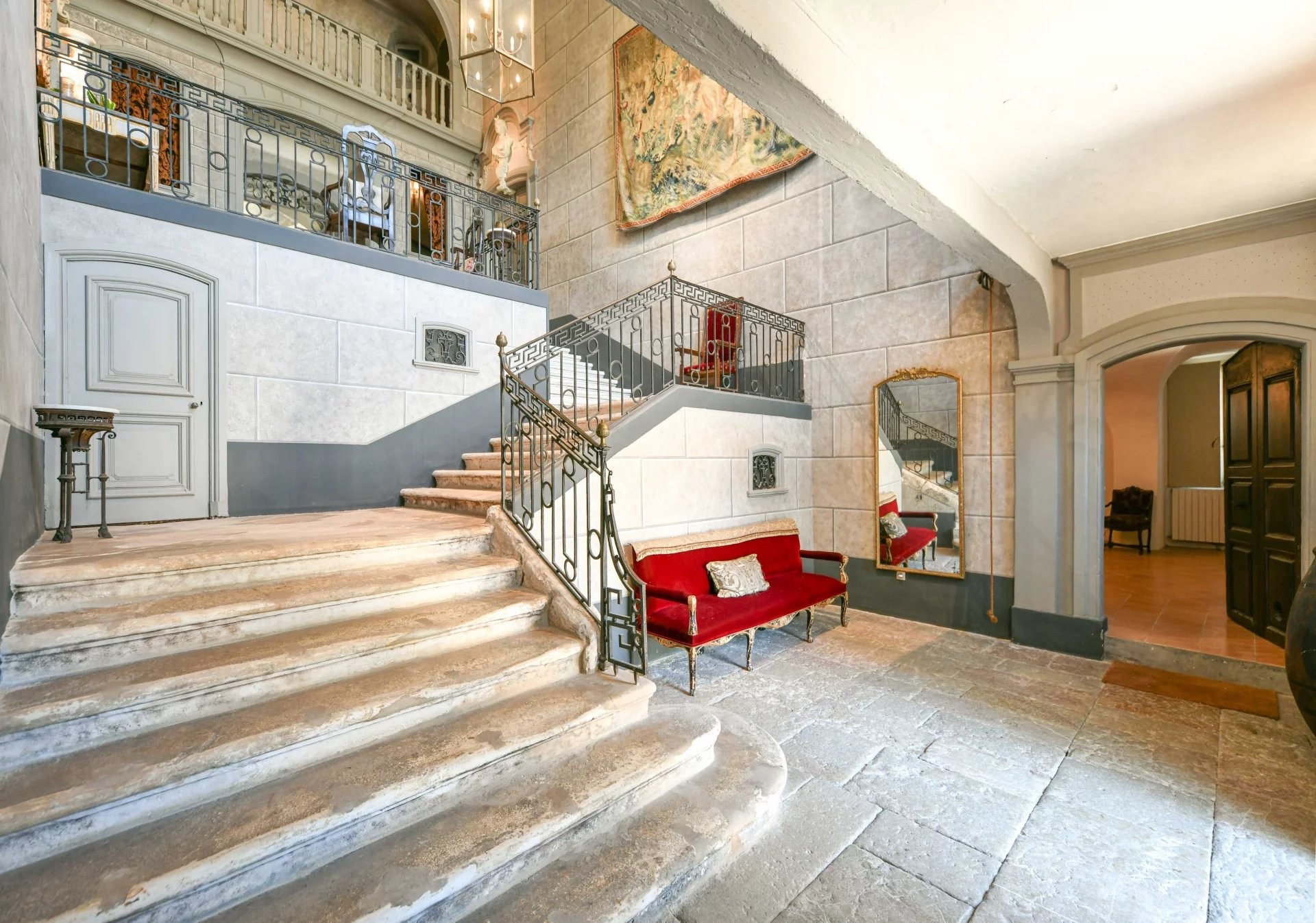
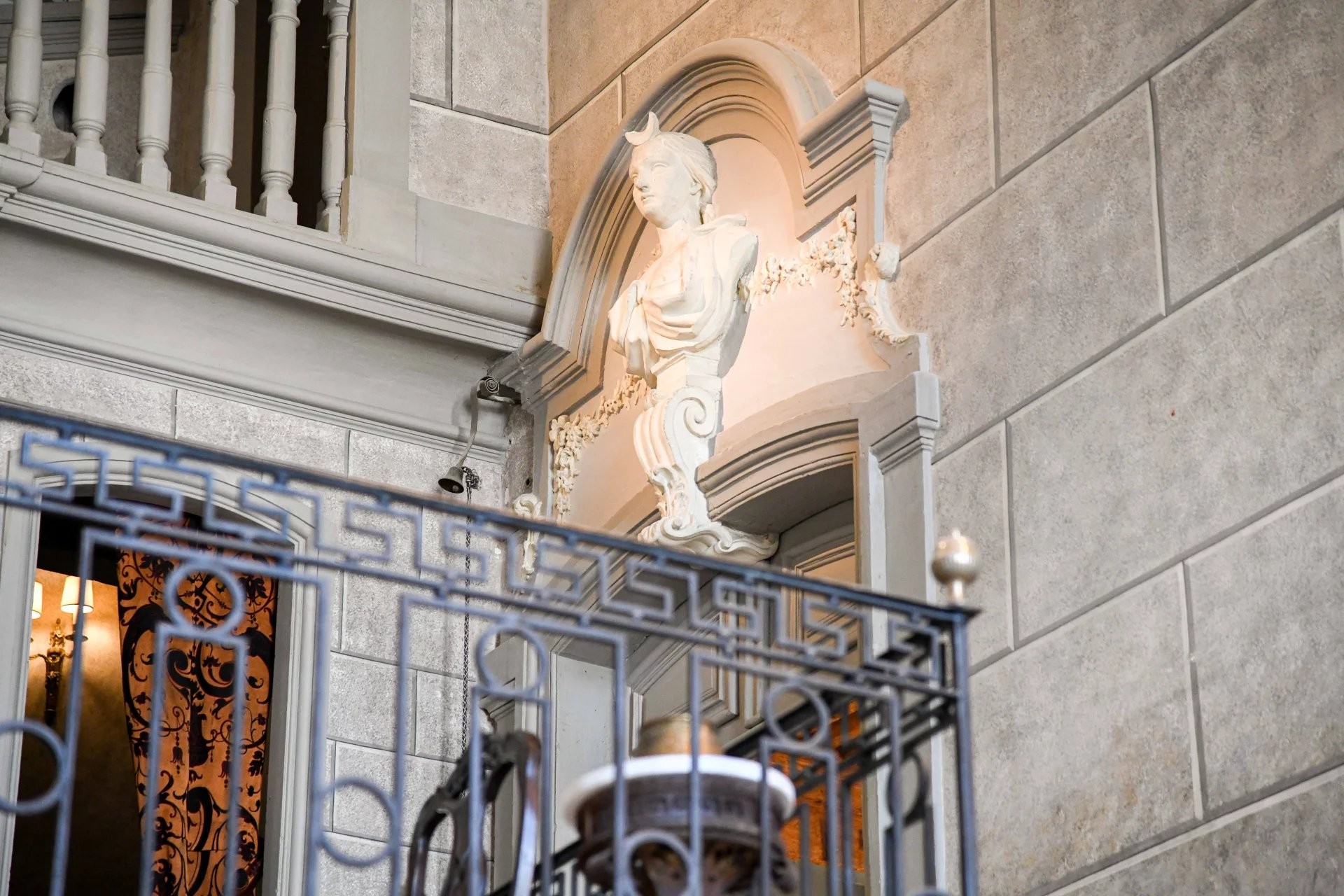
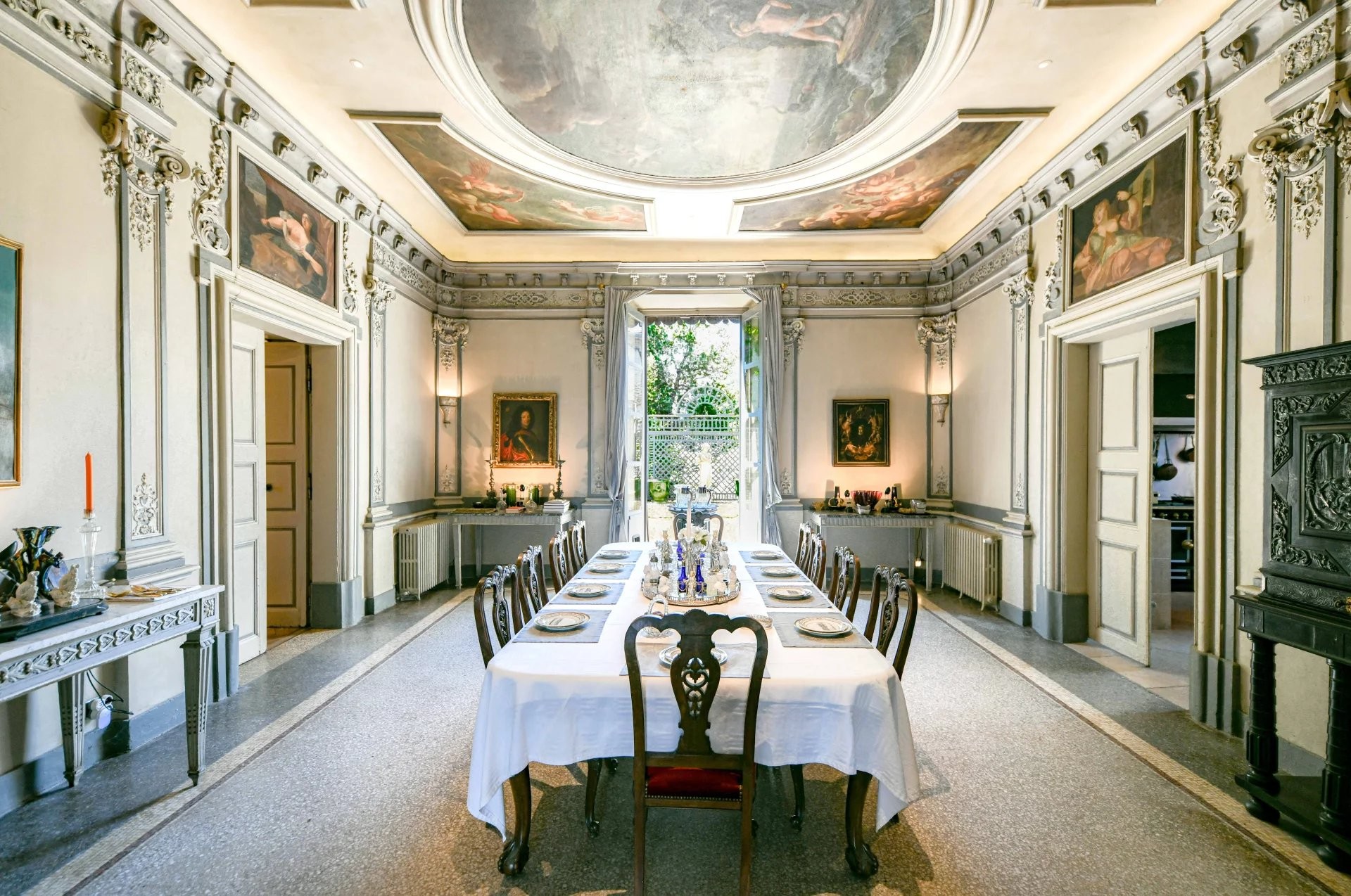
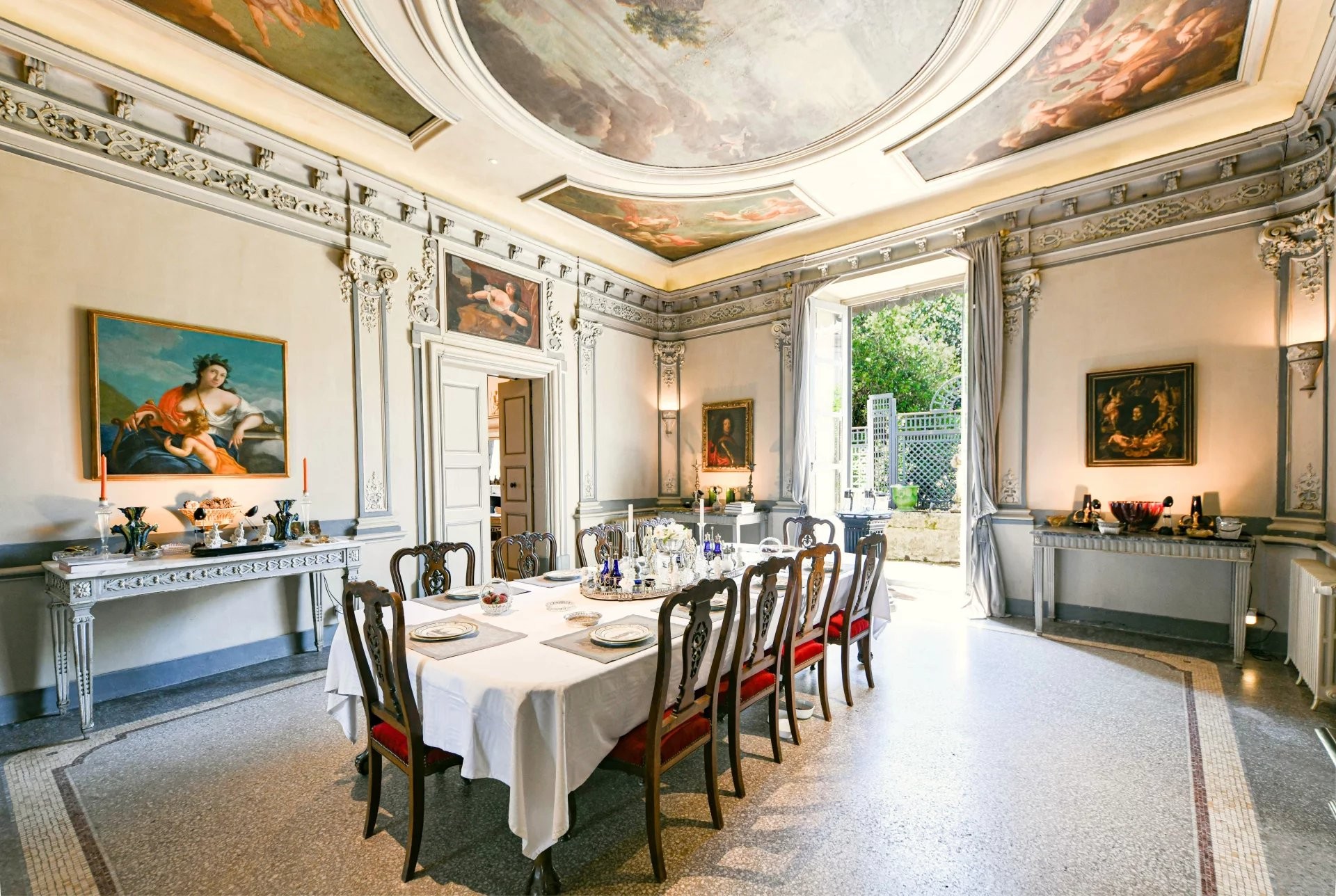
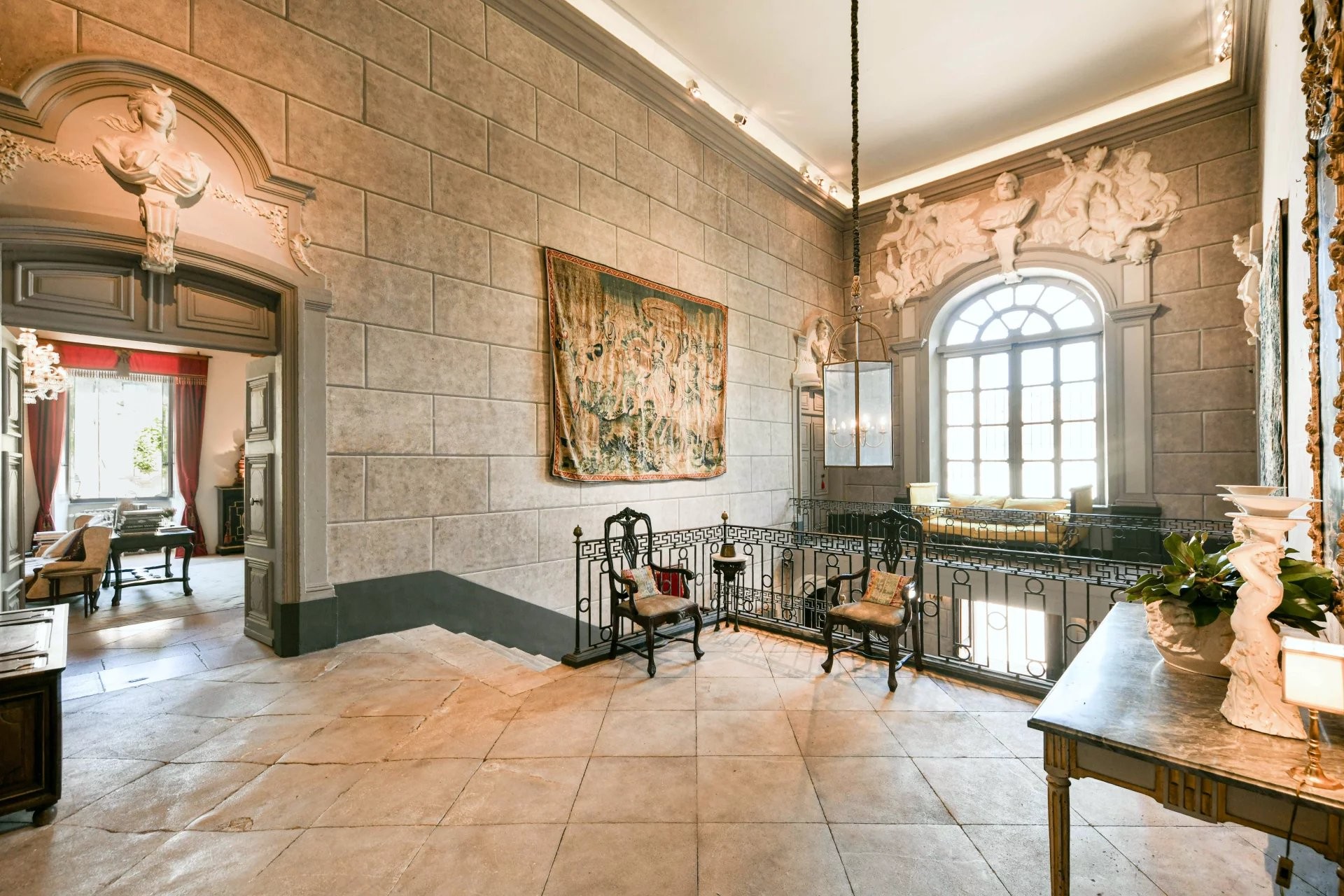
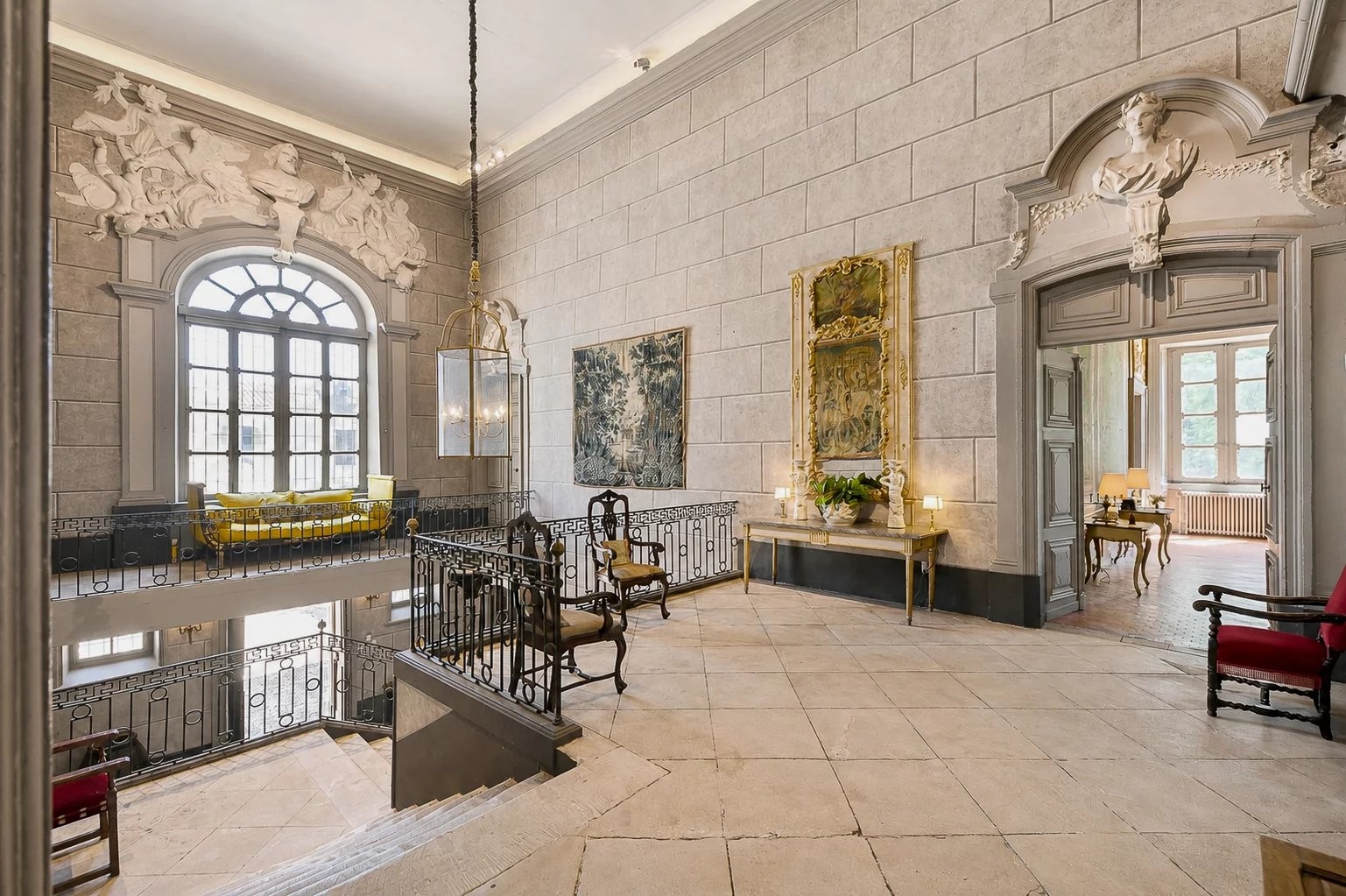
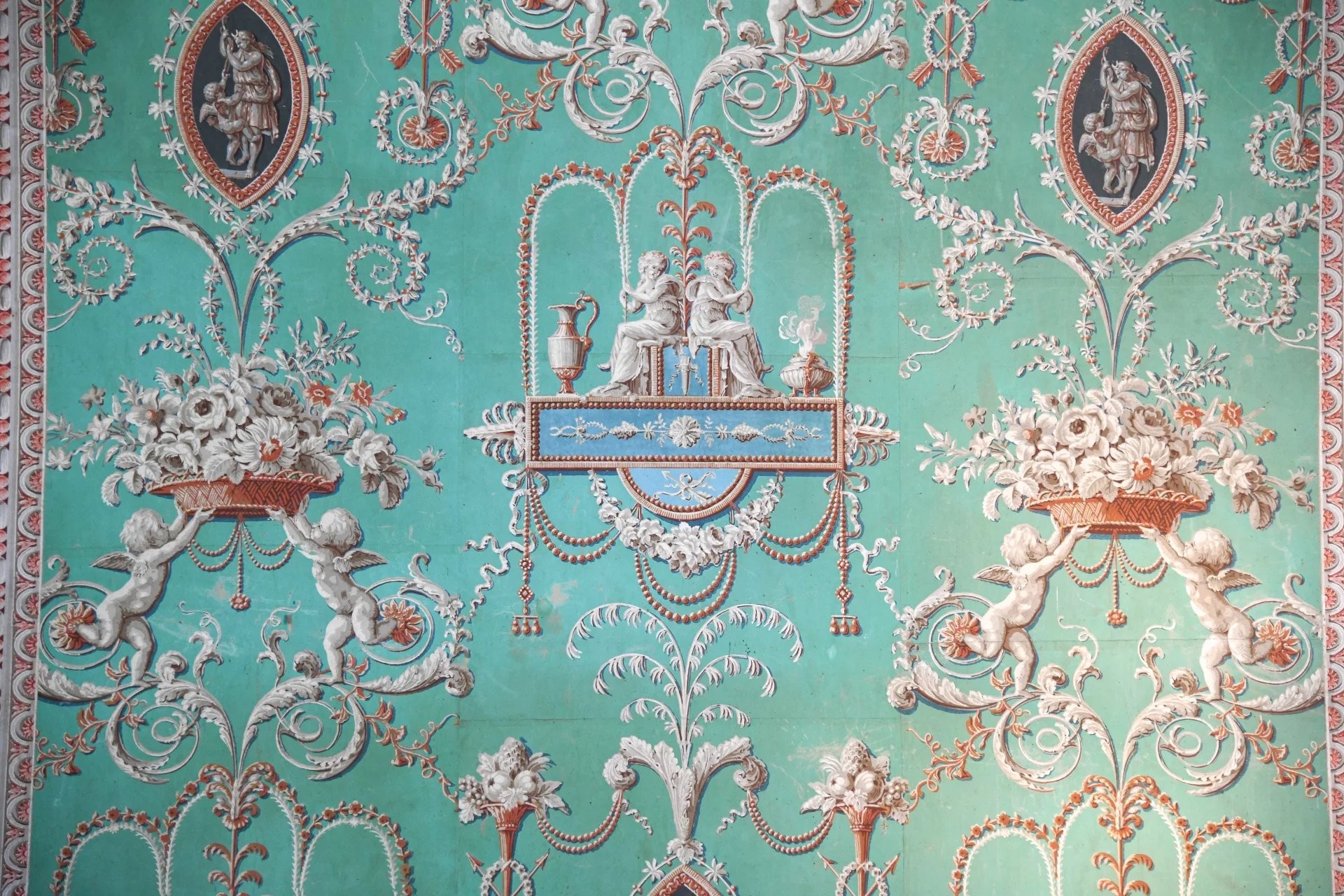
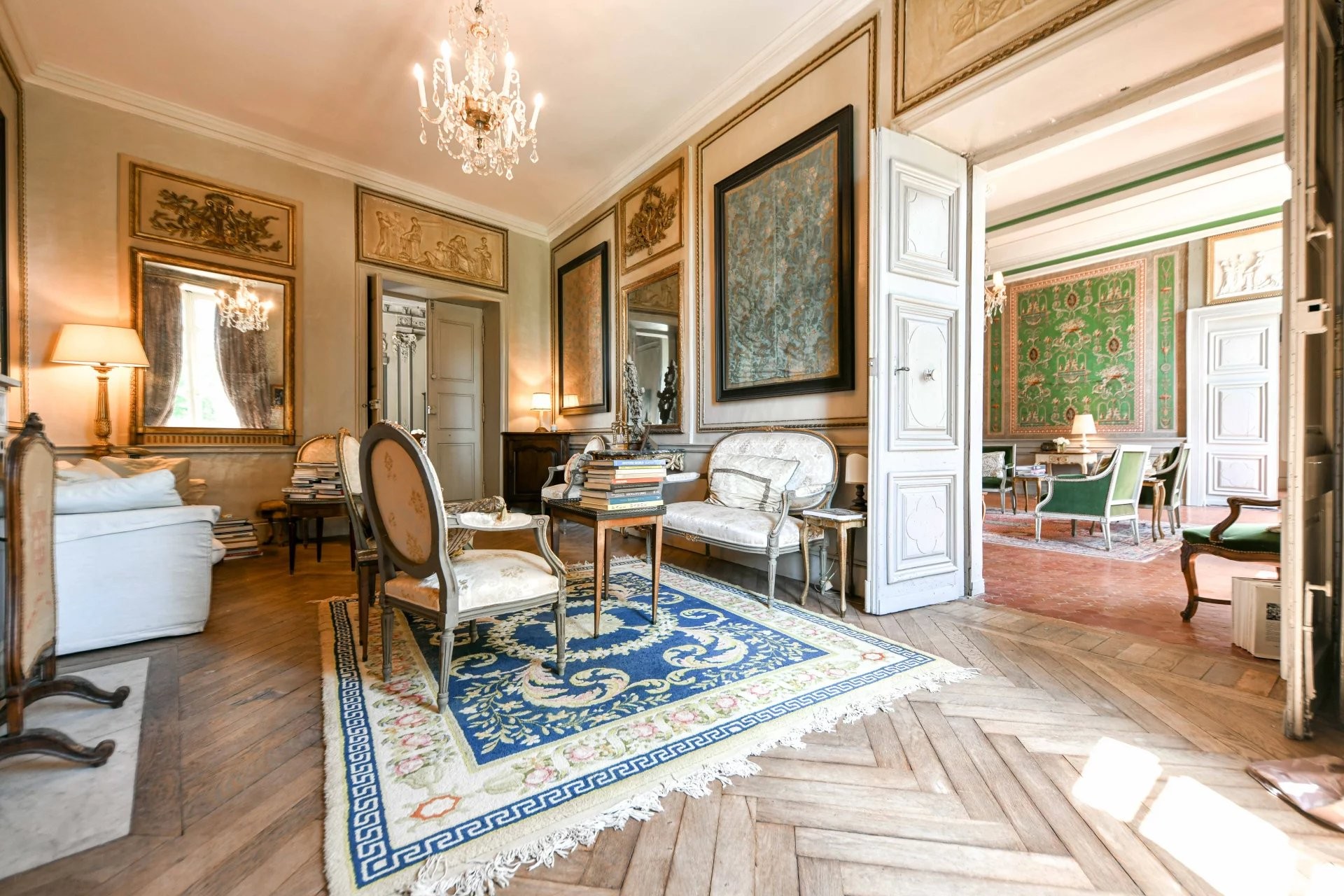
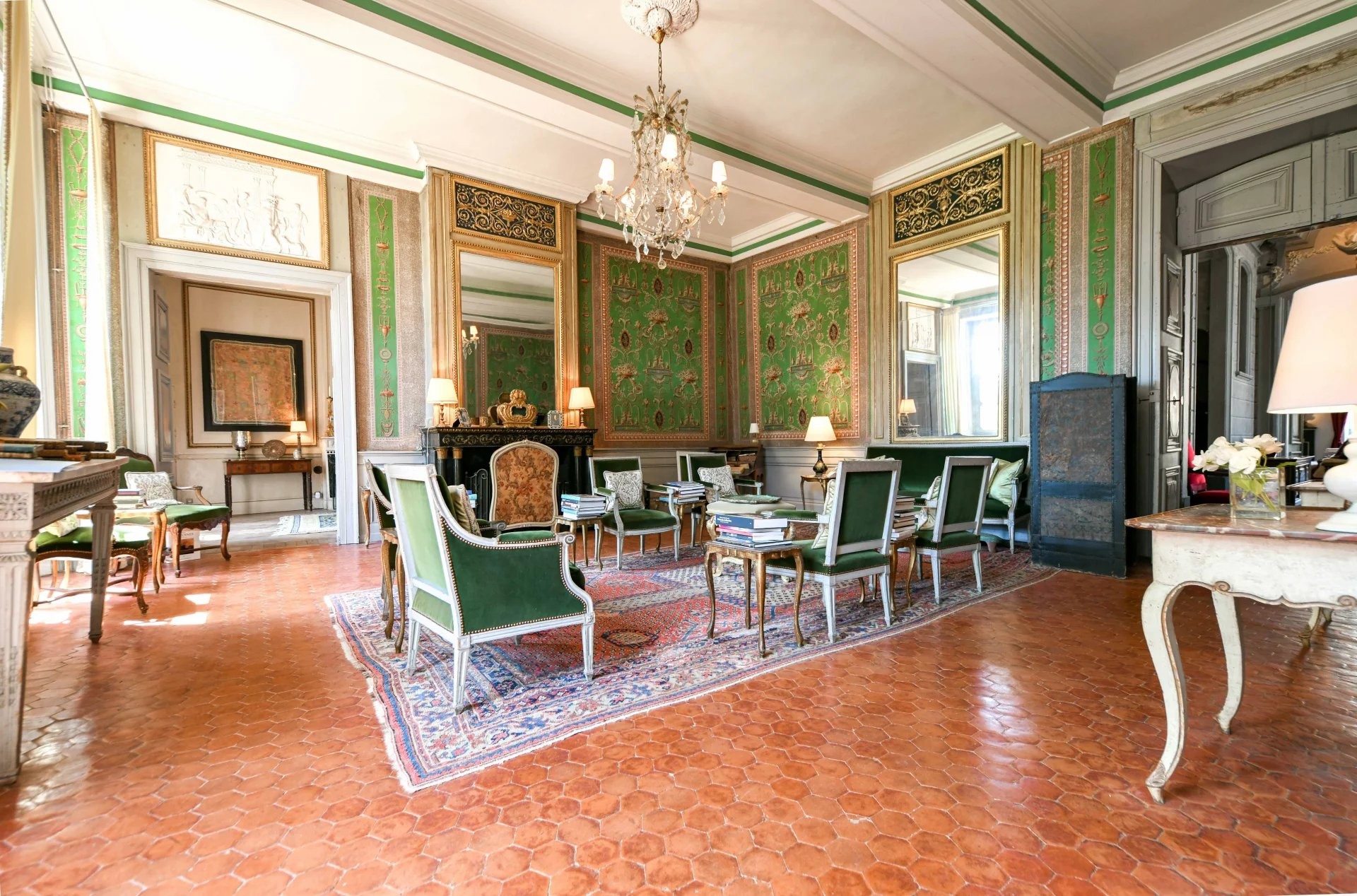
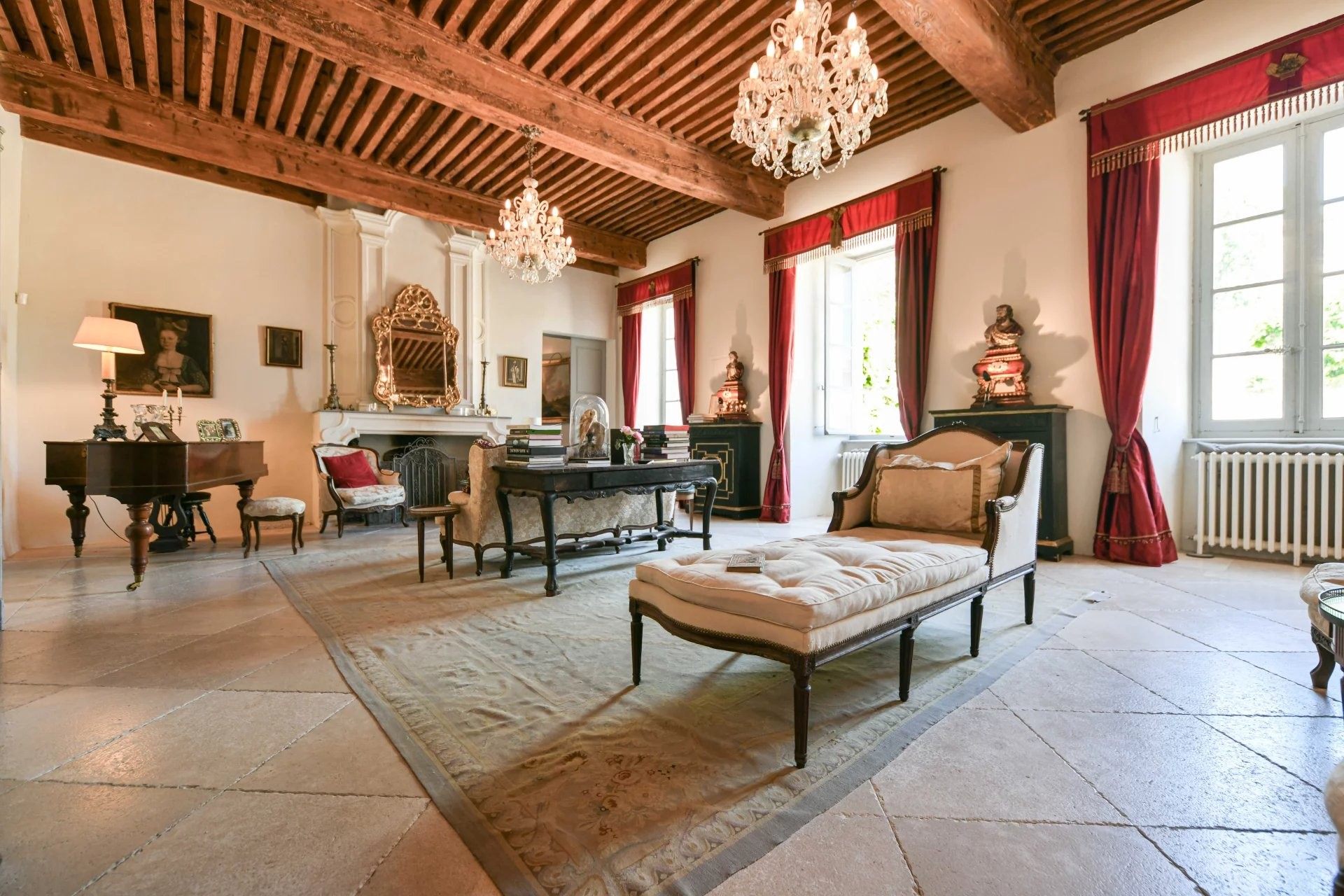
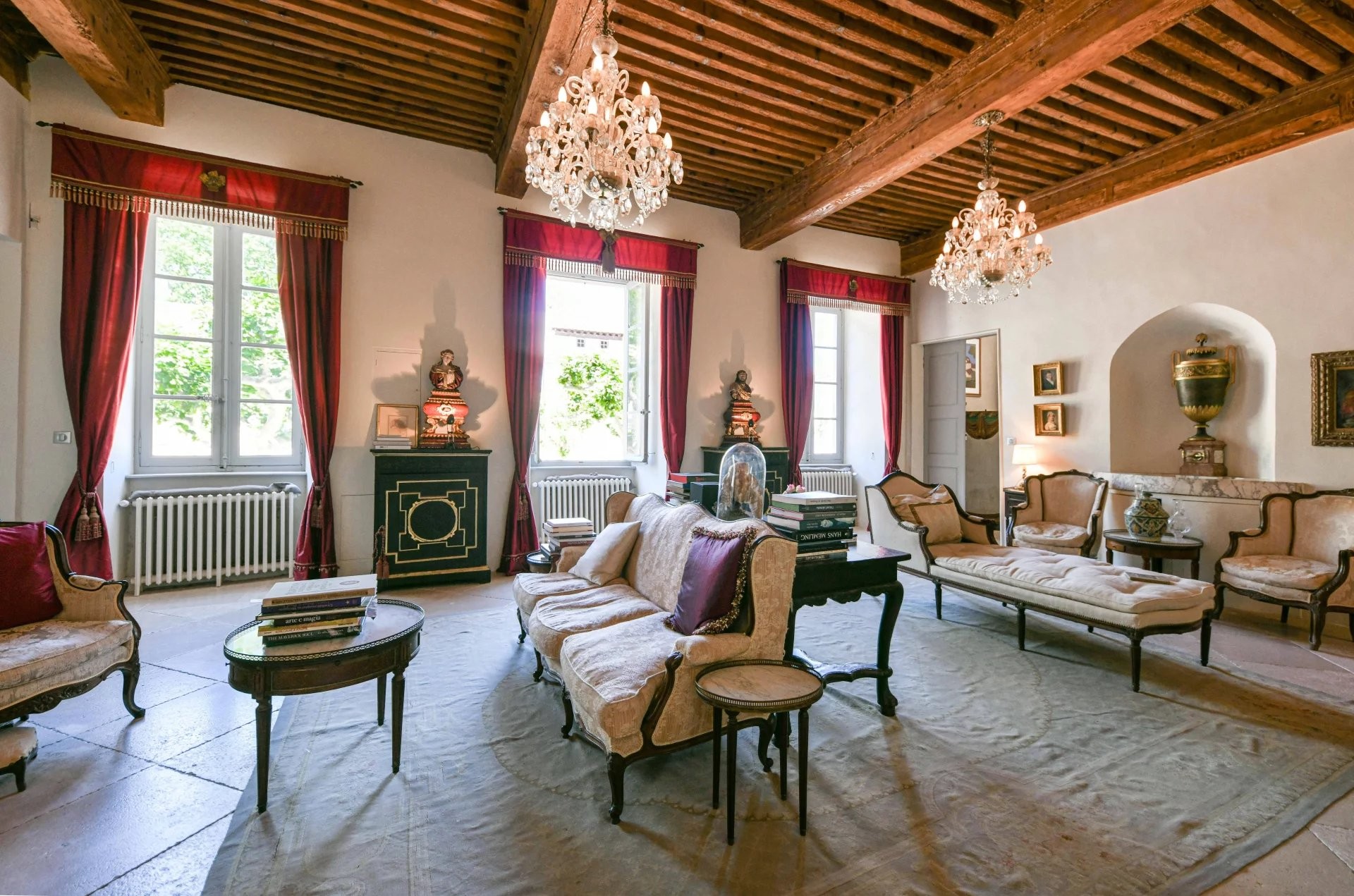
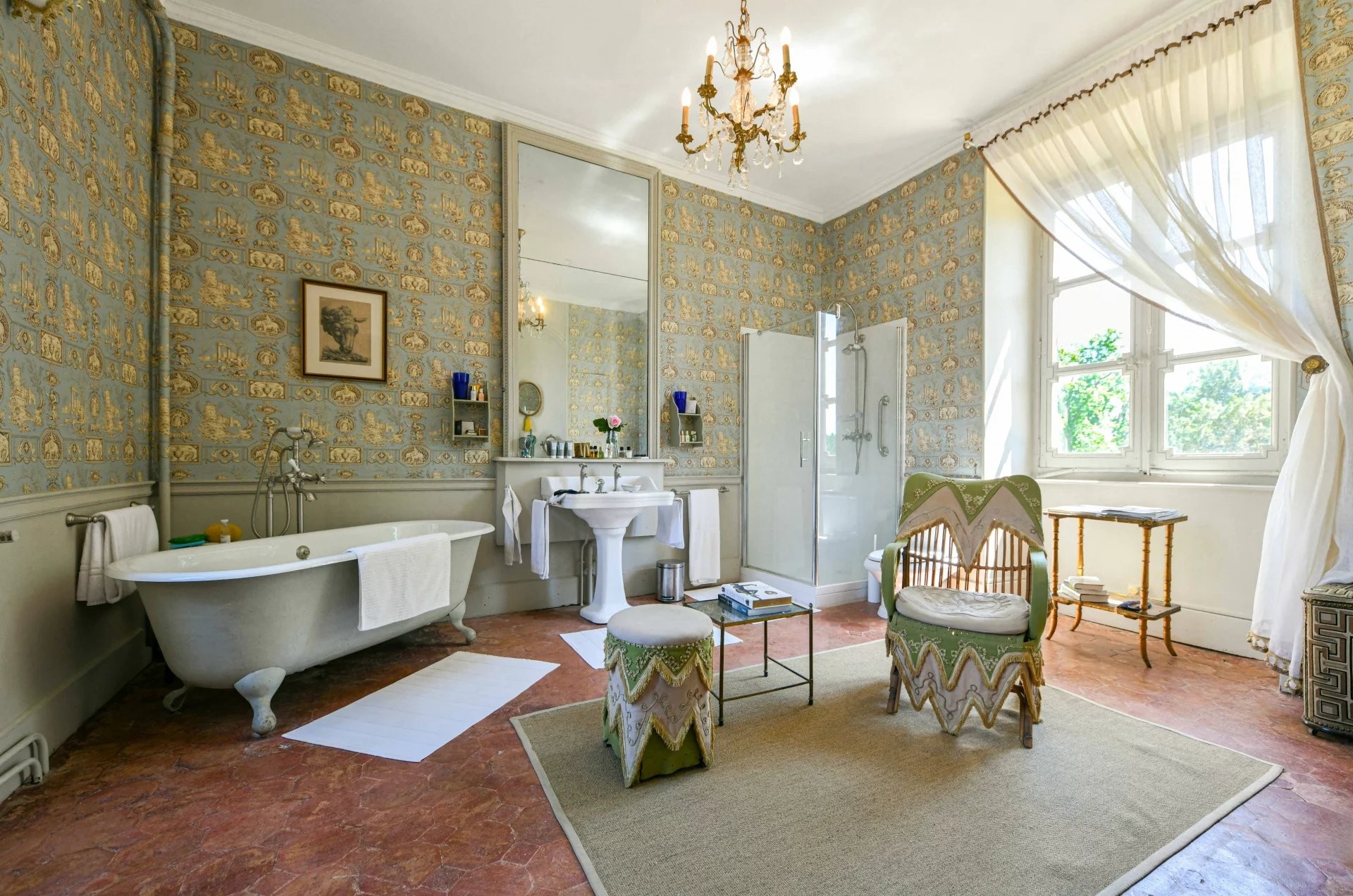
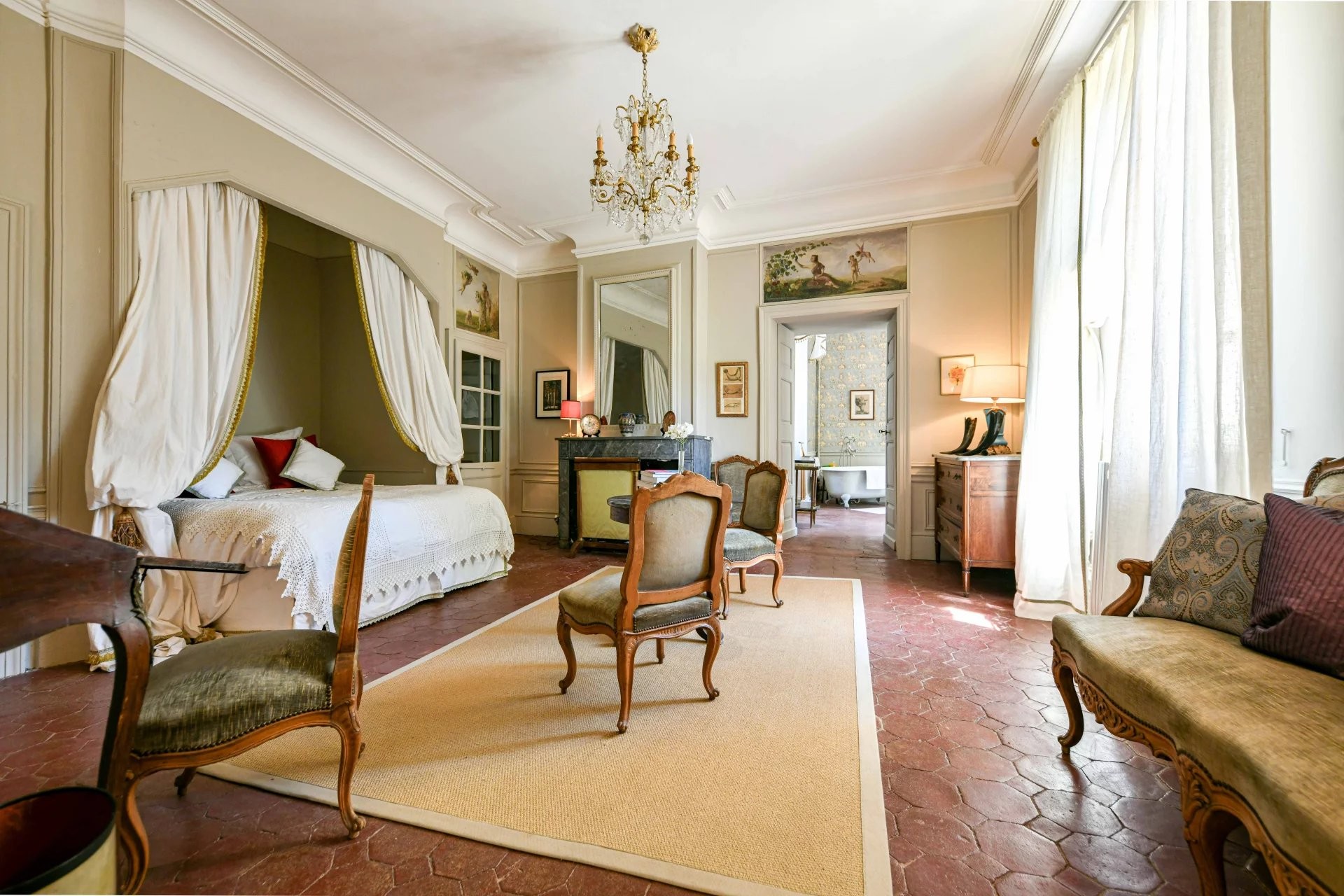
The architecture reflects successive periods of development from the Middle Ages to the 19th century. Medieval round towers, rib-vaulted ceilings, a 15th century vaulted cellar and a large 14th century hearth survive from the earliest phase. During the 17th and early 18th centuries the château was remodelled with a horseshoe entrance court, paved courtyard and a three-storey Italianate staircase hall. Period features include stucco reliefs depicting Ganymede and Zeus, painted decorative schemes and a panoramic wallpaper by the Réveillon manufactory dating from around 1780, specifically referenced in the monument listing. The 19th century brought a mansard level together with buildings associated with the Cévennes silk industry, including a silk mill, silkworm house and arcaded gallery.
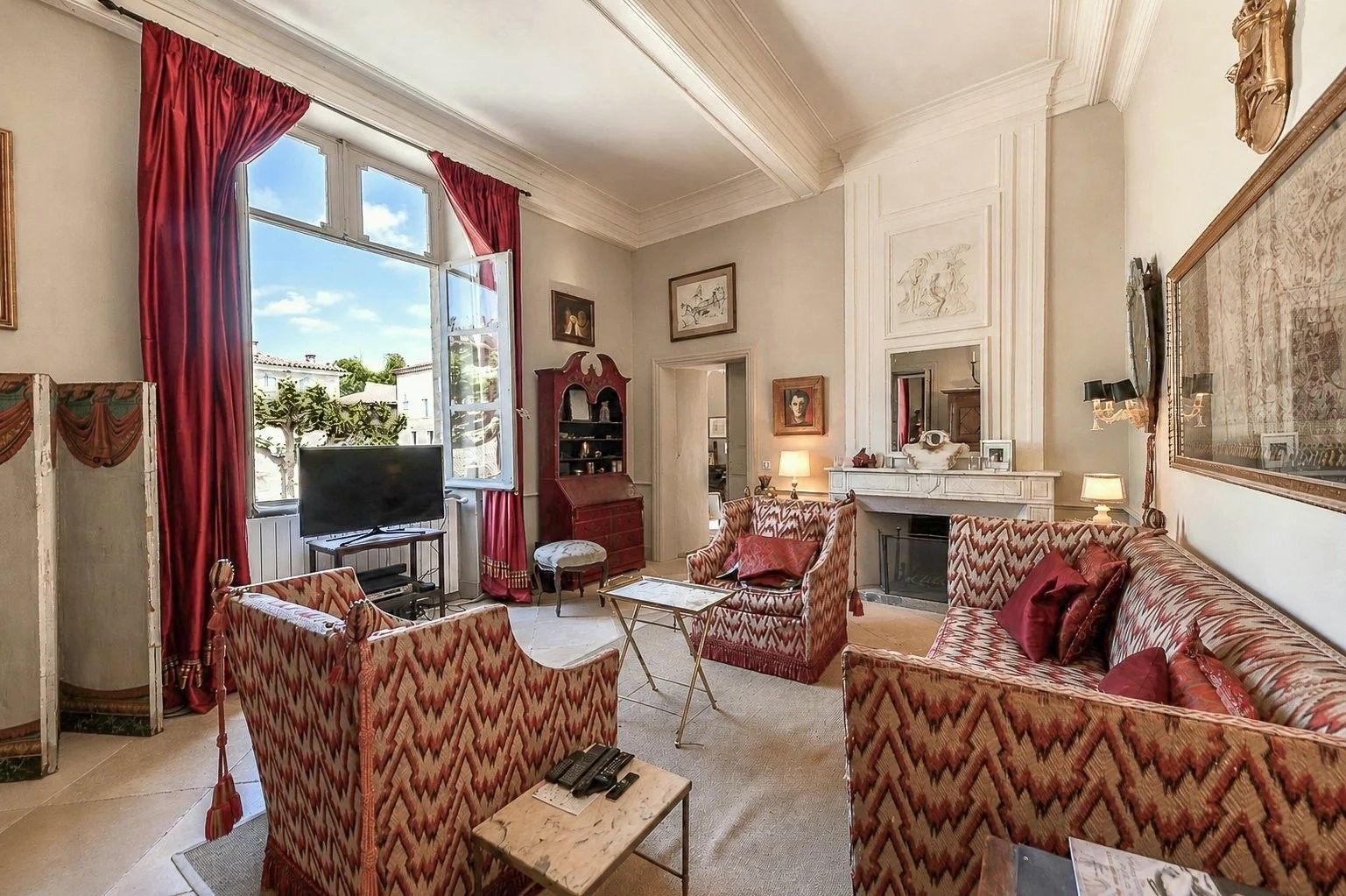
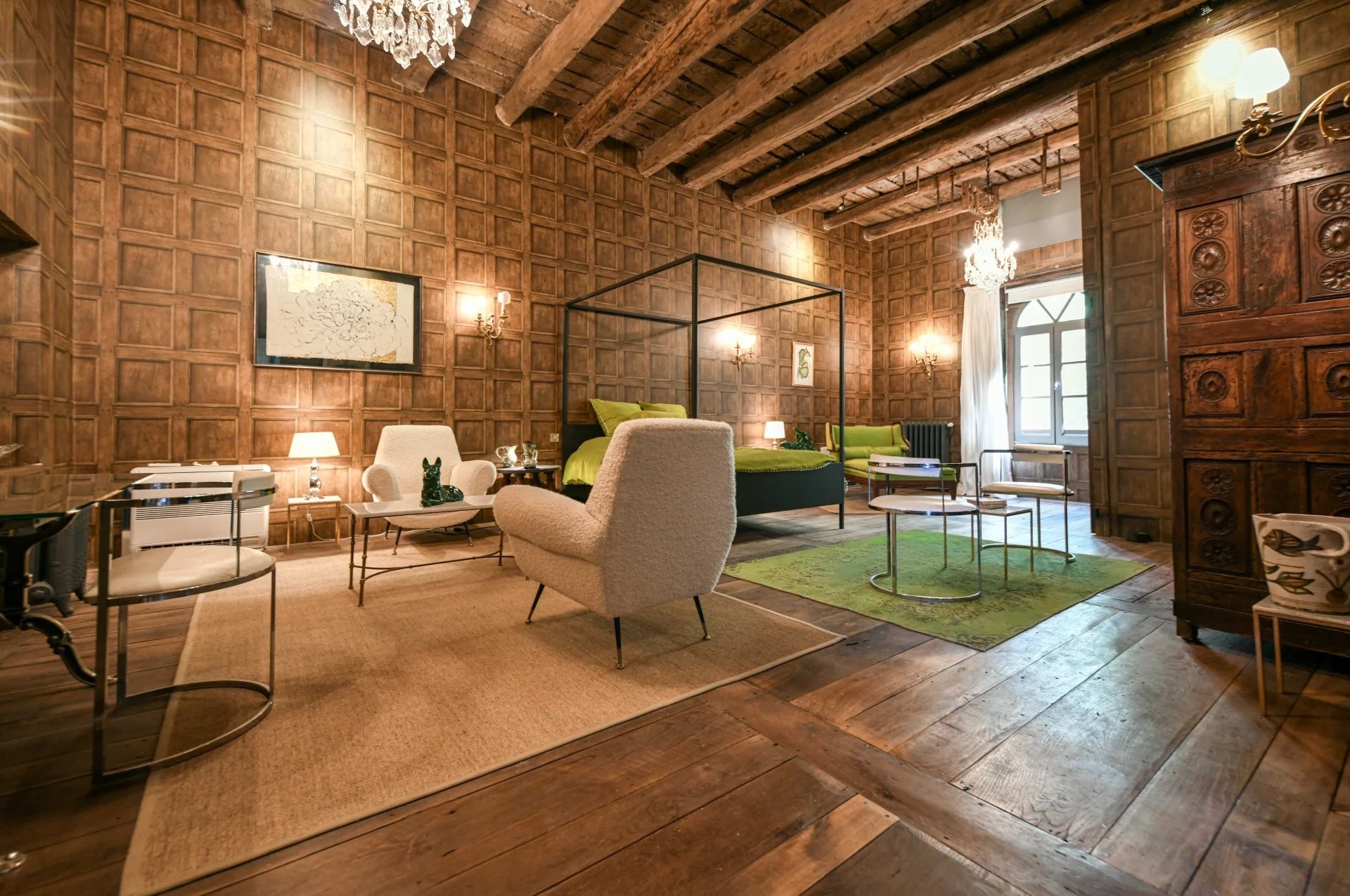
The château provides 11,840 sq ft across four levels. The lower ground floor contains historic kitchens, a 16th century laundry and wine cellar. Reception rooms occupy the principal floor and are arranged around the central staircase hall. Accommodation includes an episcopal suite, seven further suites, guest apartments and a separate keeper's house. An artist's studio from the 19th century remains intact beneath the roof.
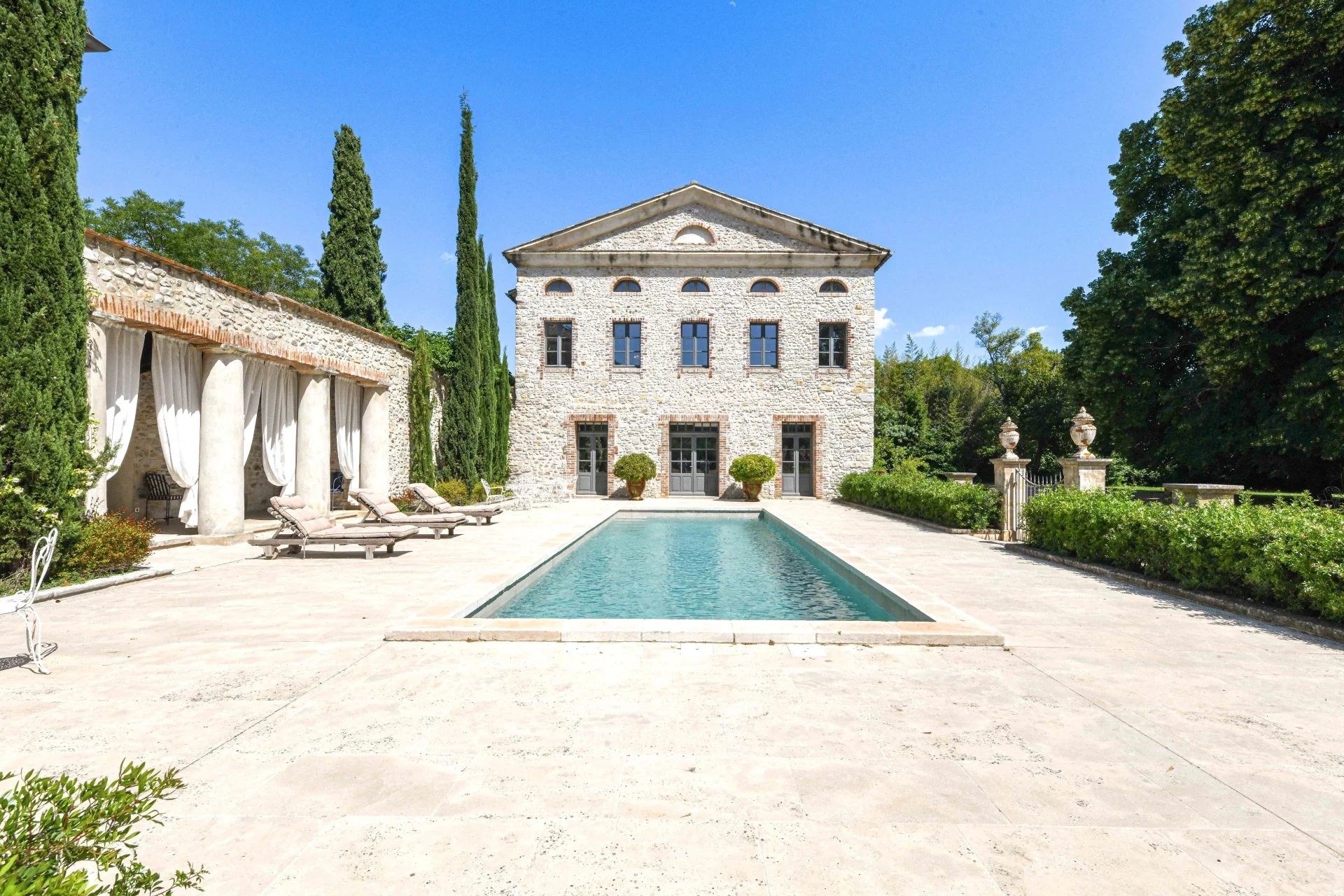
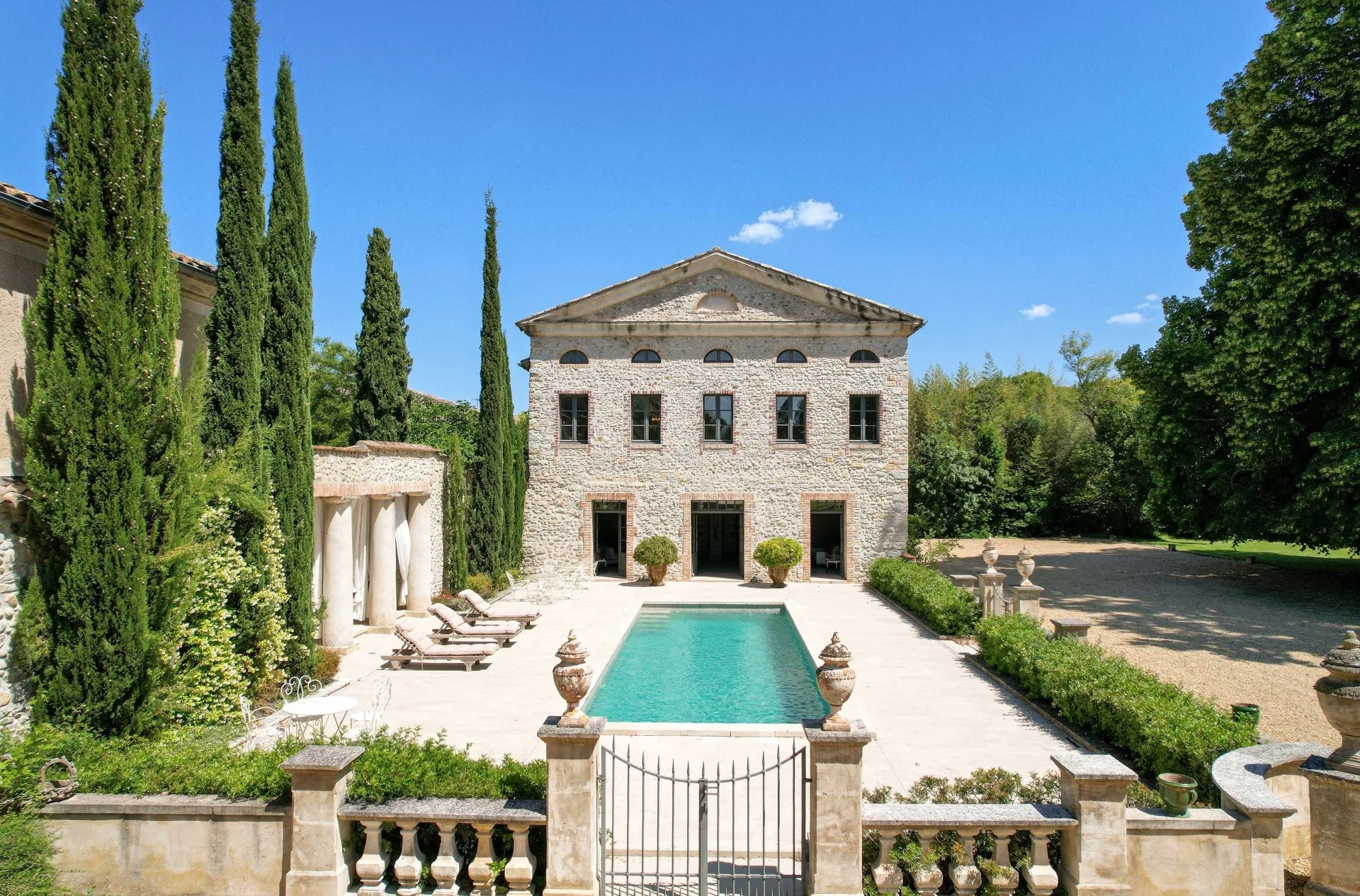
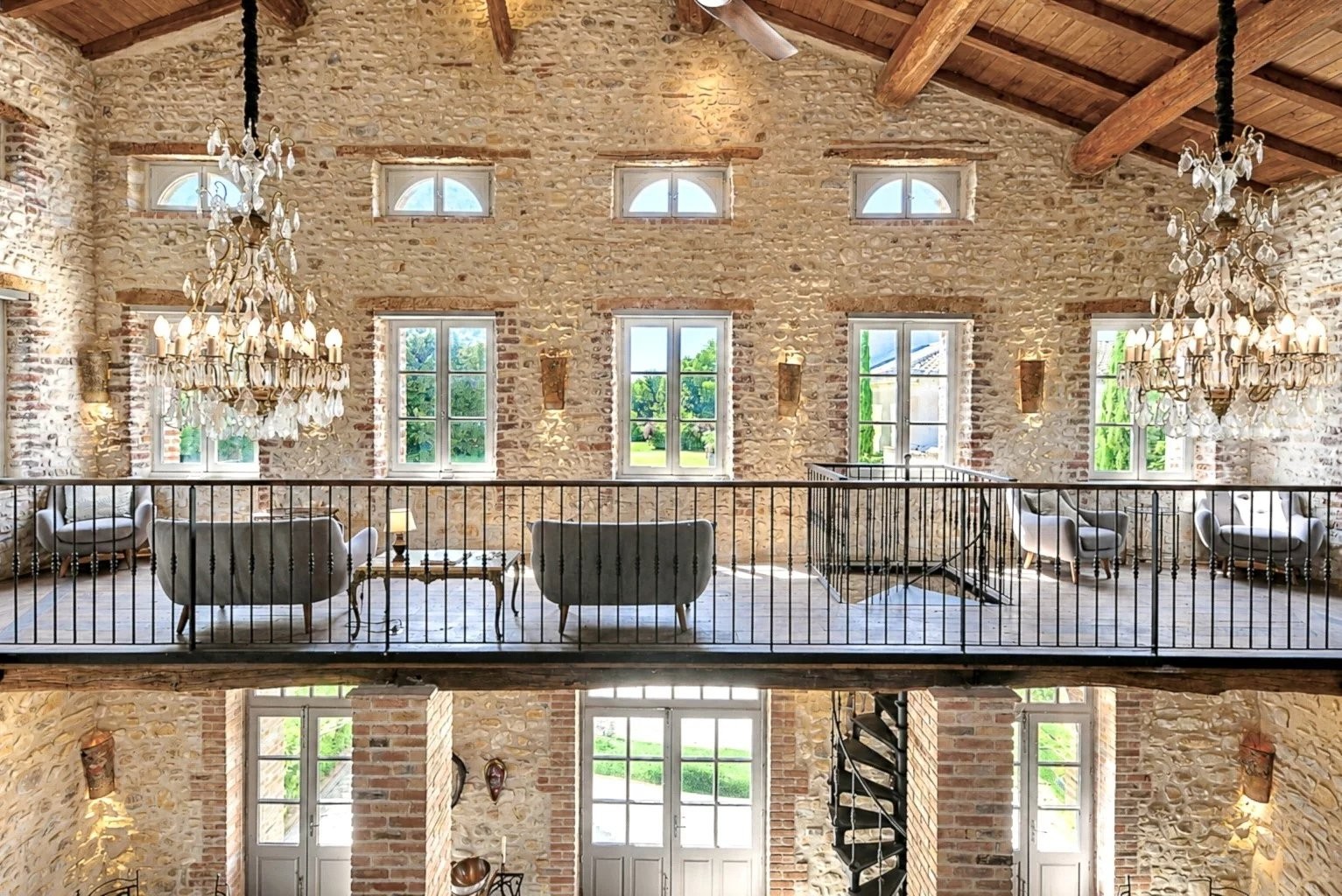
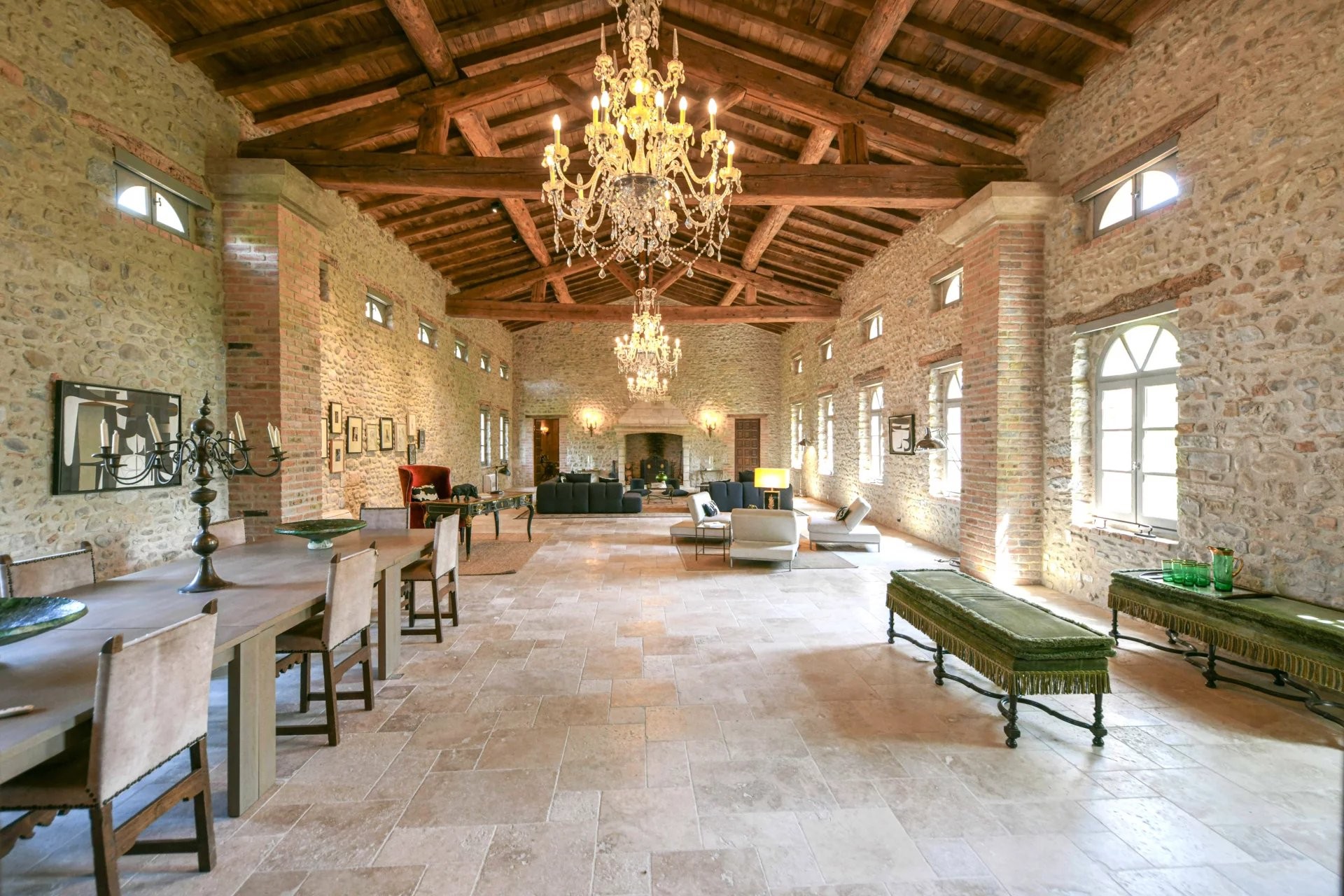
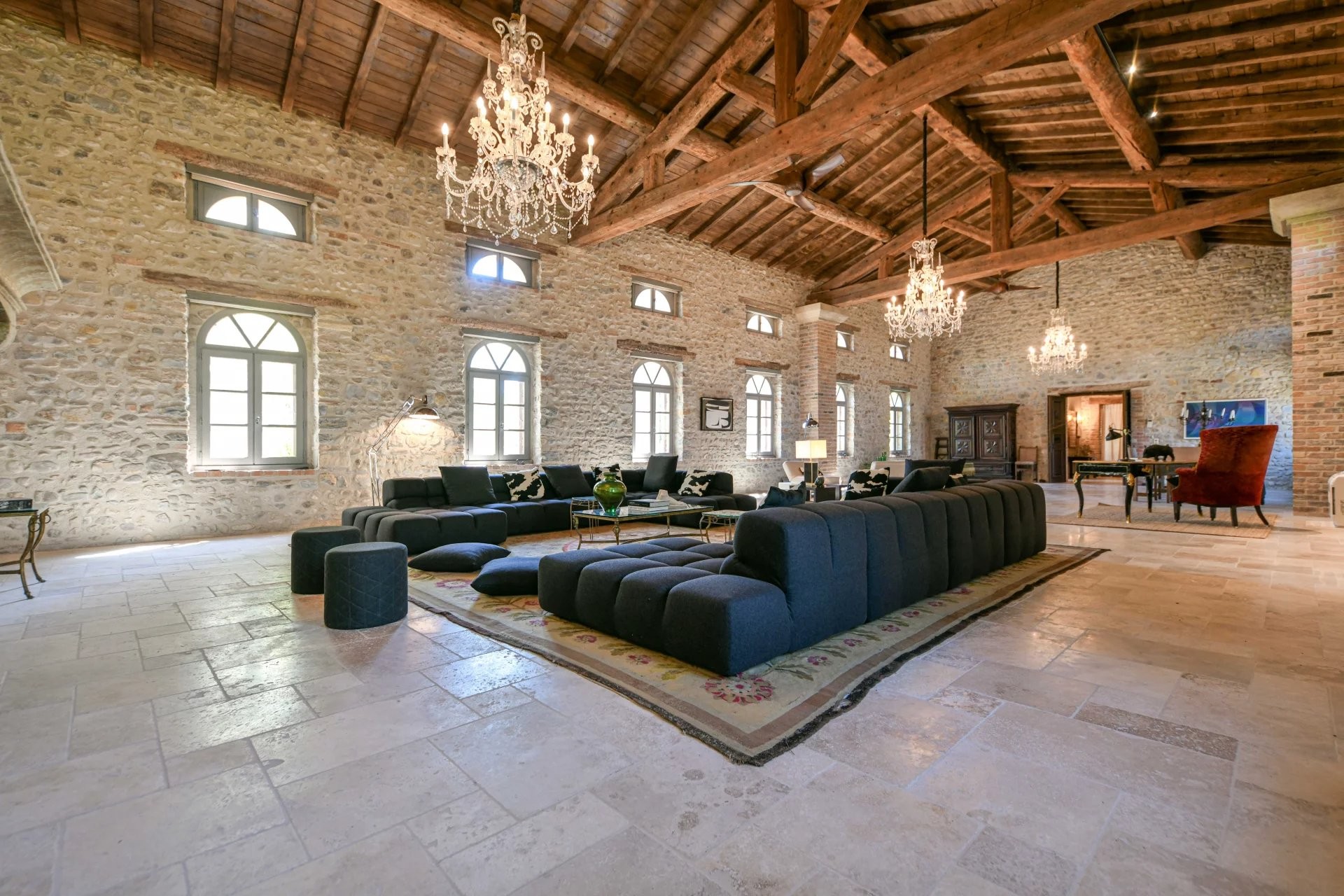
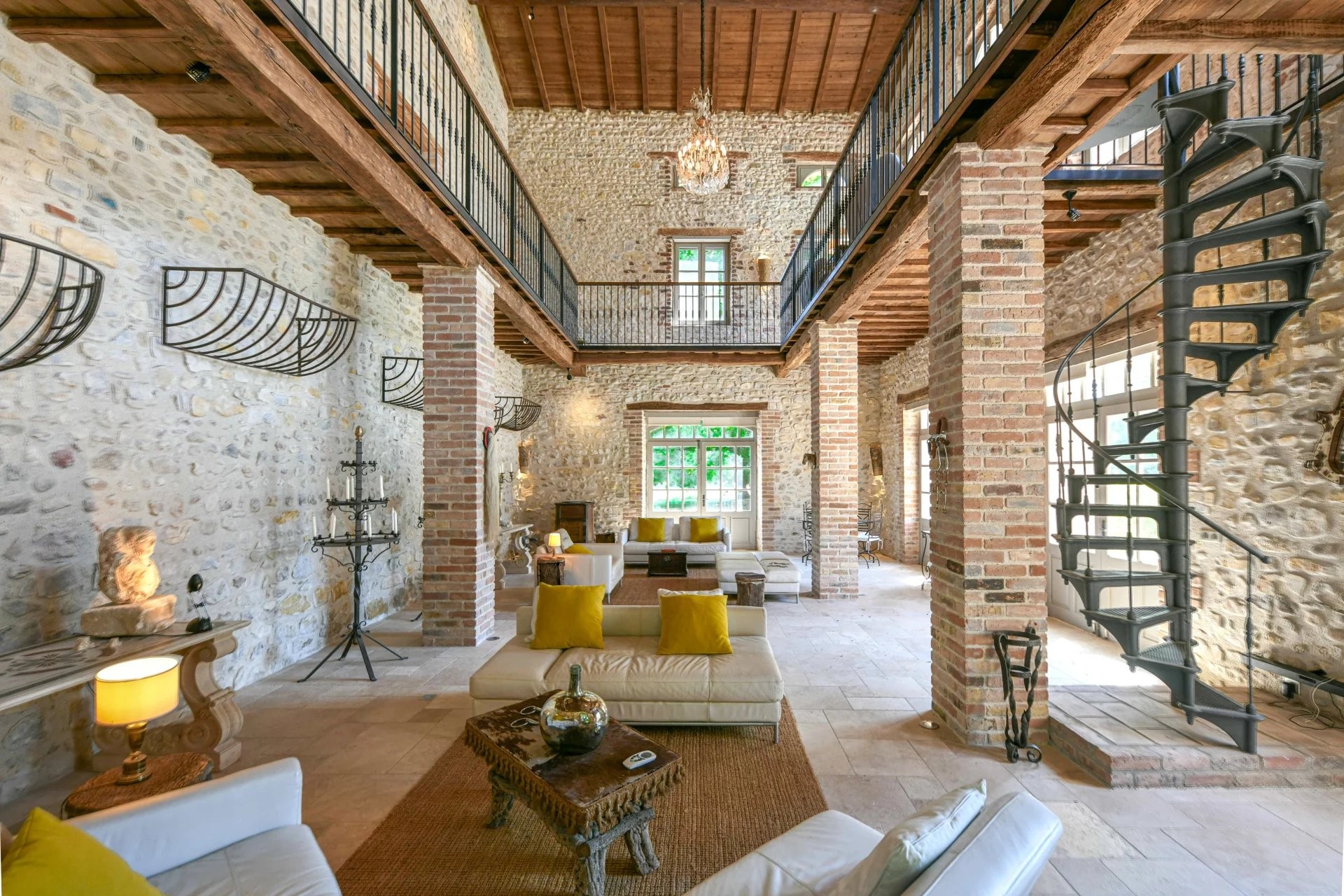
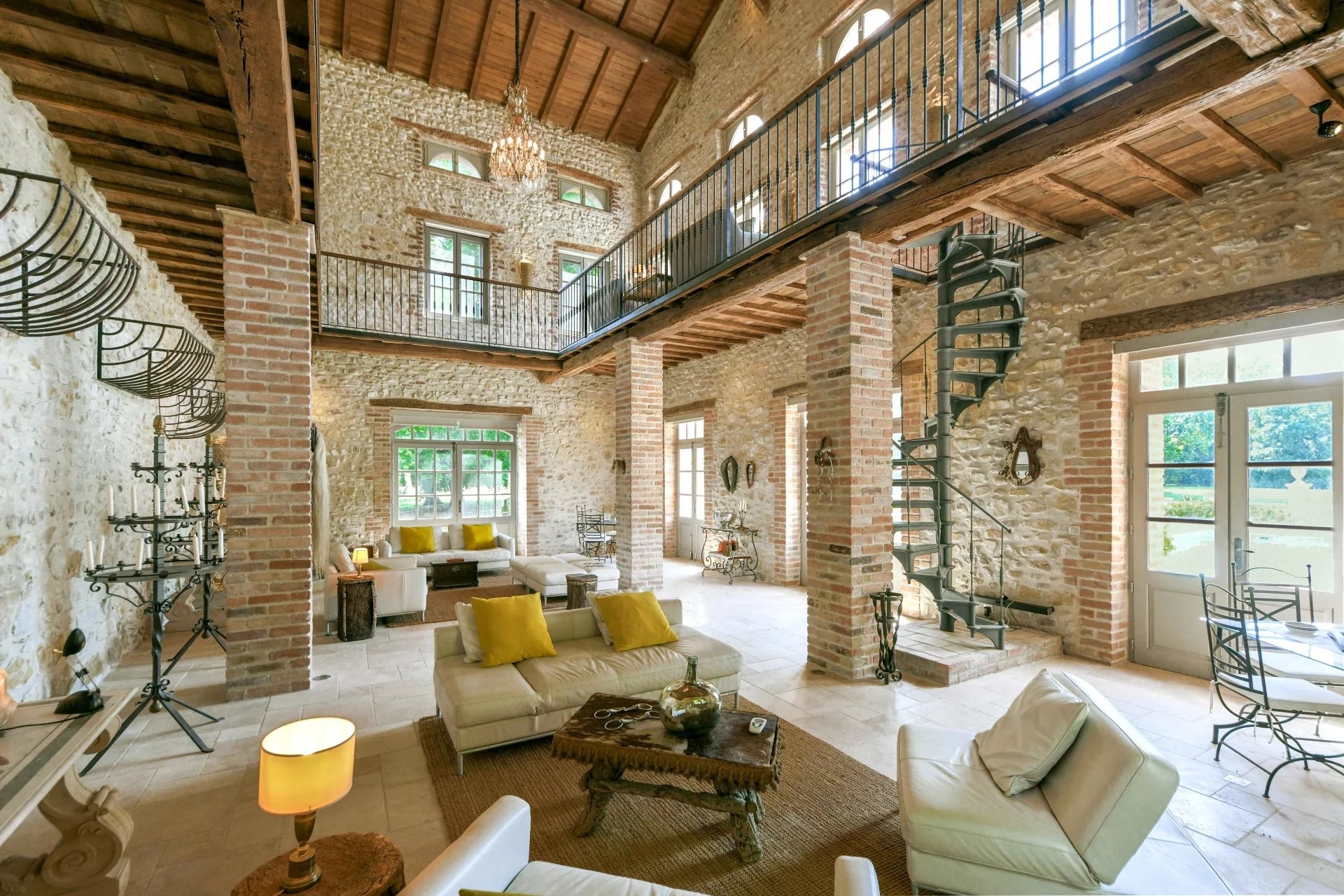
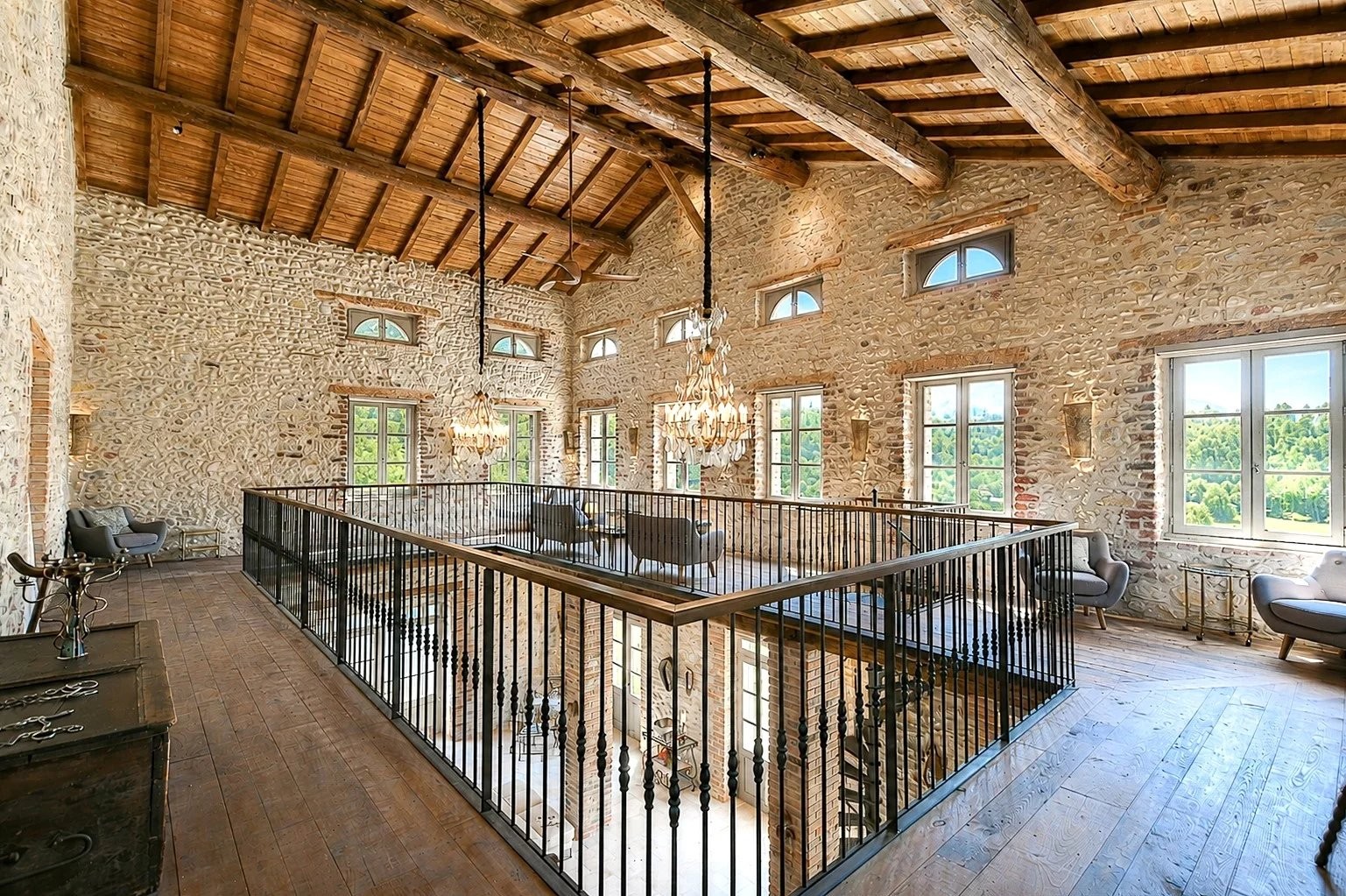
The former farm buildings extend to 19,910 sq ft. They include a former silk mill now used for receptions and events, the orangery and silkworm house, two apartments, a library tower, stables and a historic dovecote. Central heating serves the principal buildings, while the ancillary buildings are air conditioned.
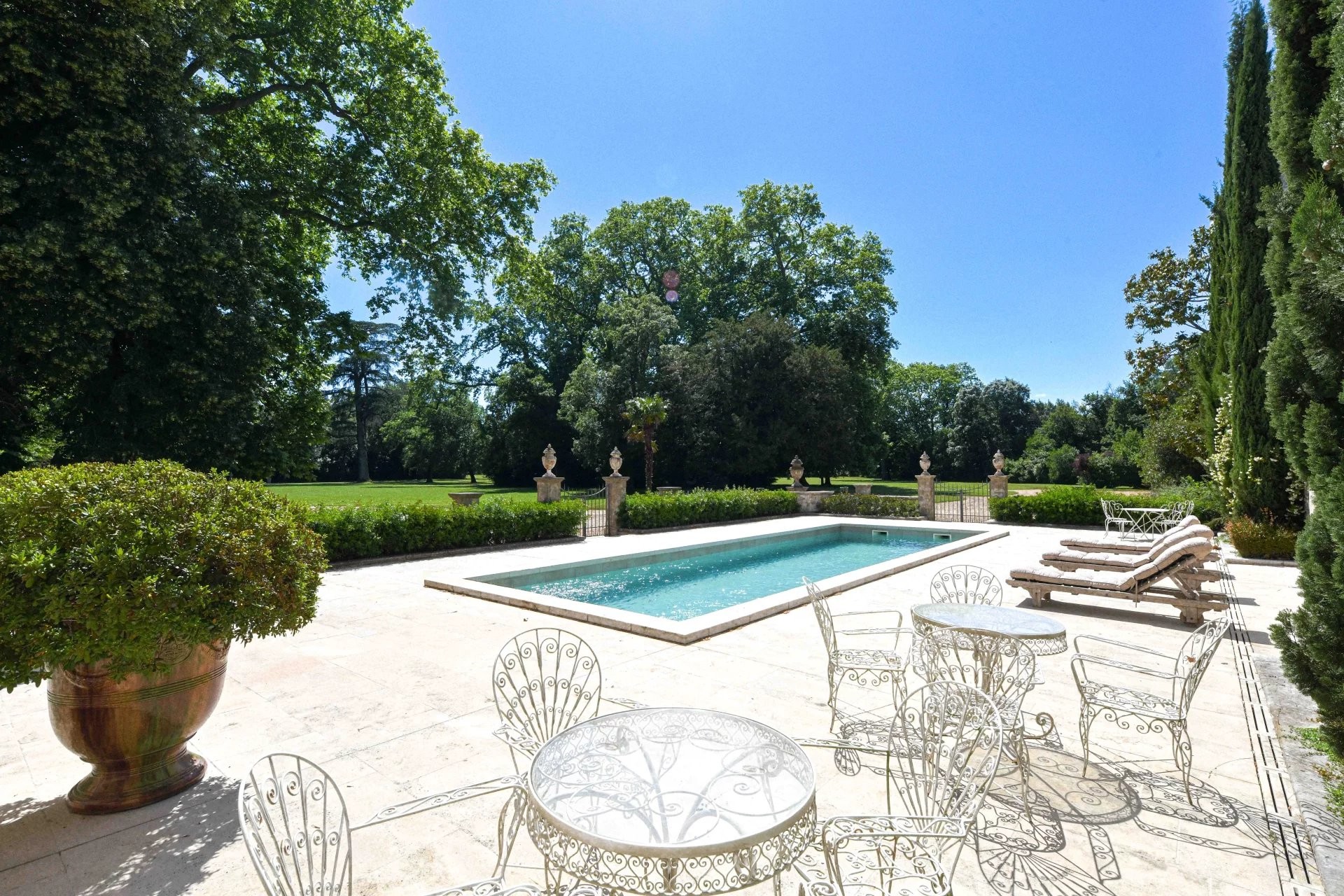
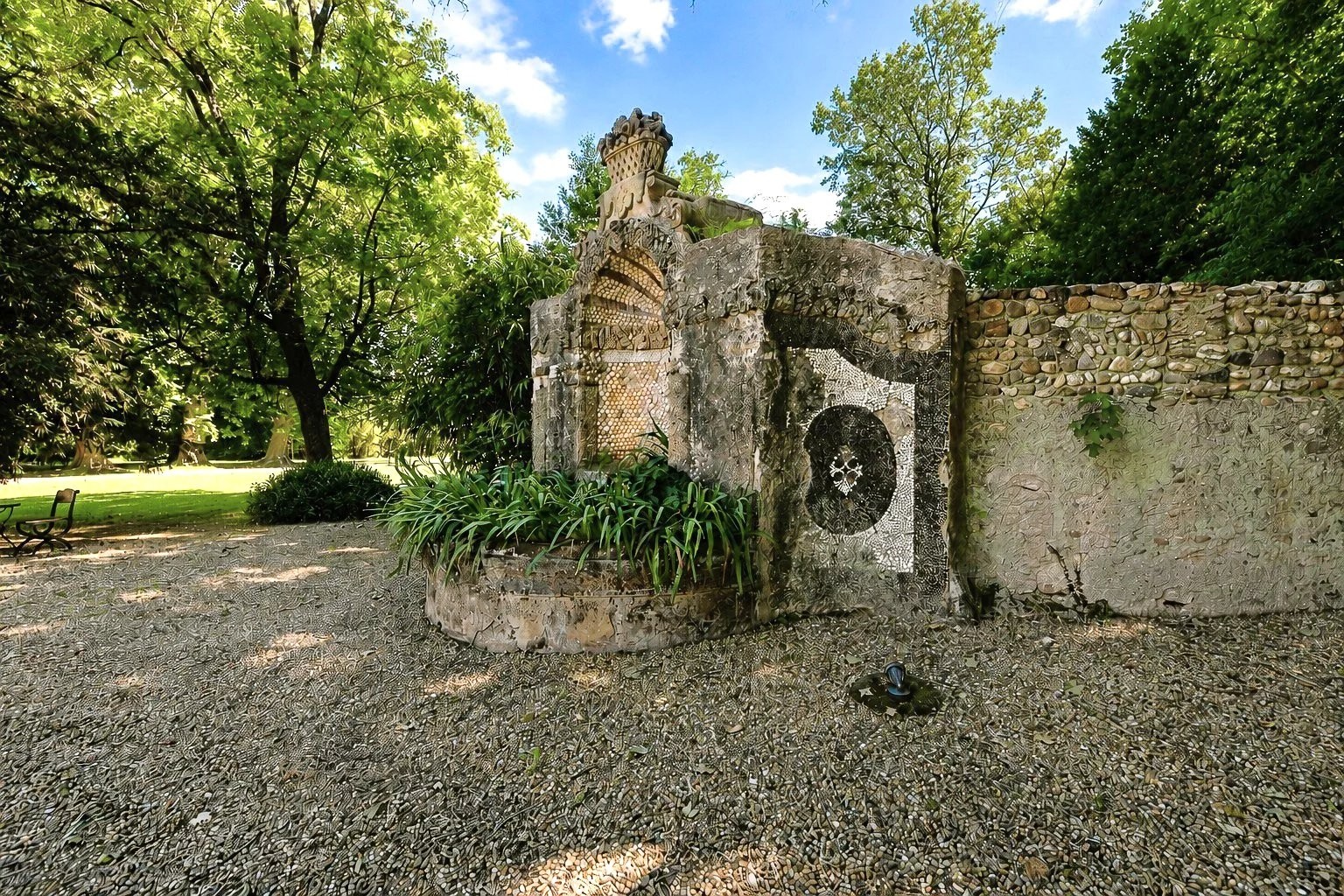
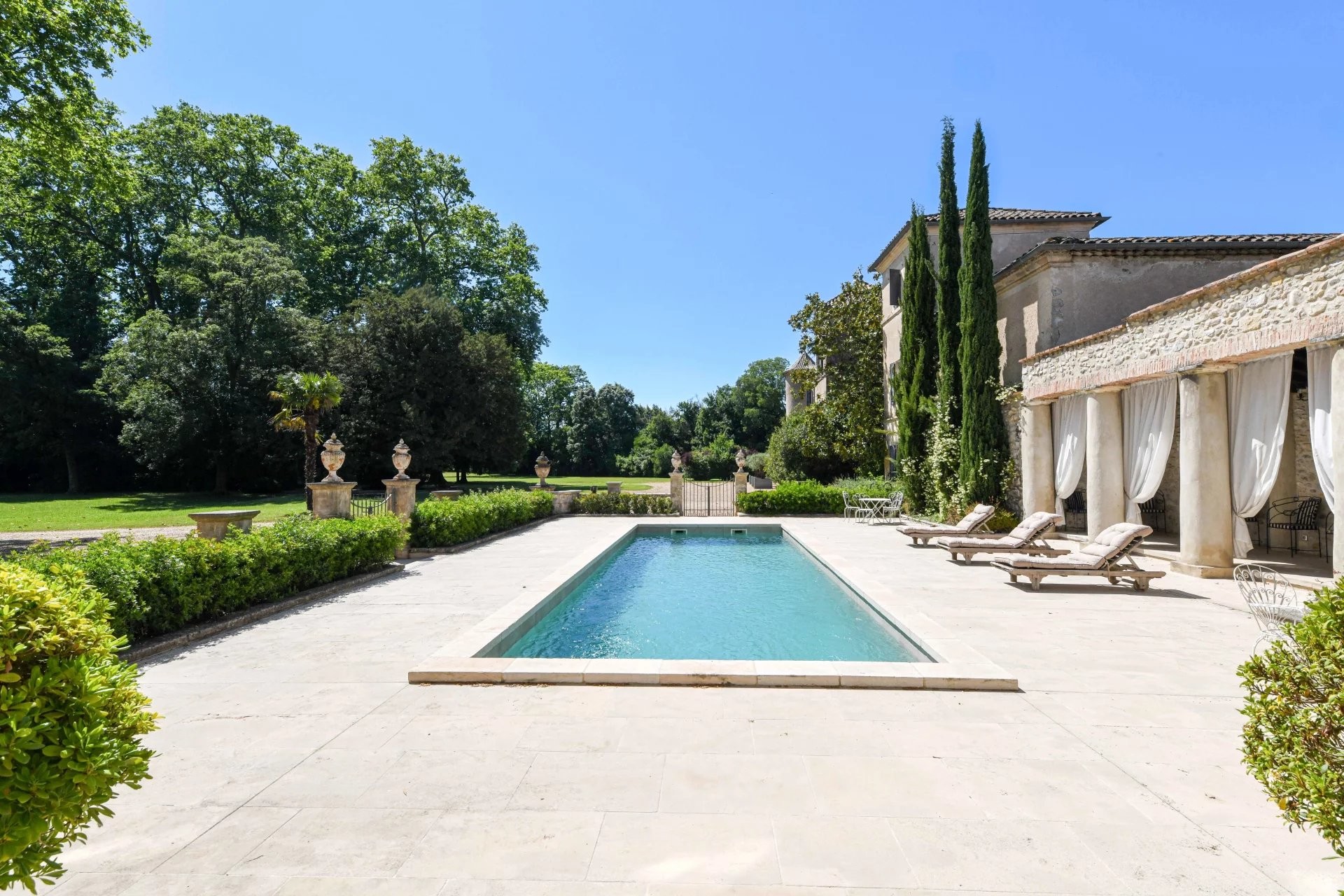
Mature parkland with cedar of Lebanon, ginkgo and bamboo groves surrounds the property. The grounds also contain a kitchen garden, a historic noria, a hydraulic nymphaeum dating from the 17th and 18th centuries and a Palladian-style swimming pool.
Restoration works were carried out by accredited conservation specialists in accordance with heritage requirements. Original materials and architectural details have been retained, while building services and infrastructure have been updated for contemporary use.
Additional language profiles