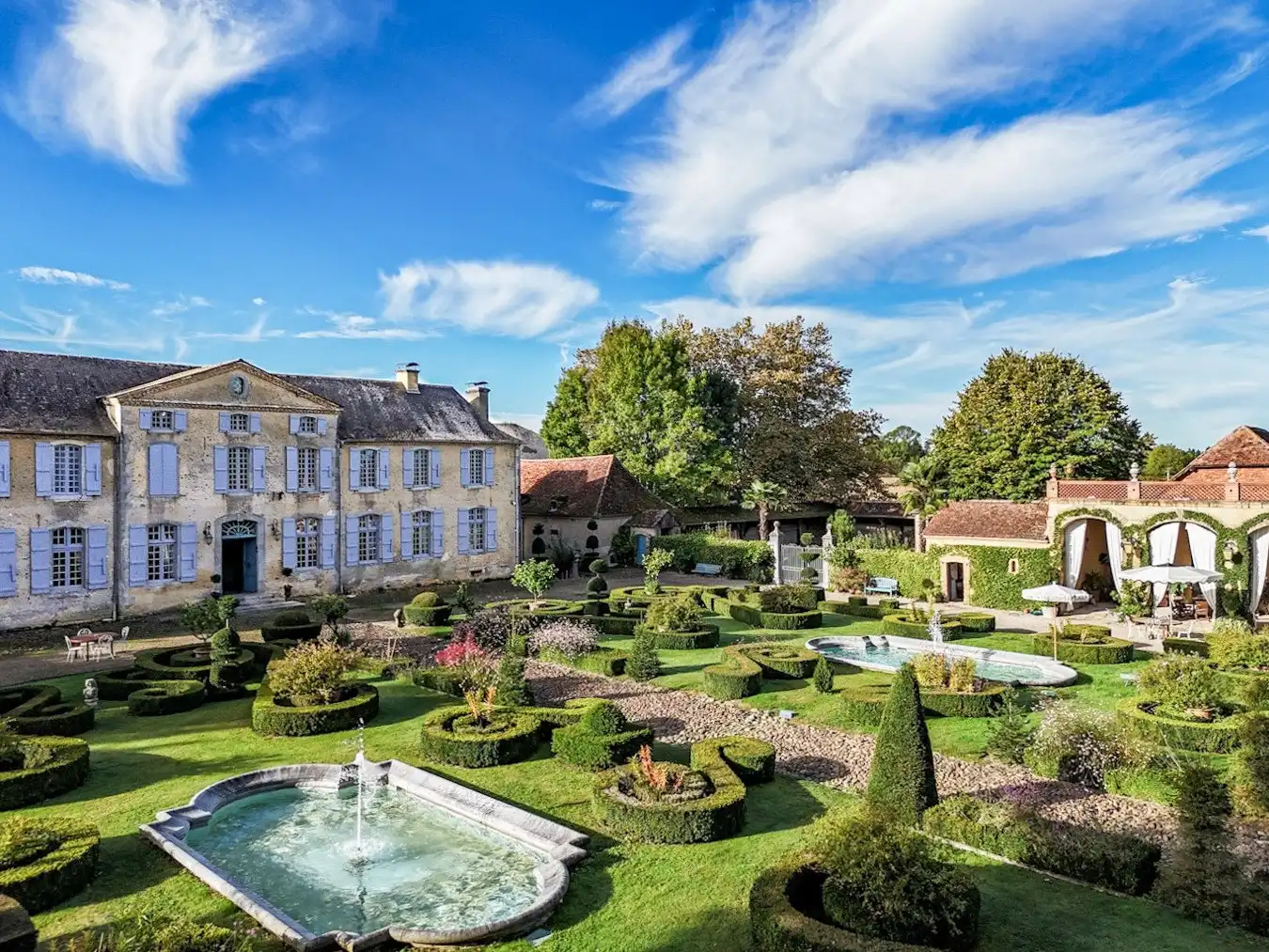
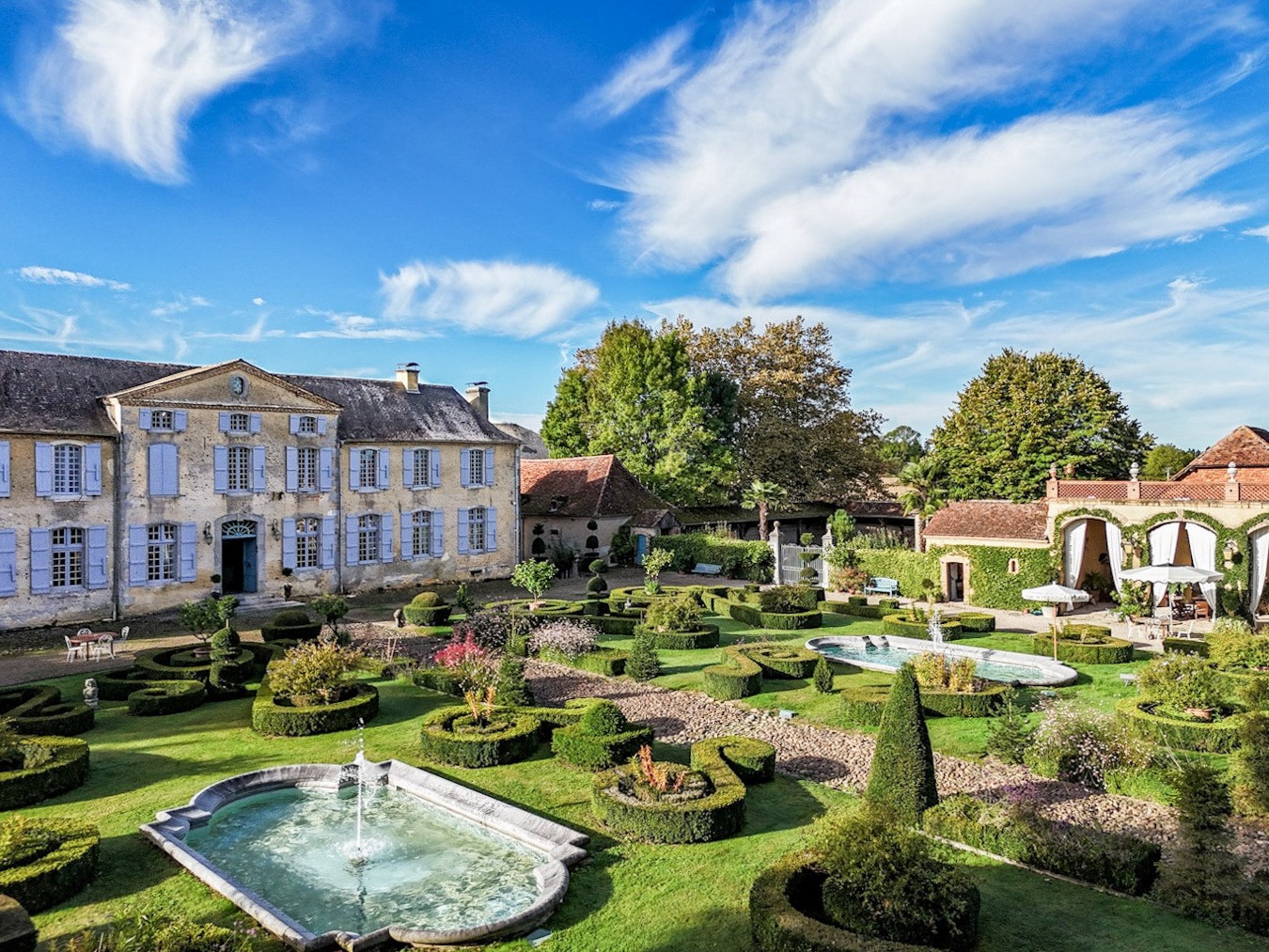
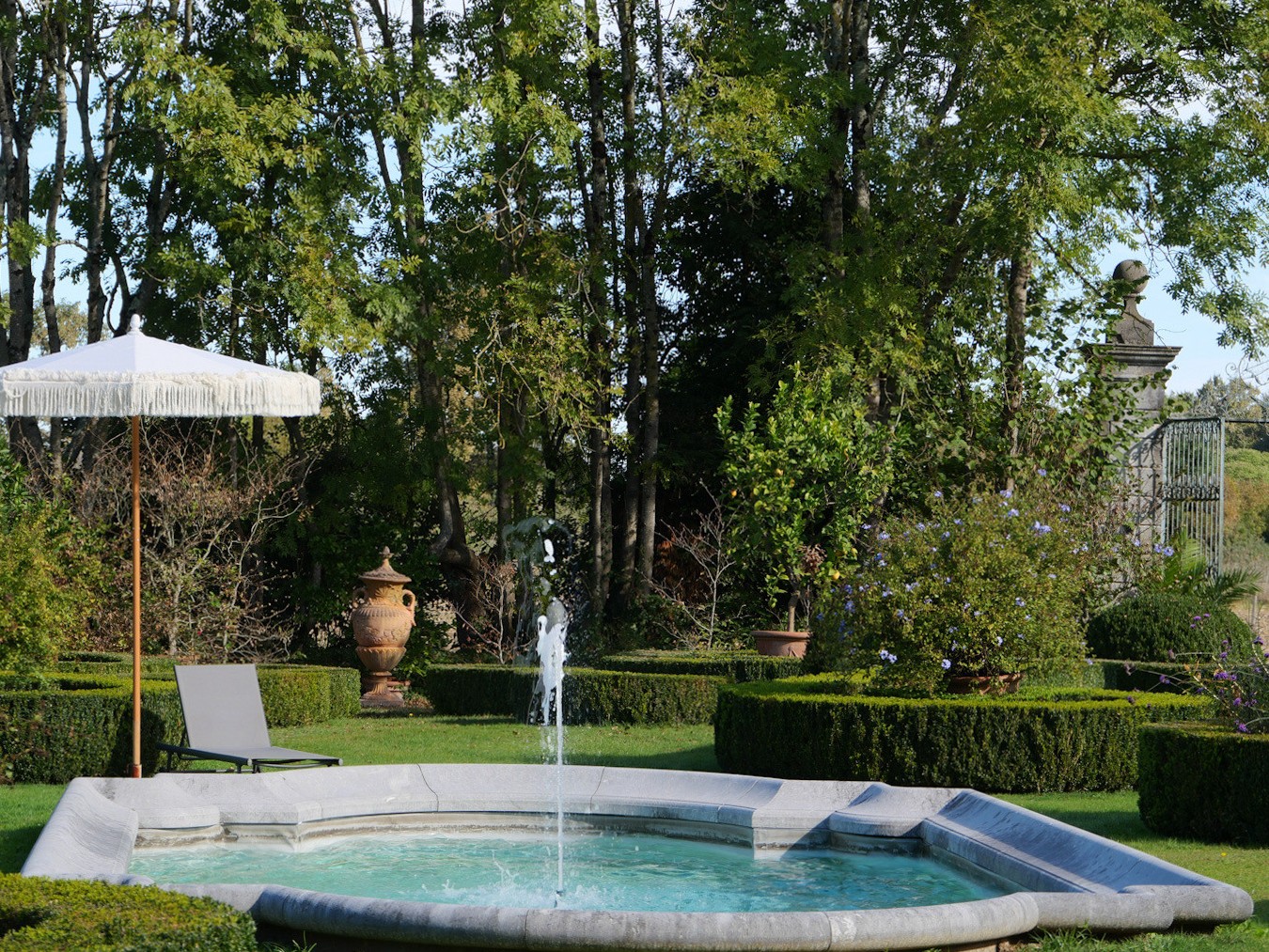
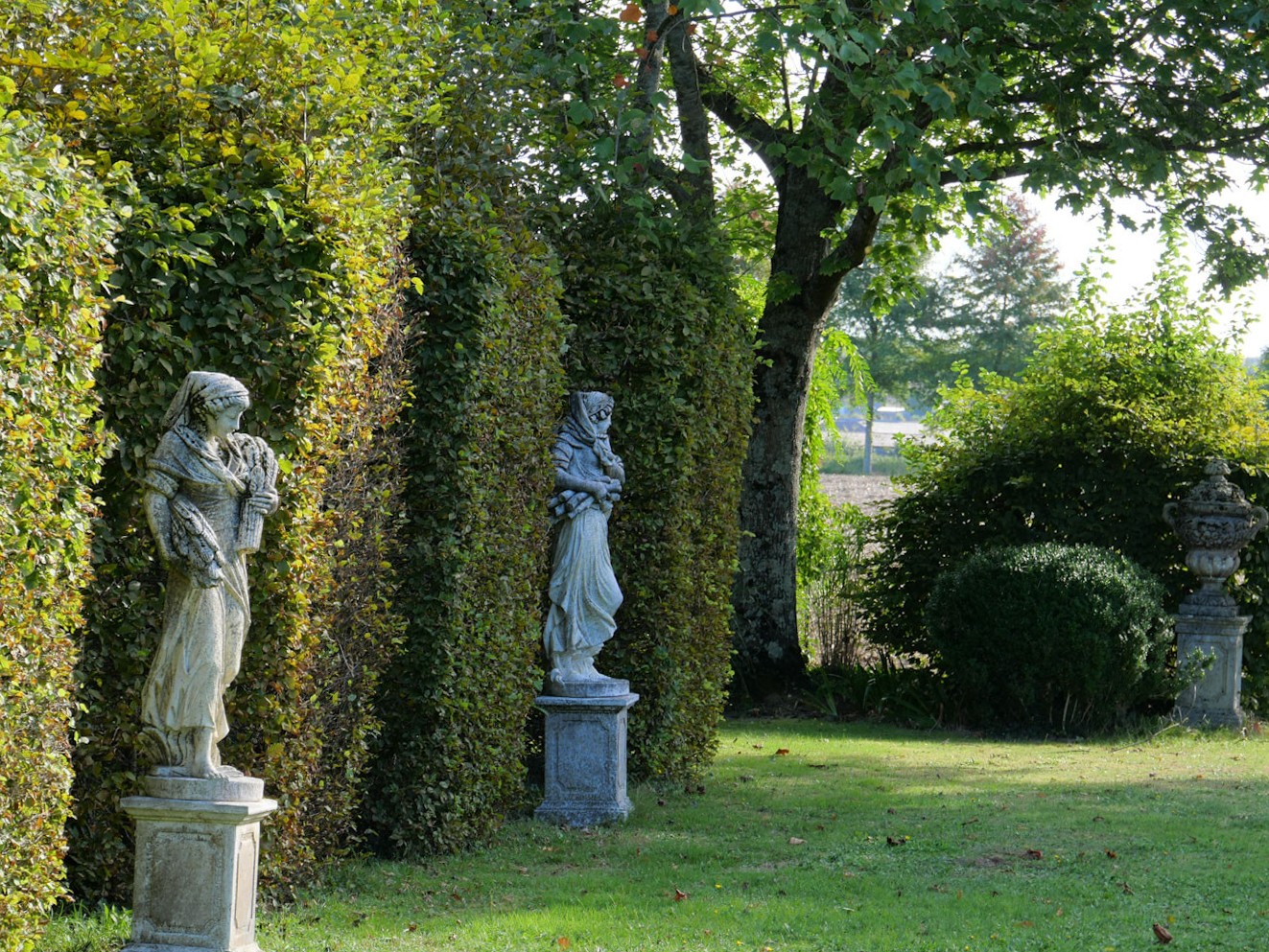
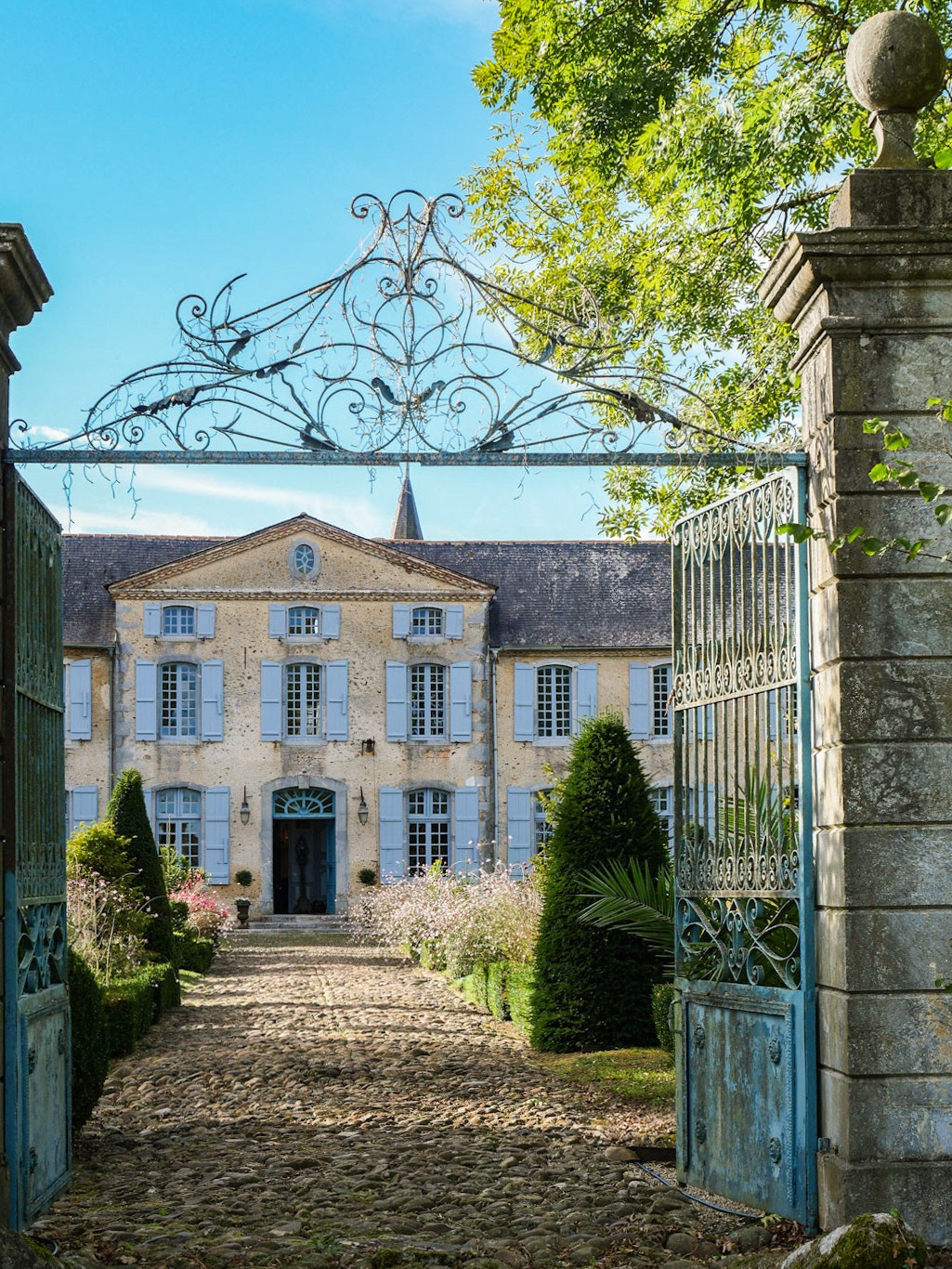
This elegant 18th-century château, restored over the past 25 years with exceptional taste by a passionate aesthete, combines classical symmetry with authentic period décor. Nestled at the foot of the Pyrenees, it is surrounded by meticulously designed gardens featuring boxwood parterres, topiary, a labyrinth, and a green theater.
Architecture and Interior
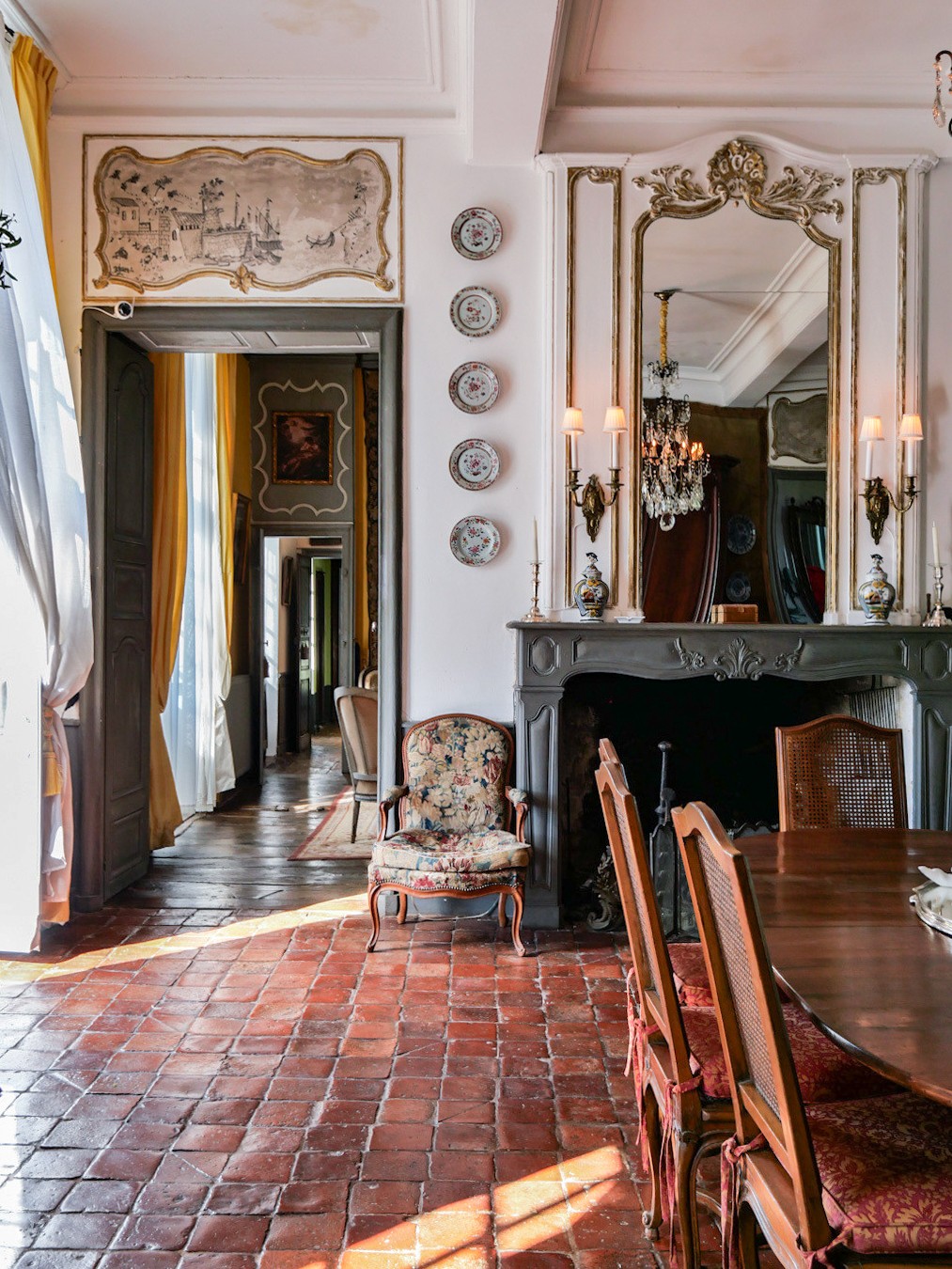
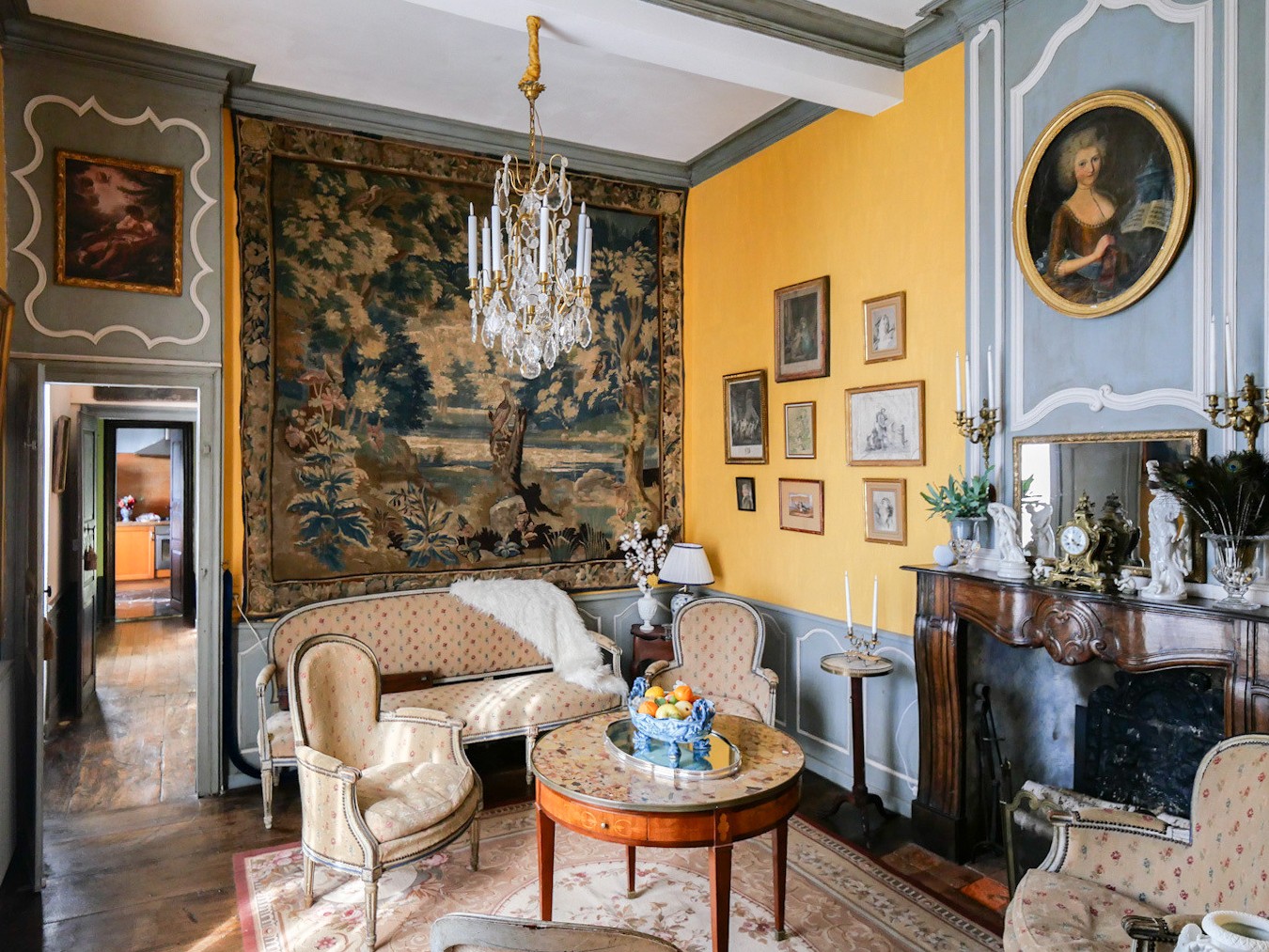
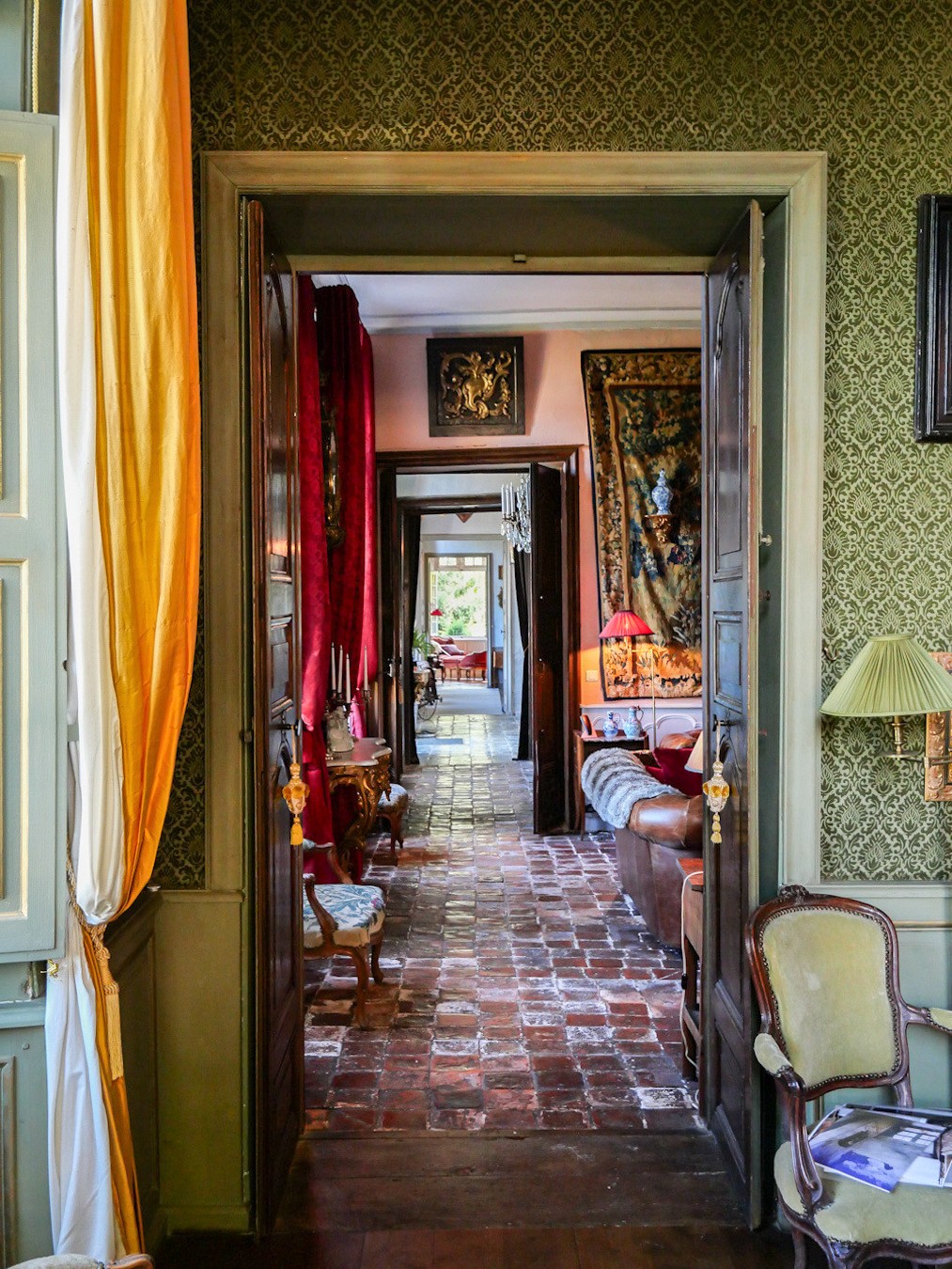
Built around 1750, the château has survived in remarkable authenticity, preserving its original wooden floors, stone and terracotta tiles, woodwork, fireplaces, wainscoting, overmantel mirrors, and double doors. Its balanced, human-scale architecture is bathed in natural light, reflecting the refined art of 18th-century country living.
On the ground floor, a series of interconnected salons welcomes visitors. A central "calade"-paved walkway winds through boxwood parterres and topiary, leading to the grand steps of the central section and the entrance hall with its stone floor. From here, light-filled reception rooms unfold, including a south-facing dining room overlooking the village and a boxwood parterre separated by a moat. The château also houses a wood-paneled dining room adjoining the kitchen, an alcove bedroom in 18th-century style, an Empire-style library, a study with painted wood paneling resembling marble, and a grand staircase with a carved wooden banister.
The first floor features a large hall leading to eight bedrooms, most adorned with hand-cut, museum-quality wallpaper, fireplaces, overmantel mirrors, and wood-paneled closets. Two bathrooms, including one with marble flooring and an early 20th-century vanity, serve the upper level. A large living room connects to the kitchen via a service staircase. Extensive cellars include a grand château kitchen.
Outbuildings and Chapel
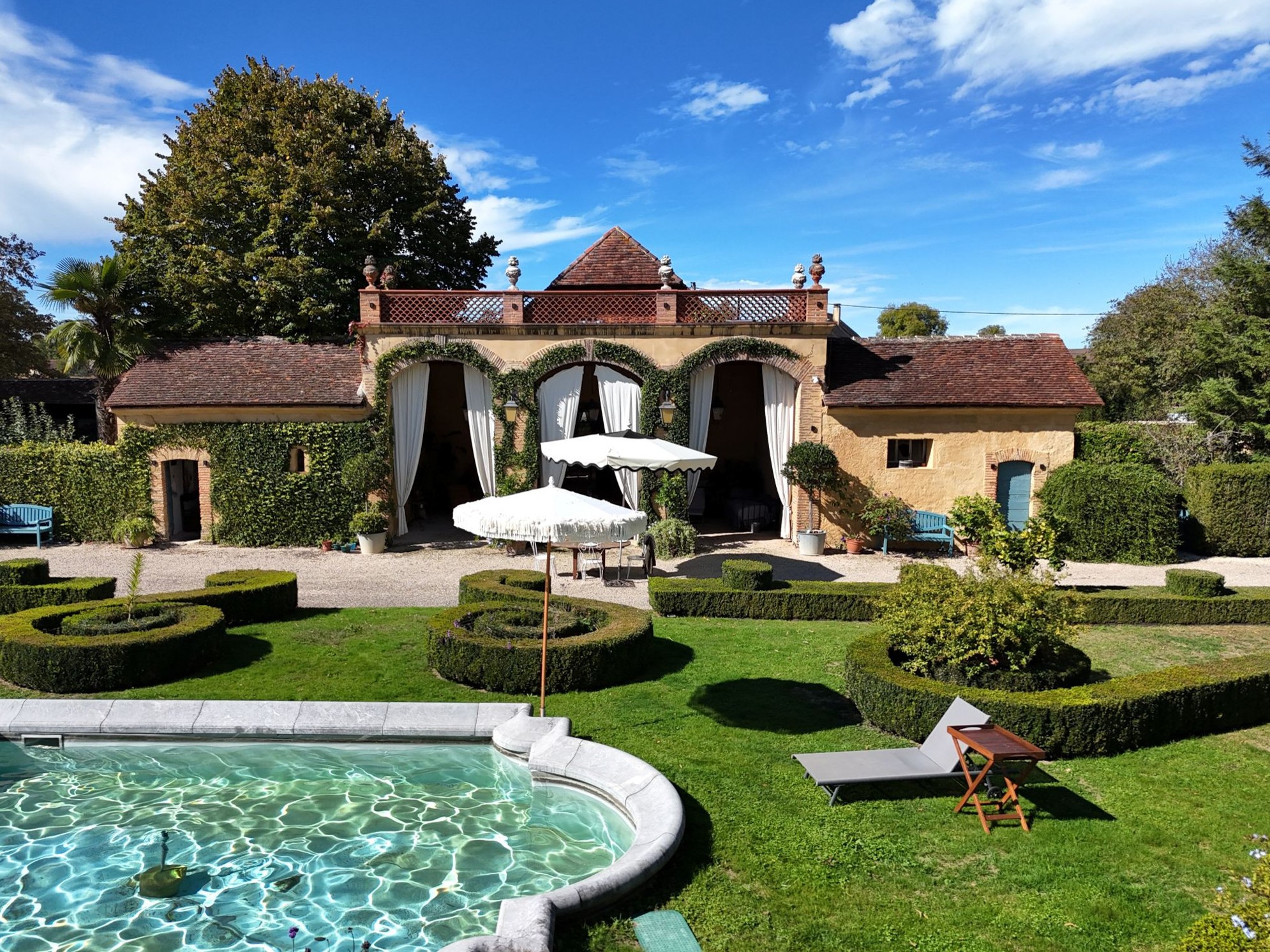
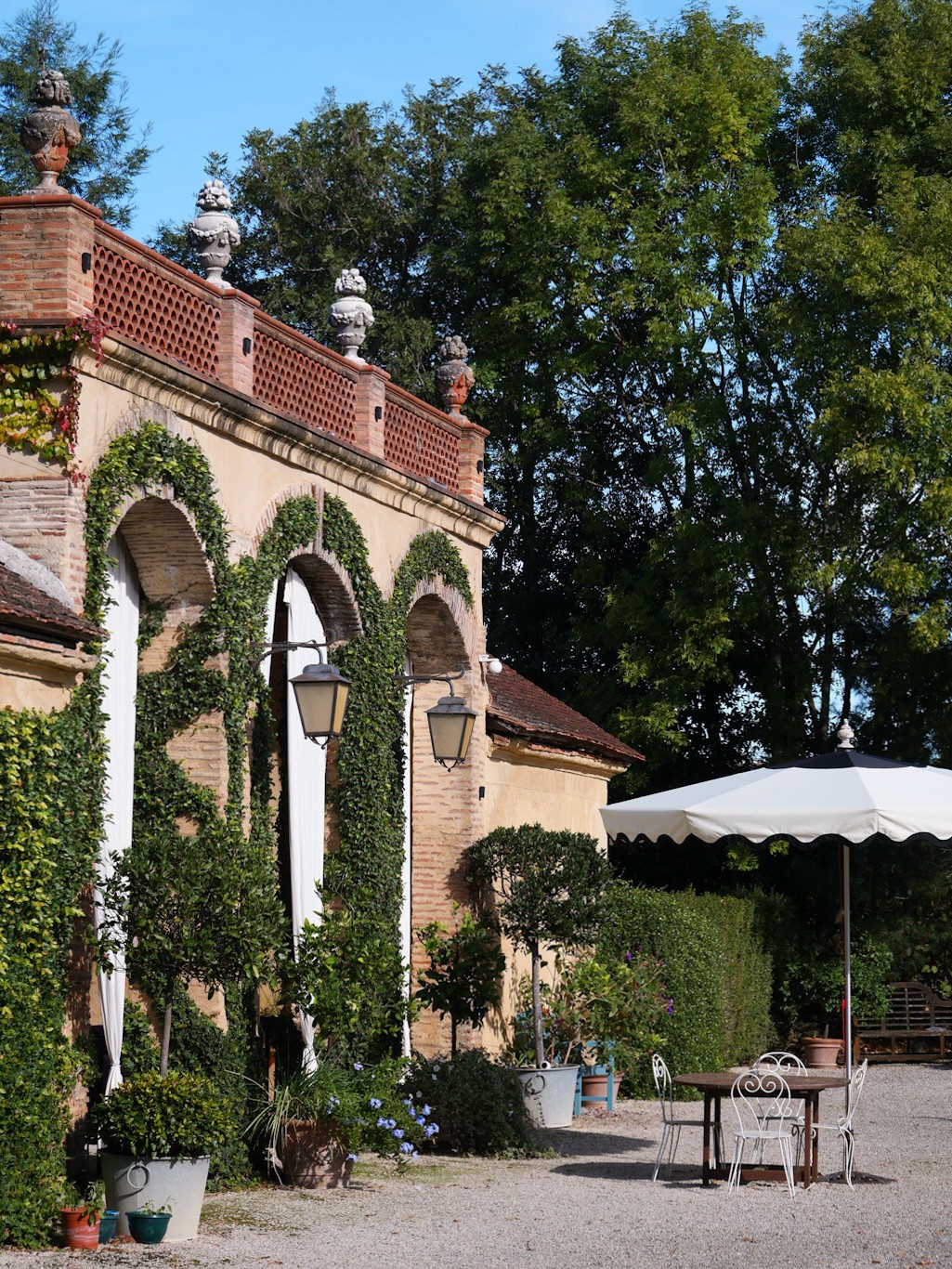
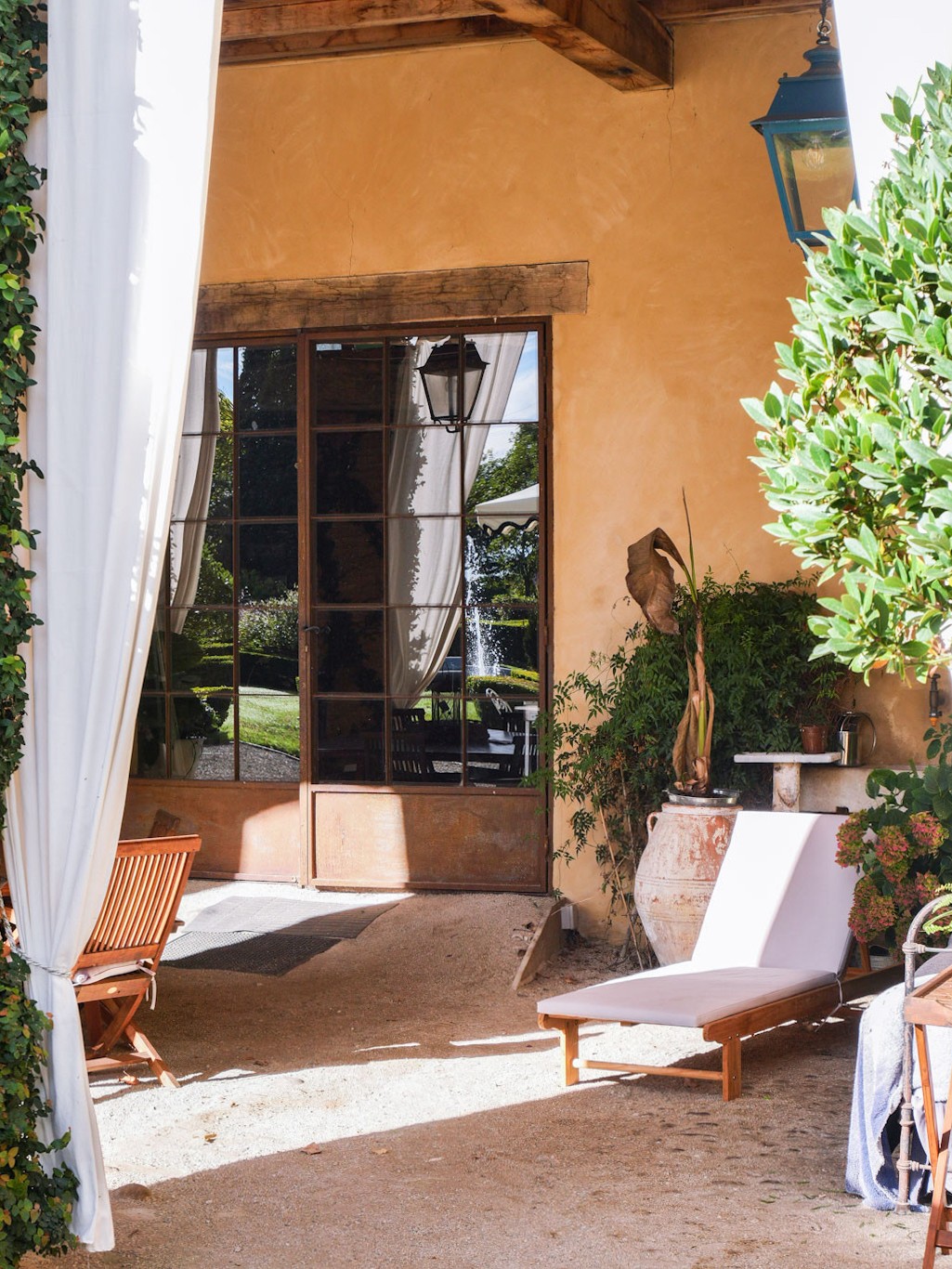
The estate includes a monumental orangery with three south-facing arches, a barn converted into an event space with a stainless steel kitchen, and a charming farmyard bordered by a henhouse and a covered area with elegant wooden columns. A discreet chapel beneath a starry blue vault features a remarkable 17th-century polychrome altarpiece. Nearby, former kitchens with terracotta floors, exposed beams, and fireplaces, along with a large attic, offer potential for conversion.
Gardens and Grounds
The gardens, planted 20 years ago, have reached full maturity and display exceptional quality. Refined boxwood parterres and topiary face the château, while a terrace adorned with parterres overlooks the village. Across a small bridge over the former moat, a romantic streamside garden and an open-air theater with semicircular seating unfold around a pond lined with schist. Monumental yew pilasters, hornbeam and beech hedges, and a green labyrinth of beech hedges bring architectural grandeur to the grounds. Sculpted vistas and a swimming pool integrated into ornamental ponds complete this landscaped masterpiece. The château has three entrances with 18th-century pillars and gates, and a plot outside the grounds can be used for parking.
Technical Features and Location
The château is a listed historical monument, with oil-fired central heating covering three-quarters of the property. Two wells and an irrigation pump ensure water supply. Annual property tax amounts to €549. The château is located 143 km from Biarritz, 30 km from Lourdes International Airport, 26 km from Pau International Airport, and 20 km from Tarbes International Airport.
Price
€1,608,000 agency fees included (payable by the seller). Information on property risks is available at www.georisques.gouv.fr.