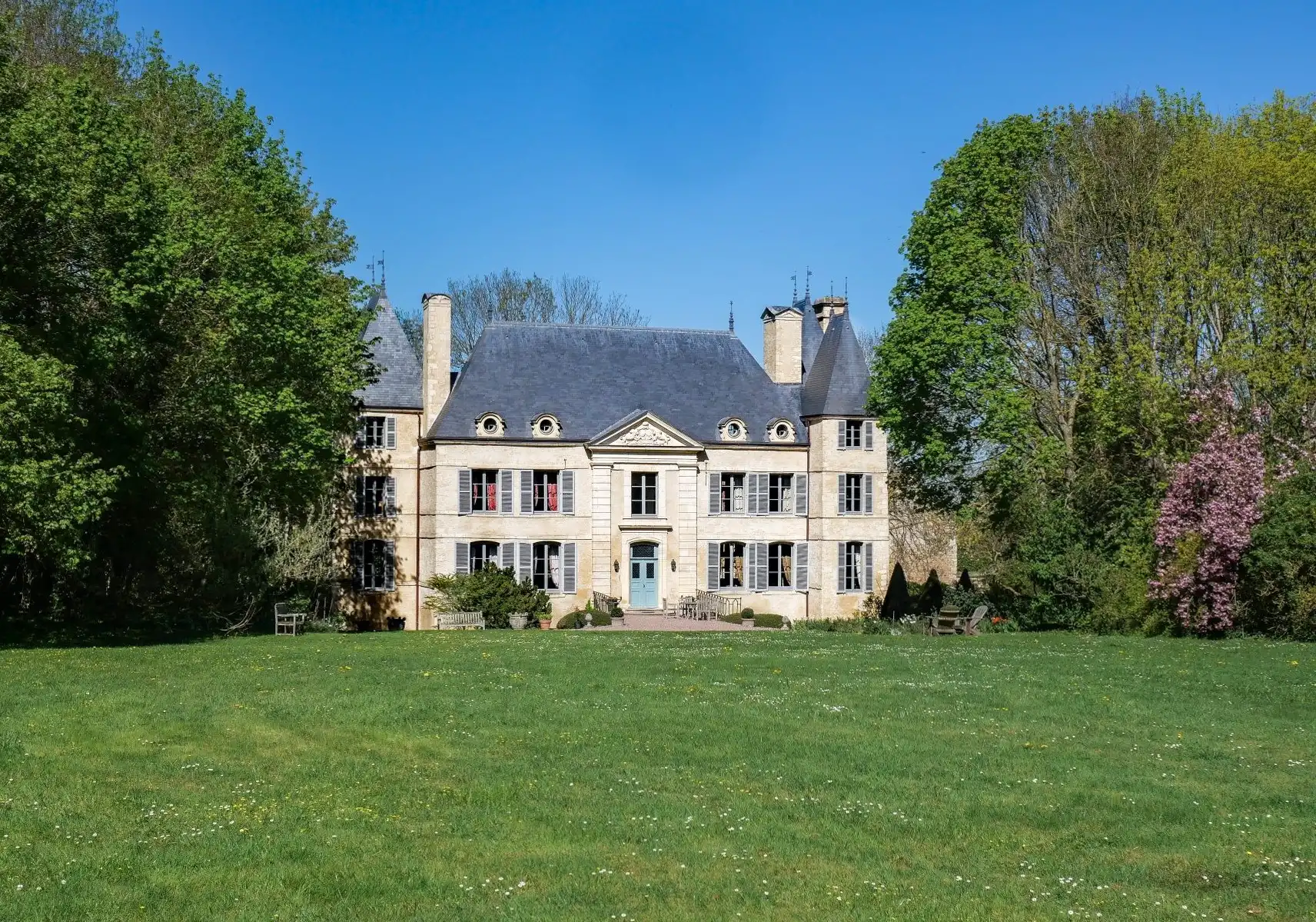
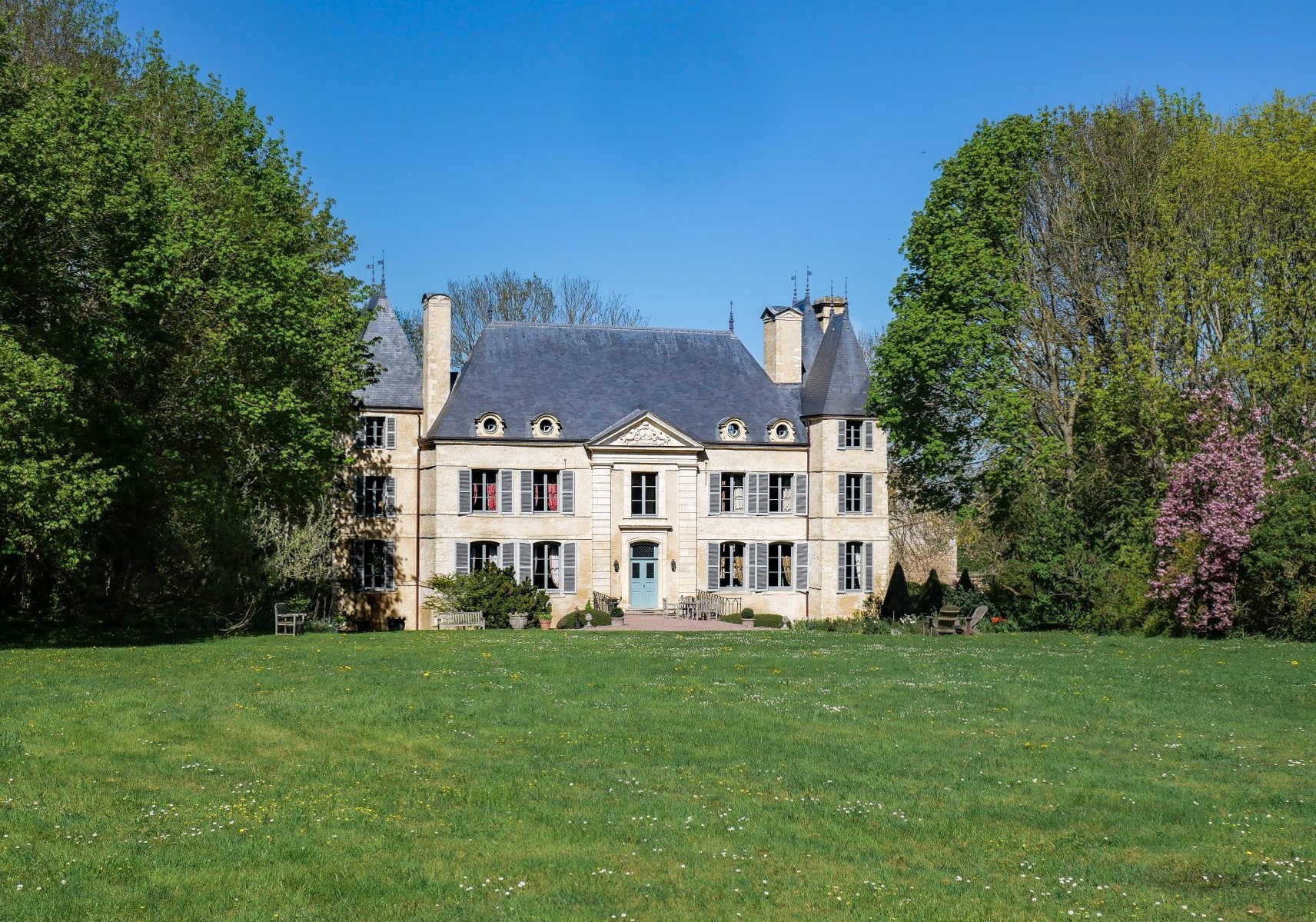
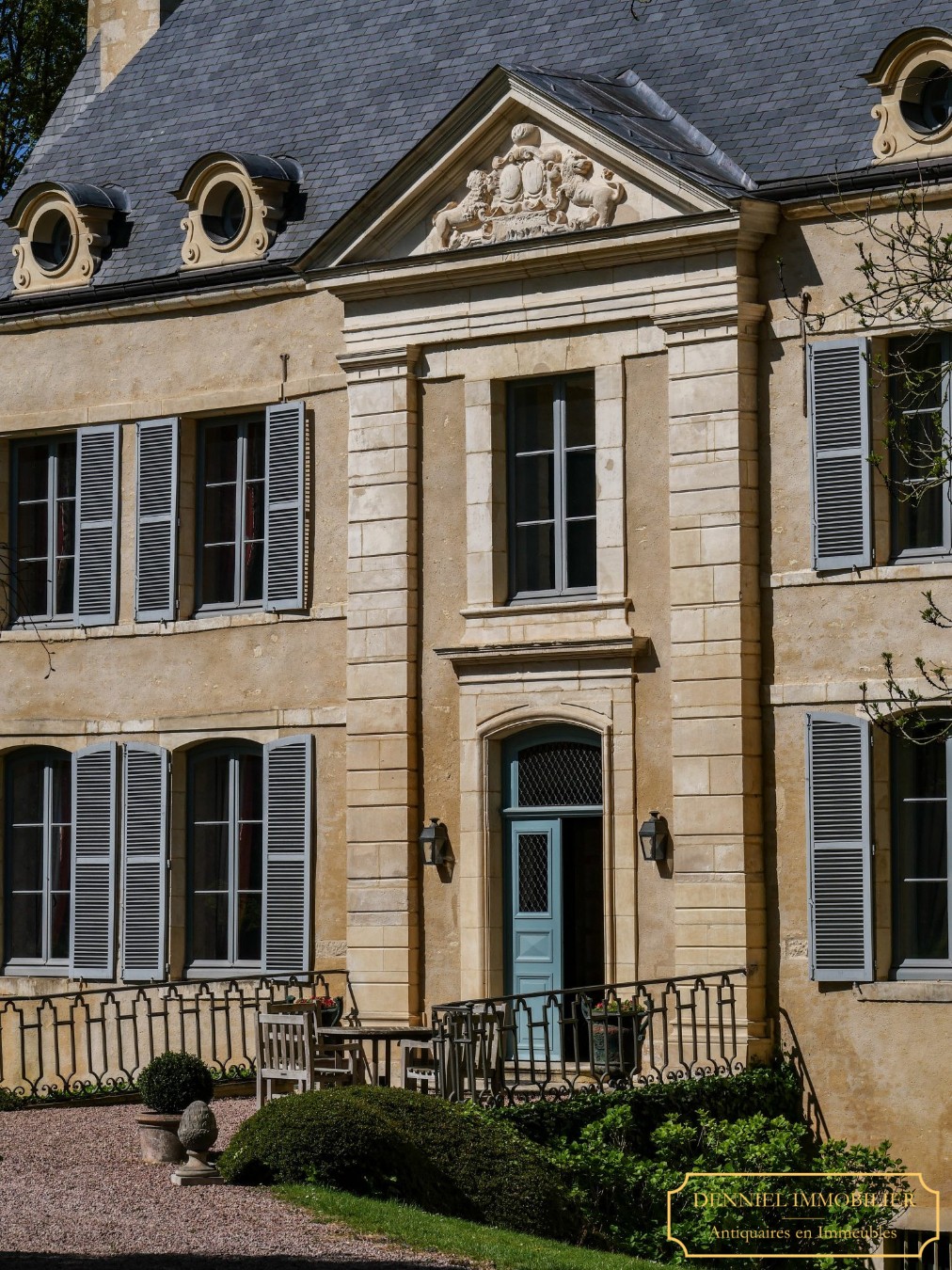
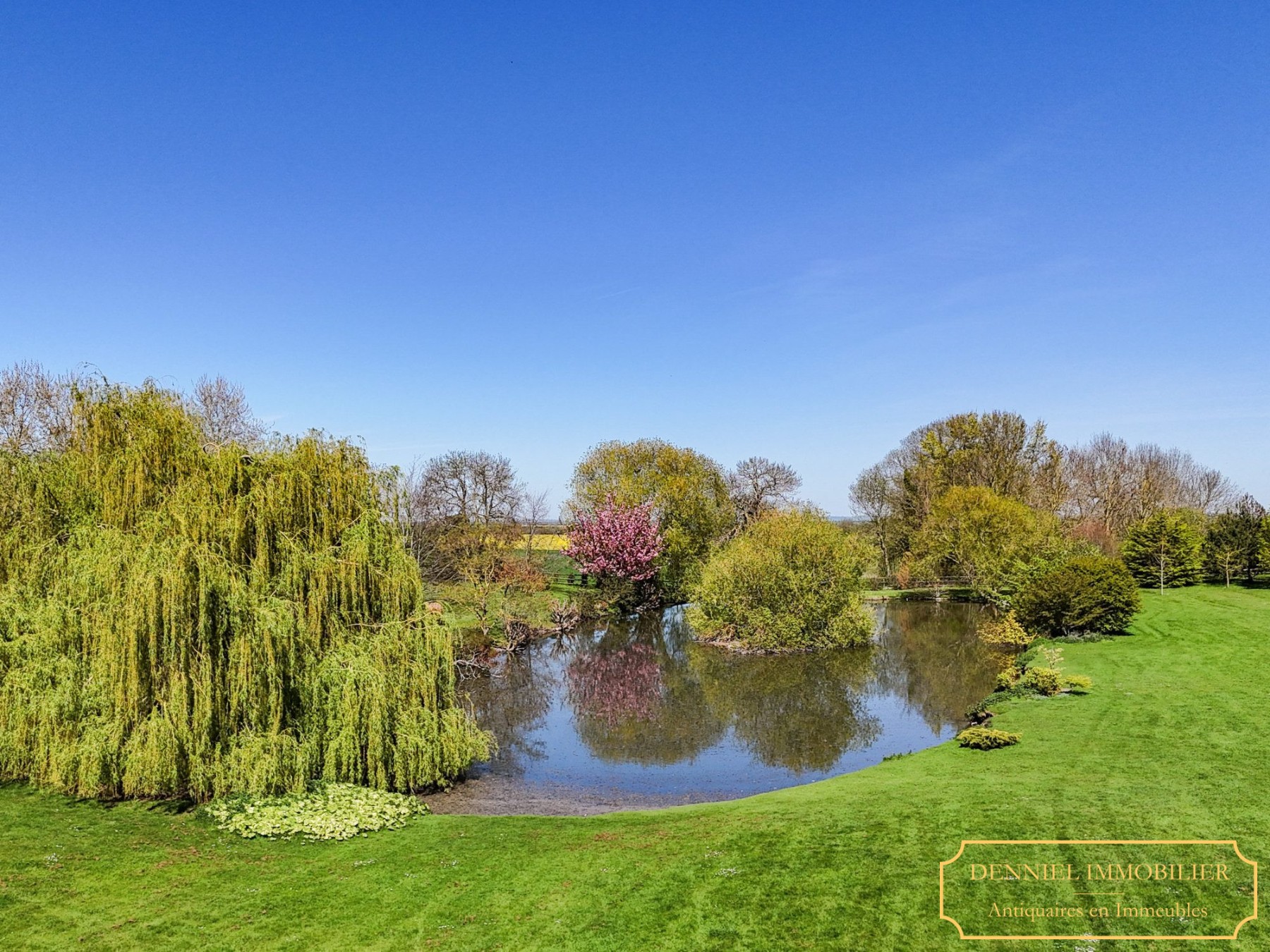
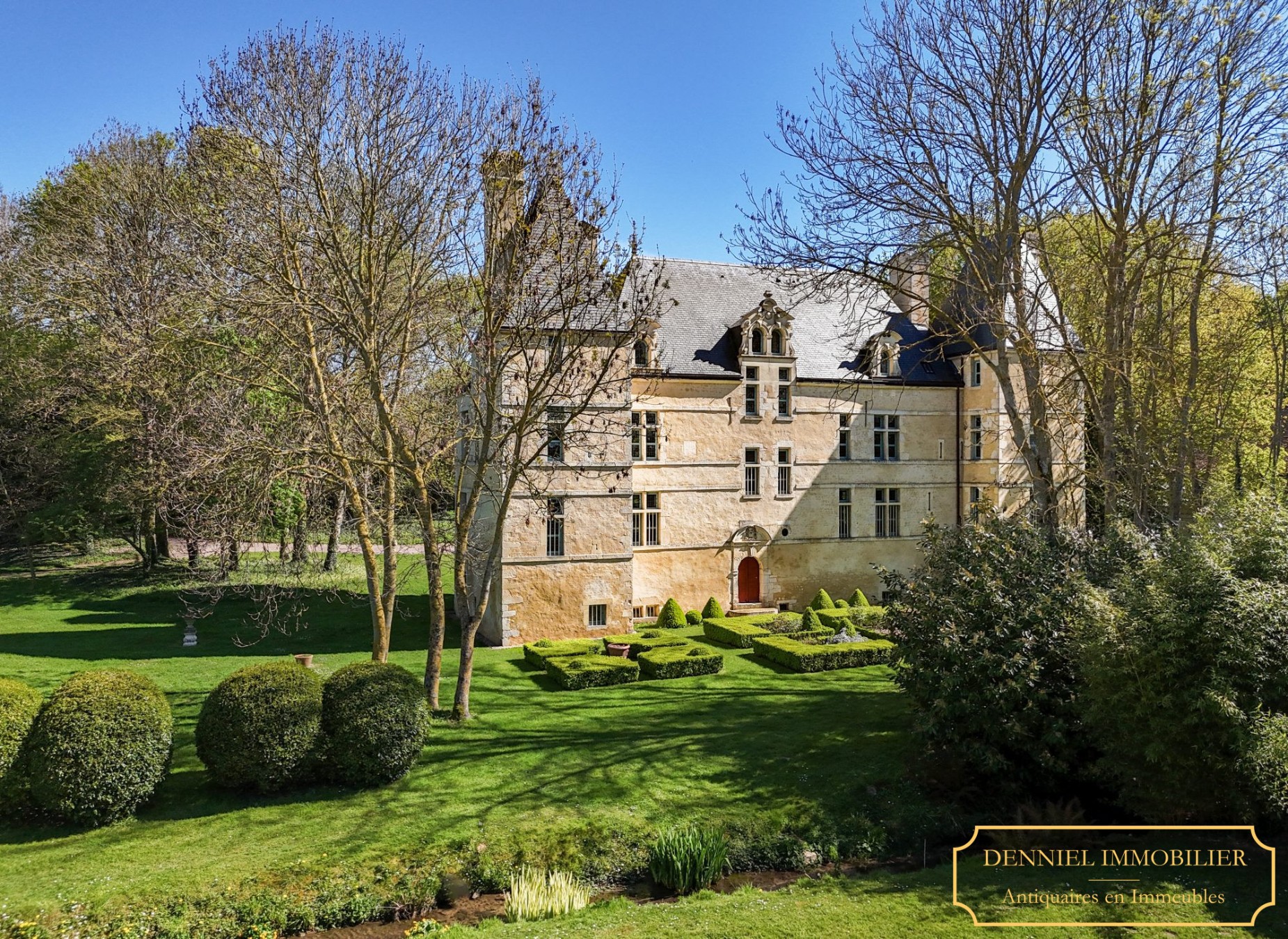
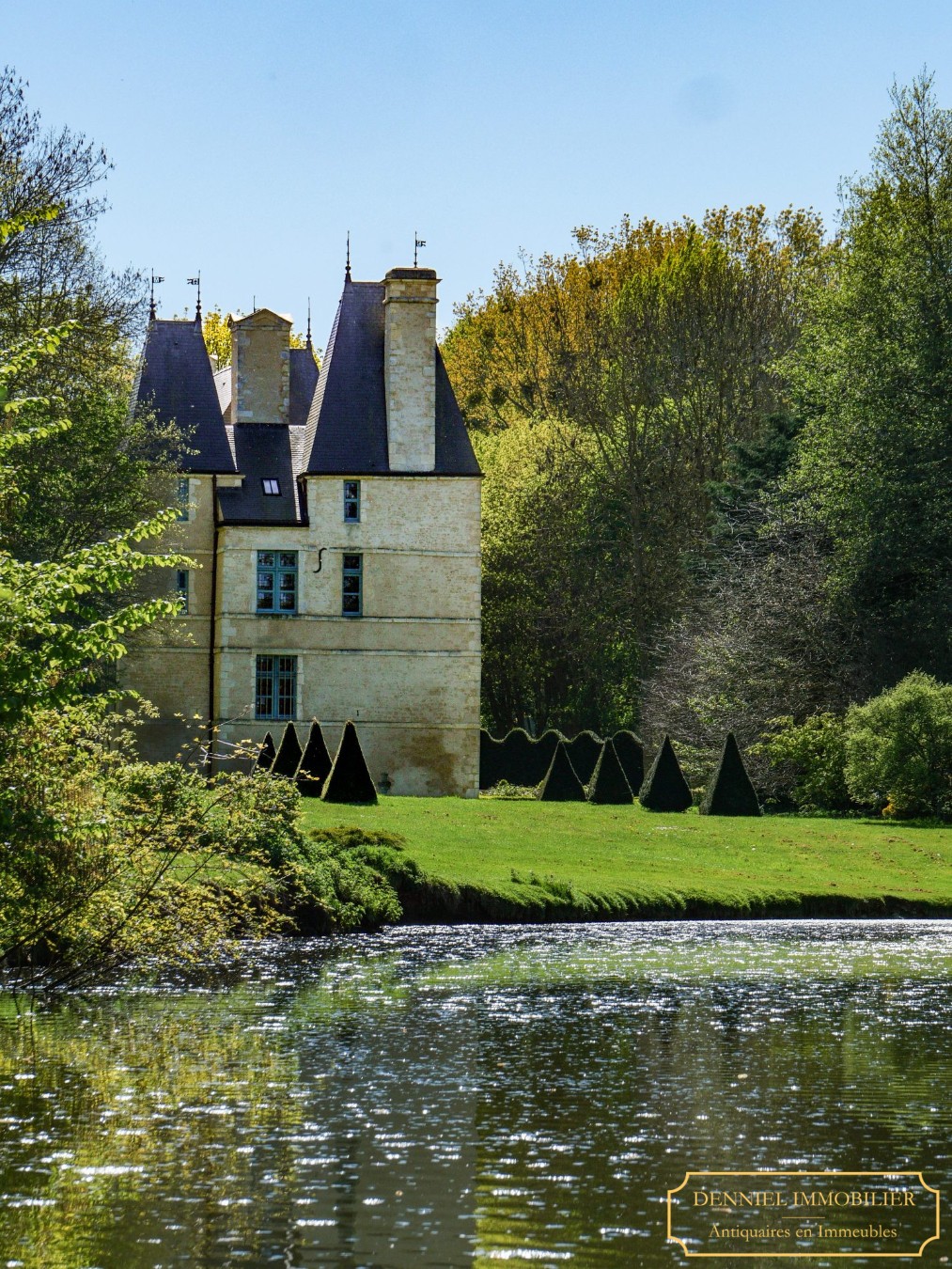
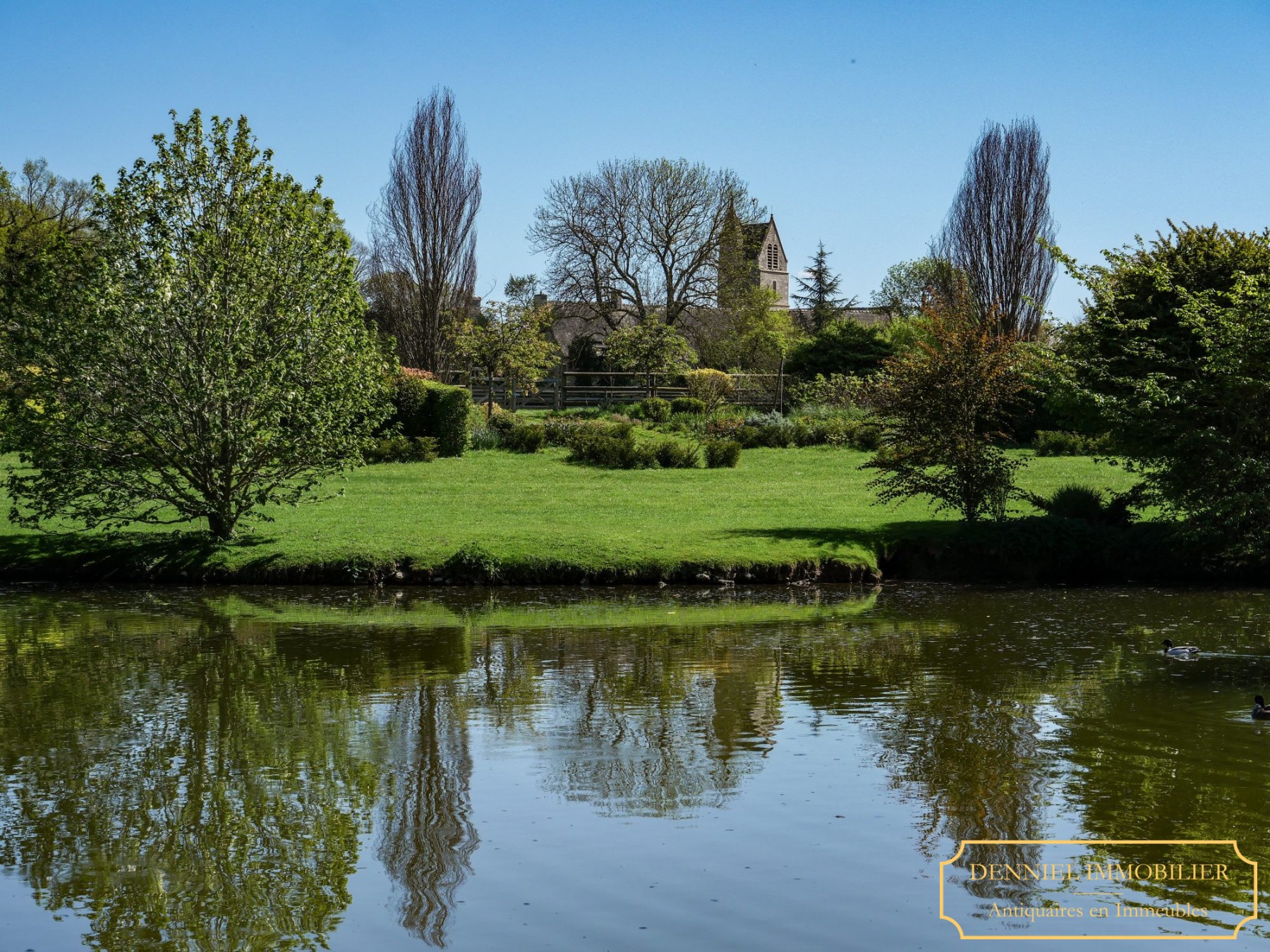
Built in 1614, this Henri IV-style château is located approximately 200 kilometres from Paris, near Caen in Normandy. The historic property is listed (Inscrit MH) and underwent comprehensive restoration to modern standards between 2012 and 2024. In the 18th century, a symmetrical classical façade with a coat-of-arms pediment was added to the building. The property is set within 21 acres of landscaped grounds, featuring a diverse botanical collection of trees, shrubs, and flowers centred around a natural stream.
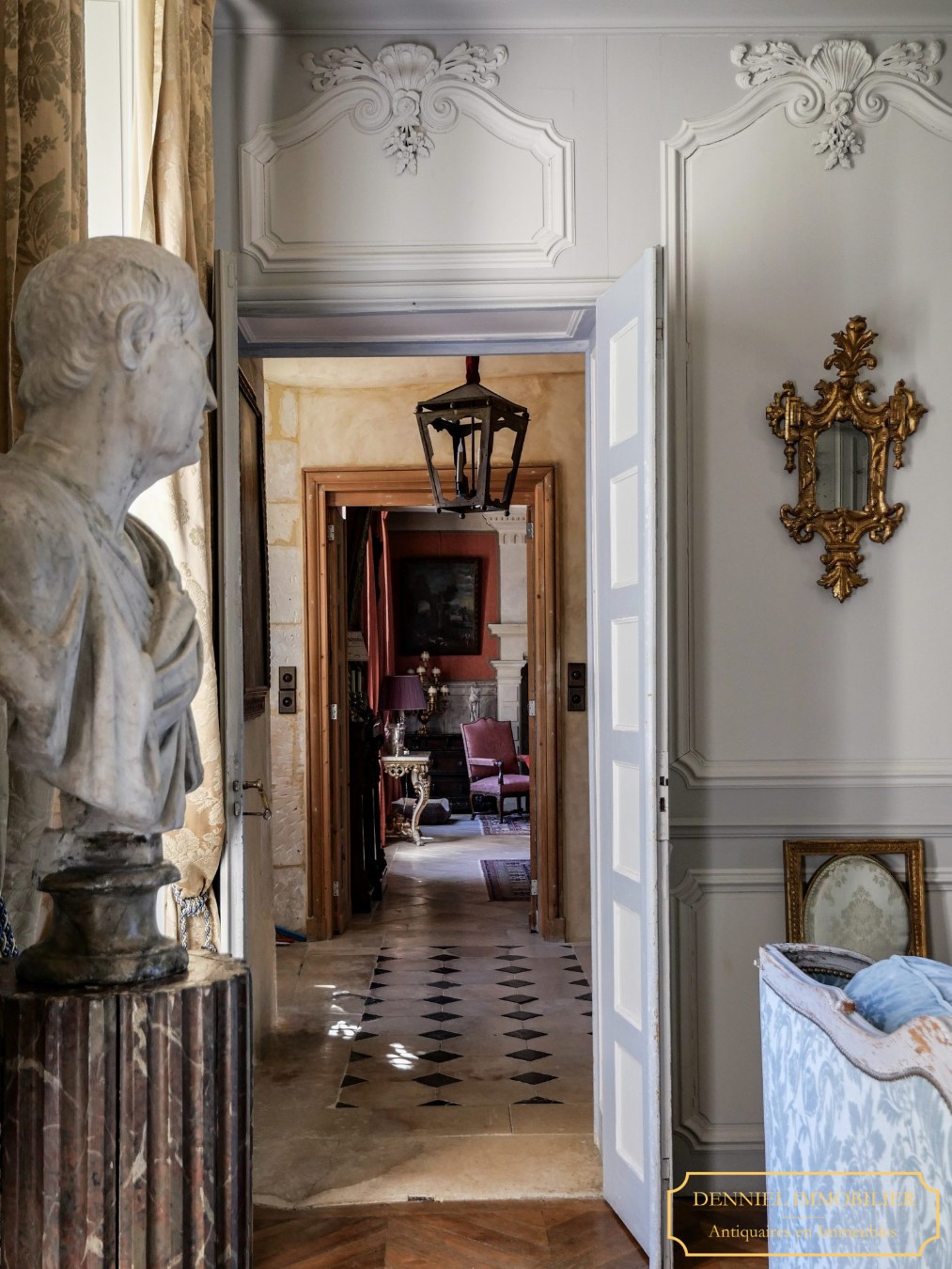
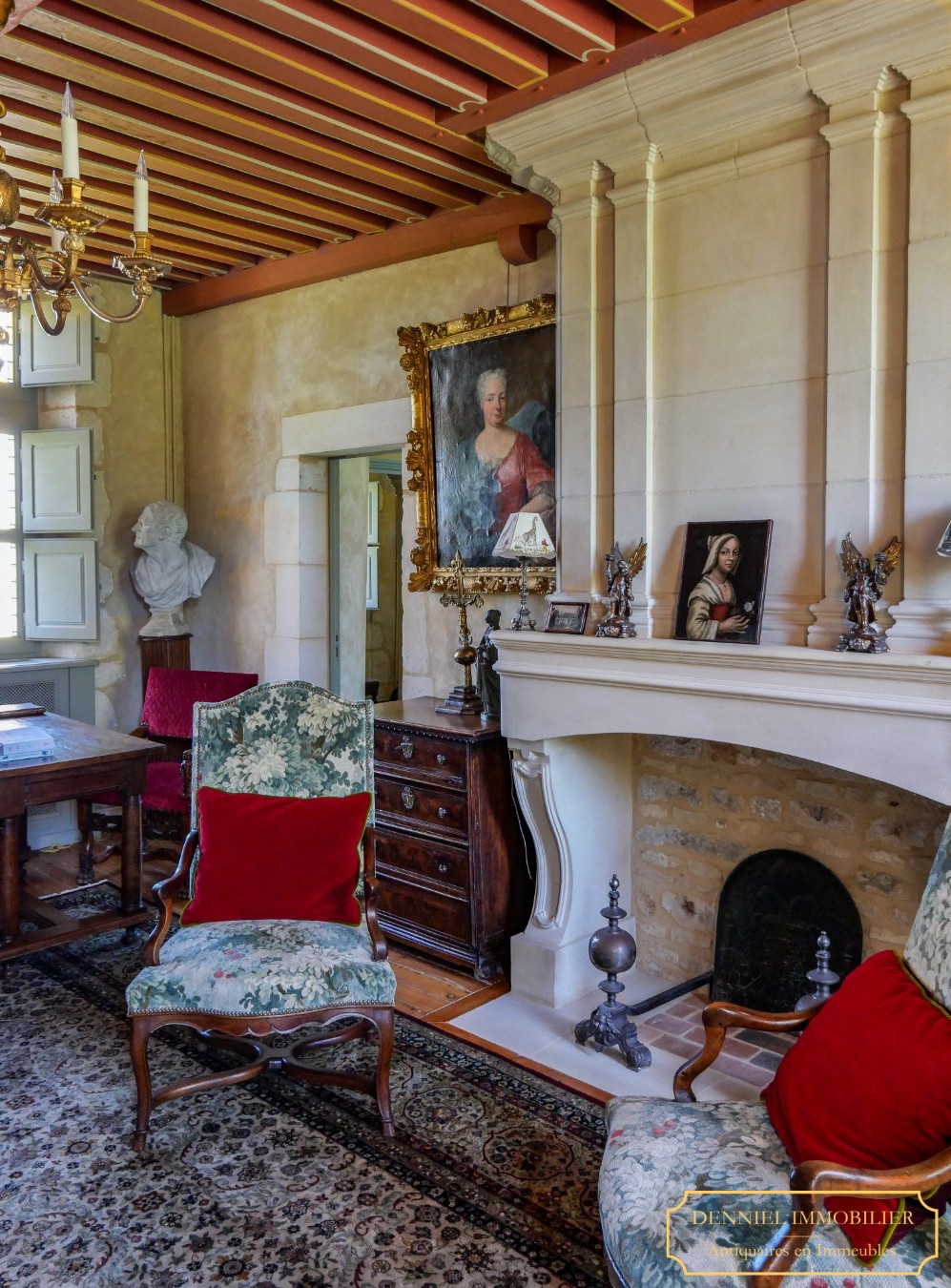
The interiors face south, receiving consistent daylight throughout the day. They retain original 17th- and 18th-century architectural features, including wood panelling (boiseries), period fireplaces, and a straight stone staircase in the Italian style.
Internal Layout of the Main Residence
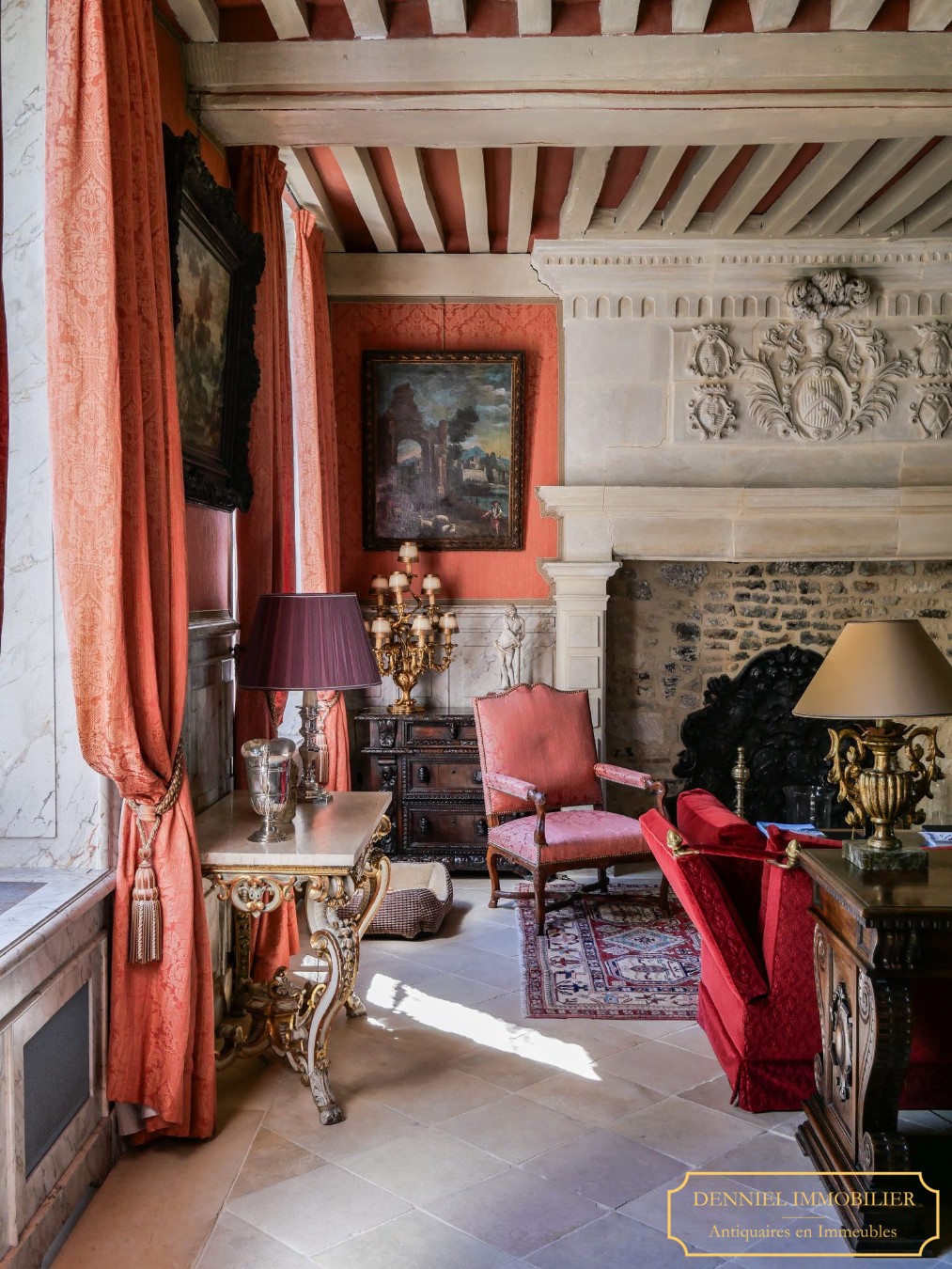
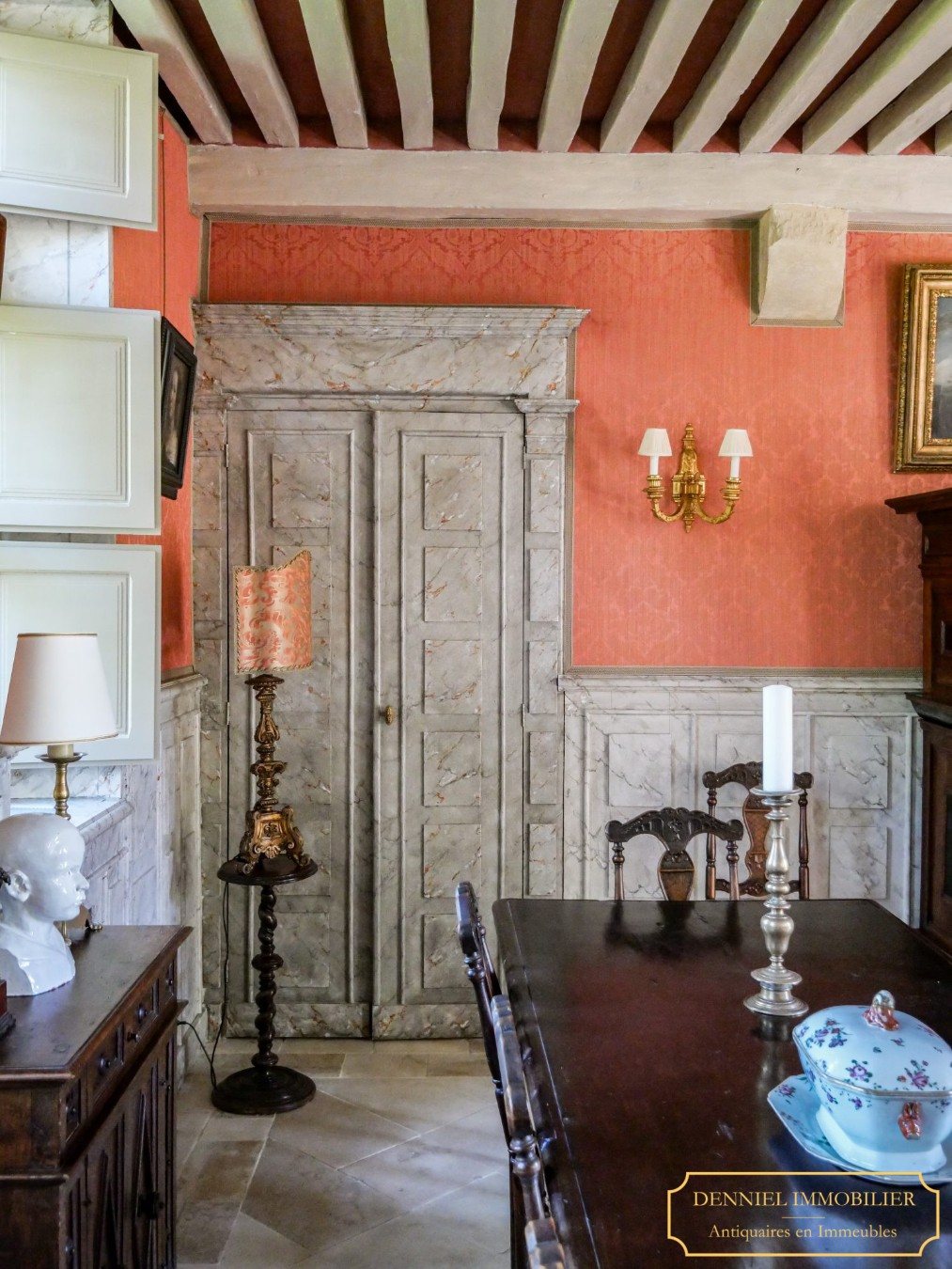
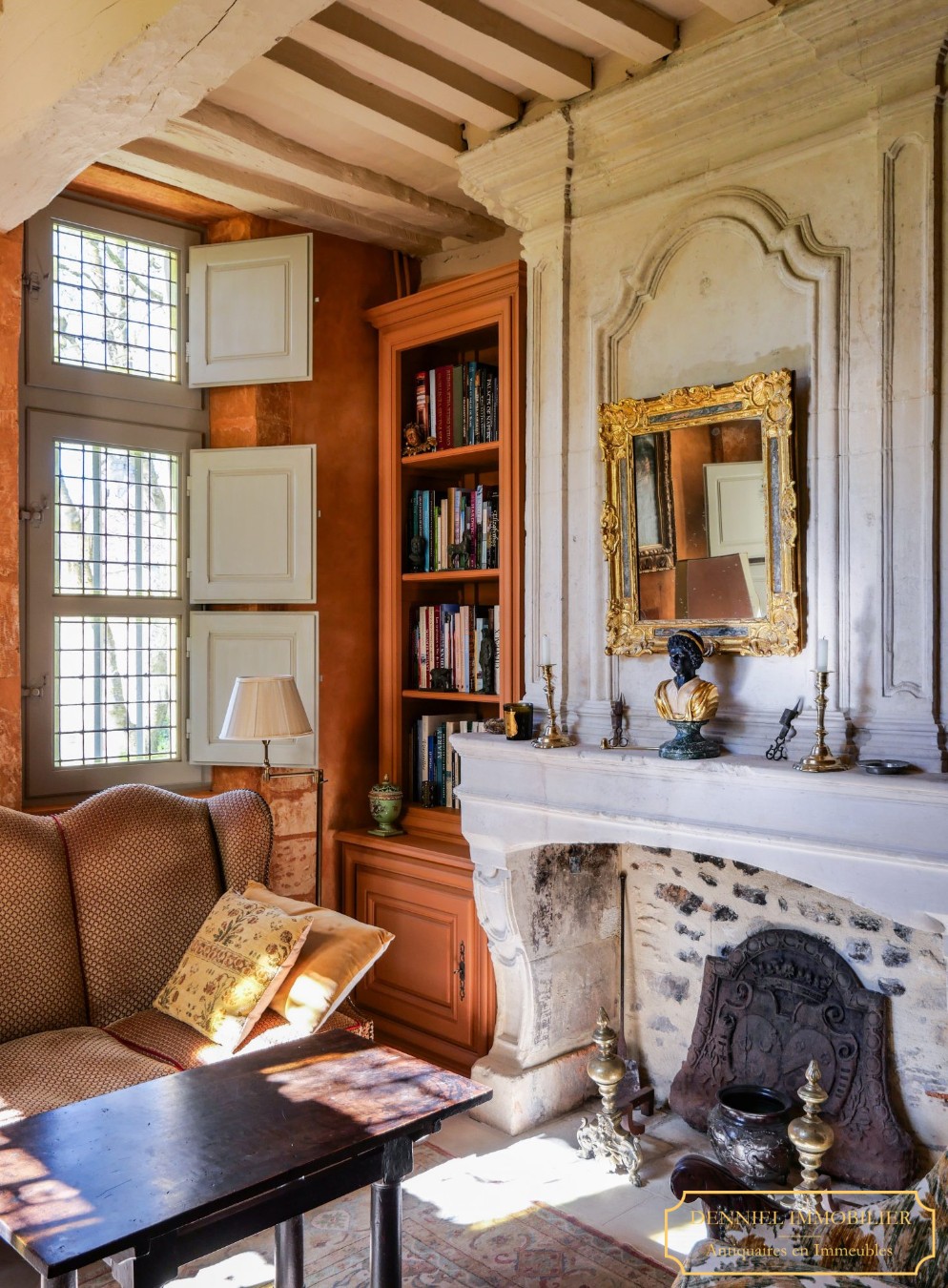
Behind the main steps and its 18th-century wrought-iron balustrade, double doors open into the entrance hall, which features a stone floor with cabochon insets. From here, interconnecting doors (enfilade) lead to the 17th-century salon, which is equipped with a stone fireplace bearing a coat of arms and a large fireback. The wood panelling is finished in faux marbre, complementing the exposed beam ceilings. A secondary stone spiral staircase connects all four levels of the château.
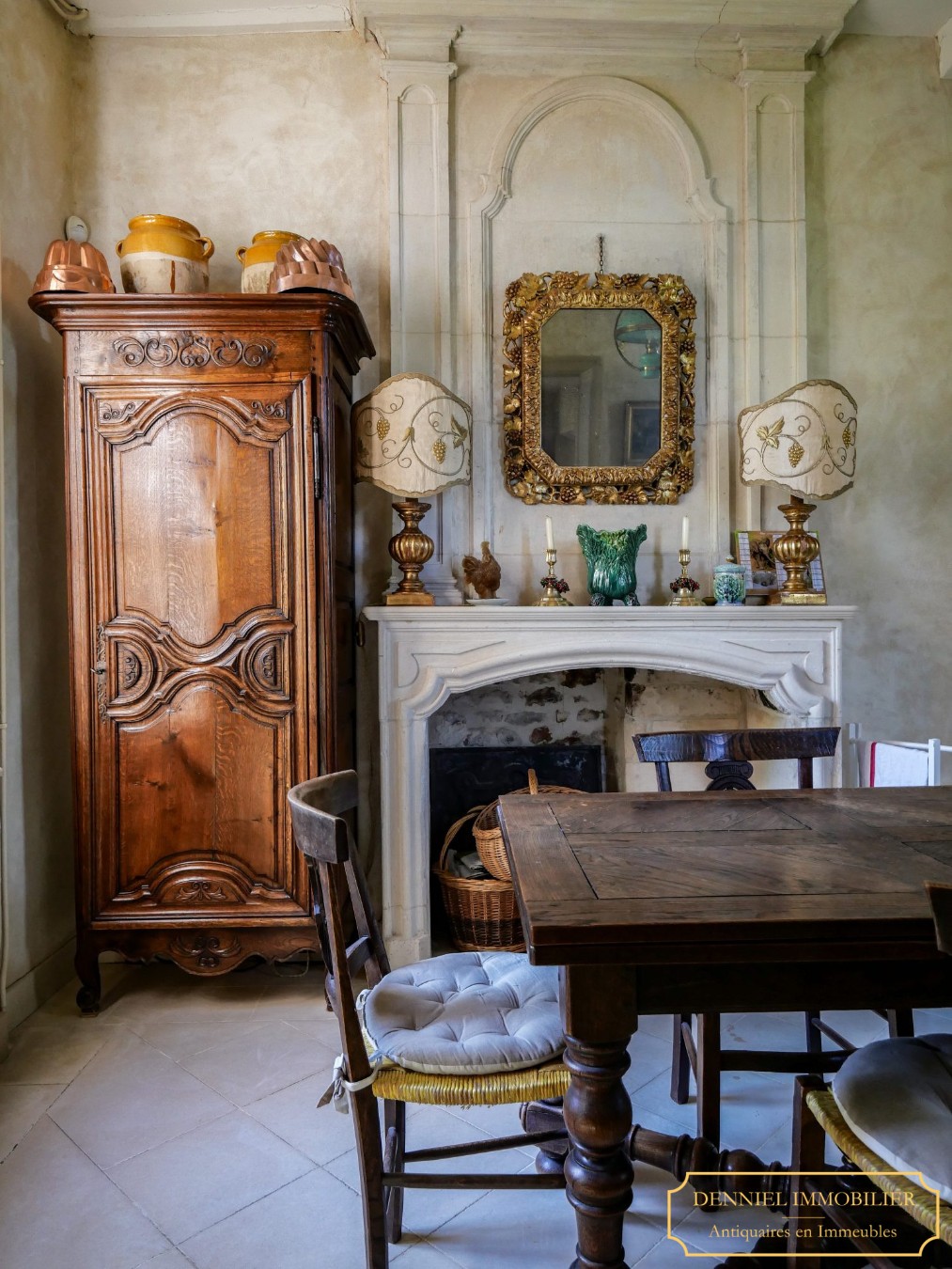
South-West Pavilion: contains the kitchen, which benefits from triple-aspect views, a Burgundy stone worktop, and an 18th-century stone fireplace.
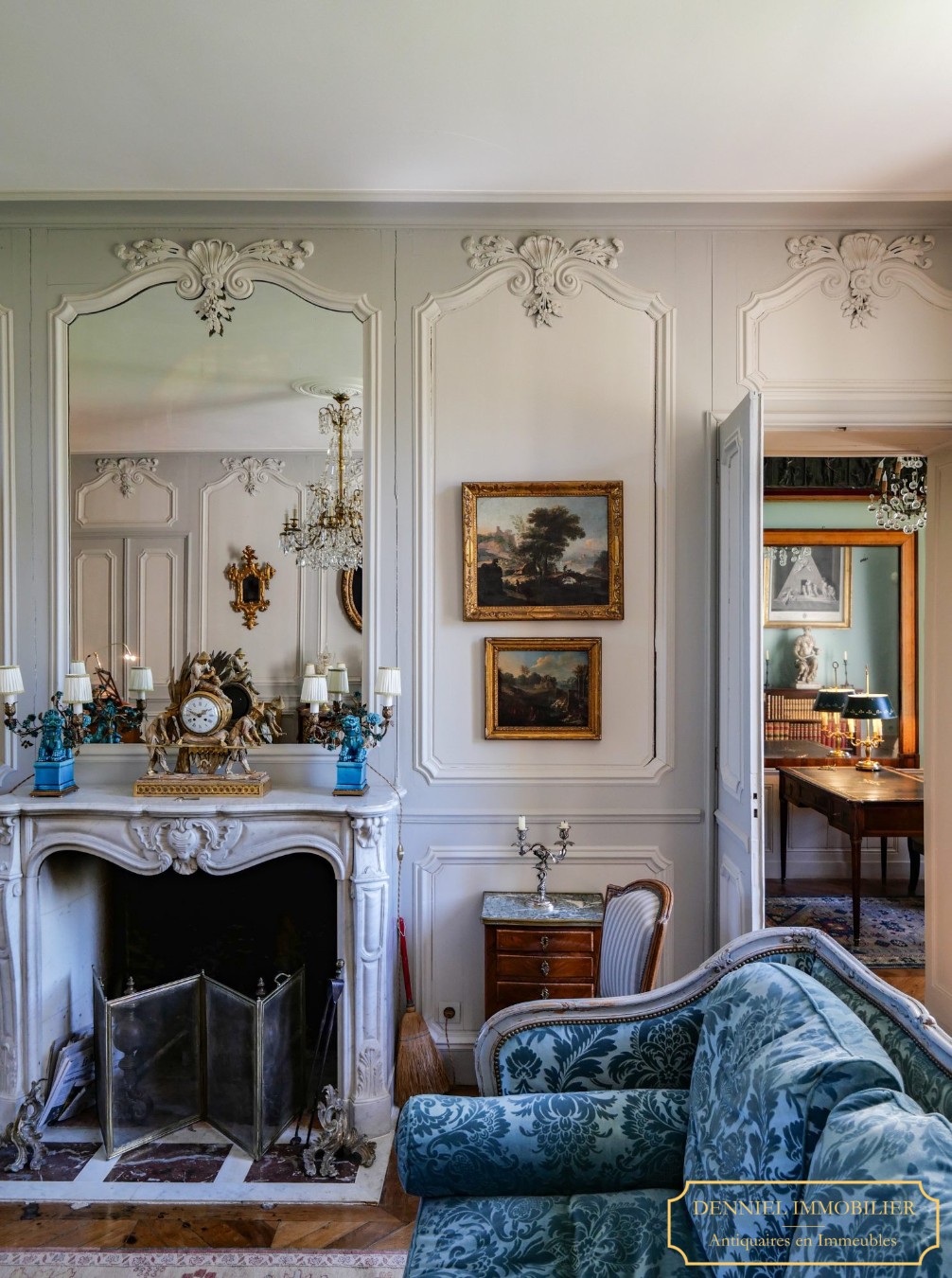
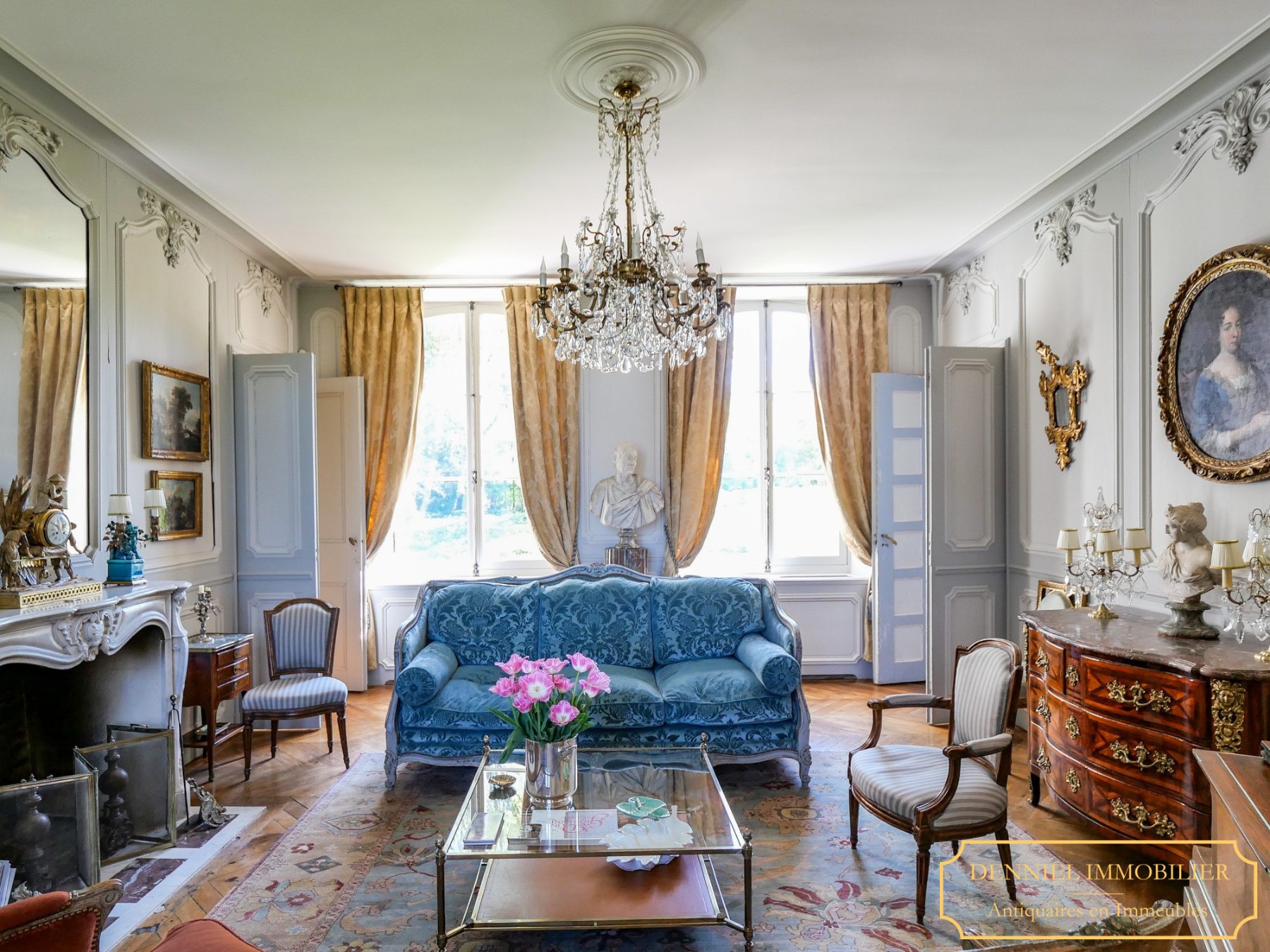
Right Wing: features a large 18th-century salon with Louis XV carved wood panelling, chevron parquet flooring, and a 19th-century marble fireplace.
North-East Pavilion: houses a smaller sitting room with an 18th-century stone fireplace.
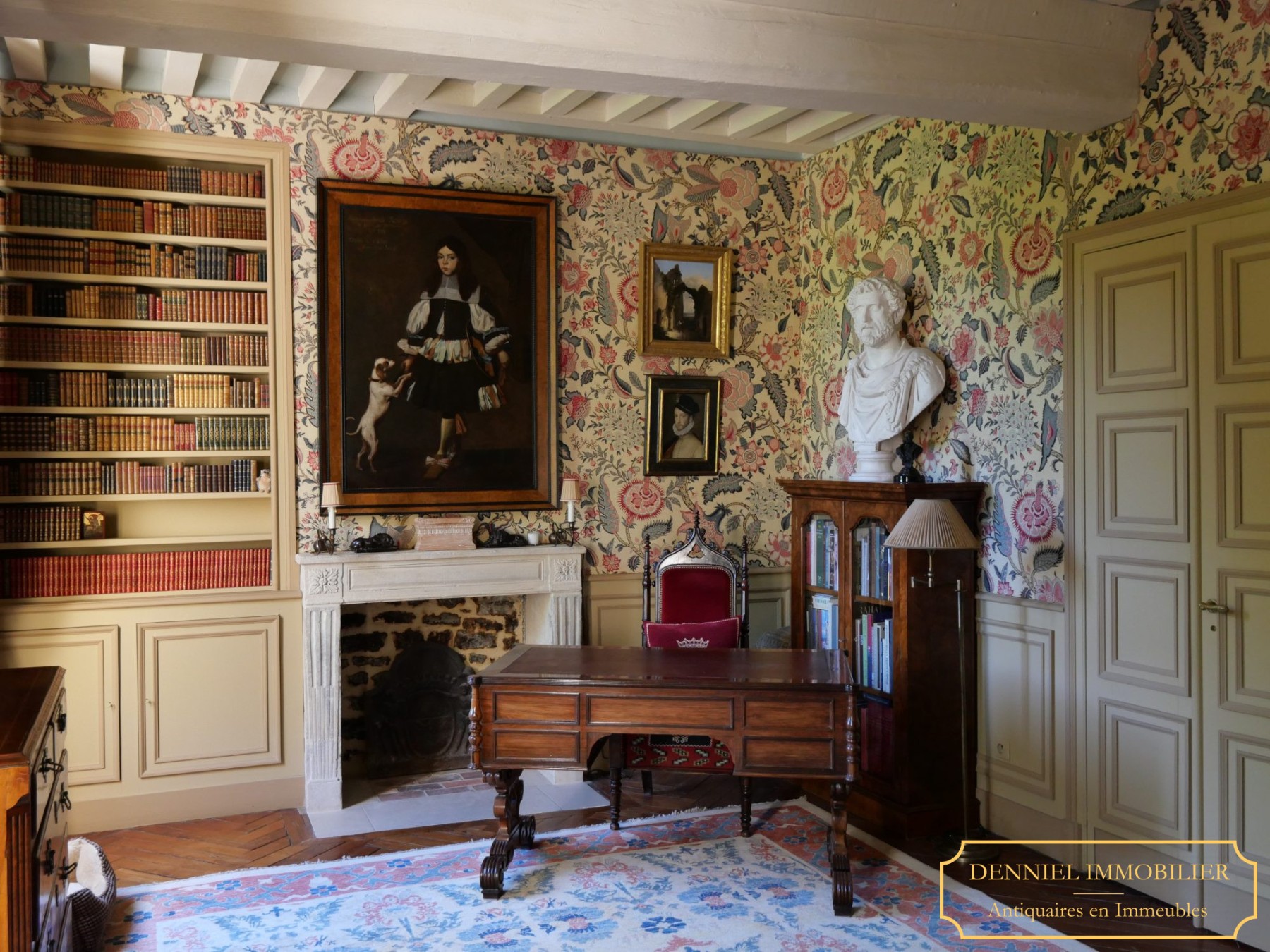
South-East Pavilion: arranged as a study with chevron parquet flooring. A guest WC completes the ground floor layout.
First Floor
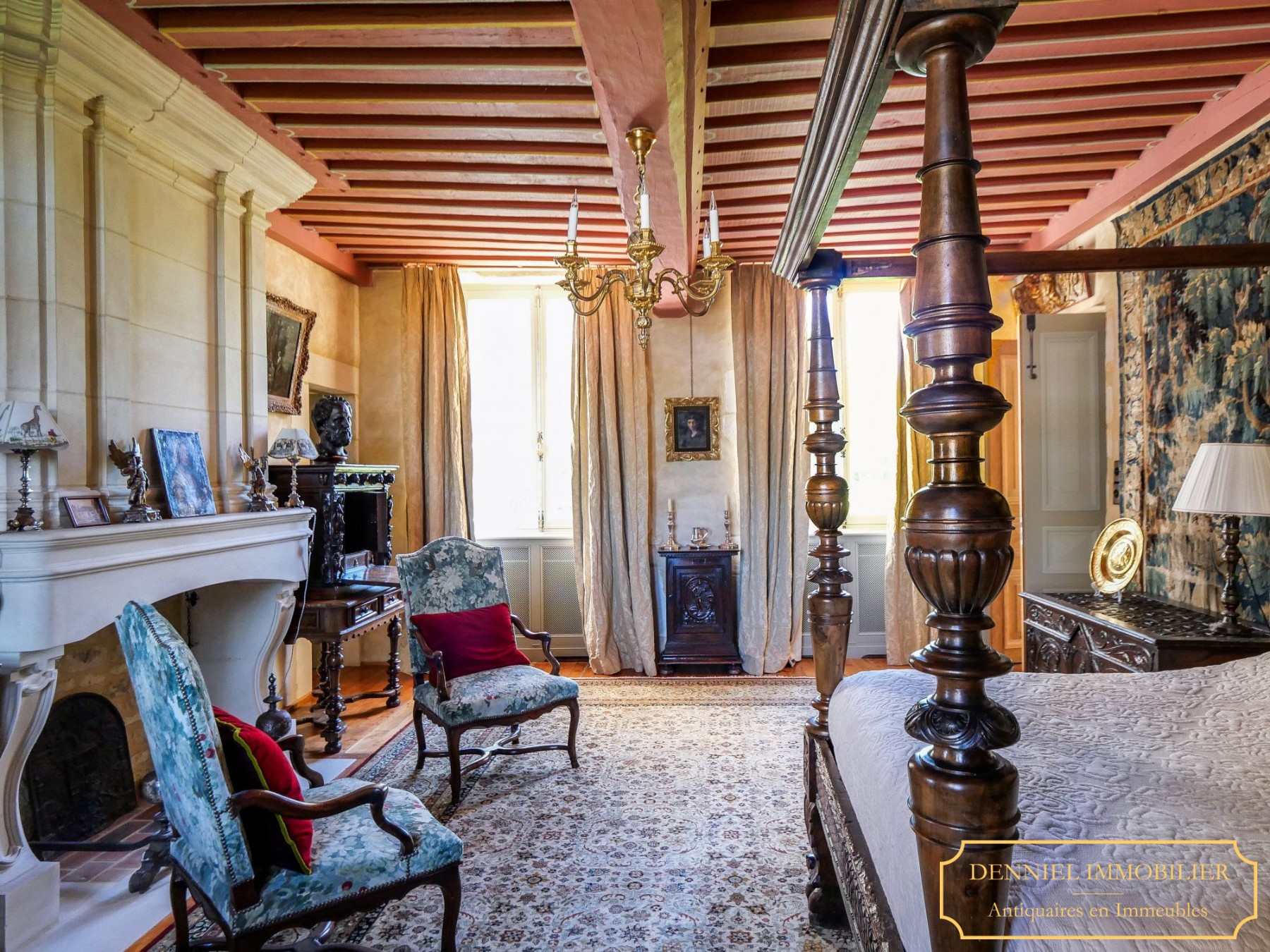
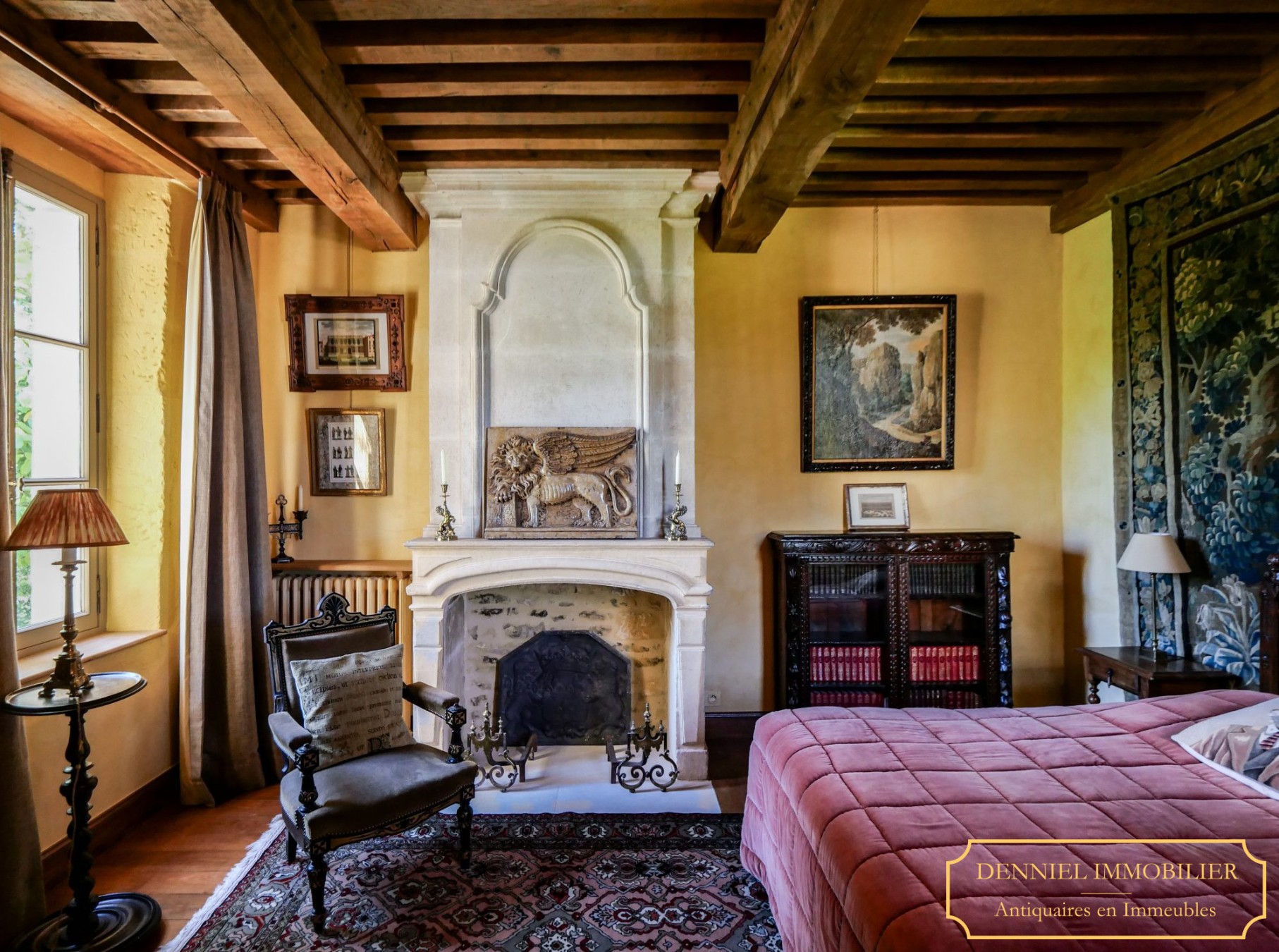
Accessed via the main staircase, the landing leads through double doors to four bedrooms. These rooms feature a mix of chevron parquet flooring, 18th-century stone fireplaces, and exposed ceiling beams. This level includes two bathrooms with WCs: one fitted with a shower, period-style ceramic tiles, and terracotta floor tiles (tomettes); the other features a bathtub and a marble-topped vanity unit.
Second Floor
Comprises three bedrooms with parquet or historic terracotta flooring, three bathrooms with WCs and terracotta floors (one with a bathtub, two with showers), a large sitting room with a double-height vaulted ceiling (salon cathédrale), and a small study (studiolo).
Garden Level (Rear)
Includes a large vaulted kitchen with a stone floor and fireplace, an adjacent utility and laundry room, and three further vaulted rooms providing direct access to the outside.
Grounds and Outbuildings
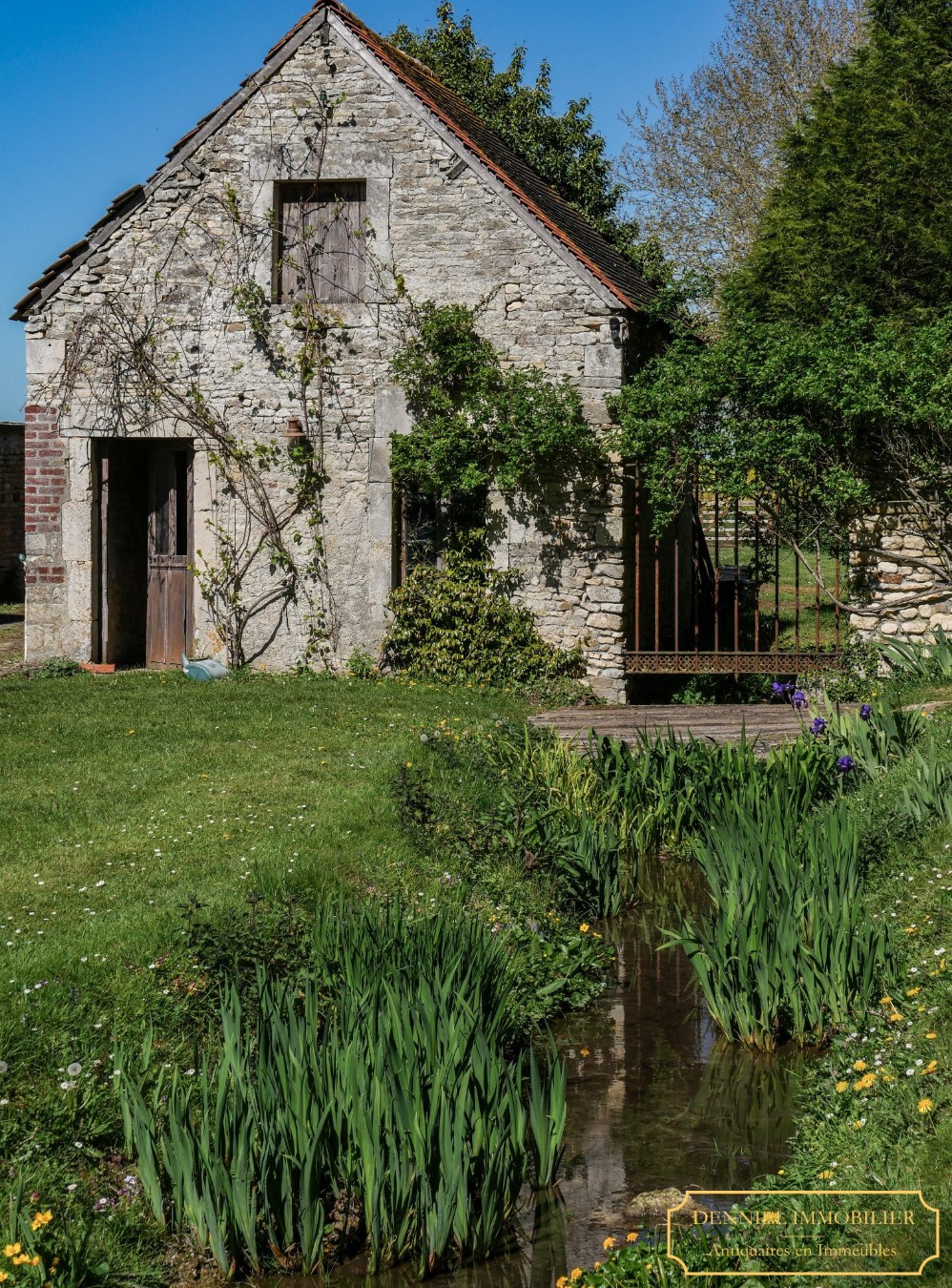
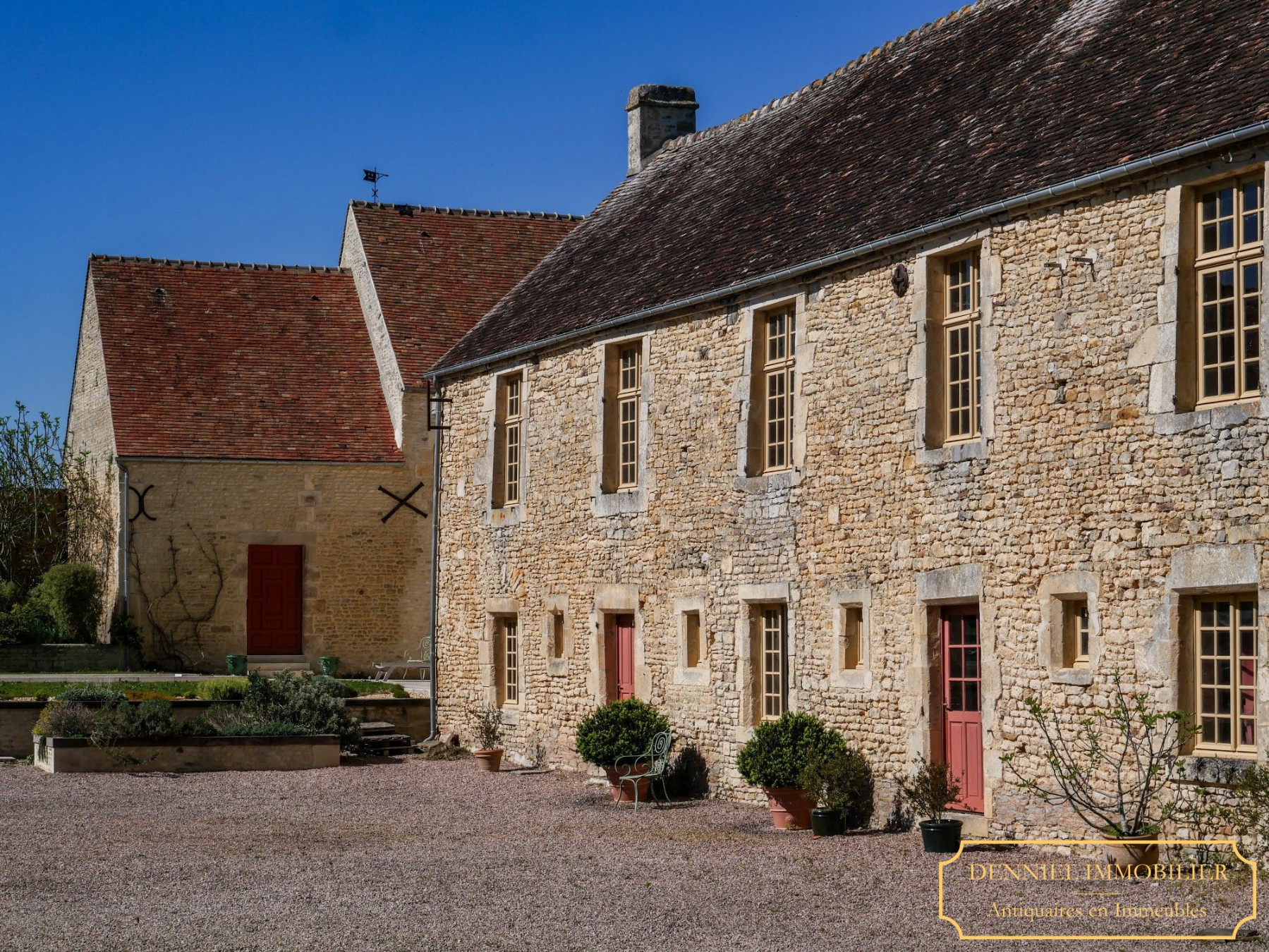
At the rear of the château, a boxwood garden extends before the façade, which is characterised by dormers and mullioned windows set between two corner pavilions. A stream separates the main residence from the adjacent courtyard and outbuildings.
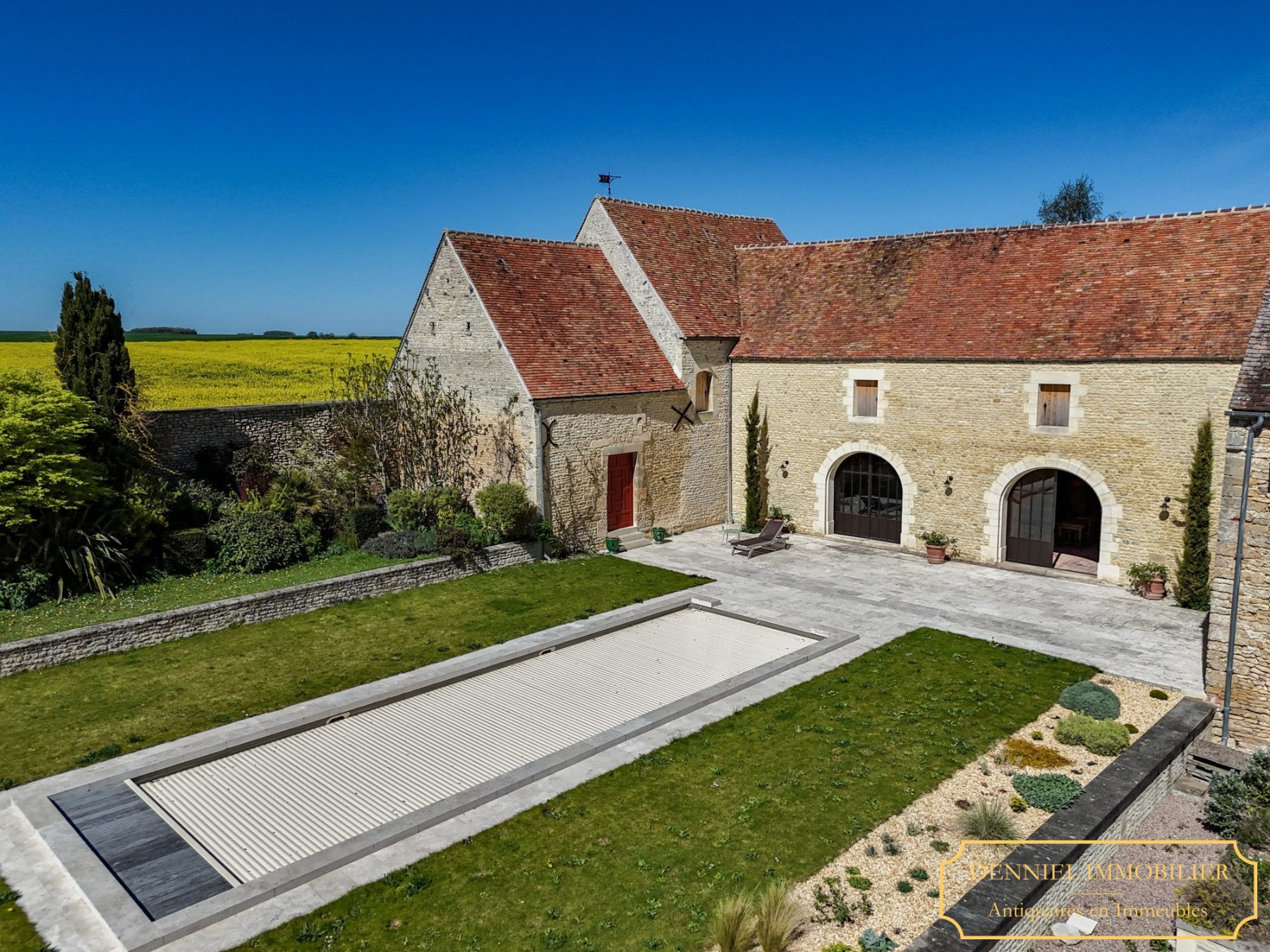
Former Farmhouse (17th century): a south-facing building containing ten rooms. The structural walls and roof are intact, while the interior requires full renovation. Original elements, including stone fireplaces and a straight stone staircase, remain in place.
Pool Area: installed in 2023, featuring a heated saltwater swimming pool and an open-fronted pool house with two south-facing arches. It includes a summer kitchen, a room with a double-height ceiling, and a stone terrace.
Additional Outbuildings: comprise a shed, plant room, log store, garage, barn, historic bread oven, two workshop-garages, and a workroom. The boiler room houses an oil-fired heating system combined with a heat pump installed in 2013.
The outdoor space also includes a partially walled kitchen garden. The entire property is connected to mains drainage.
The estate is accessed via three entrances. The main driveway entrance is through wrought-iron gates, leading along a tree-lined avenue through the grounds to the front façade. A second entrance features a separate gate between stone pillars, while a timber gate provides direct access to the farm courtyard.
The historical listing (1997 decree) covers the château’s façades and roofs, the central staircase, the salon with its fireplace and wood panelling, and three additional fireplaces within the building.
Location
Situated in the Caen region of Normandy, driving time to Paris (Porte Maillot or Porte d’Auteuil) via the A13 motorway is approximately 2 hours and 30 minutes. The city of Caen is 30 kilometres away, providing full regional infrastructure and a railway station with direct services to Paris Saint-Lazare in under two hours. The town of Falaise is 11 kilometres from the property, and local everyday amenities are within 7 kilometres.