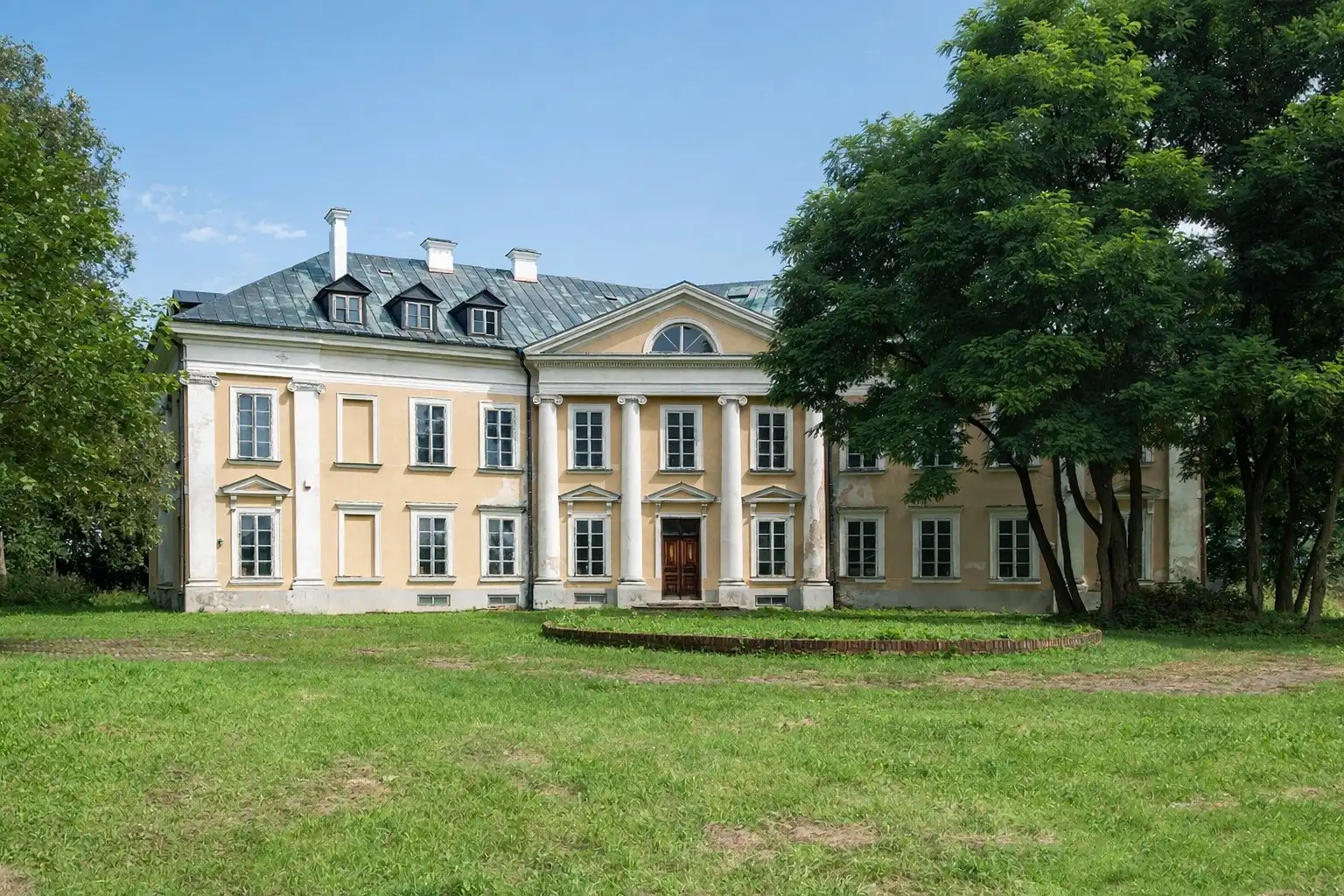
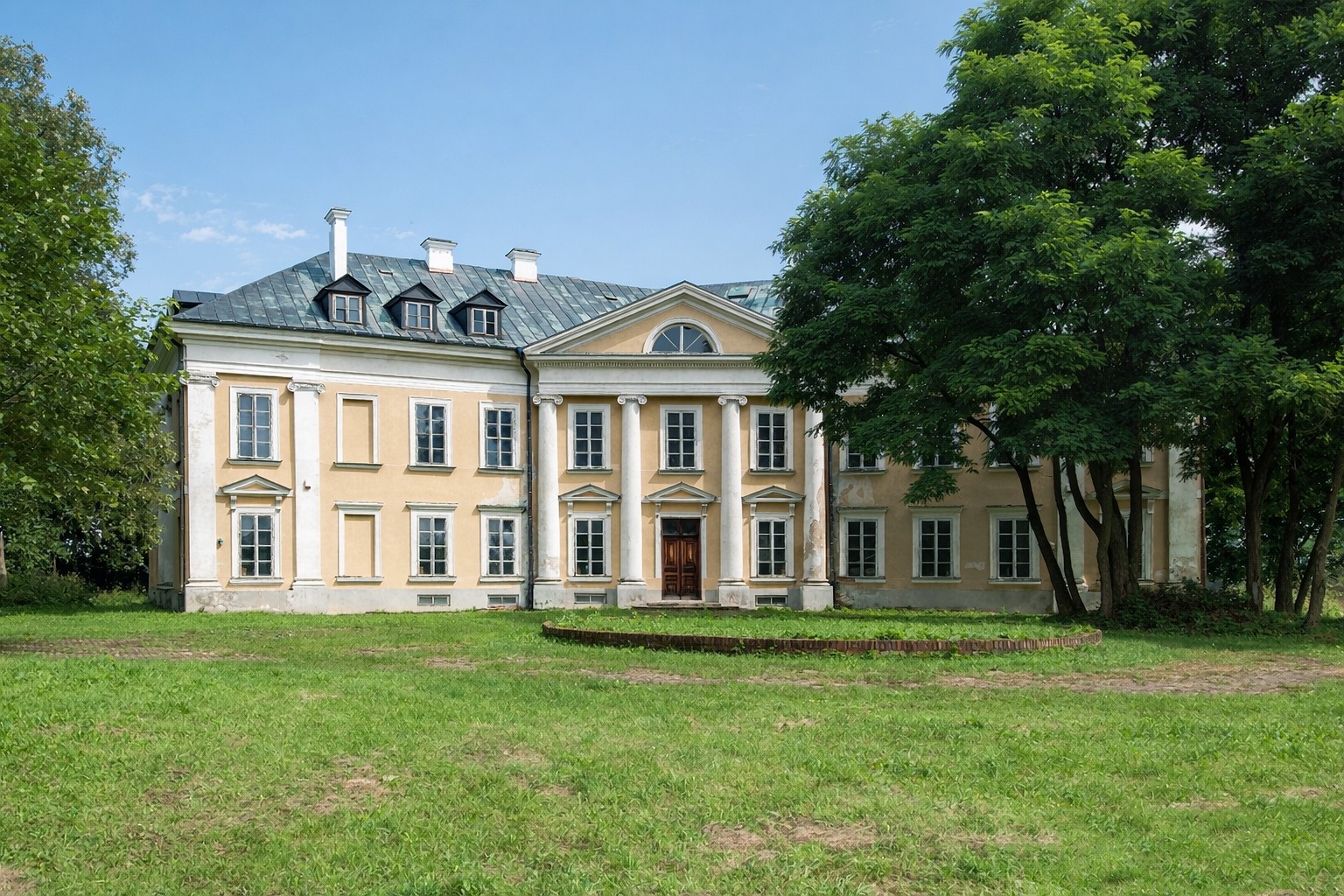
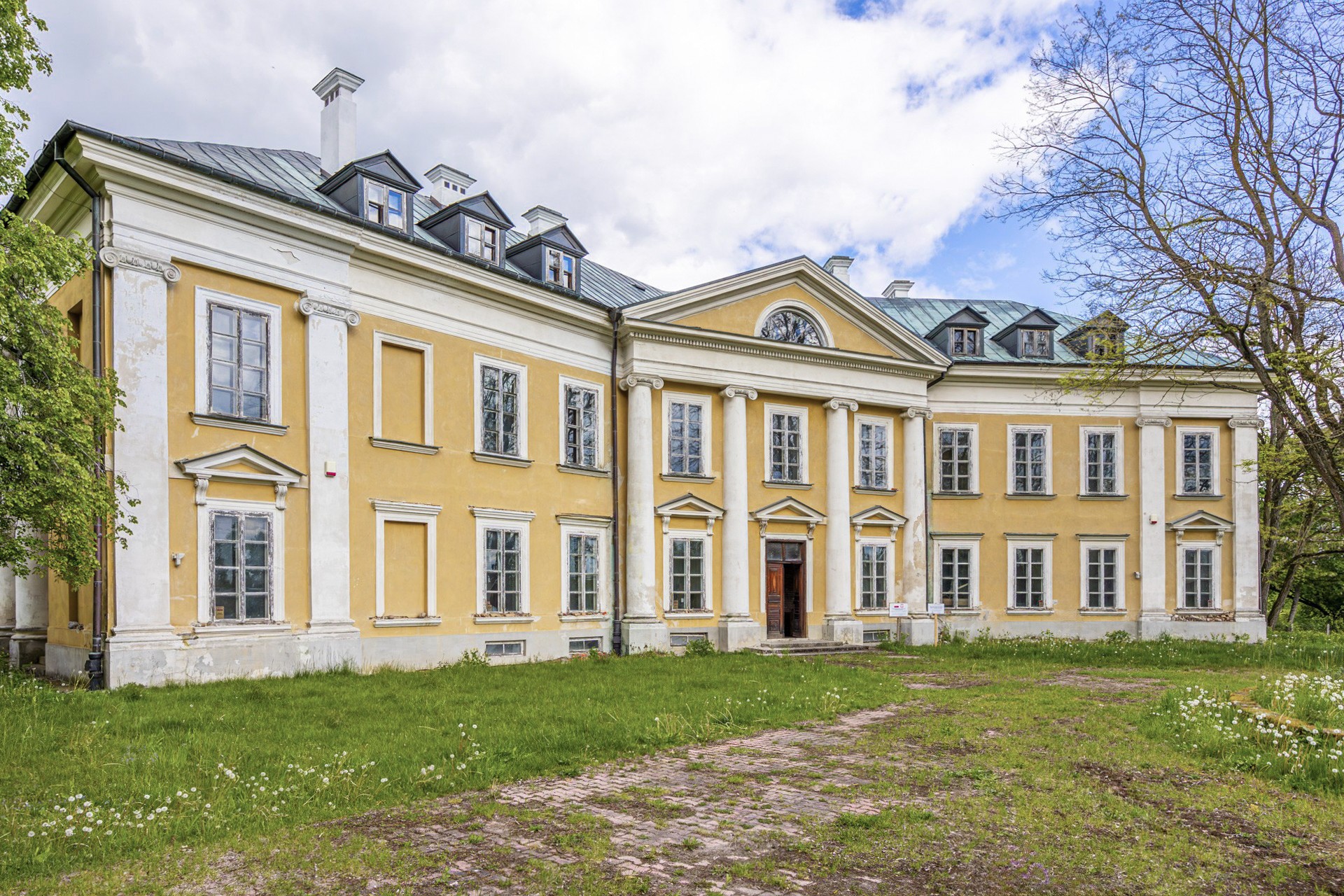
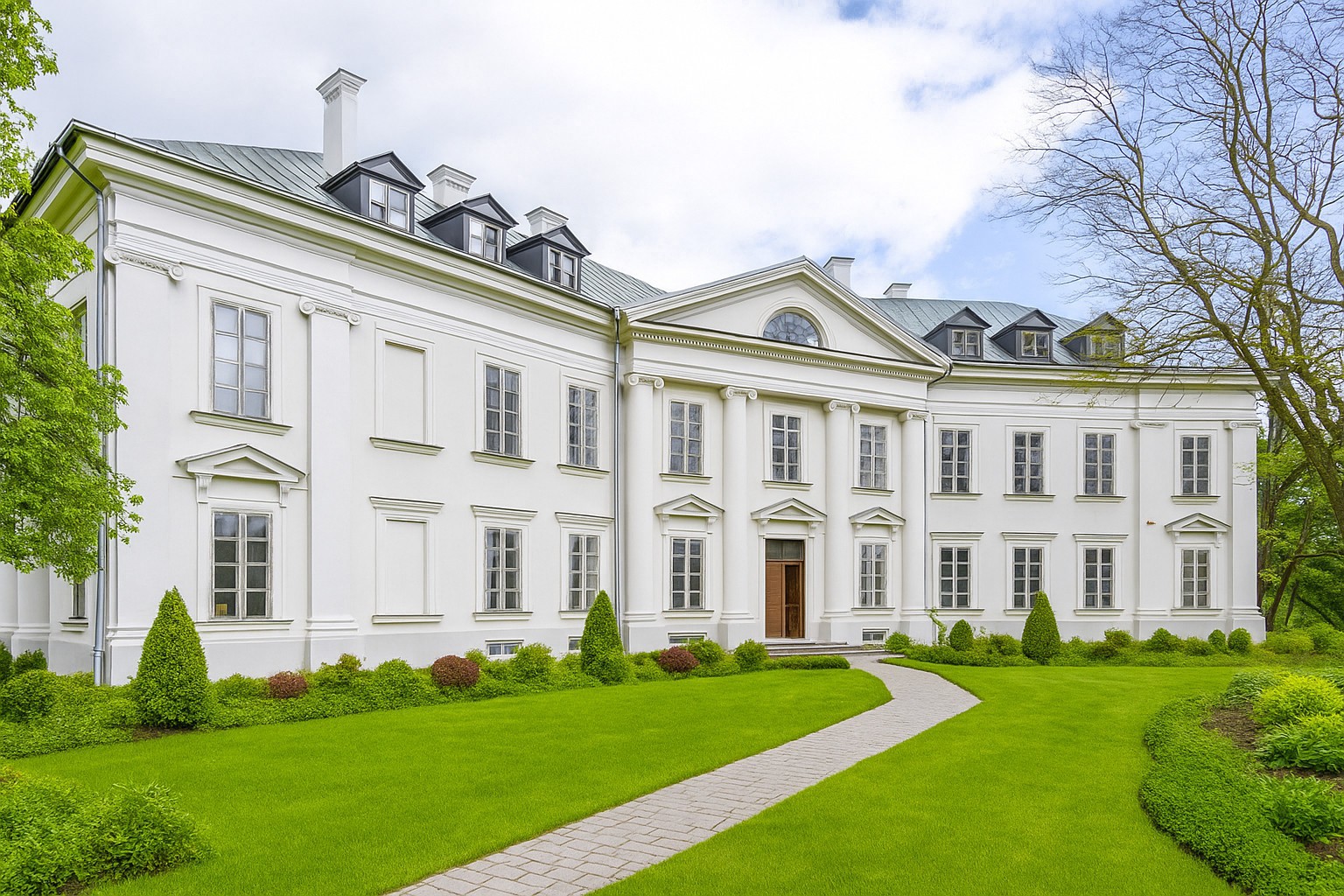
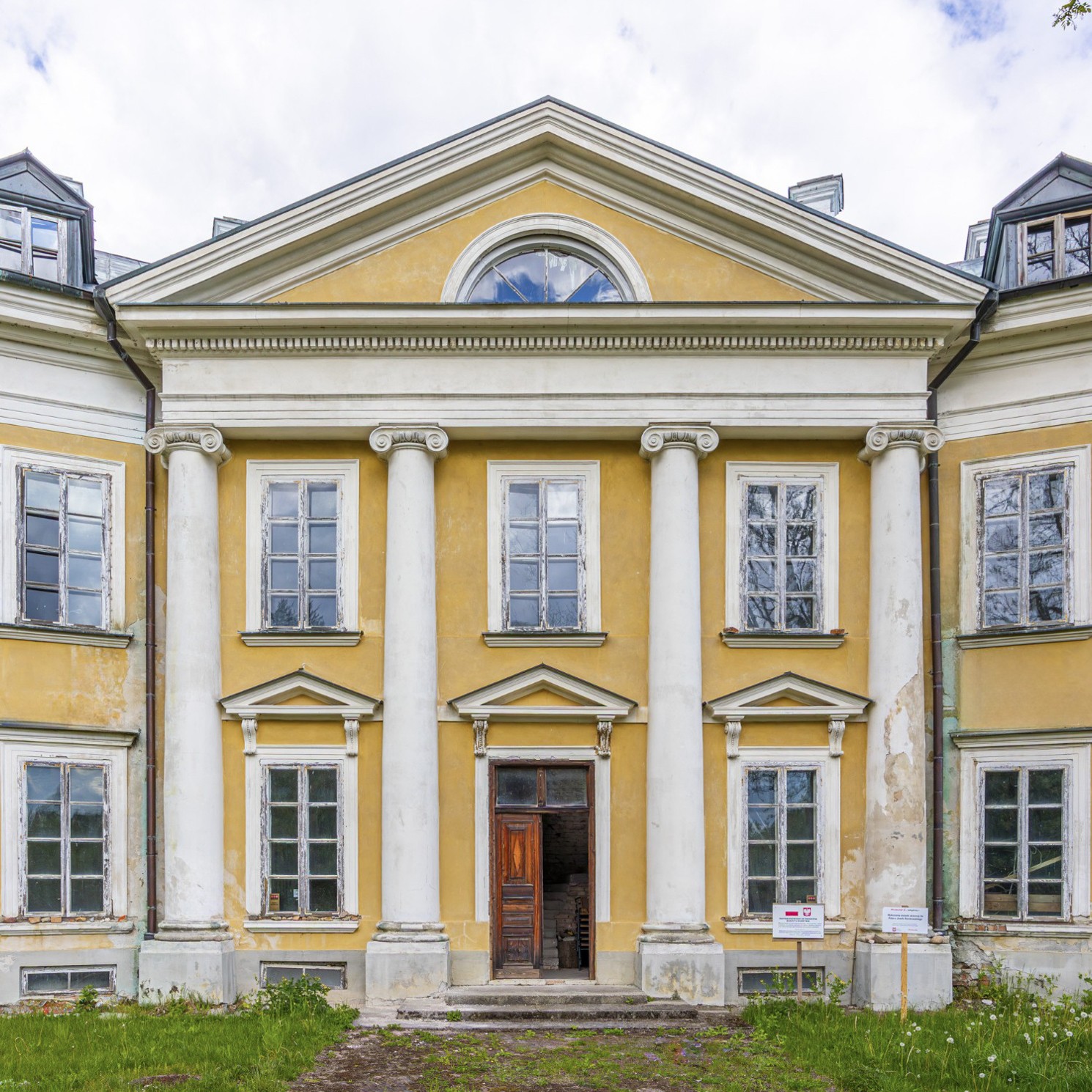
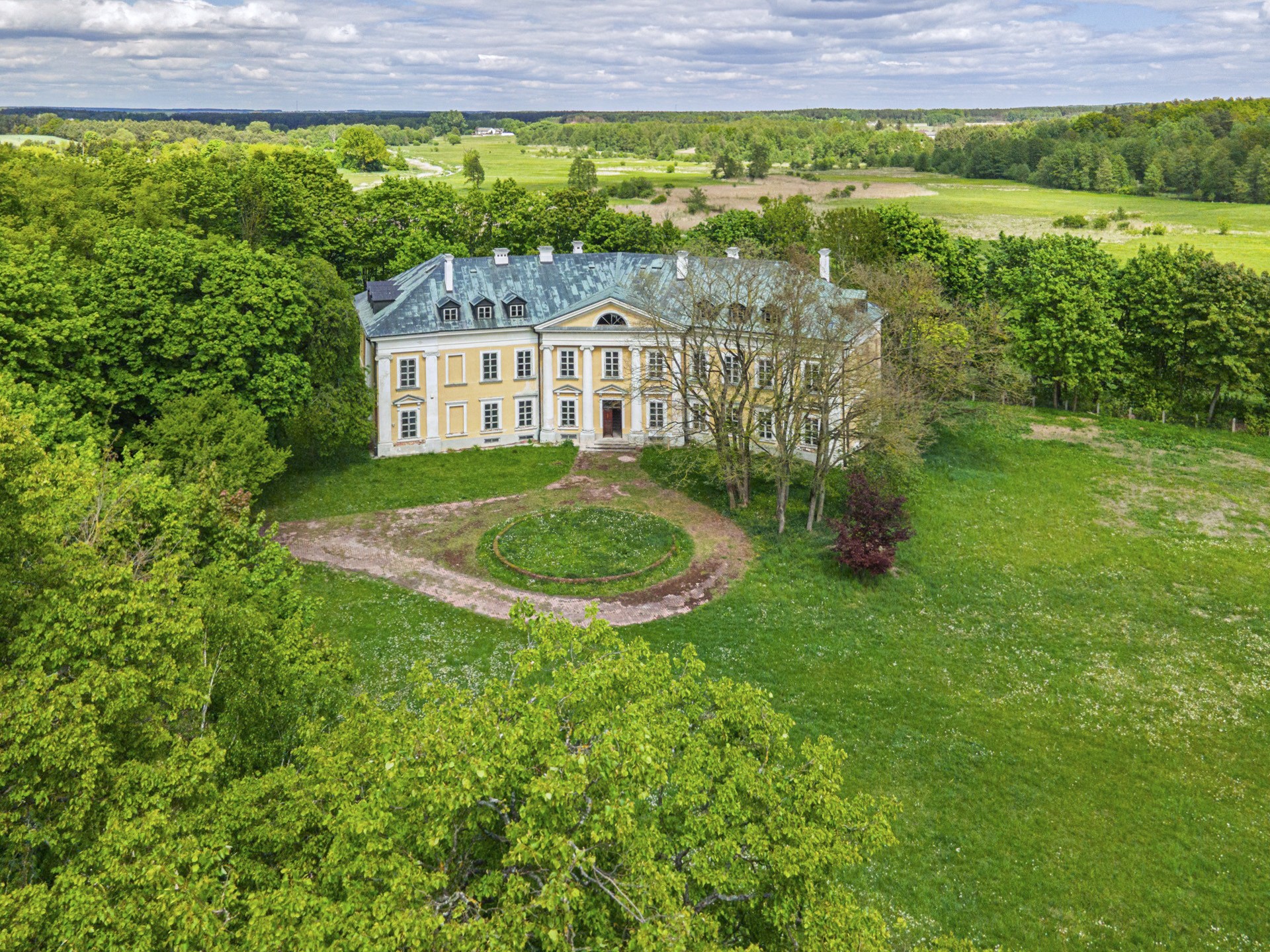
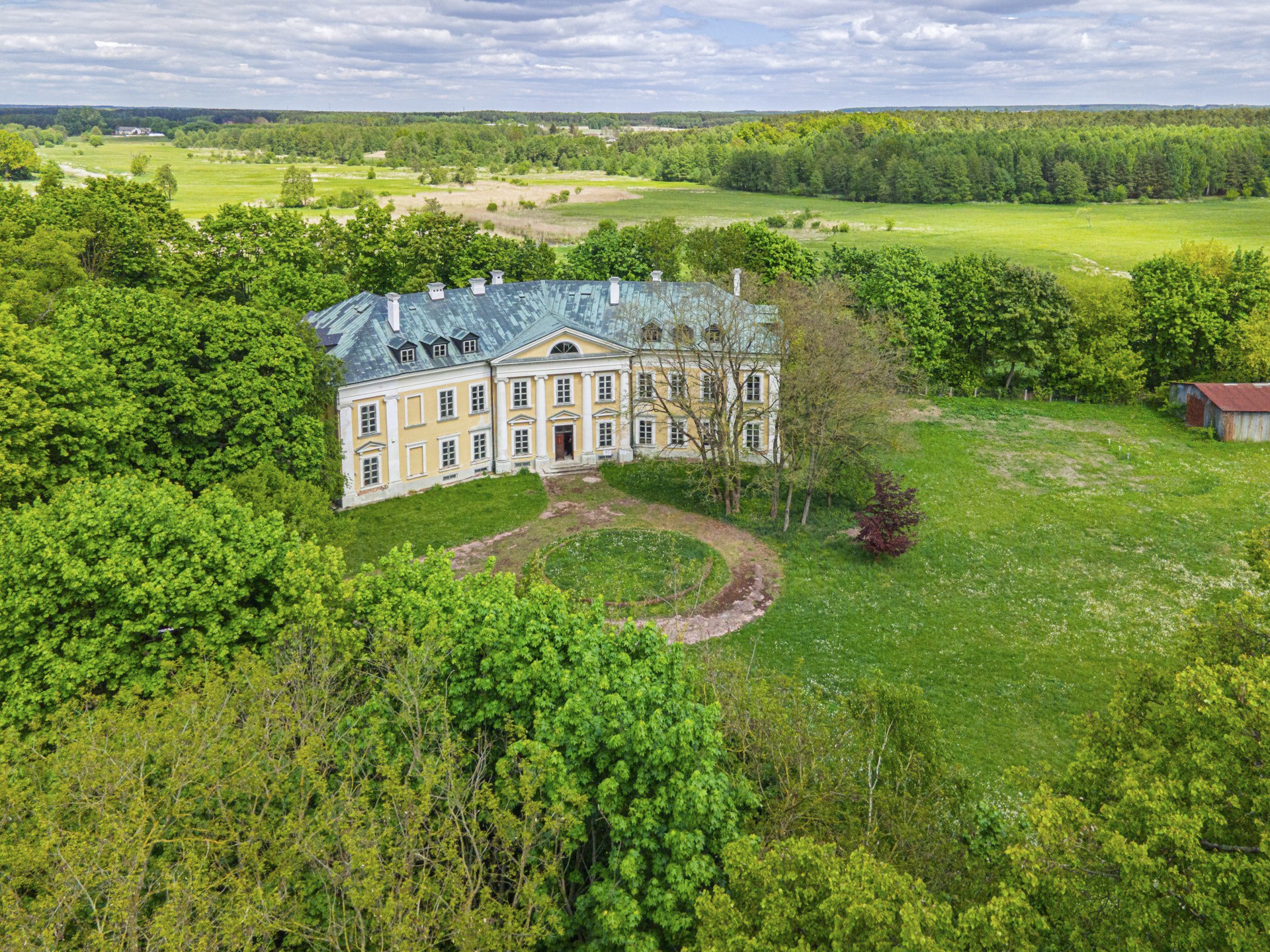
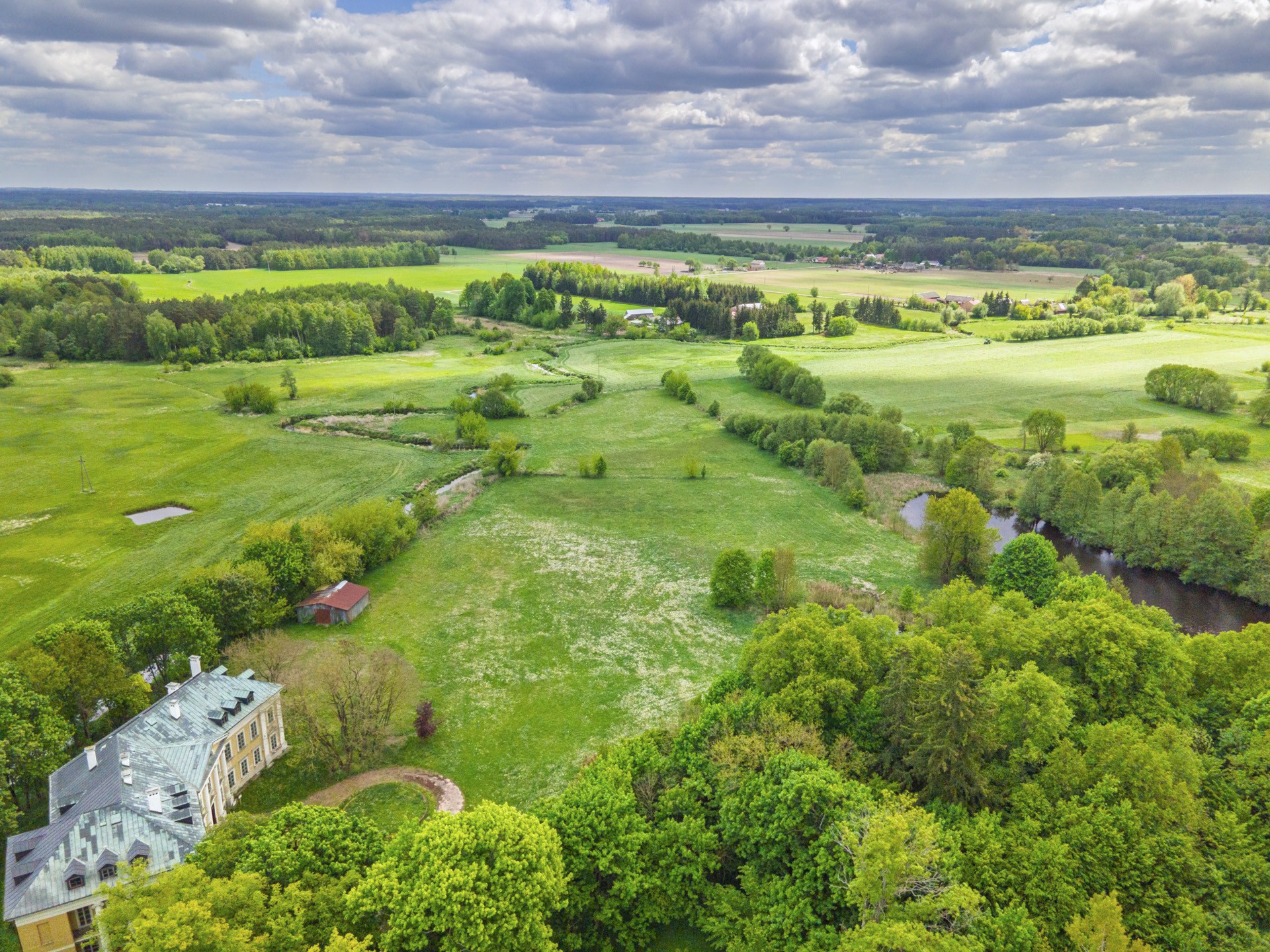
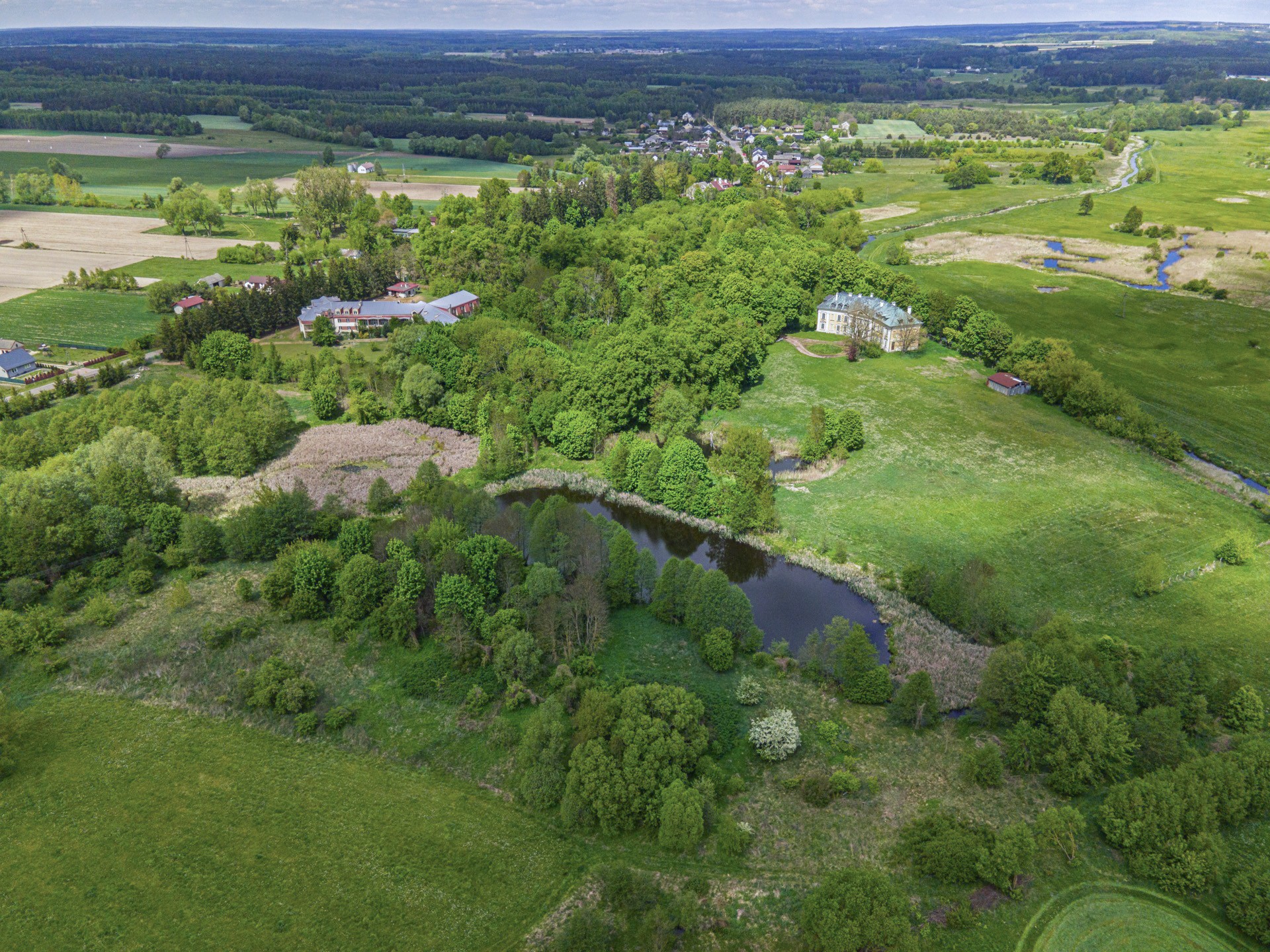
The Palace at Luberadz, located north of Warsaw, was designed by the architect Hilary Szpilowski. Constructed in 1789 on a semi-circular plan for Józef Dembowski (1761–1831), the building is a prominent example of the Masovian landed gentry’s architecture and is frequently cited in Polish academic literature.
Historical Significance
Józef Dembowski served as Inspector General of the Royal Cavalry and was a page at the court of King Stanislaus Augustus. The construction of Luberadz Palace stands as a testament to his high standing within the Polish aristocracy. During the Kościuszko Uprising against Russia and Prussia, Dembowski commanded the cavalry and, in 1792, served as the civil-military commissioner for the Zawkrze region.
Current Condition
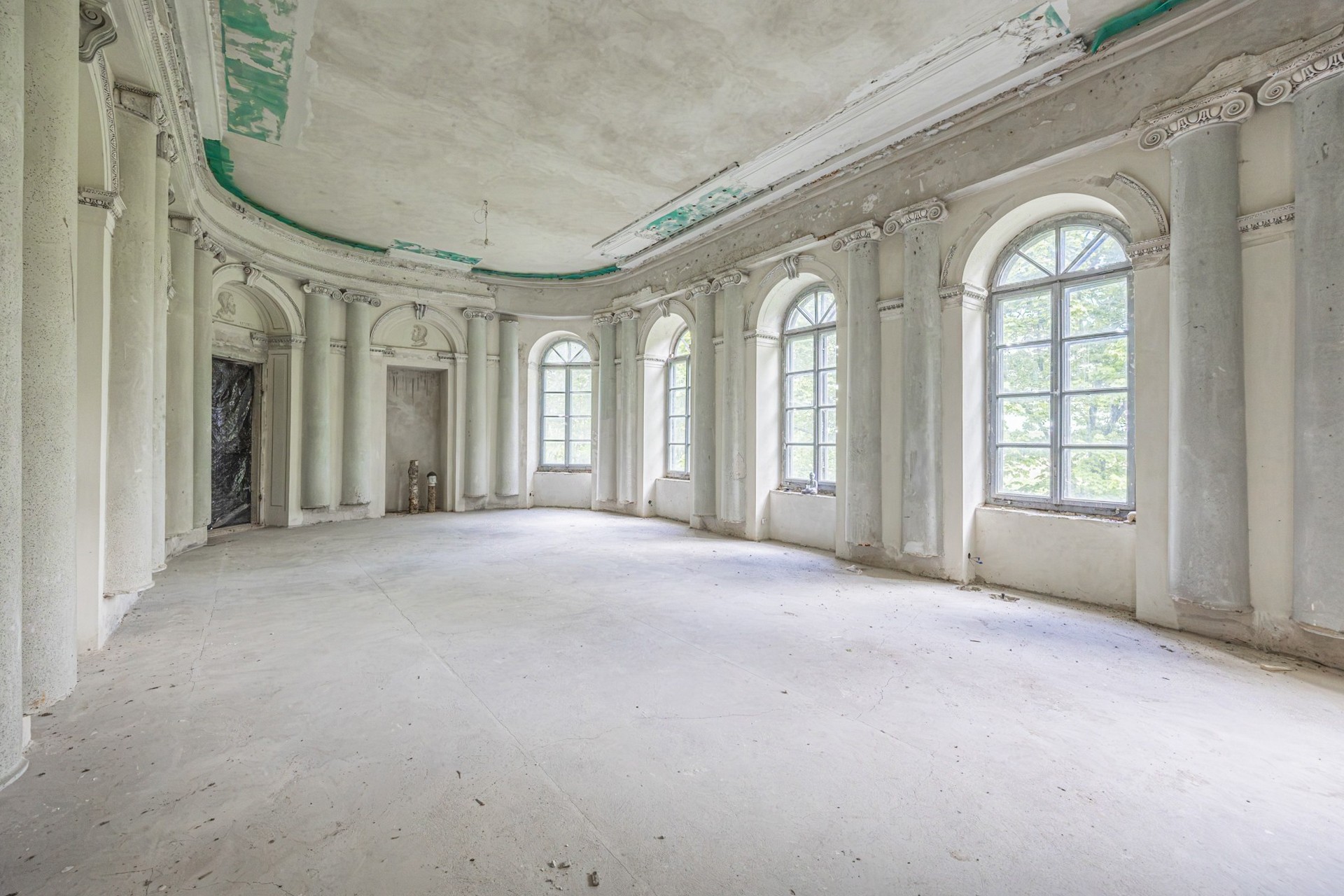
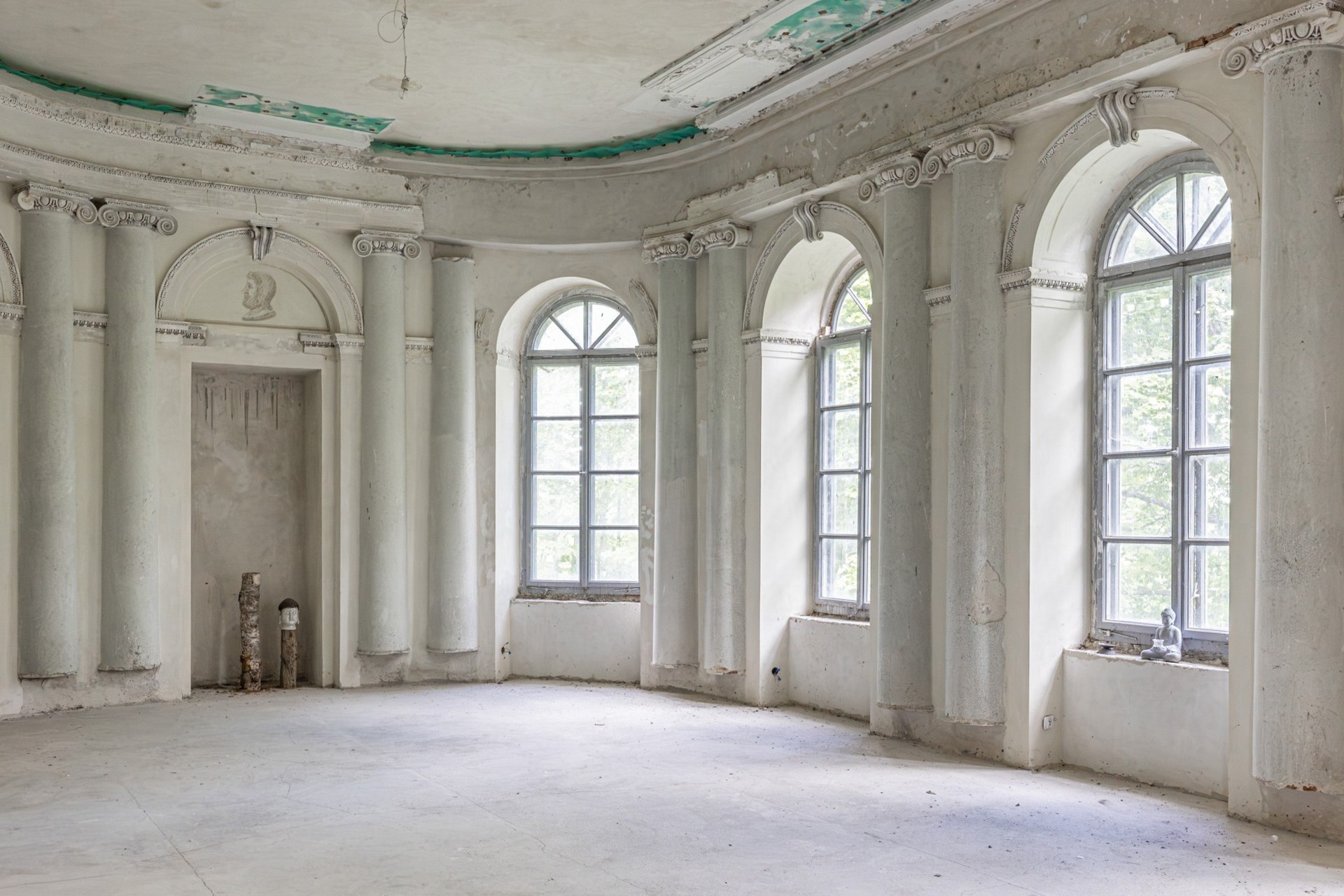
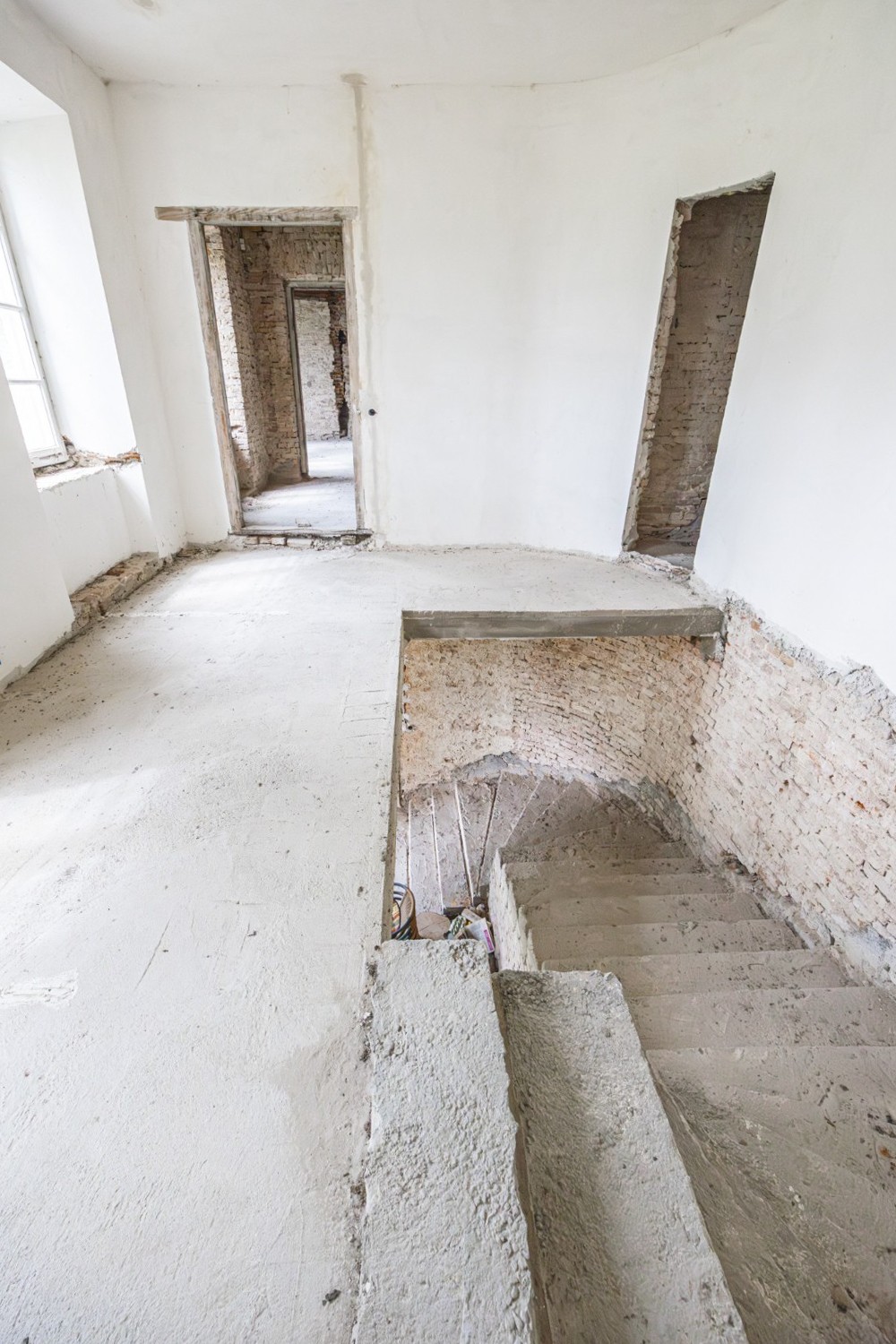
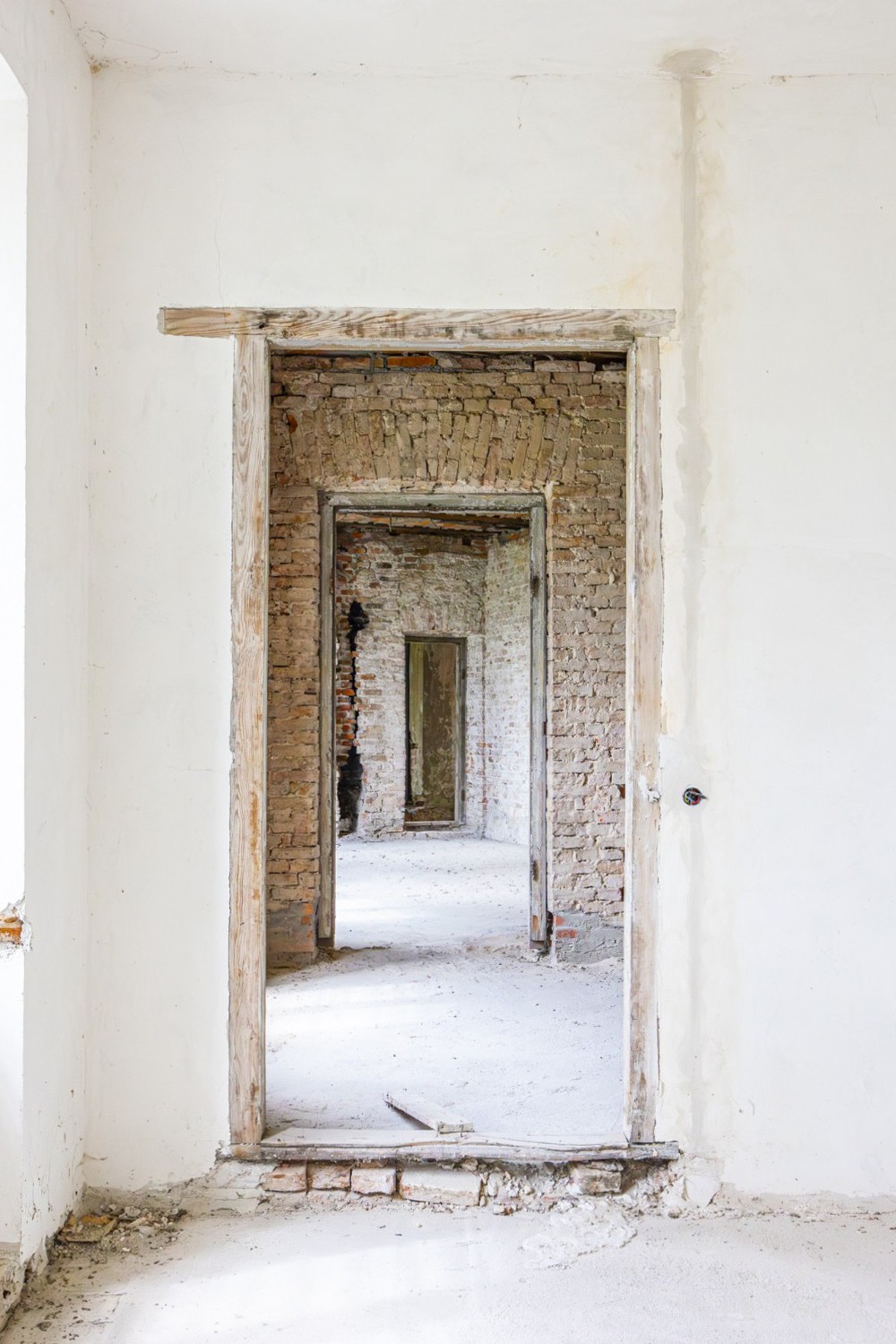
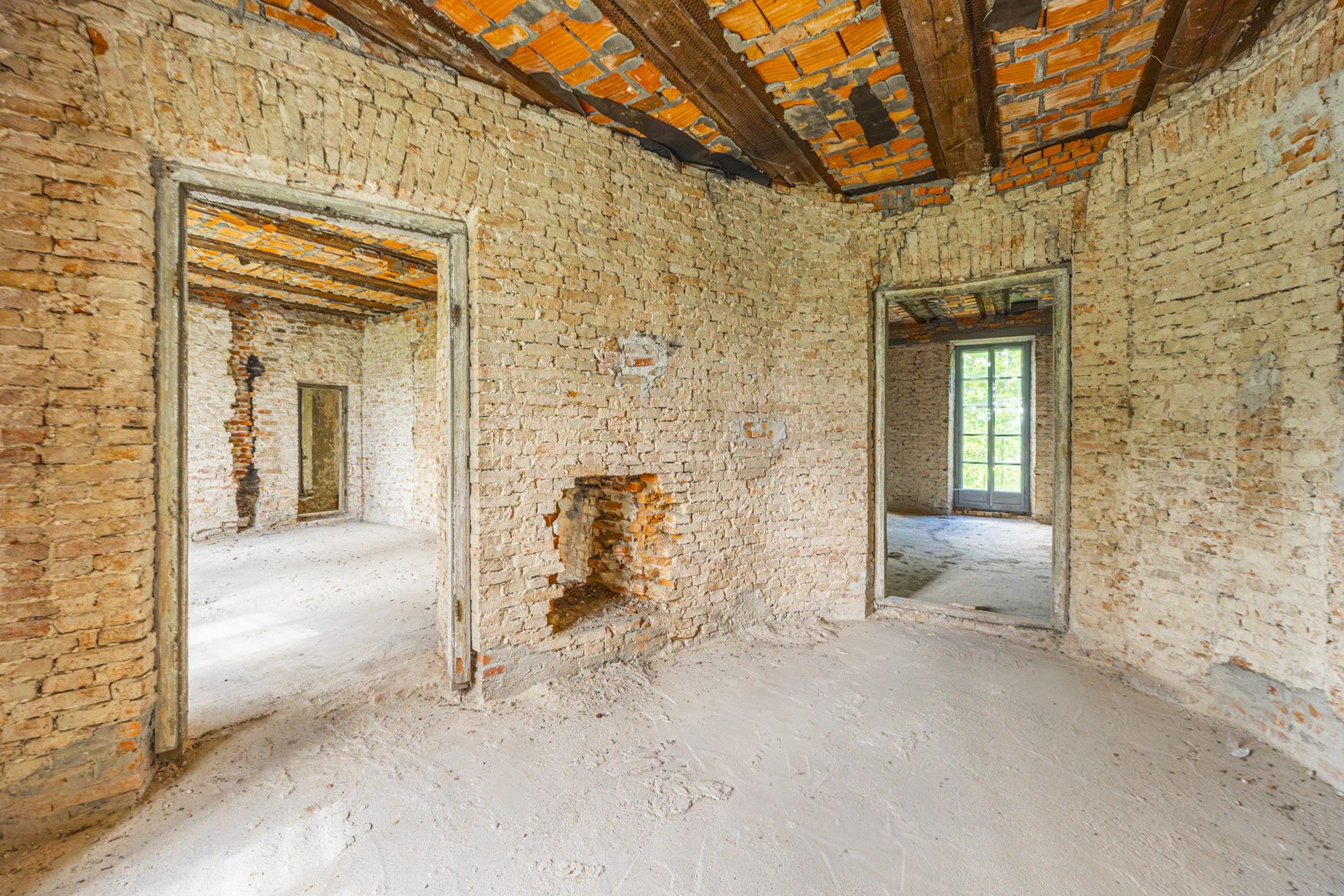
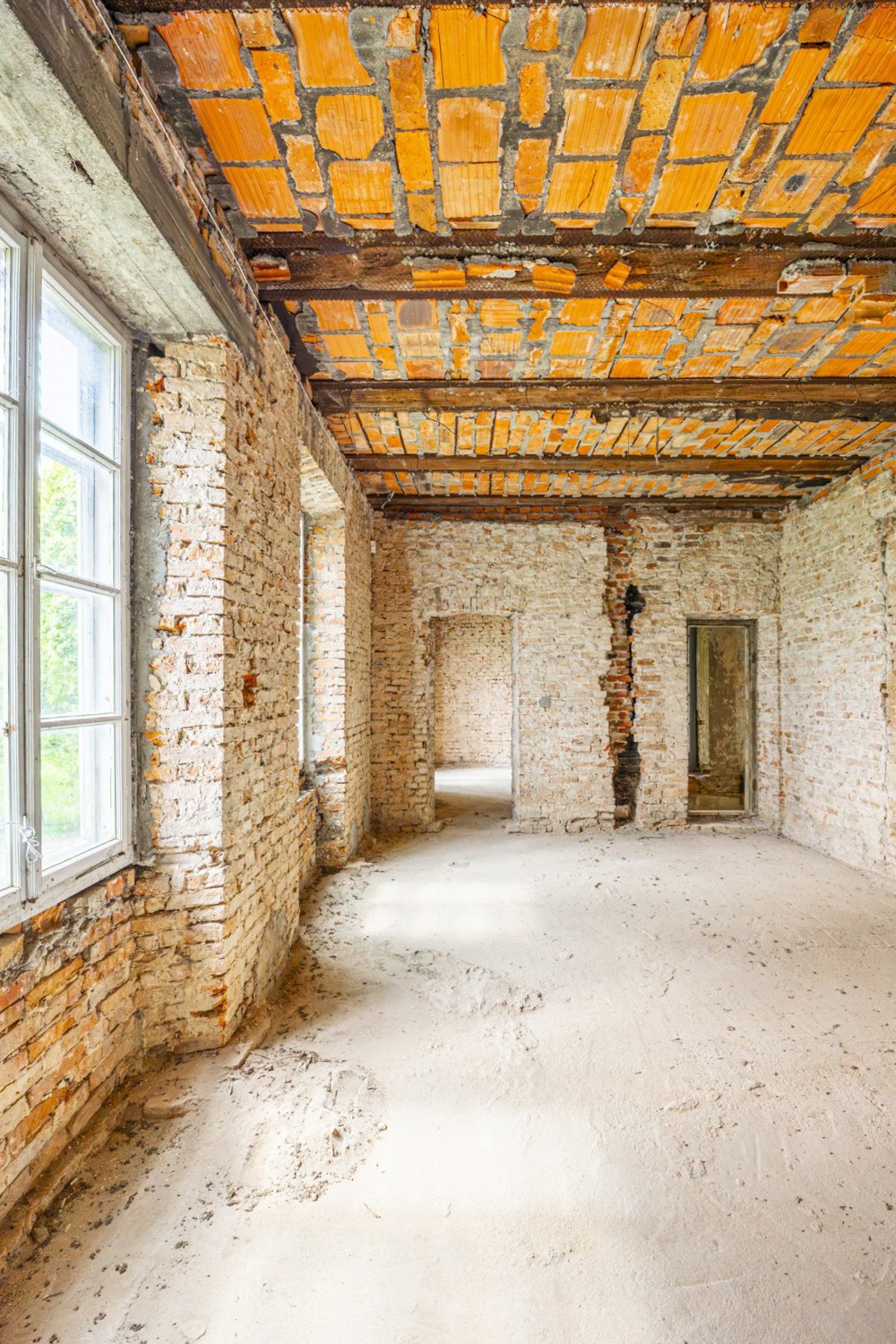
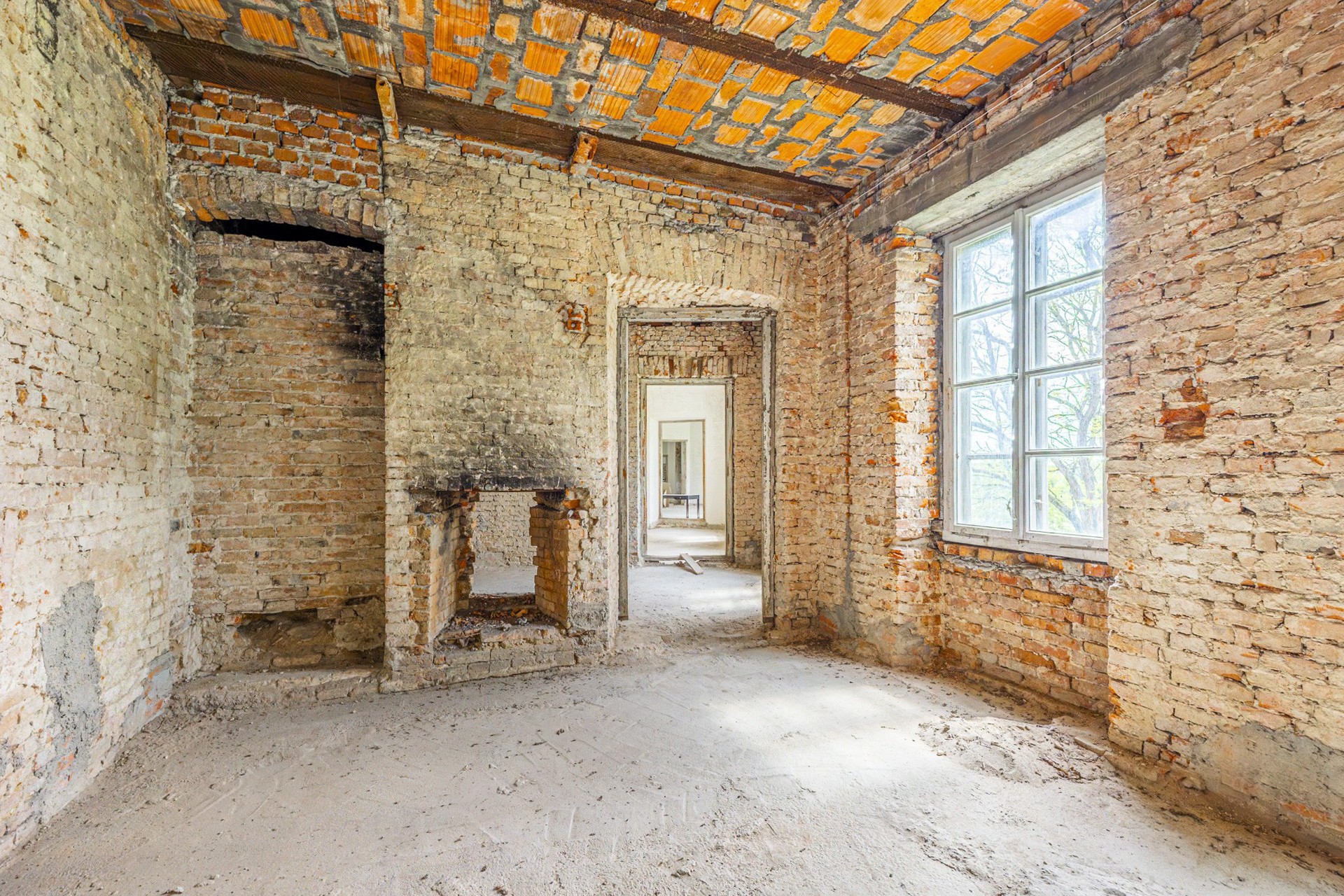
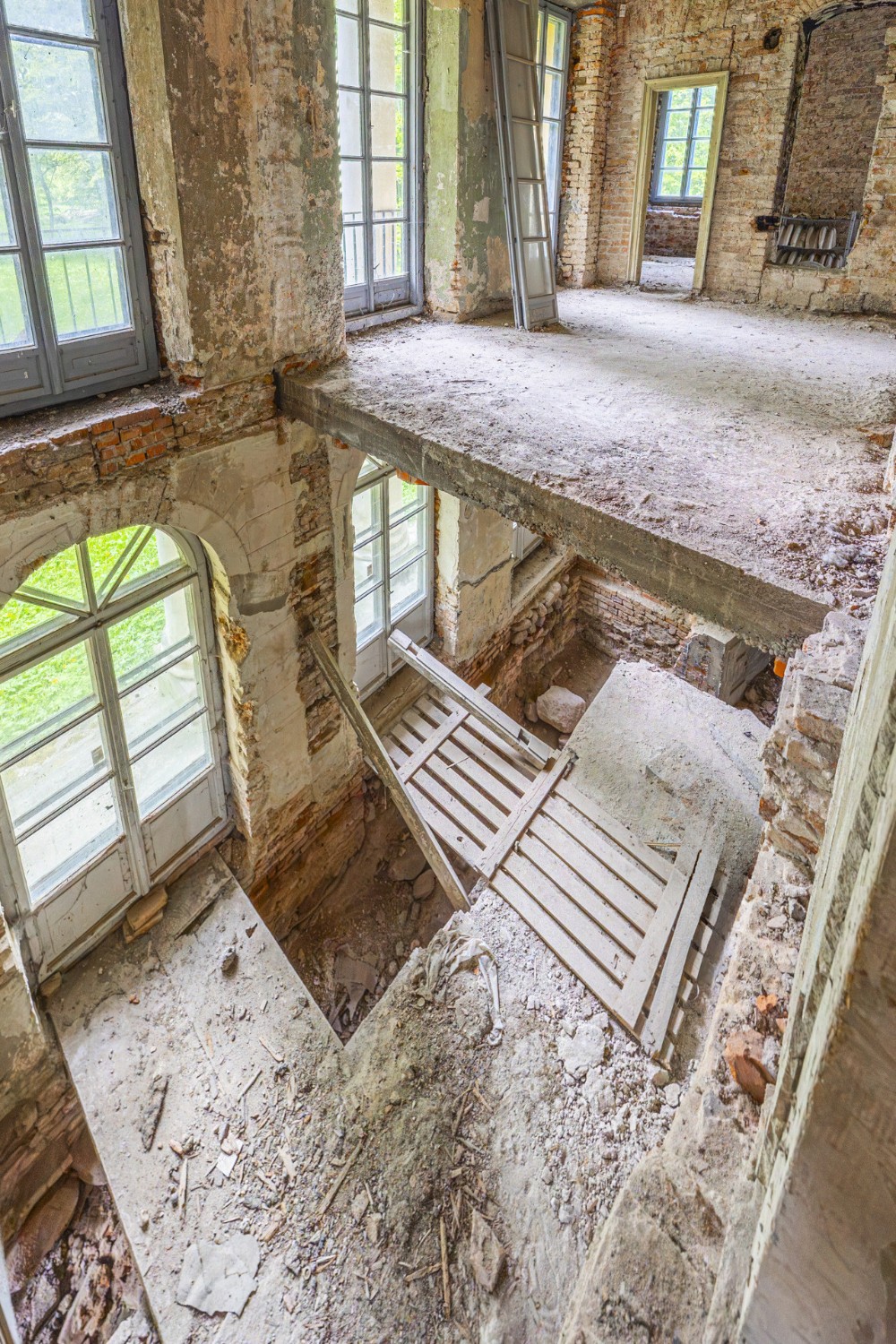
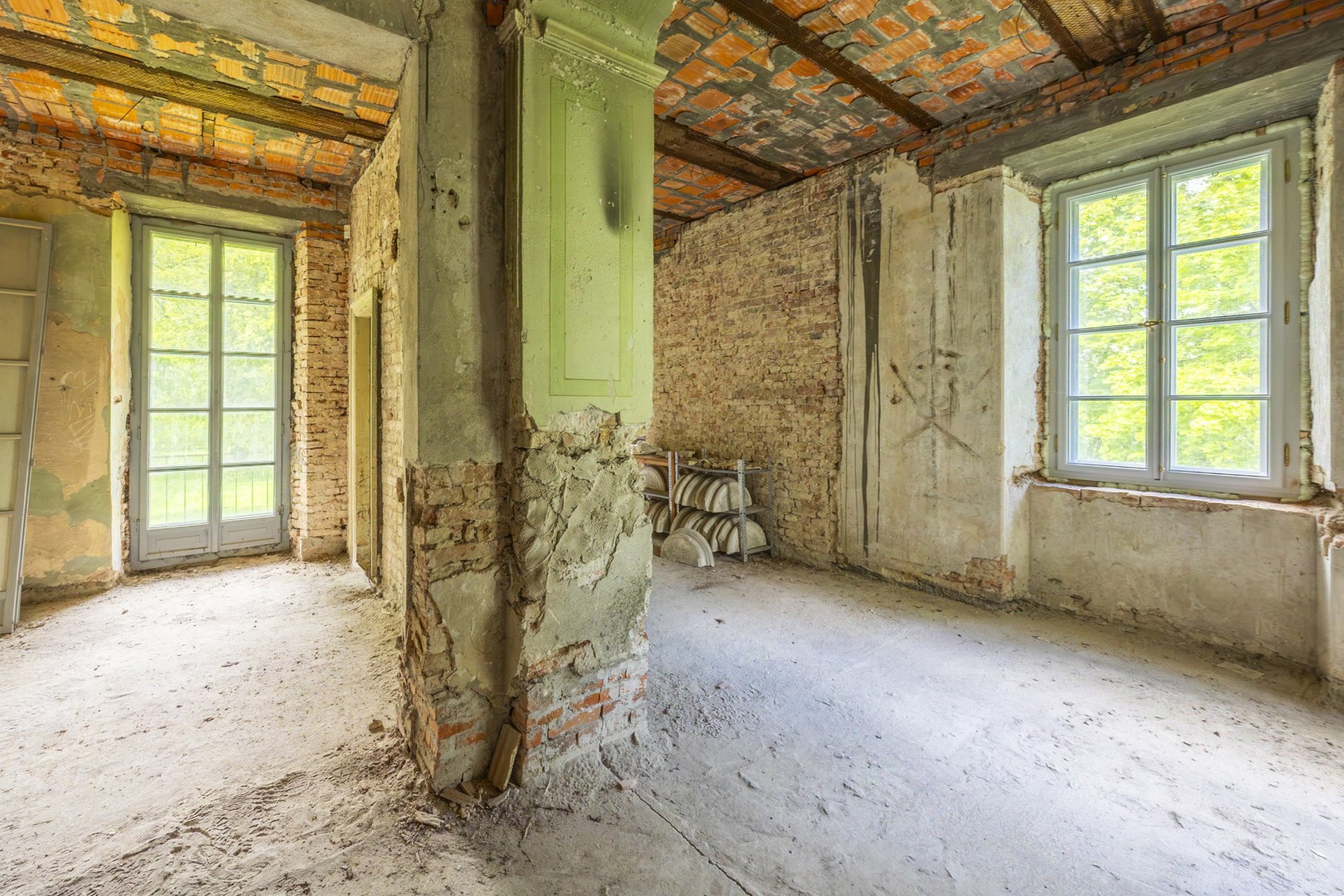
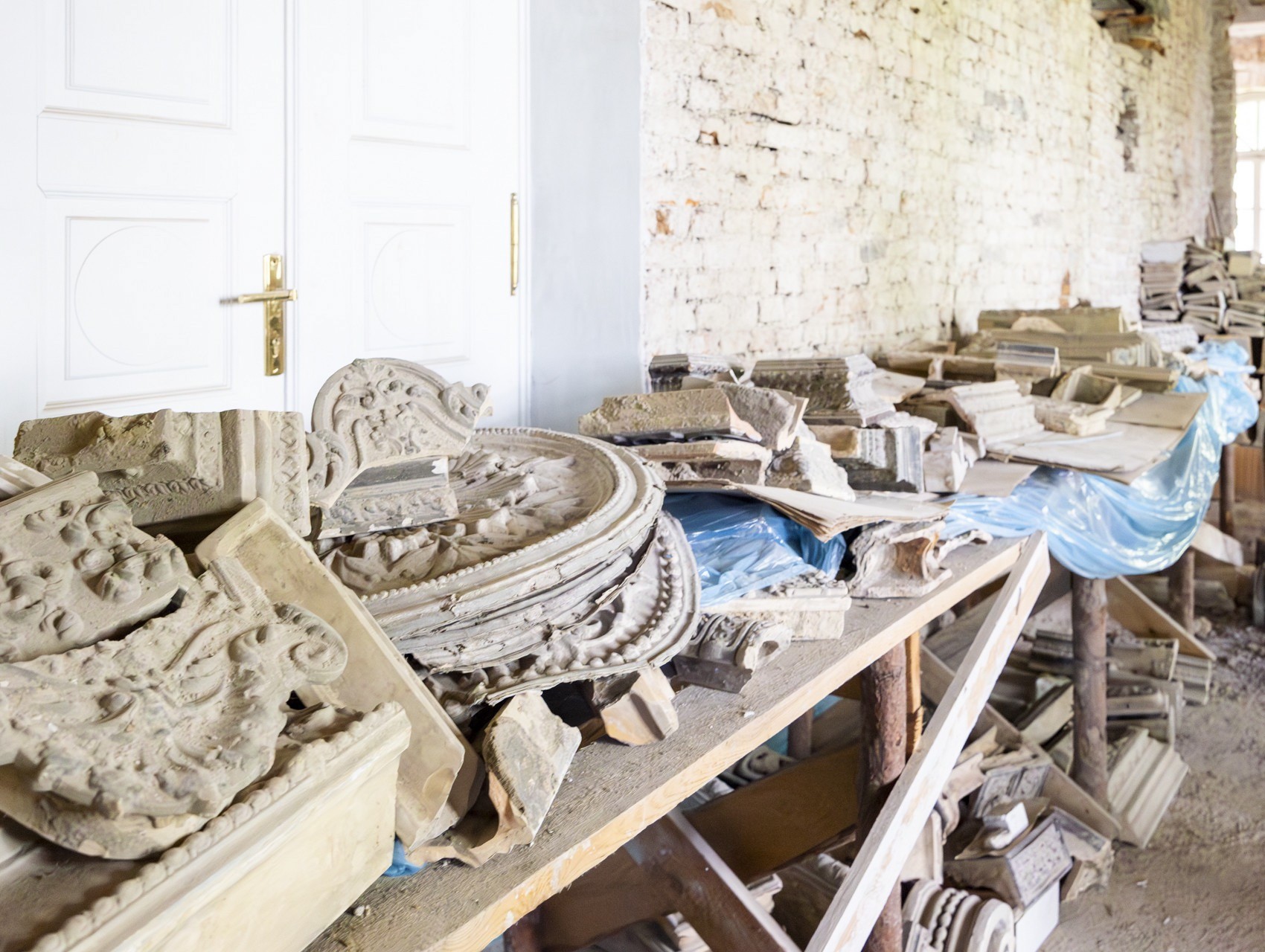
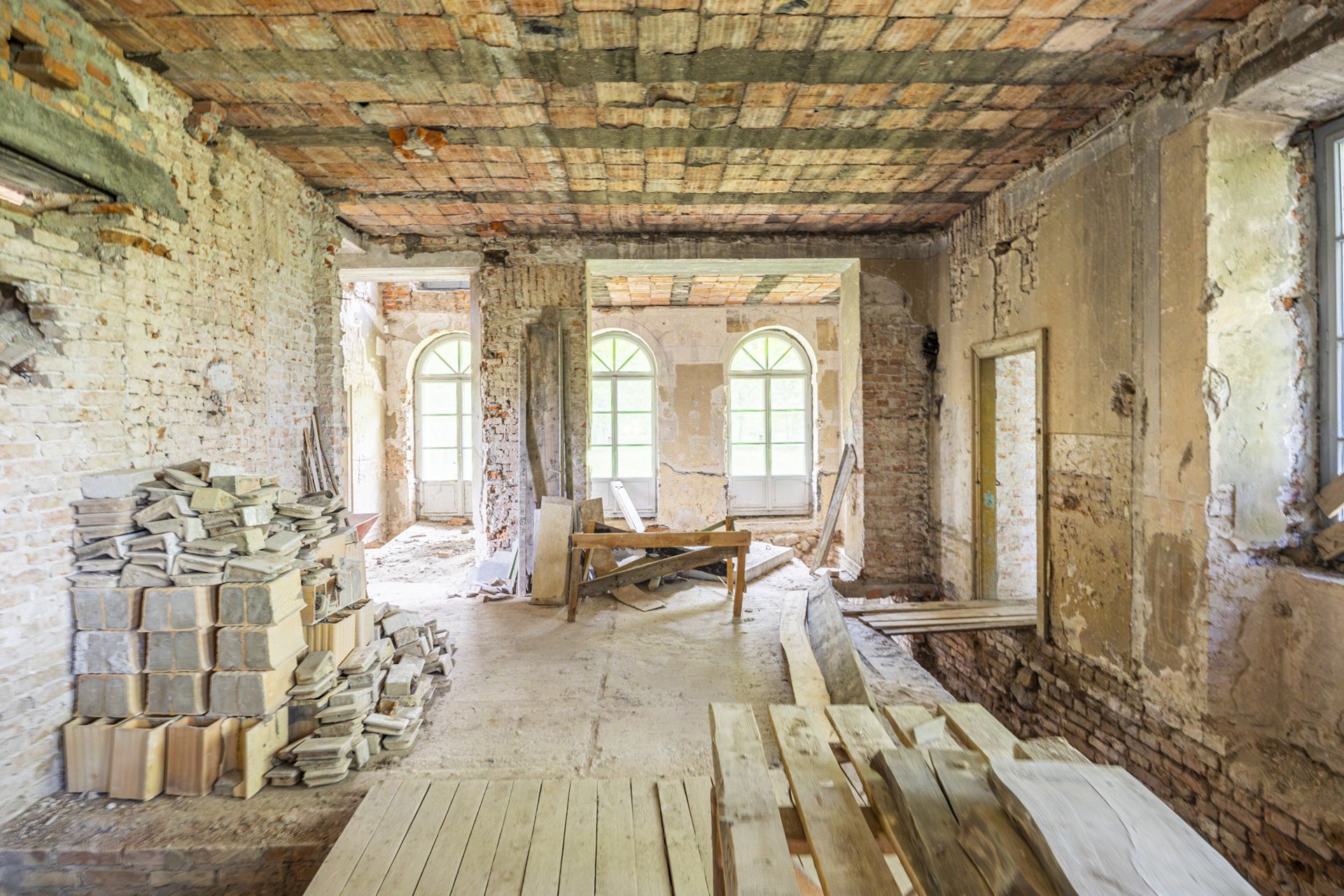
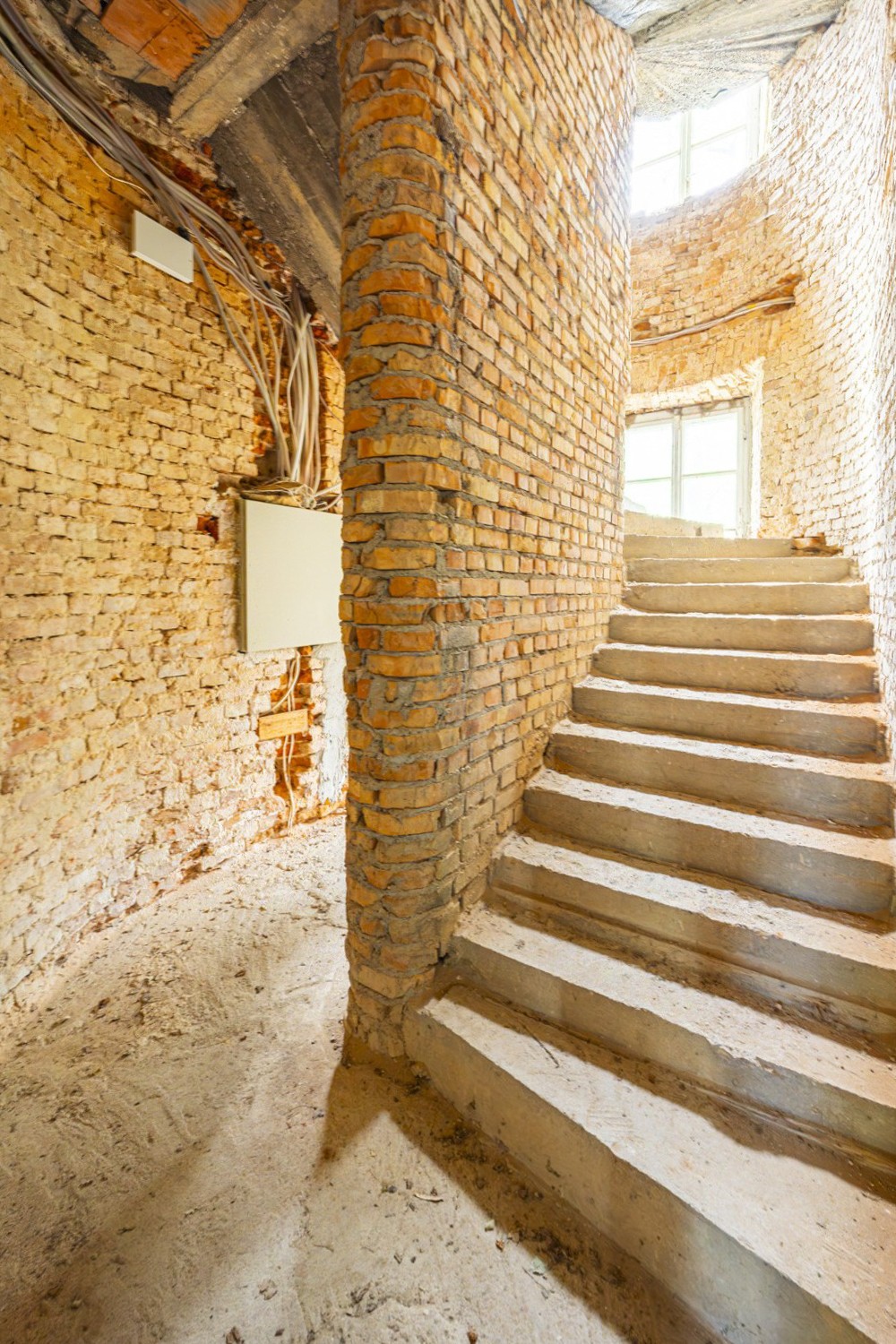
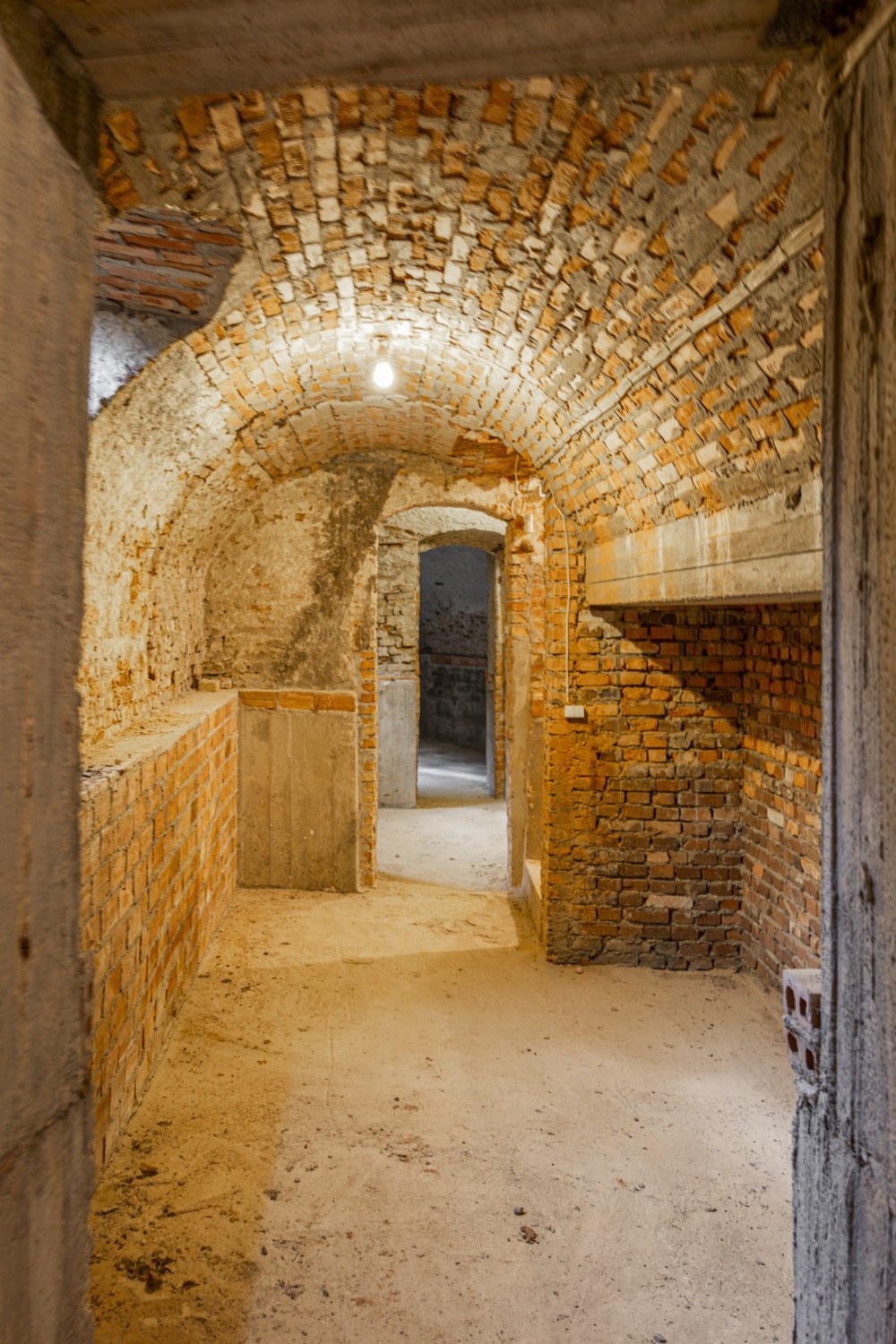
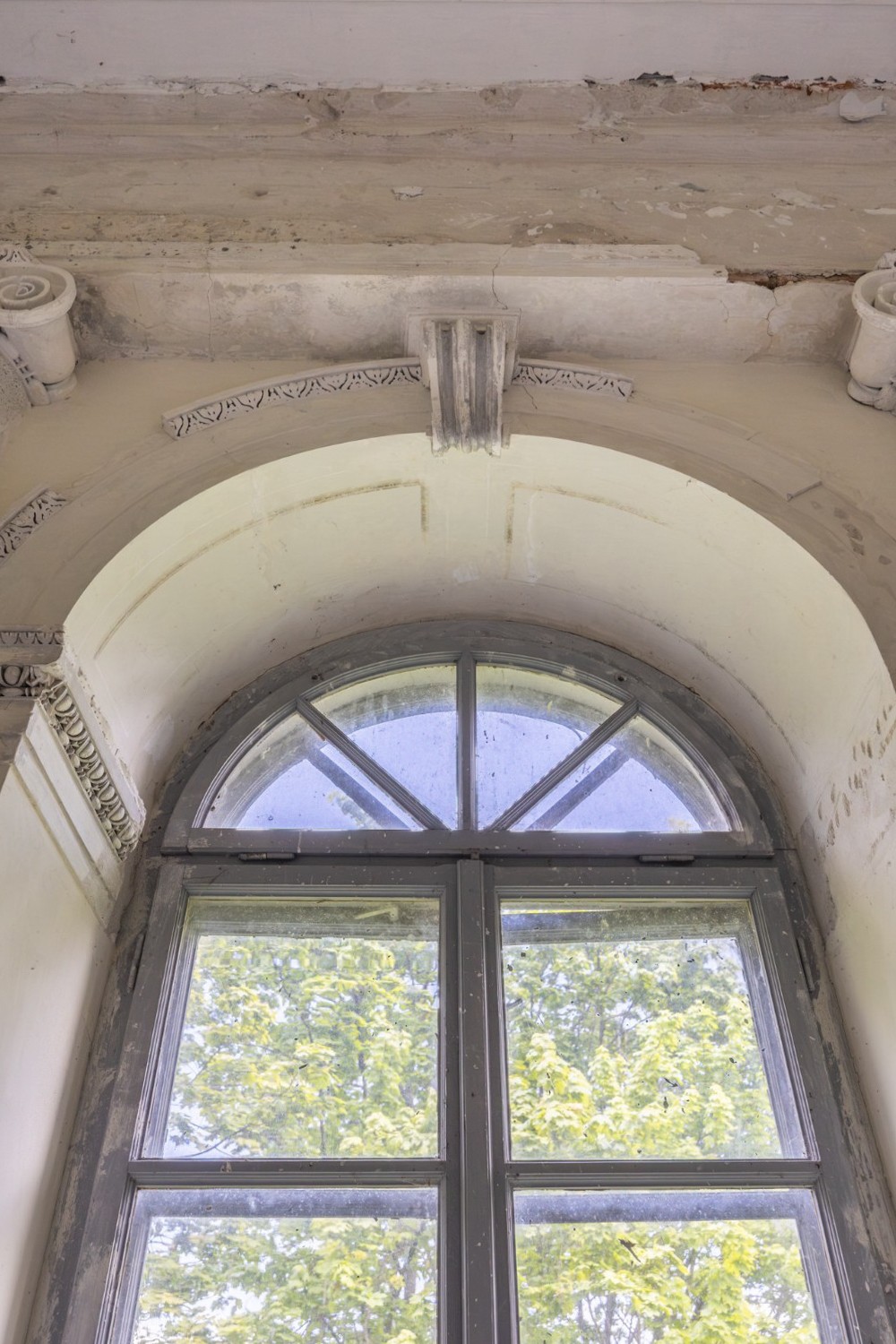
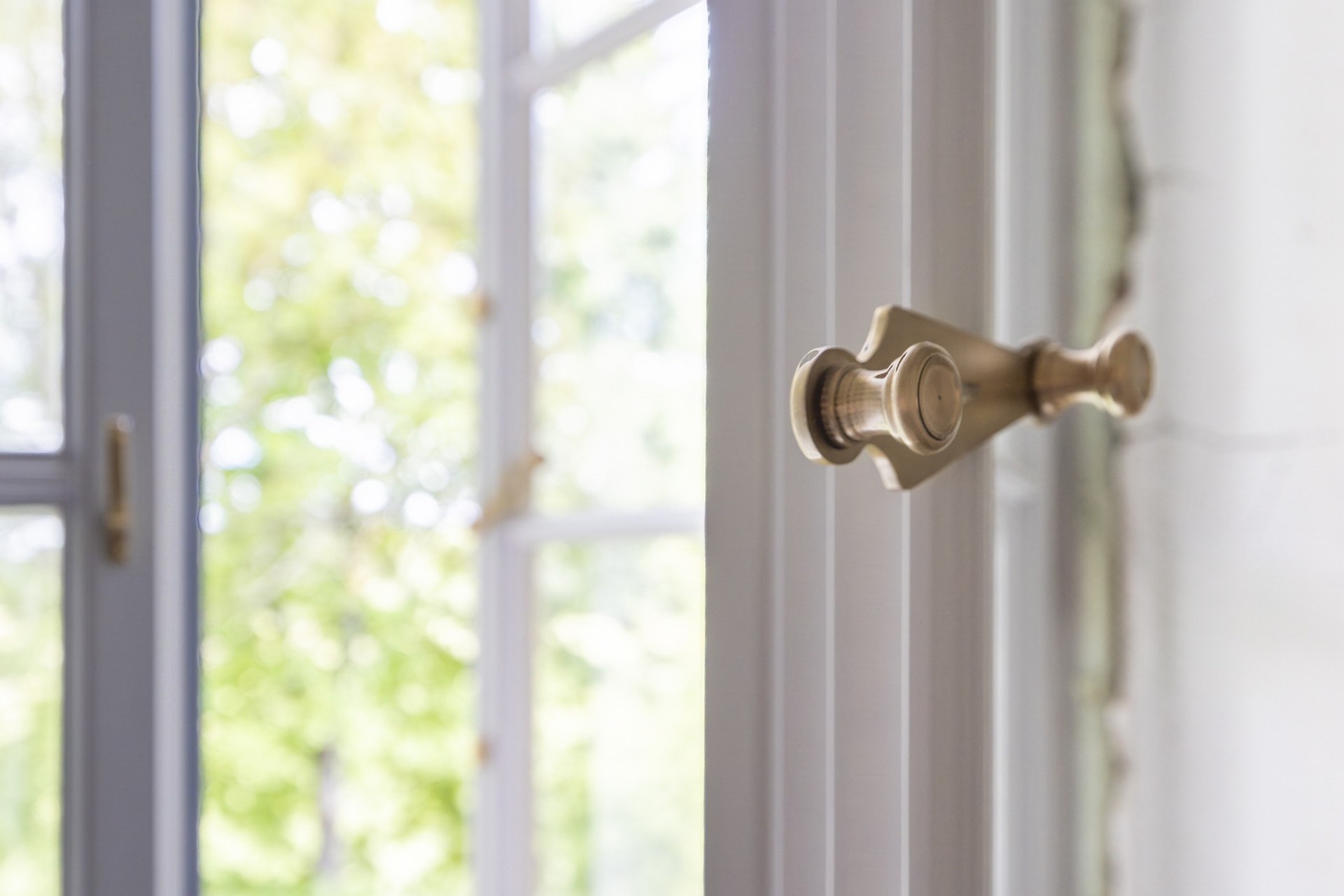
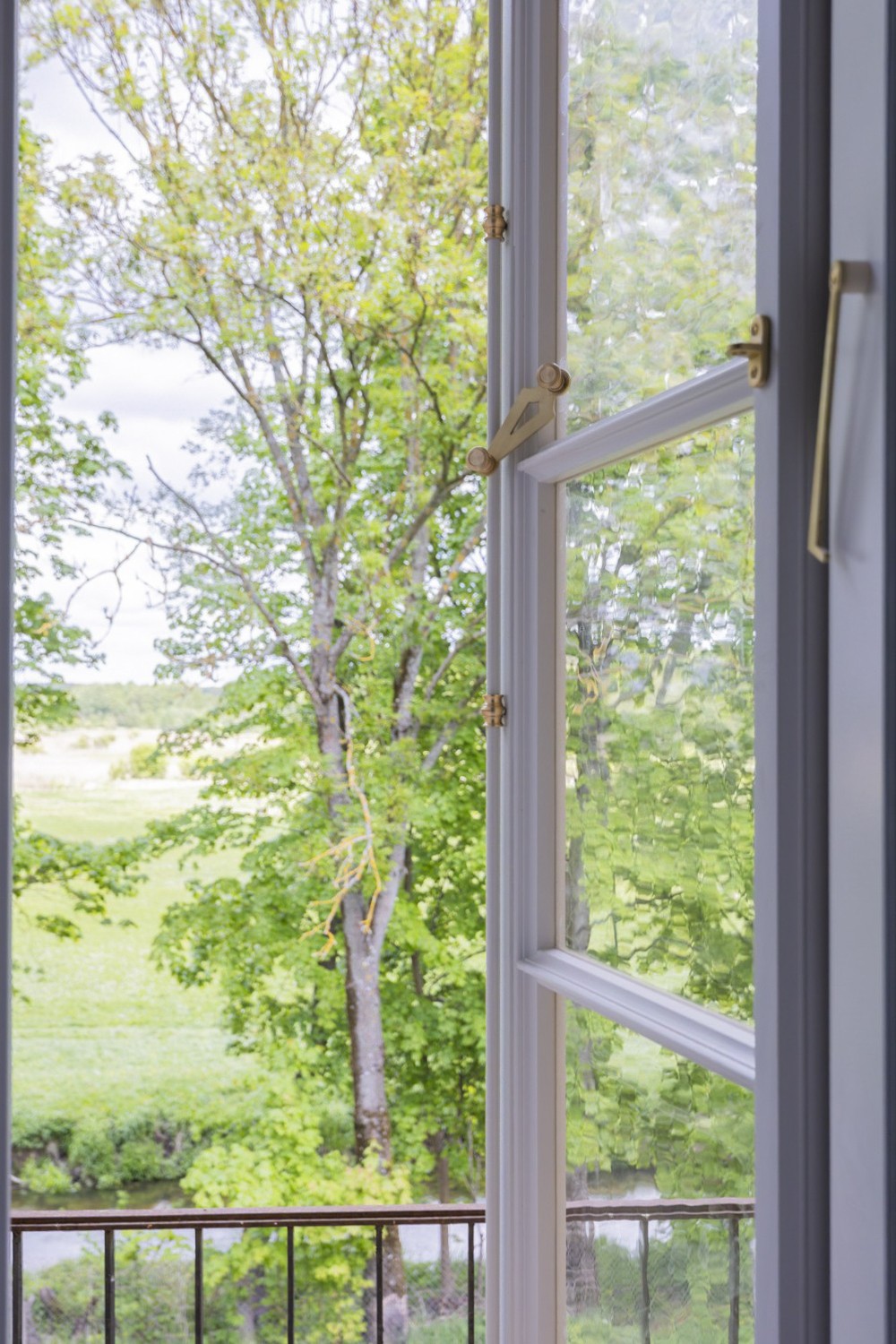
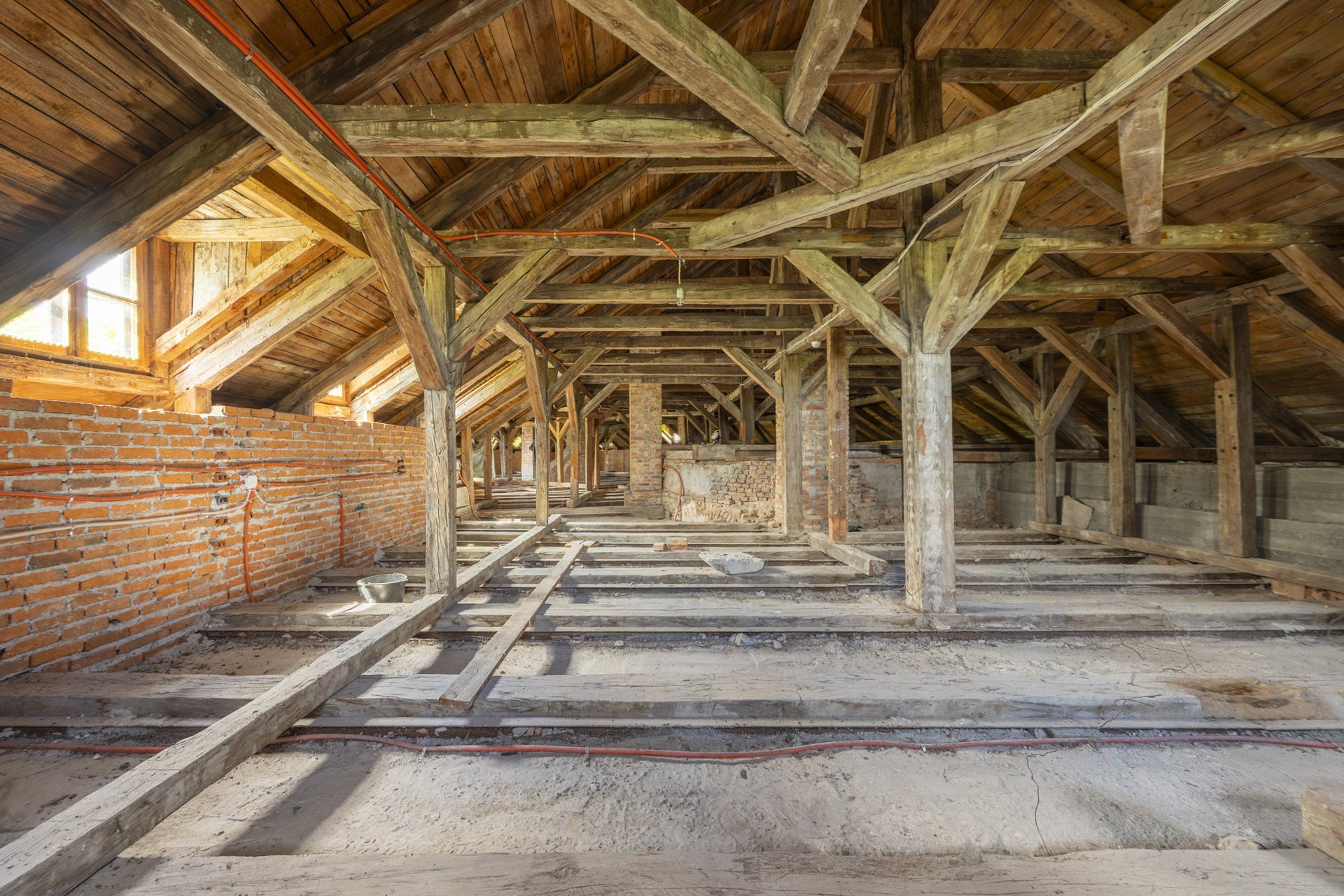
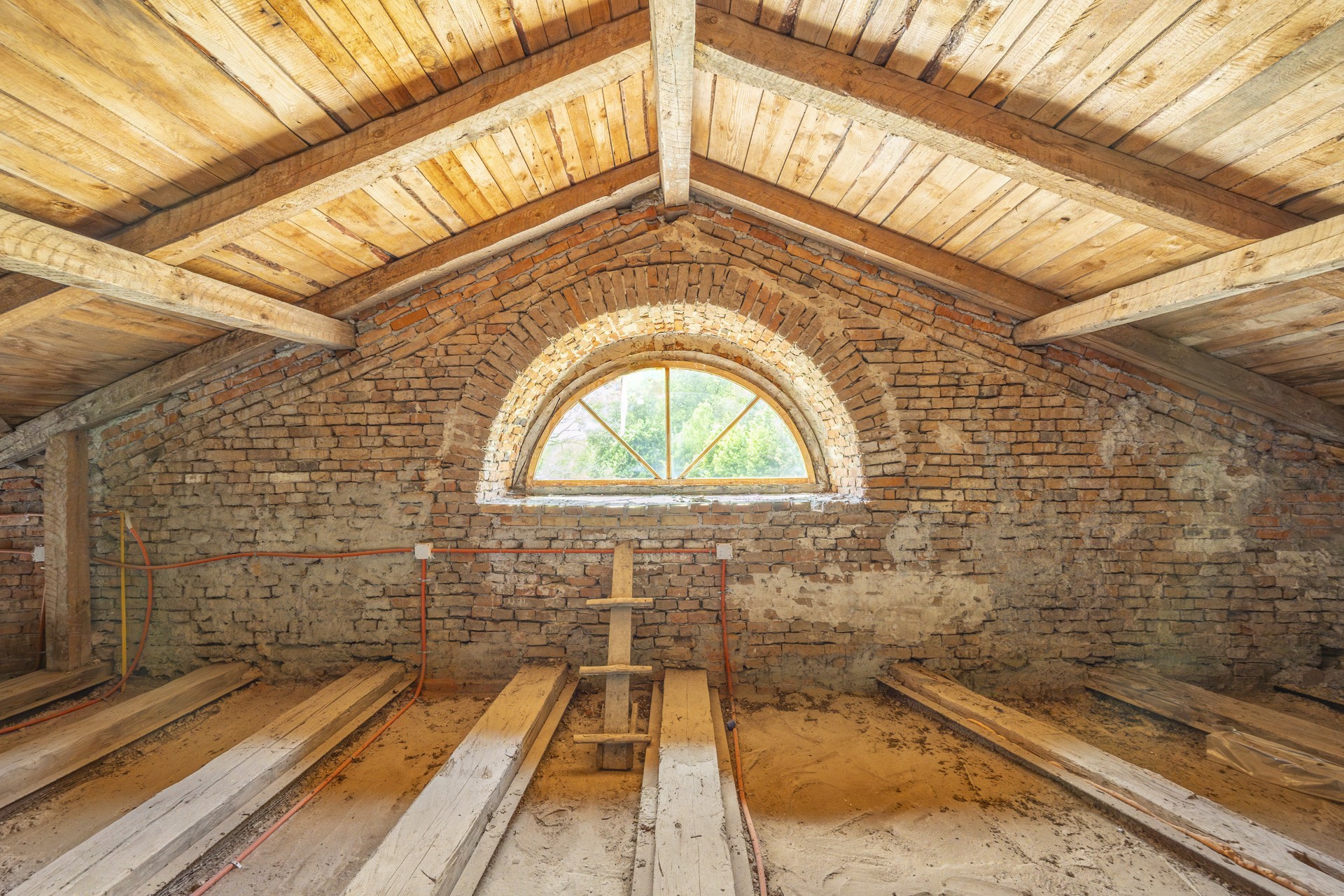
The property requires a comprehensive restoration. To date, initial works have included the gutting of the interior, the replacement of original timber joists with concrete floors, the heritage-compliant renewal of ten windows and the repair and conservation of the roof. The estate is equipped with a mains electricity connection, a private well and a professional security system.
Internal Arrangement
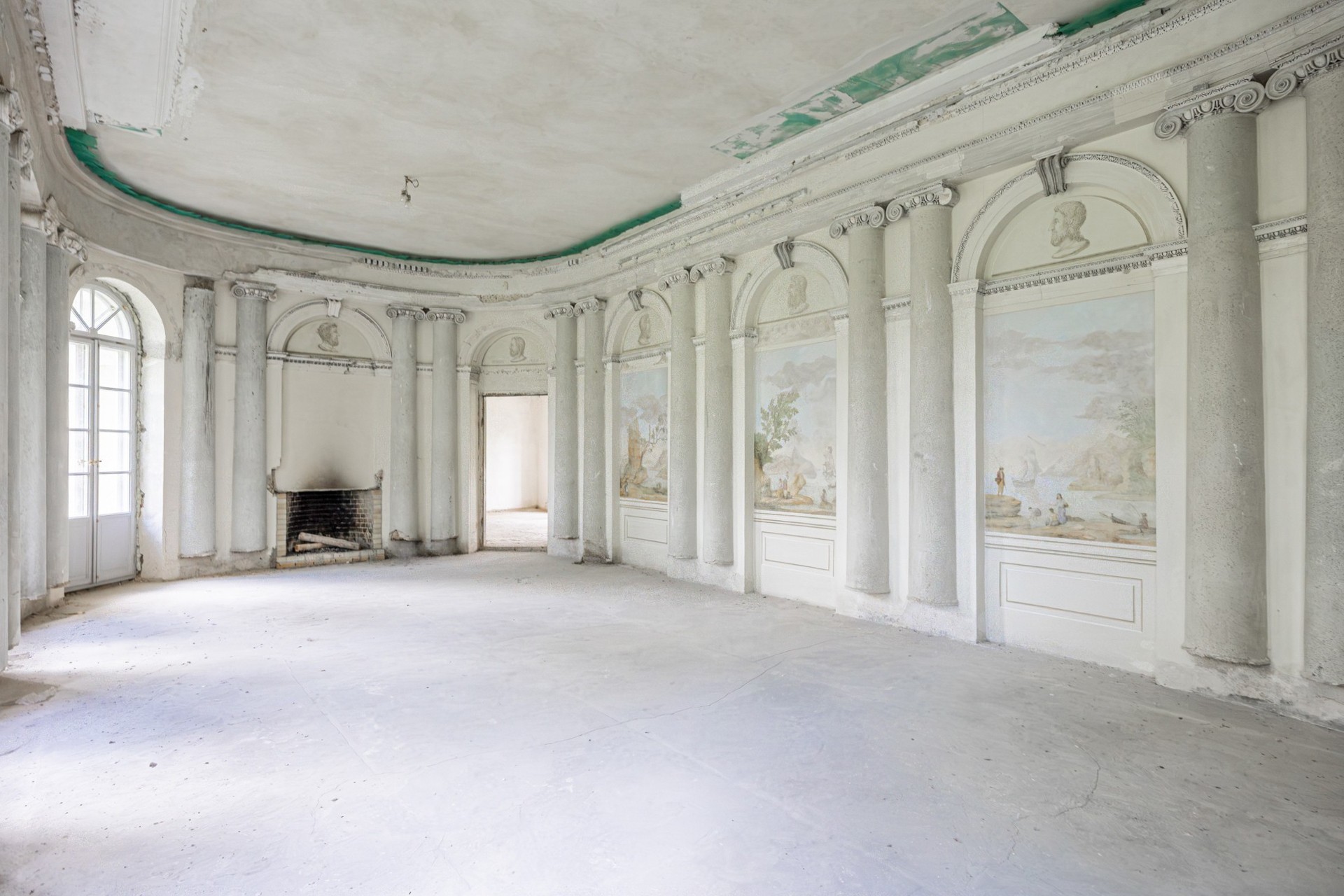
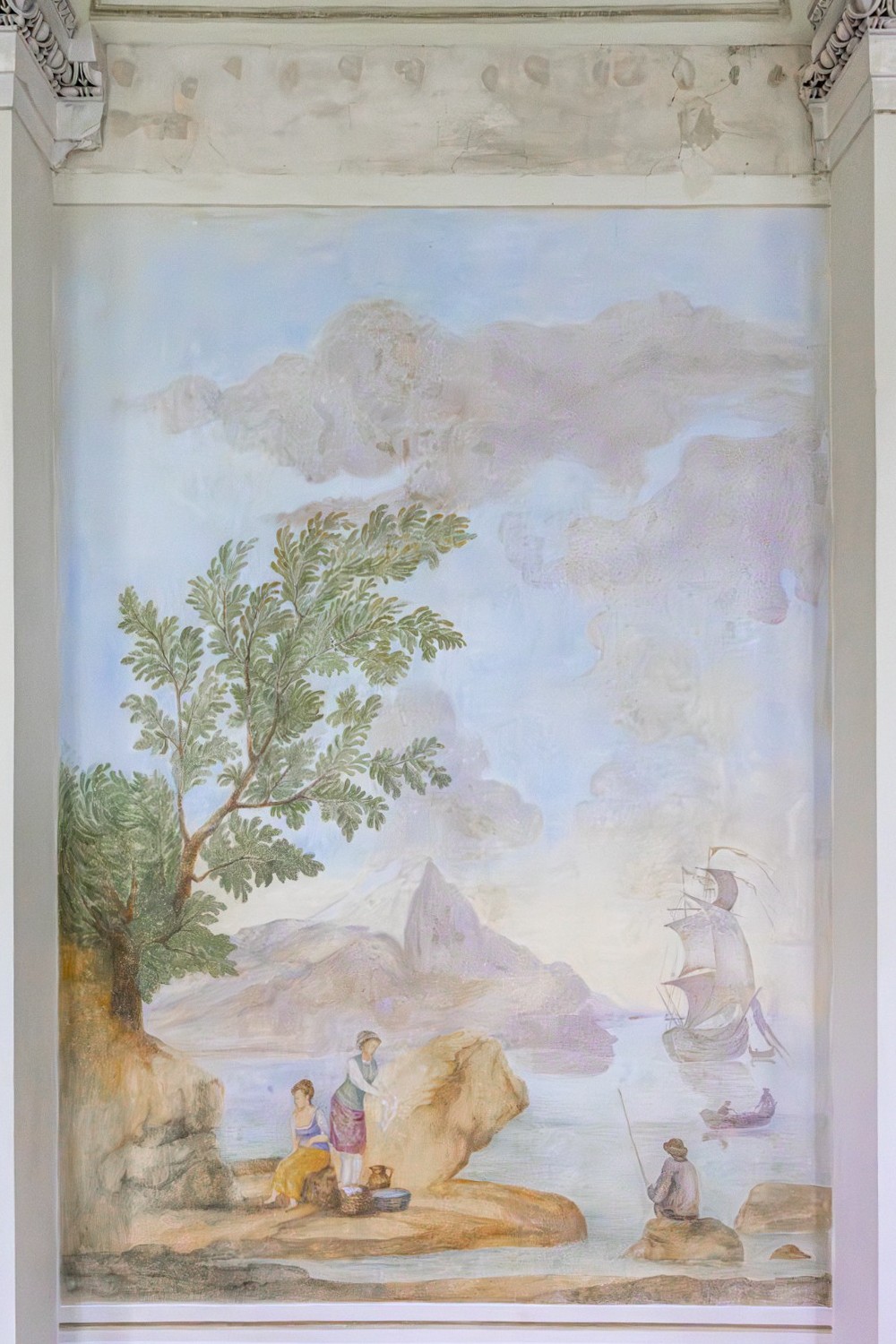
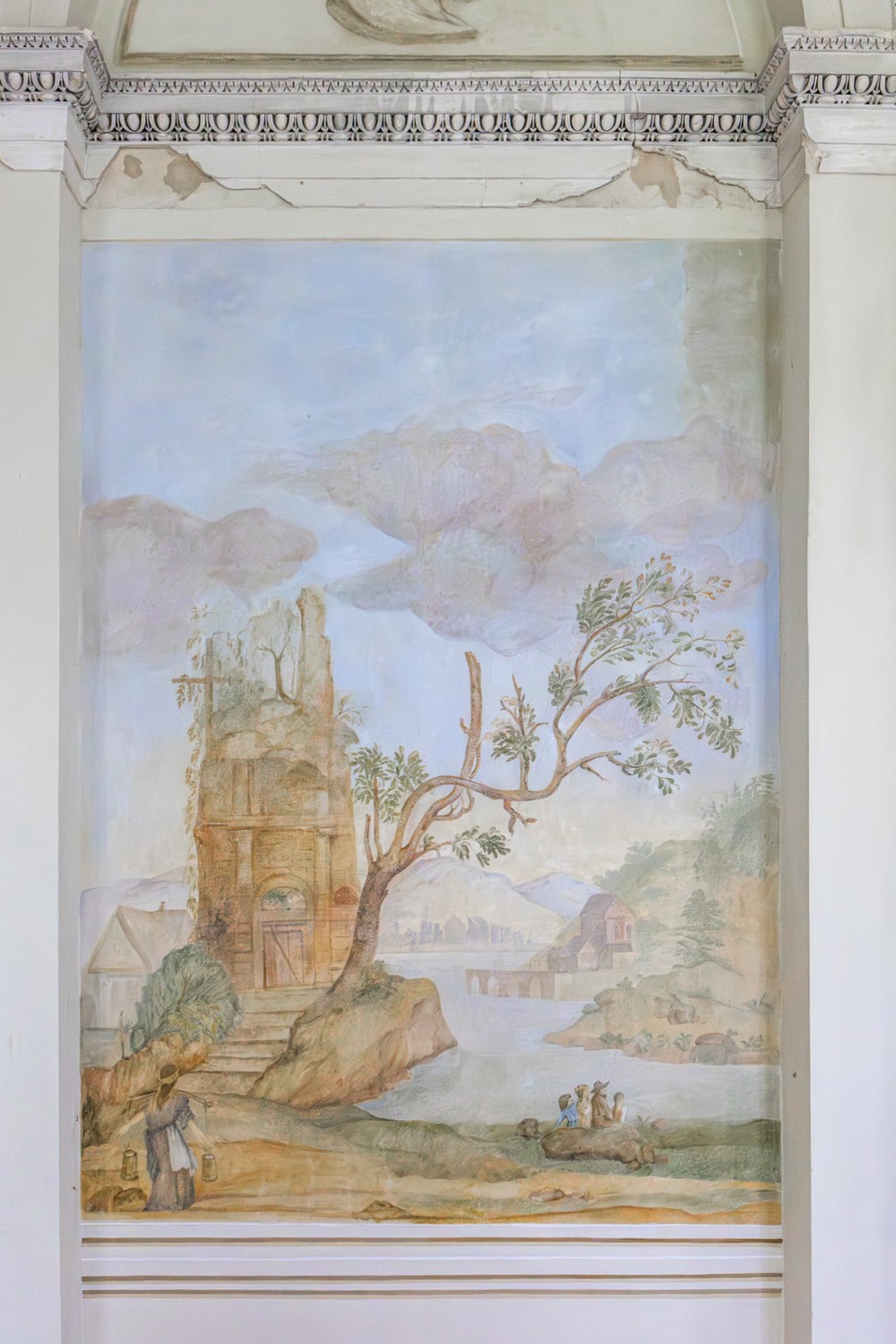
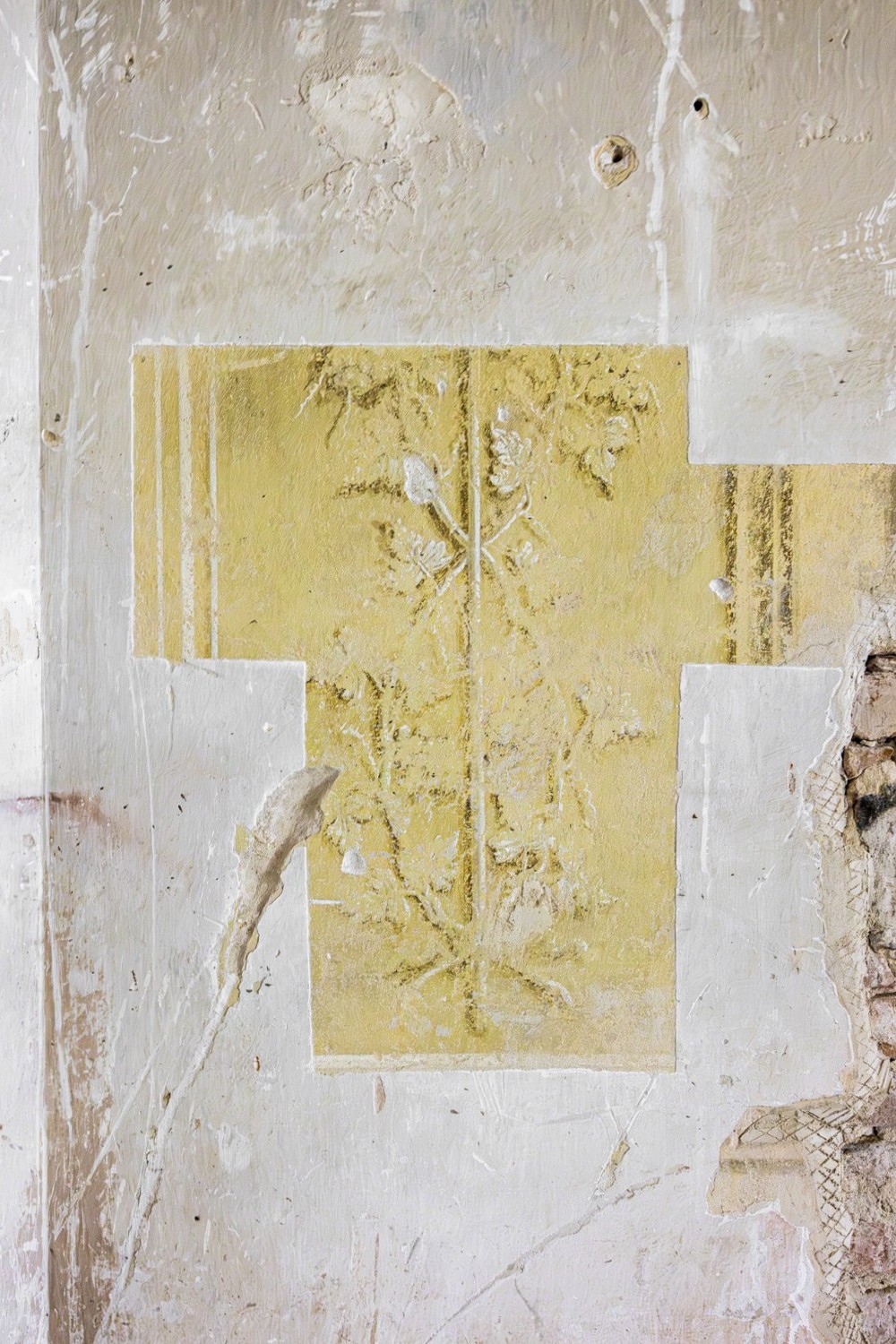
The entrance leads into a series of expansive reception spaces. The ground floor historically housed the living quarters and a dining room adorned with frescoes depicting Warsaw’s Łazienki Park and a monument to King John III Sobieski. These frescoes remain only in fragments and require specialist conservation by art restorers.
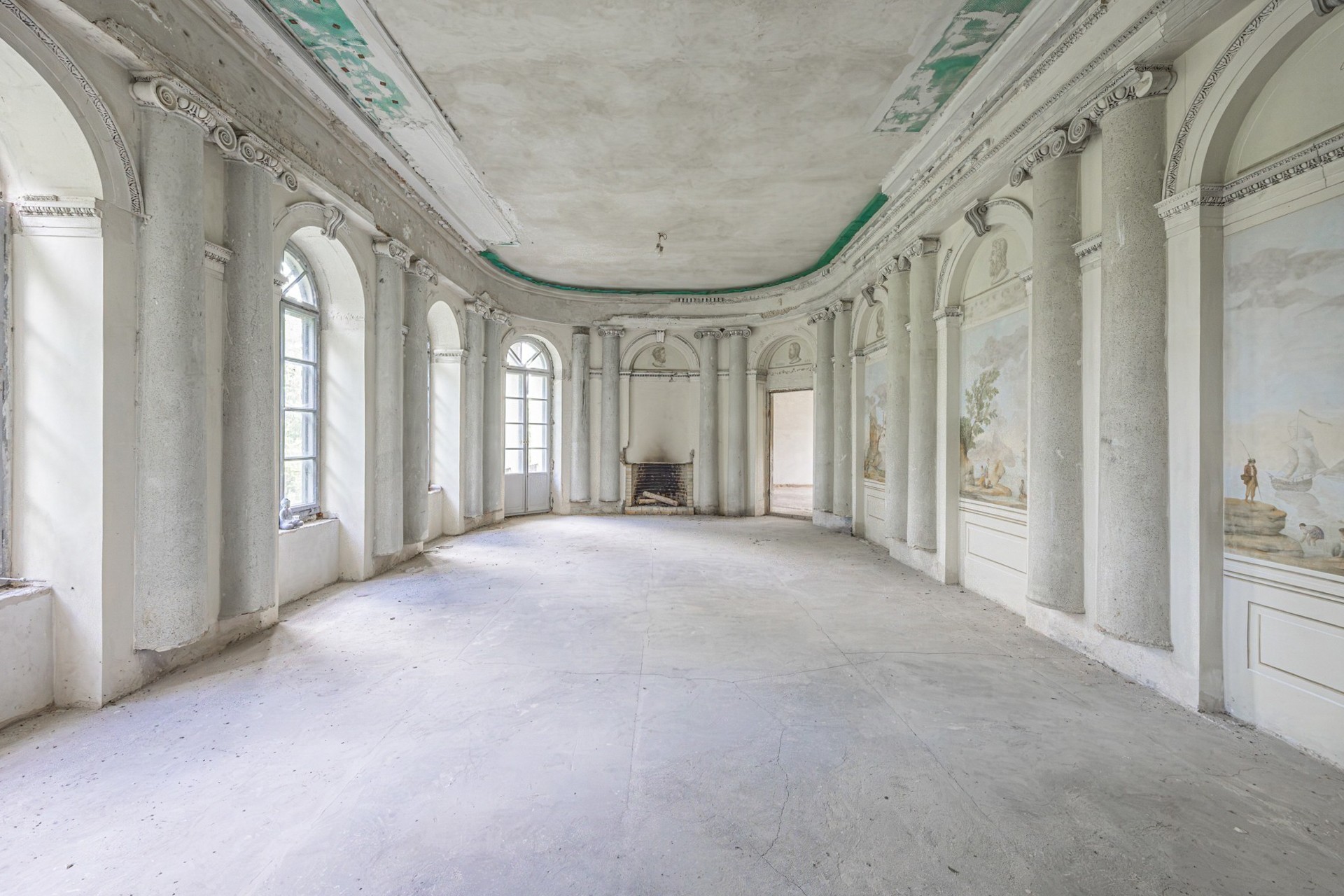
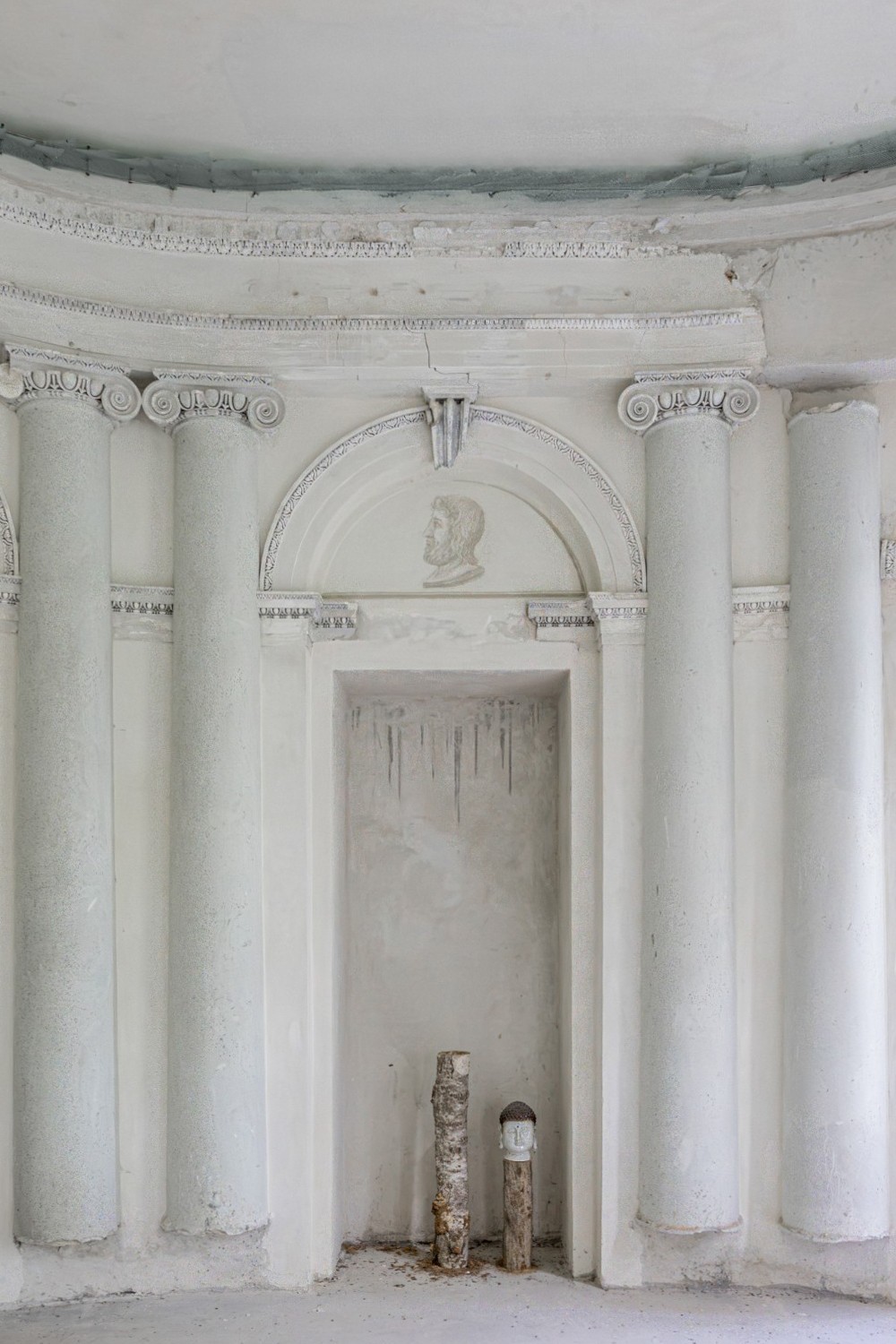
The upper floor contained the formal state rooms, including a large dining hall and a ballroom featuring semi-circular scagliola (stuckmarmor) columns. The ballroom has undergone partial restoration, during which the wall paintings were stabilised and the windows replaced.
Architectural Form
The building's structure comprises two rectangular wings set at an obtuse angle. The central three-bay section is defined by a four-column Ionic portico. In contrast to the classical regularity of the front, the garden elevation is intentionally asymmetrical, featuring a portico with a balcony and a corner loggia.
Grounds
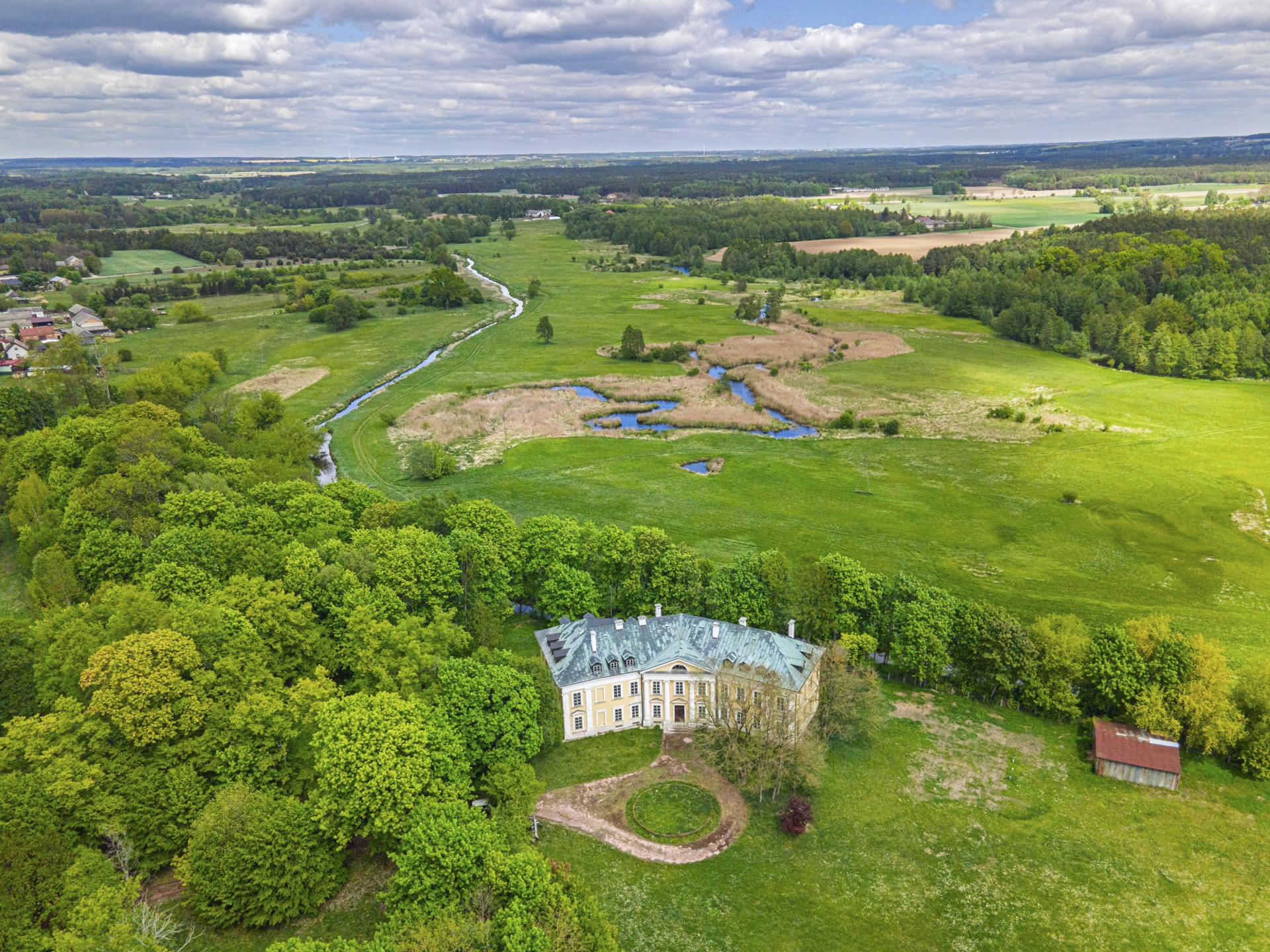
The palace is situated 60 kilometres north of Warsaw in the municipality of Luberadz. The park extends to the west, while the northern and eastern boundaries border a nature reserve and a stream. The property is not visible from the public road, ensuring complete privacy with no neighbouring encroachments on the grounds.
With a sustainable restoration and usage concept, Luberadz Palace offers the potential to become a significant landmark within the region's cultural landscape.
Additional language profiles