 RTICO
RTICO
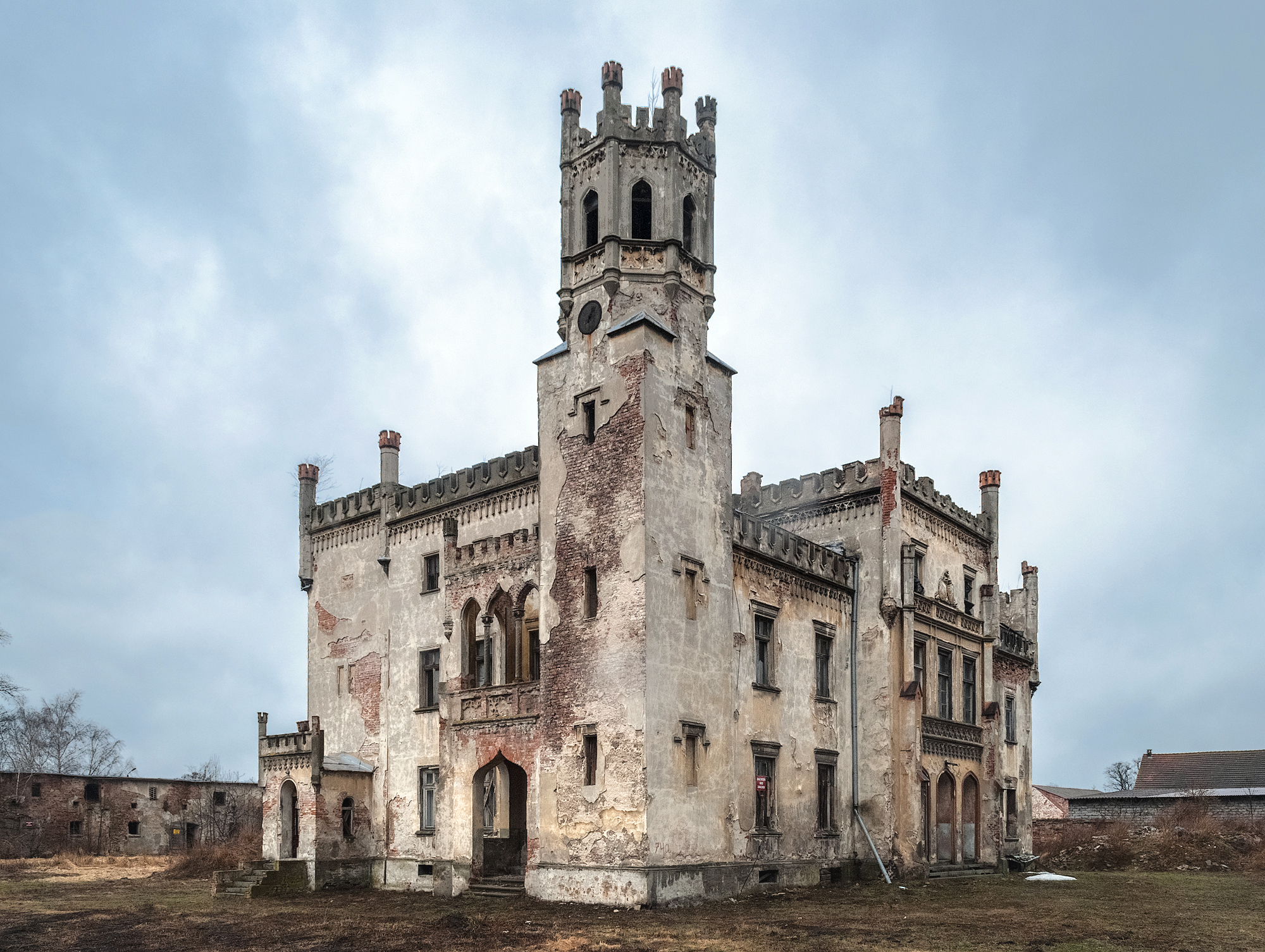
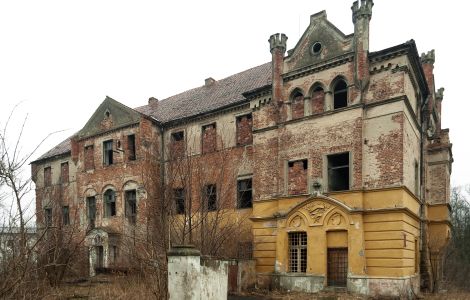
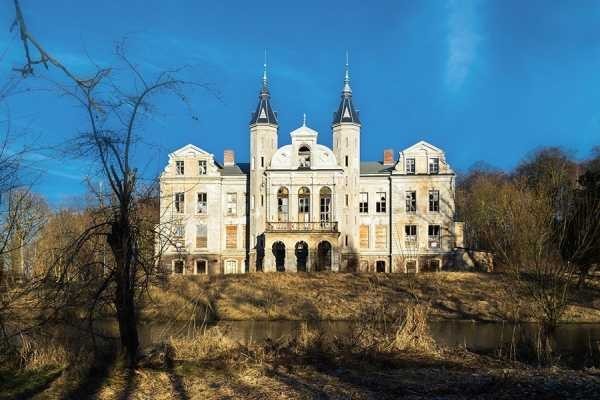
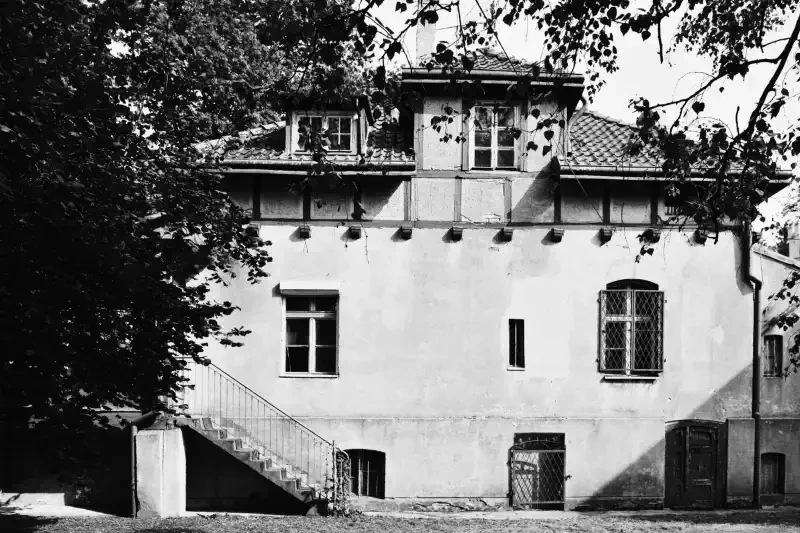
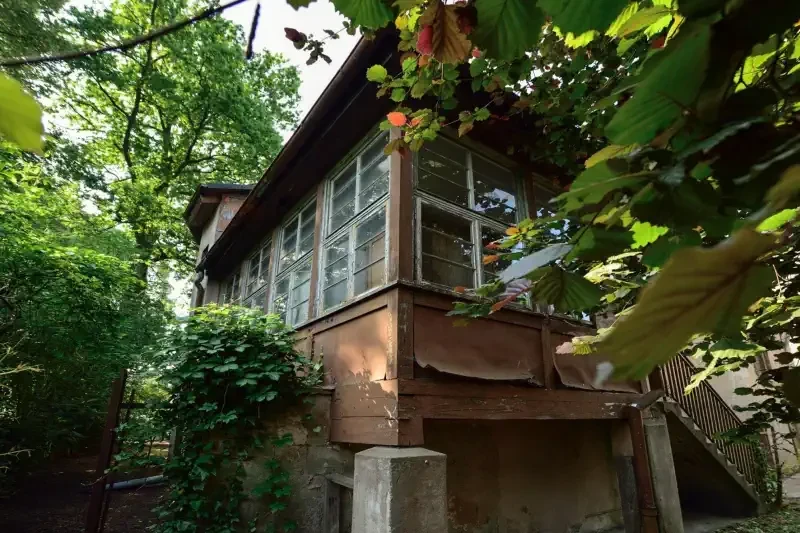
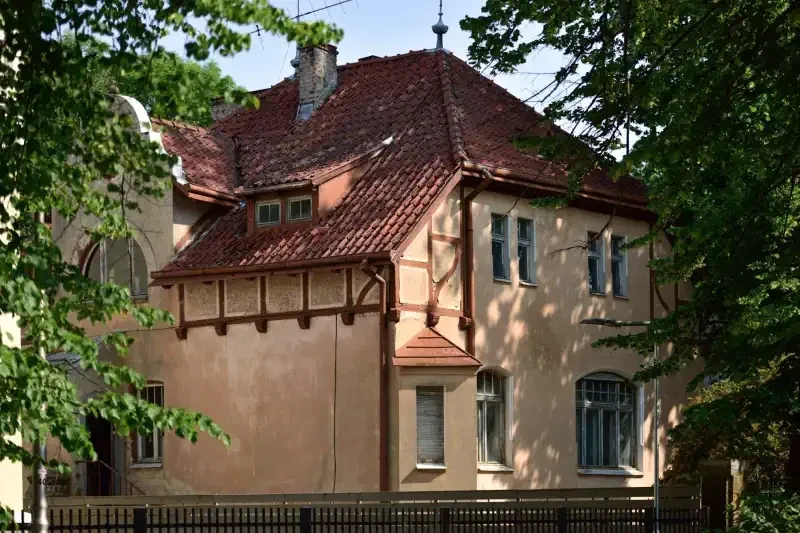
Norok manor in South-Western Poland before restoration
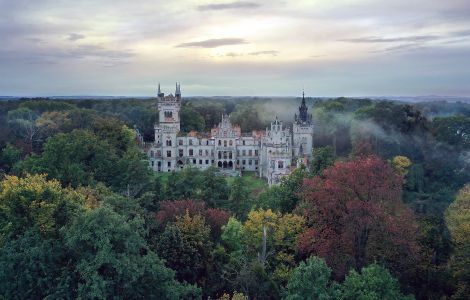
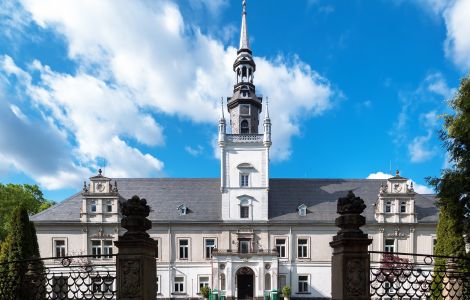
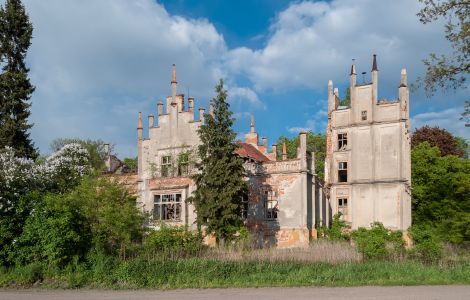
The manor house in Narok (Pałac w Naroku; Norock estate, Falkenberg district, today Opole Voivodeship) was built in 1869 for the Prussian landowner Friedrich von Wichelhaus on the site of an earlier predecessor building. It is one of the most distinctive country estates of historic Upper Silesia and exemplifies the Neo-Gothic style, which was widespread in the late 19th century, featuring Byzantine-inspired motifs.
Alongside typical Neo-Gothic elements such as encircling battlements and pinnacles, oriental influences are particularly visible to the left of the tower: a balcony with a central pointed horseshoe arch, flanked by slender columns and ornamental details reminiscent of Moorish design.
After 1945, the building was used for residential and agricultural purposes by a state-owned farm cooperative (PGR) and, following the political transformation, remained unused for decades in a severely dilapidated condition.
Today, the Narok Manor House presents itself following heritage-compliant restoration, with its façade reconstructed to once again reveal the oriental details. The revitalised two-hectare landscape park restores part of the estate’s original ensemble character.
Orientalising architecture in Poland
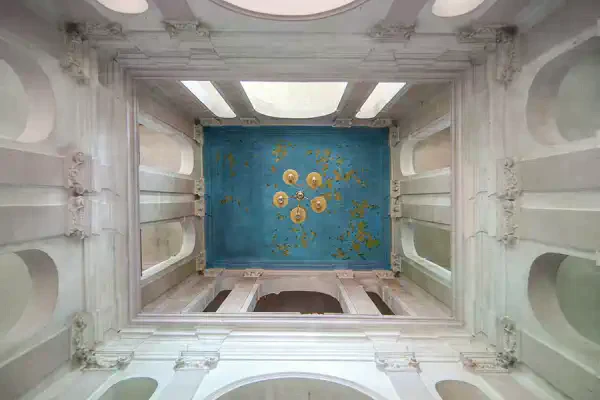
Orientalising architecture in Poland was primarily adopted in interior design – in larger and more significant aristocratic residences often in the form of an “oriental room” or “Moorish salon”. On façades, Orientalism remained rare and, where it did appear, was expressed in a relatively restrained manner.
A notable regional example can be found in Osiek in Lesser Poland. The local palace, Pałac w Osieku, with its delicately decorated interiors, is regarded as the most prominent example of Orientalising architecture in the country.

 Deutsch (DE)
 English (US)
 Polski (PL)




Share your opinion with us!