RTICO
RTICO

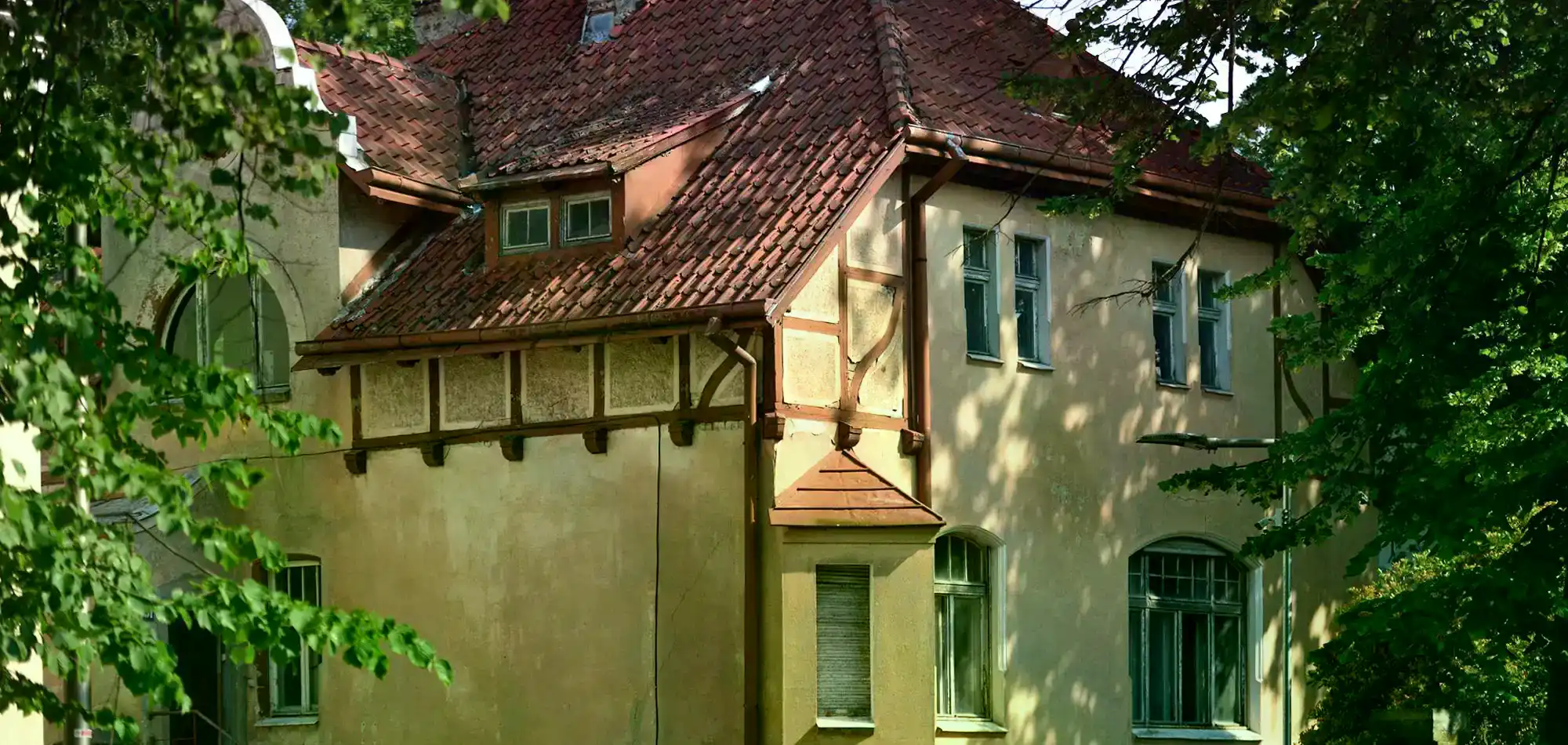
Piłsudskiego Street in Koszalin, formerly Danziger Straße, is one of the city’s most prestigious residential areas. Set among mature trees, law offices and architectural practices, it is home to a historic villa district preserved from the time of former Köslin - a level of architectural cohesion rarely found today.
Attorney Iwona owns two historic villas on this street. One of them, the villa at Piłsudskiego 51, is now being offered as a development project. In this interview, she explains what makes the building unique, which regulatory frameworks and heritage protections apply to historic properties in Poland and why Koszalin remains an underestimated market despite its proximity to the Baltic Sea.
Audio feature (German only)
To accompany this interview, we recommend a report by Deutschlandfunk Kultur from 25 March 2026. The program Weltzeit
explores the current tourism boom on the Polish Baltic coast and the region’s development through EU funding.
- A house from childhood
- A street that has preserved its character
- Why Koszalin is overlooked
- The Baltic Sea nearby, forest at the doorstep
09U
– cryptic codes explained- Local or national heritage status?
- Tax advantages through
Pałacyk Plus
- Language barriers are no cause for concern
1. Iwona, what personal connection do you have to the house attributed to tax councillor Wilhelm Brandrup?
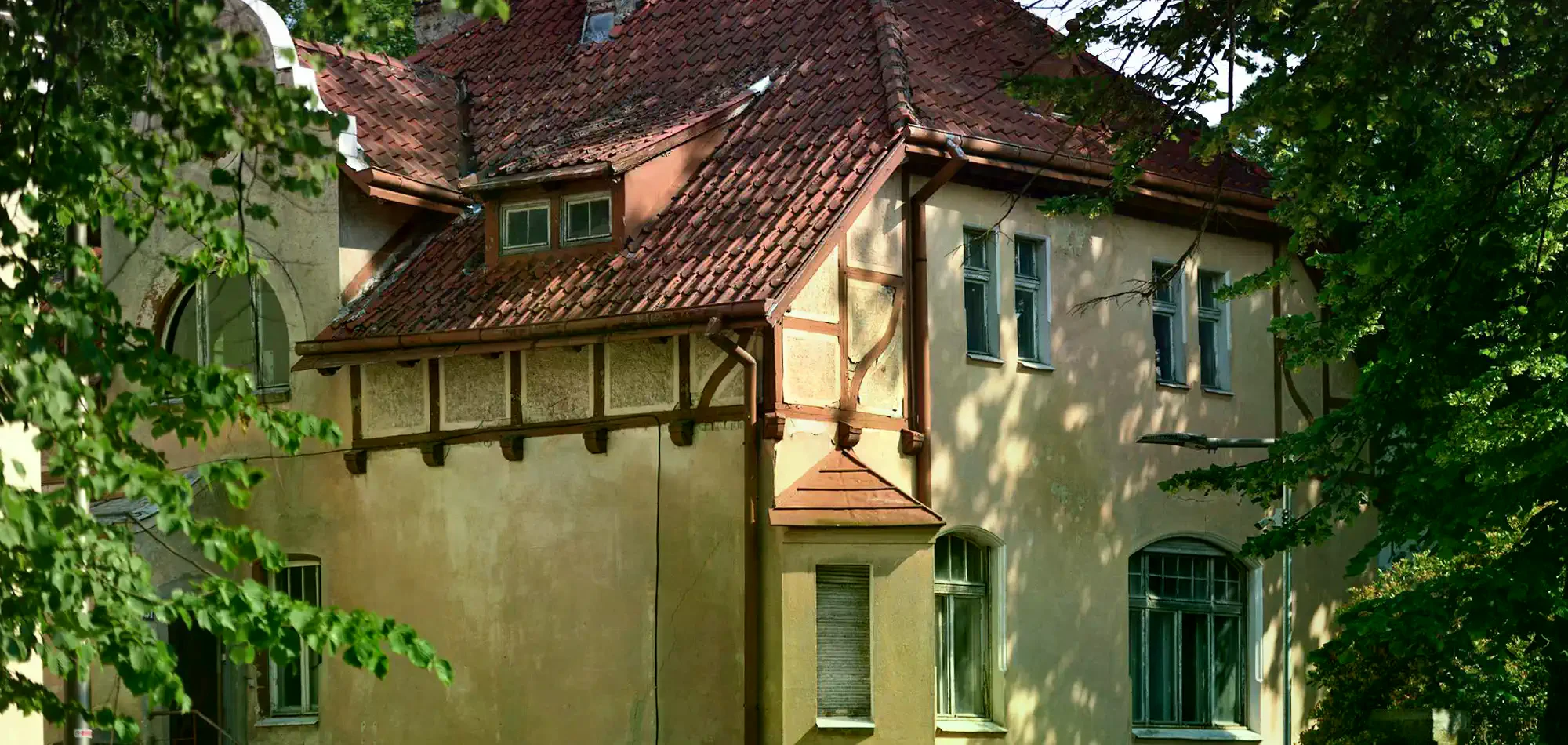
This villa is special to me on several levels: architecturally, historically and personally. I have known this street since childhood; I attended kindergarten here, which to this day is housed in a historic villa. This type of architecture, with its high ceilings, wooden staircases and façade details, shaped my sense of aesthetics early on. When the opportunity arose many years later to acquire a villa on this street, I had no hesitation.
I first purchased the larger neighboring villa, followed by this one a few years later. Both houses still convey an authentic atmosphere of their time of origin. The historic character has been well preserved despite later uses, thanks to numerous original elements.
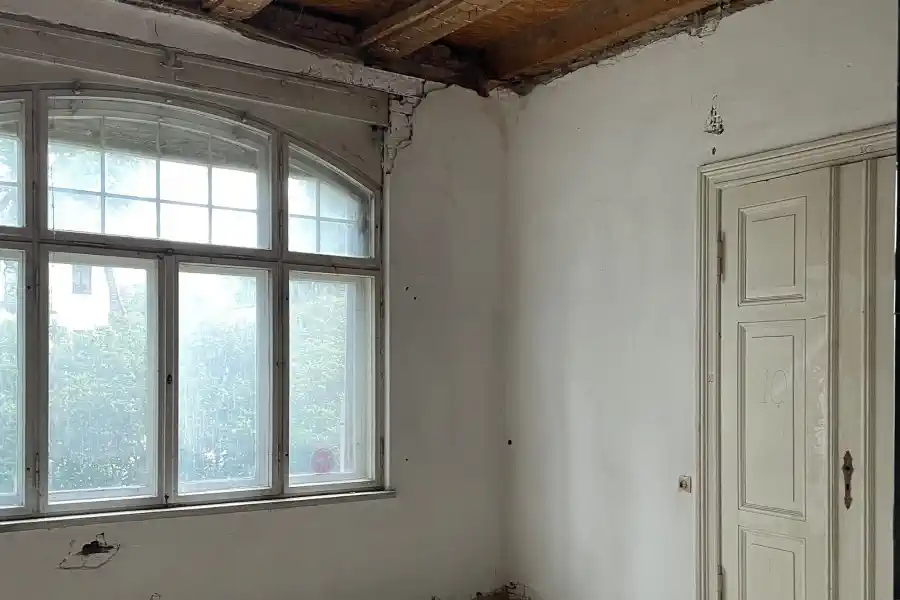
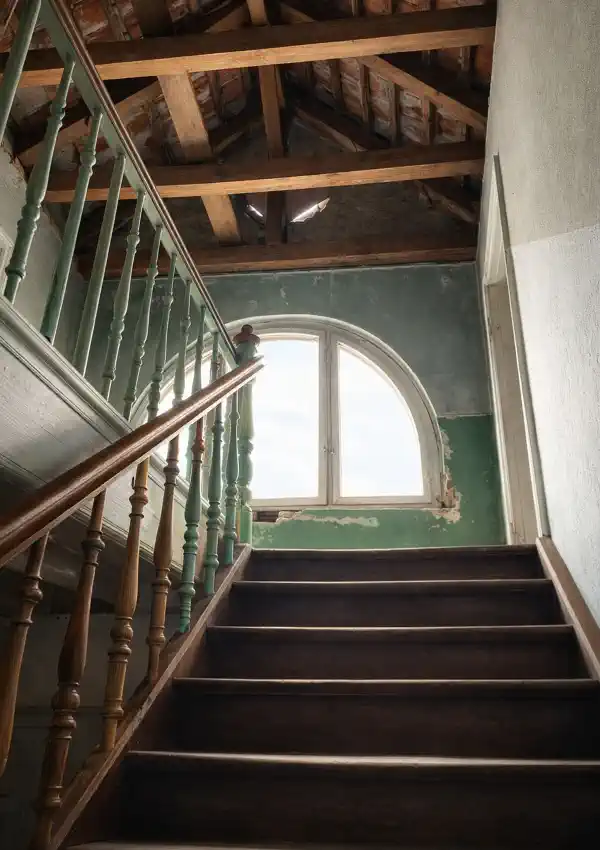
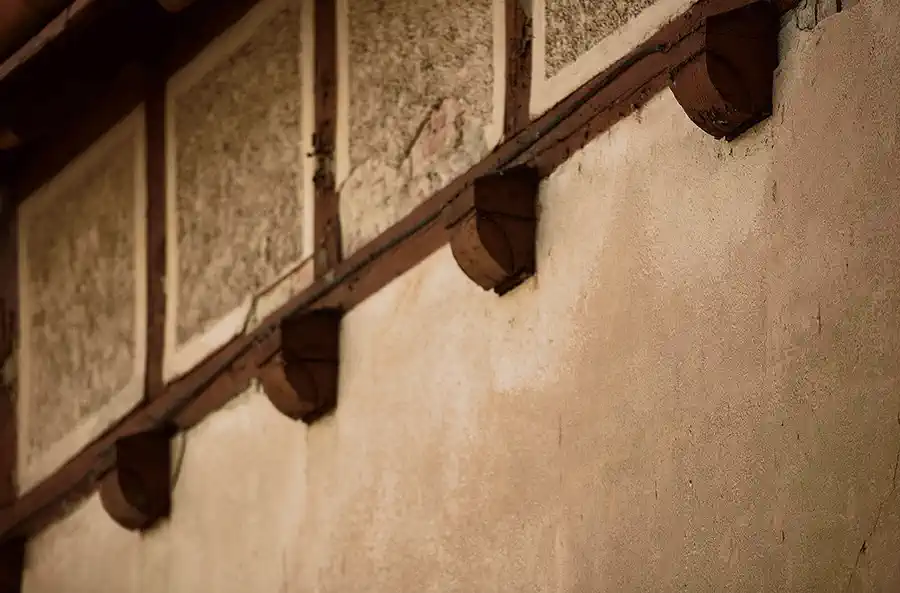
Among the preserved features are original door and window frames, tiled stoves, the classic floor plan with a central hall and staircase, timber beam ceilings and large wooden windows. The wooden veranda with direct access to the garden is a particularly well-preserved detail. The original street-side enclosure, mature rhododendrons and a small outbuilding from the early 20th century are also part of the ensemble.
Two independent entrances, each with its own staircase, provide a solid basis for flexible use, for example combining living and working. Initial preparatory measures have already been carried out: old installations have been removed and the basement has been deepened. The new owner can therefore move directly into the planning and implementation phase.
The decision to sell the villa is linked to changing priorities. Alongside my main professional activity, I intend to focus on projects that require less operational effort. In addition, caring for a young child currently takes up much of my time.
Although this is one of the smaller villas on the street, such a property naturally requires attention and financial commitment. Many aspects come together here: anyone who recognizes its character, value and sustainable potential can create something truly special.
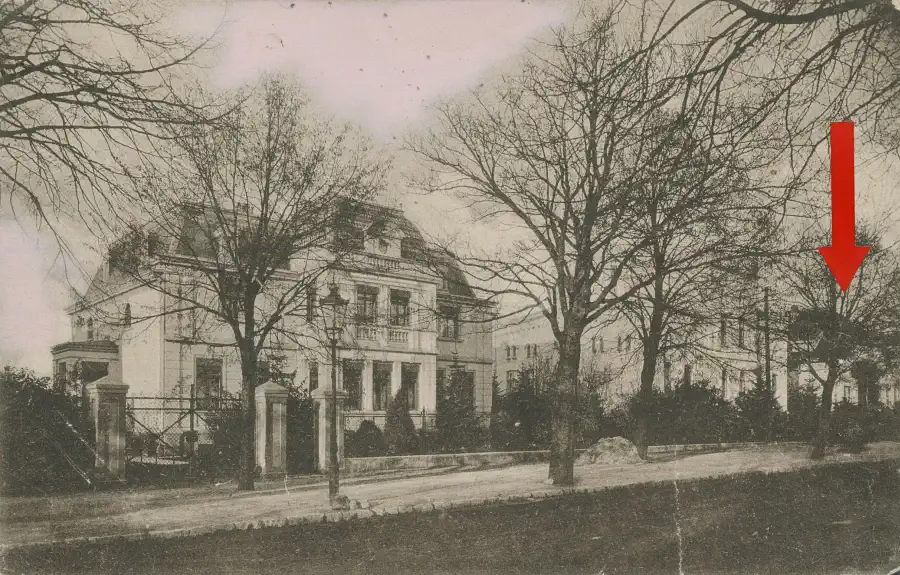
The city archive documents the surroundings of former Danziger Straße
and gives today’s house number 51 an initial historical identity:
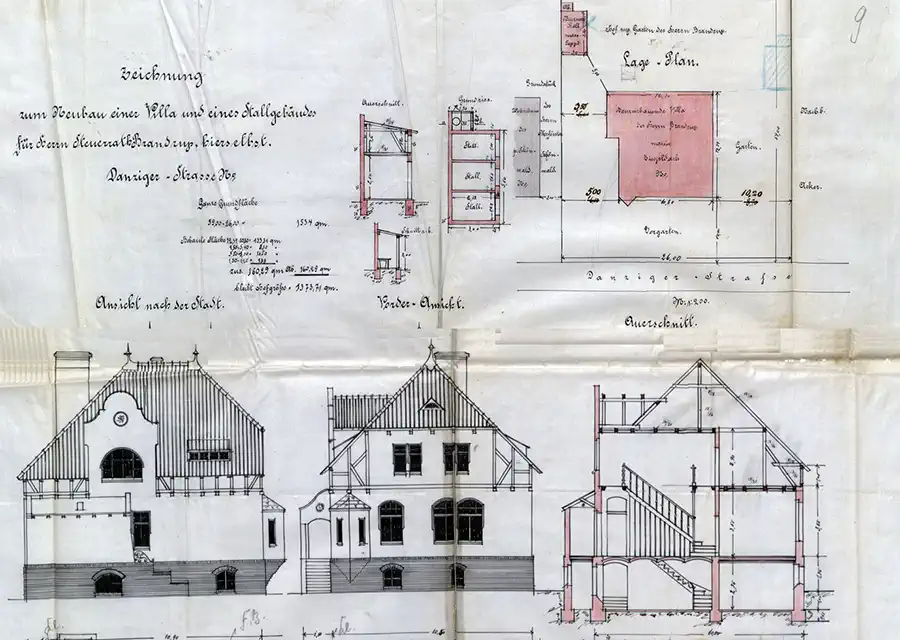
Construction of a new villa and a stable building for tax councillor Wilhelm Brandrup
(1853–1910)
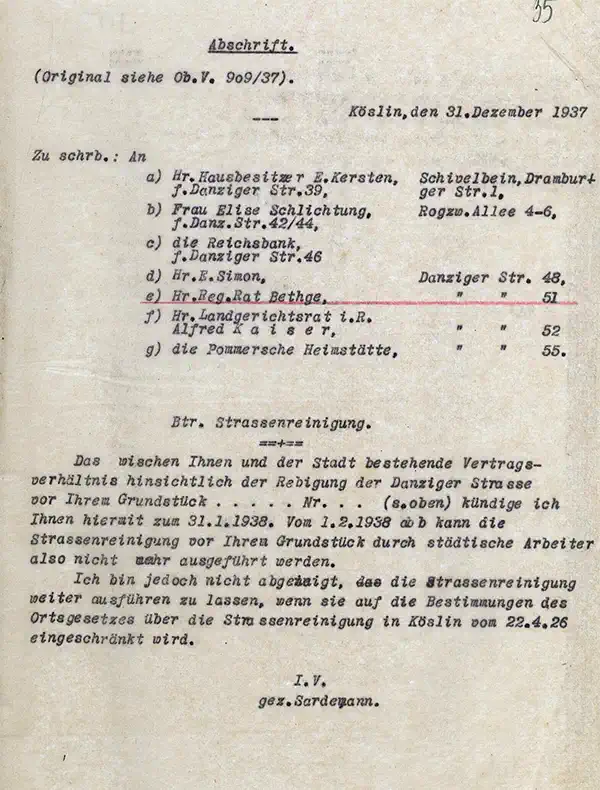
Archival research often reveals interesting historical documents about a property and its surroundings. This typical administrative document from the German period records the proper termination of street cleaning contracts for Danziger Straße as of 31 December 1937 under the local statute of 1926 and also identifies the subsequent owner: after Wilhelm Brandrup, government councillor Bethge took over the villa.
2. The villa is located on Piłsudskiego Street, formerly Danziger Straße. What remains visible of that today?
Piłsudskiego Street is one of Koszalin’s defining thoroughfares. Its structure is still clearly legible: in the lower section, larger residential buildings now house notary offices, law firms and architectural practices. Further out of the city center, the development transitions into a villa district.
On both sides of the street, turn-of-the-century villas stand on larger plots with mature trees. This allows the historical character of the street to remain clearly visible. In recent years, the city has invested specifically in infrastructure: roads, sidewalks, lighting and cycle paths have been modernized with the aim of increasing comfort without compromising the historic character.
In the immediate vicinity, there are smaller hotels in historic buildings as well as well-maintained commercial properties. In the neighborhood stands the other, significantly larger villa in my ownership, whose sale I am currently also preparing.
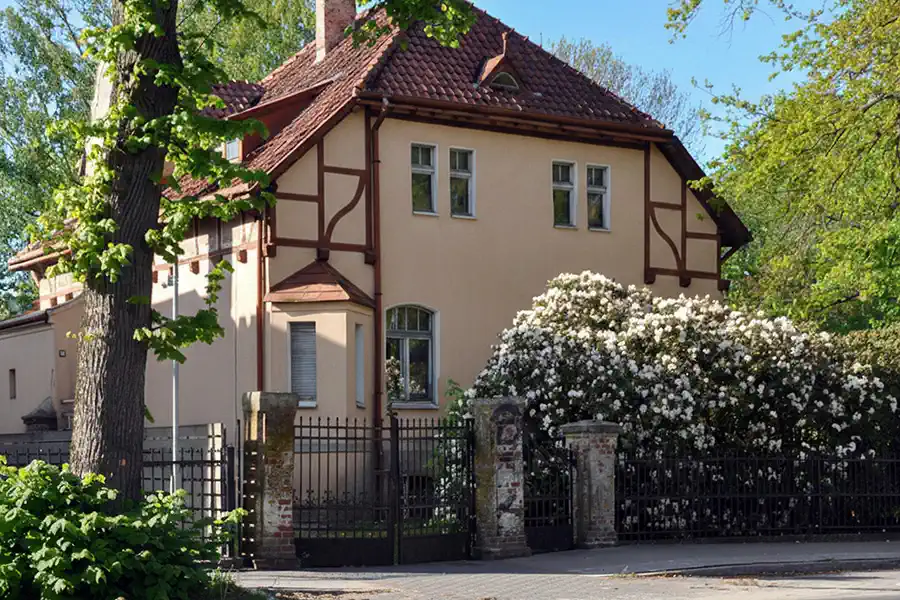
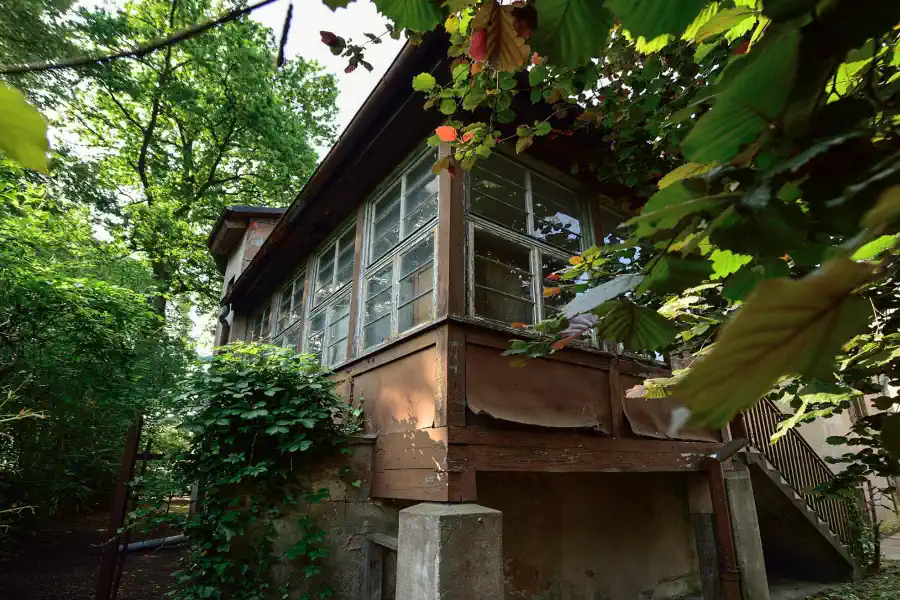
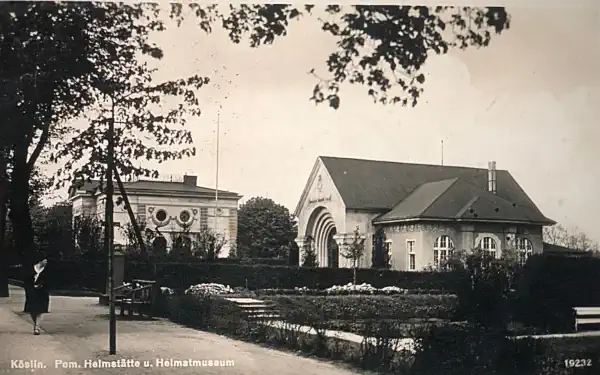
The villa also appears in a film portrait on YouTube by Polish Radio Koszalin and the State Archive, dedicated to the history and architecture of former Danziger Straße (PL).
3. Koszalin is often underestimated abroad. Why is the city worth considering as an investment location?
Koszalin still flies under the radar, yet the city is economically far more developed than it often appears from the outside.
A key factor is the technical university, which consistently produces skilled professionals in construction, IT and business. This ensures a stable labor market, often shaped by cross-border German-Polish dynamics.
Compared to major cities such as Berlin, Gdańsk or Szczecin, both living and operating costs are significantly lower. Koszalin offers fully developed urban infrastructure with a comparatively low entry threshold. At the same time, the city is well connected via the S6 expressway; further expansion will continue to reduce travel times to the Tri-City area around Gdańsk in the coming years.
Supported by the special economic zone, Koszalin combines economic momentum with stable location conditions. For investors focused on long-term perspectives, the city is a relevant market in western Poland.
This is supported by a year-round cultural offering with a philharmonic hall and amphitheater as well as a well-developed local supply infrastructure.
4. In Koszalin, the Baltic Sea is practically on the doorstep. What does West Pomerania offer beyond the coast?
The Baltic Sea remains the main attraction: seaside resorts such as Mielno, Unieście or the slightly more distant Kołobrzeg can be reached in around 20 minutes. A special experience is a trip on the excursion boat Julek
across Lake Jamno (Jezioro Jamno). The lake offers water sports facilities and a wake park and forms the transition between city and coast.
To the south lies the forest area around Góra Chełmska, a nearby recreational area that sustainably enhances the quality of life.
Góra Chełmska (Gollenberg)
At 137 meters in height, Gollenberg is a recreational area and the “green lung” of Koszalin. Historically, it served as a landmark for Baltic navigation and as a site of worship and pilgrimage. Today, numerous hiking and cycling paths run through the area; on clear days, the view from the summit extends to Lake Jamno and the Baltic coast.
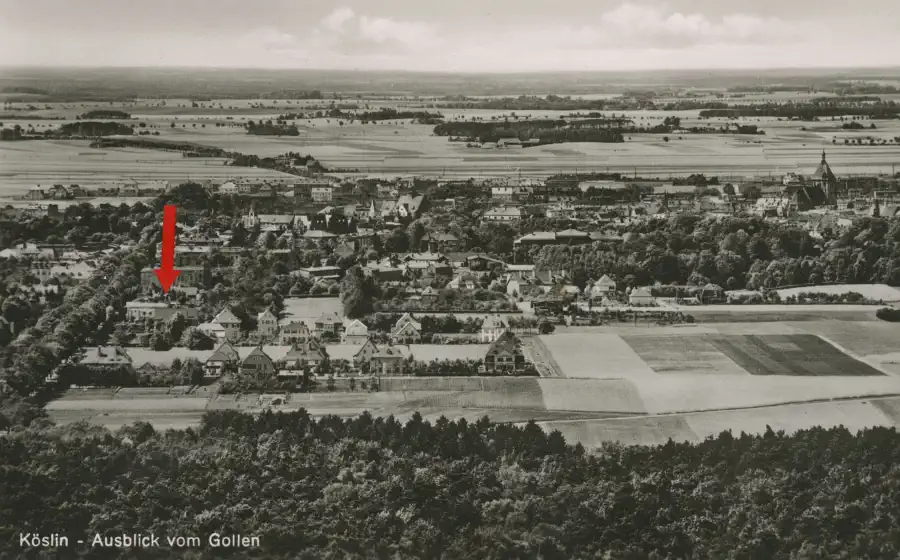
Those who only move along the coast see only part of West Pomerania. In recent years, the region has gained a clearer profile. The extensive network of cycling routes between coast and hinterland increasingly attracts visitors from across Europe, alongside German guests.
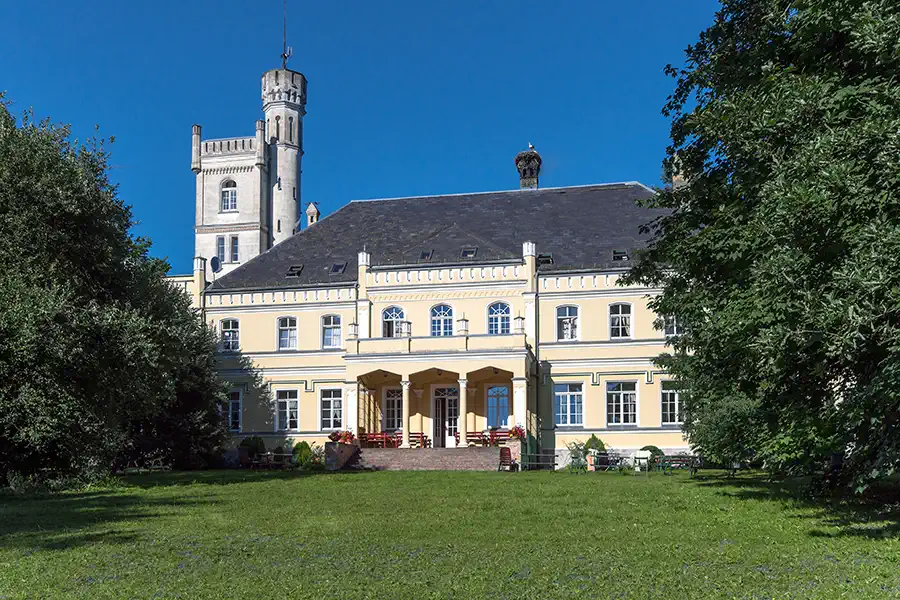
The Pomeranian Lake District is a destination for nature lovers. It is more unspoiled and less developed for tourism than the Masurian Lake District. Cycling tours along the lakes can be easily combined with overnight stays in the manor houses of Western Pomerania, such as Dwor Role, Rybokarty Castle and many other properties in the region used for tourism.
5. The villa is designated as 09U
in the land-use plan. What does that mean for someone unfamiliar with Polish planning law?
This designation permits service-based uses: offices, practices, studios or comparable commercial uses are allowed. A combination of residential and commercial use is also possible. For an investor, this means planning certainty with sufficient flexibility for different concepts.
Use as a holiday property or for short-term rentals is not permitted under the current designation. Instead, a subdivided use with several independent units is a suitable option.
6. In Poland, a distinction is made between local and national heritage status. How is the villa classified and what does that mean for renovation?
The villa is listed in the municipal heritage register and is also located within a category A
protection zone.
This protection zone designates the villa as part of a historically significant ensemble. Work on the exterior, such as the façade, roof and defining architectural details, therefore requires approval.
The regional heritage authority is responsible for all coordination. In the case of national monuments, the national heritage authority is responsible, which usually involves stricter requirements.
A conservation concept provides early clarity in the approval process and reduces uncertainty in planning.
Even municipal monuments provide access to specific funding programs intended exclusively for historic building fabric.
7. Poland supports the preservation of historic buildings with programs such as Pałacyk Plus
. How does it work in practice?
The program is an interesting instrument to support heritage-compliant renovations. In simple terms, it is a tax incentive that allows part of the renovation costs to be deducted. This provides noticeable relief and partly offsets the higher costs associated with restoring historic buildings.
There are clear conditions: the funding applies only to actual renovation and investment measures carried out on the property, not to the purchase price itself. The program is primarily aimed at taxable private individuals. For international investors, this means a direct benefit only arises if there is a corresponding tax liability in Poland.
Proper documentation is required. This includes heritage approvals for the measures, proper invoices and confirmation of completion. While individual tax assessment may be required in specific cases, the program represents real financial support and a clear signal that the preservation of historic buildings is publicly encouraged.
8. Many Western Europeans are wary of the Polish language. Is the language barrier really an obstacle in practice?
The situation is much more relaxed than many expect. Due to its history and proximity to Germany, the region has traditionally been international. English and German are widely spoken, especially in business contexts. Many notaries, architects and engineers work routinely in multiple languages. In addition, involving a sworn interpreter is standard practice in property transactions, ensuring legal certainty from the outset.
In practice, buyers often build a local network of experts who support the entire process, from acquisition to renovation and management.
In smaller towns and rural areas, however, it should not be assumed that English or German will always be understood. Making an effort to learn a few words of Polish is usually met with a warm response and is appreciated as a gesture.
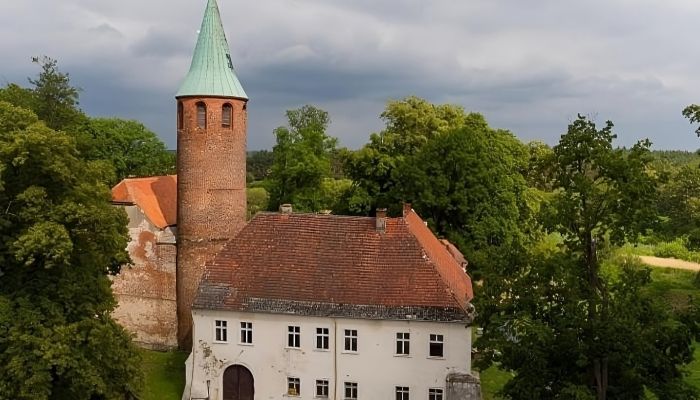
 Karłowice, Opole Region