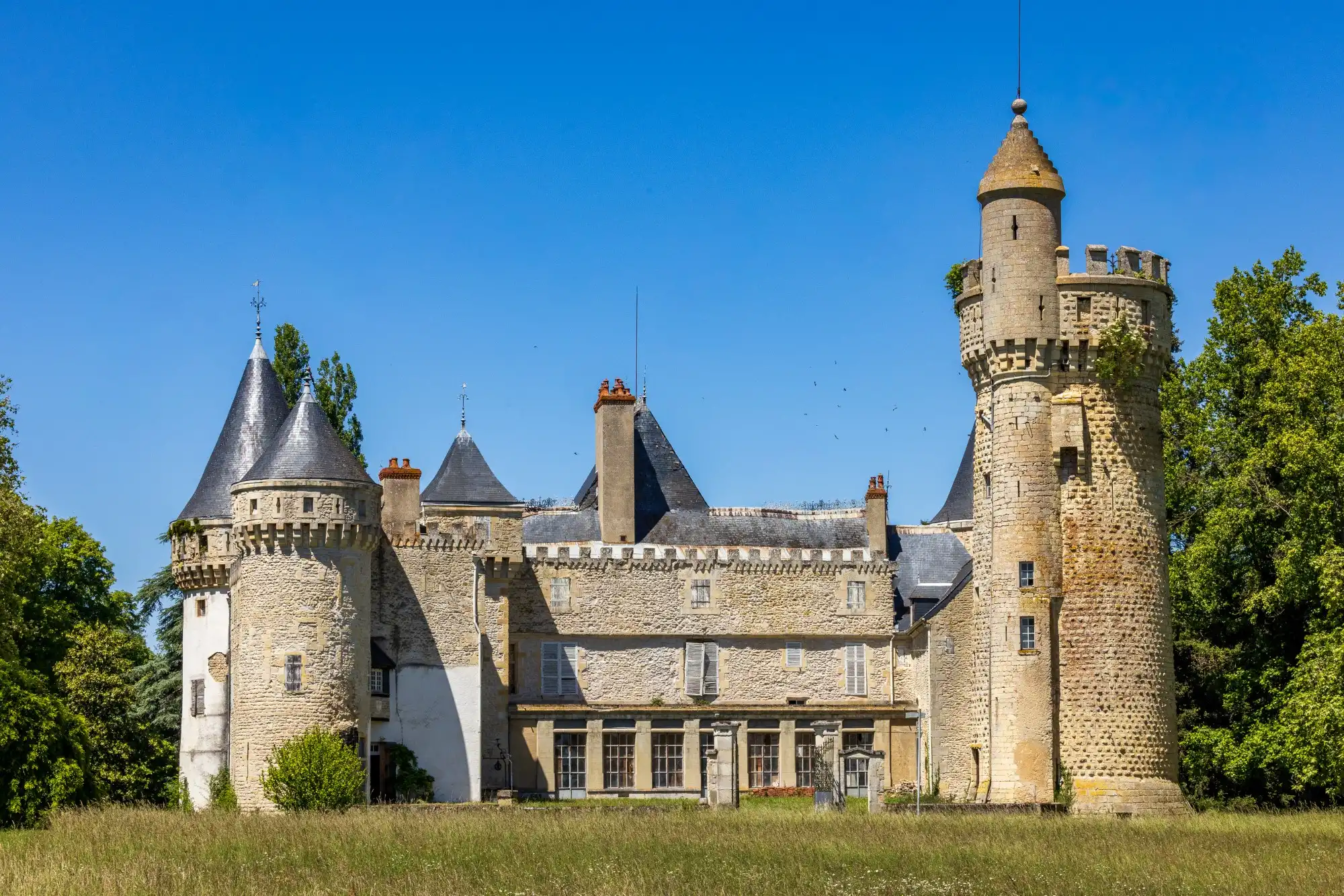
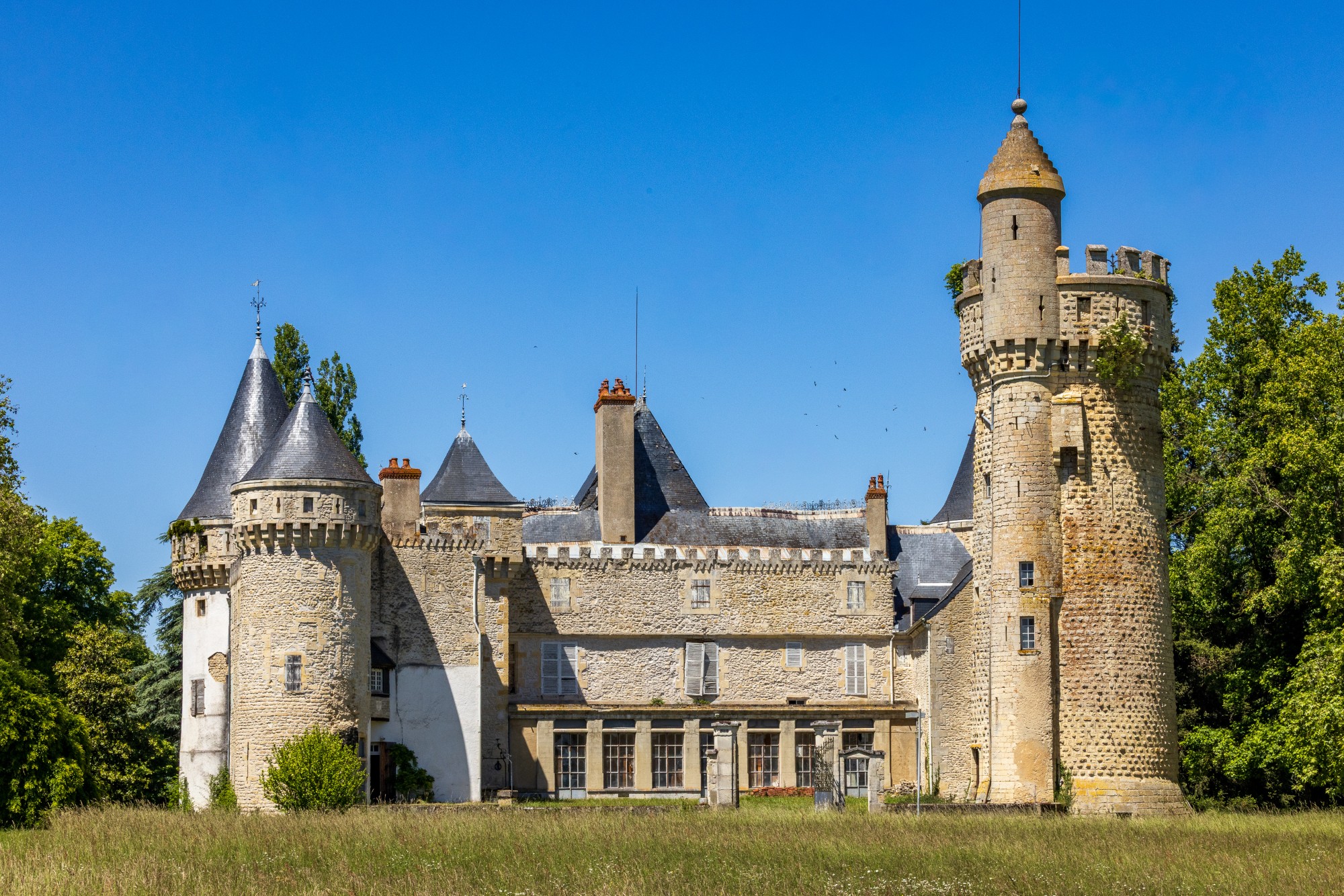
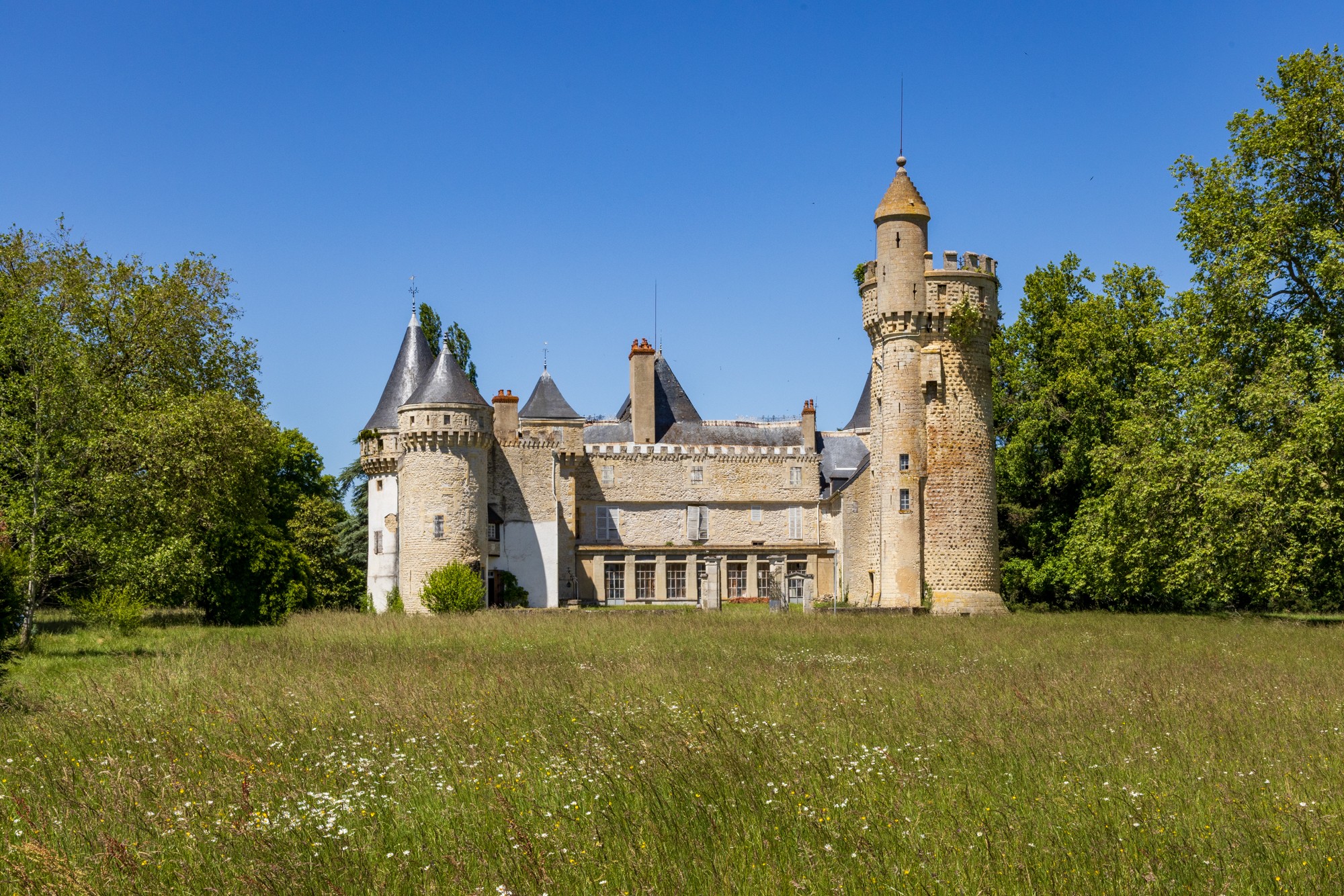
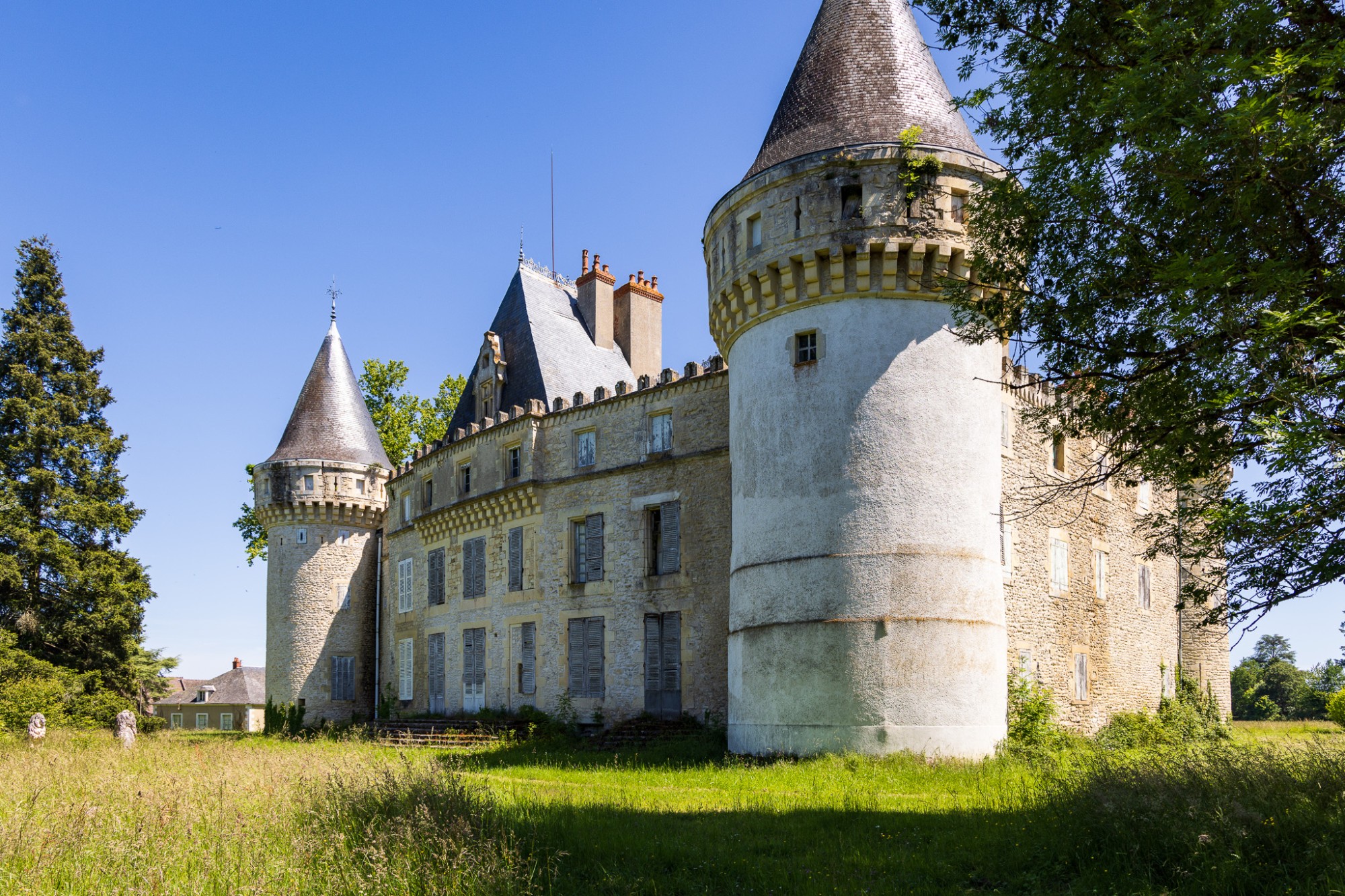
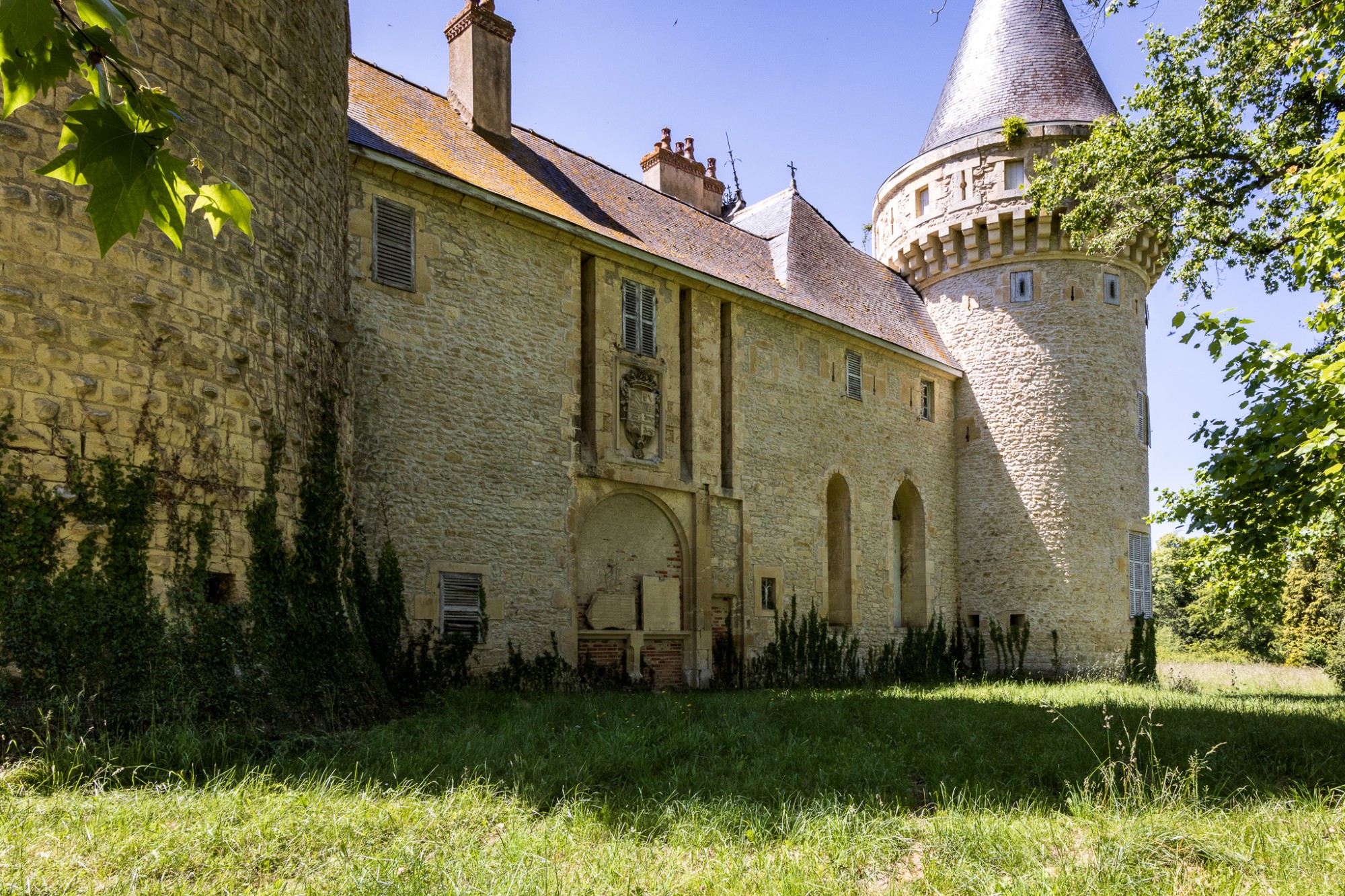
Château on the border between Bourbonnais and Berry, partially designated as a Monument historique. The former fortress dates back to the late 12th century and acquired its present appearance during the Second French Empire. The château offers 850 m² of living space and stands in a 27-hectare landscaped park with several outbuildings. Extensive renovation work is required.
A watchtower was first built here in the late 12th century under Philip II Augustus. In the 14th century, it was developed into the keep of a fortress with curtain walls, corner towers and deep moats. Parts of the defensive structure survive, including passages within the thick walls.
Over time, the fortress was converted into a representative country residence. Reception rooms were opened towards the gardens and the interiors remodelled. During the Second French Empire, the château acquired its present silhouette, with high slate roofs and the Neo-Gothic crown of the keep, whose design is attributed to the architect Eugène Viollet-le-Duc.
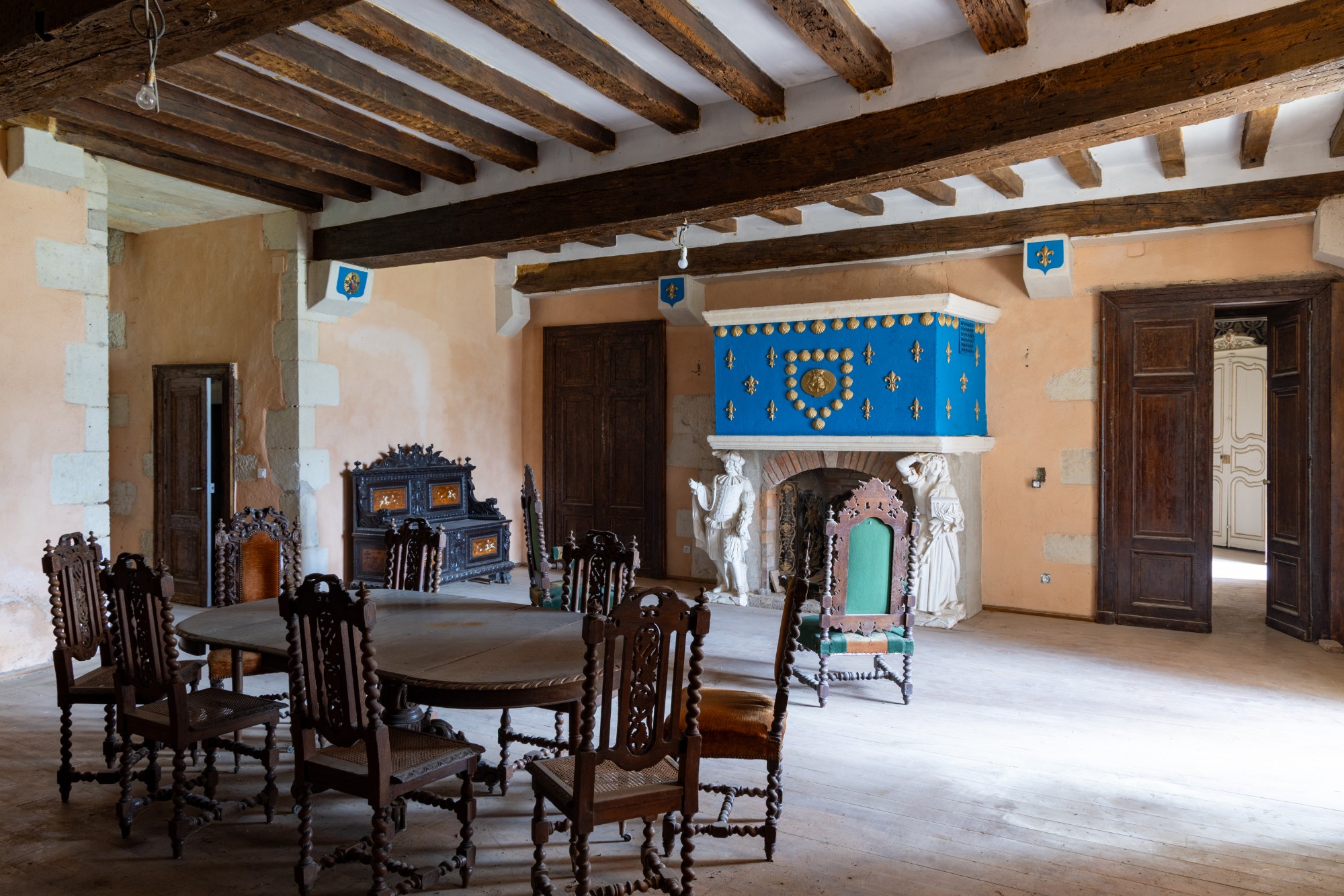
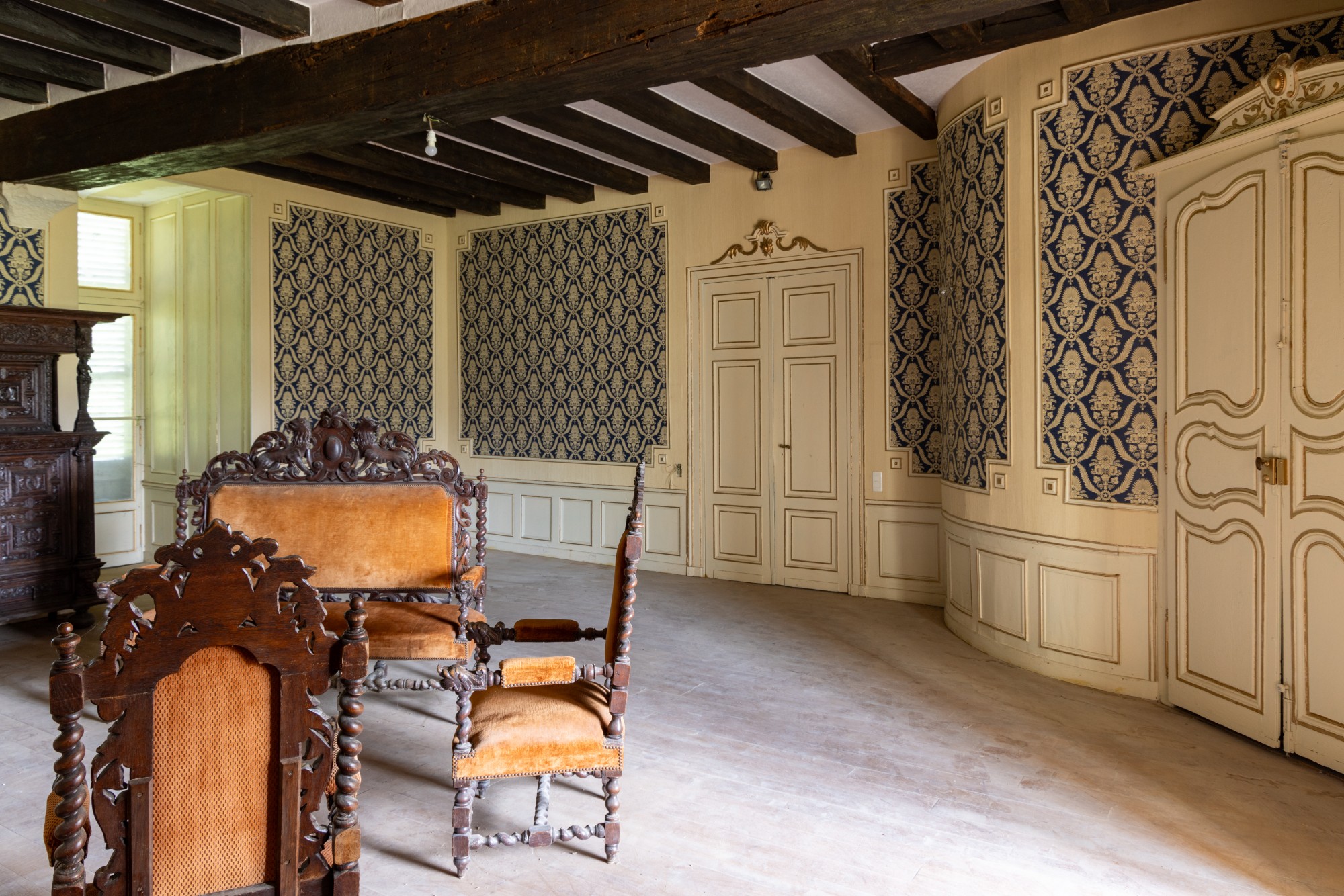
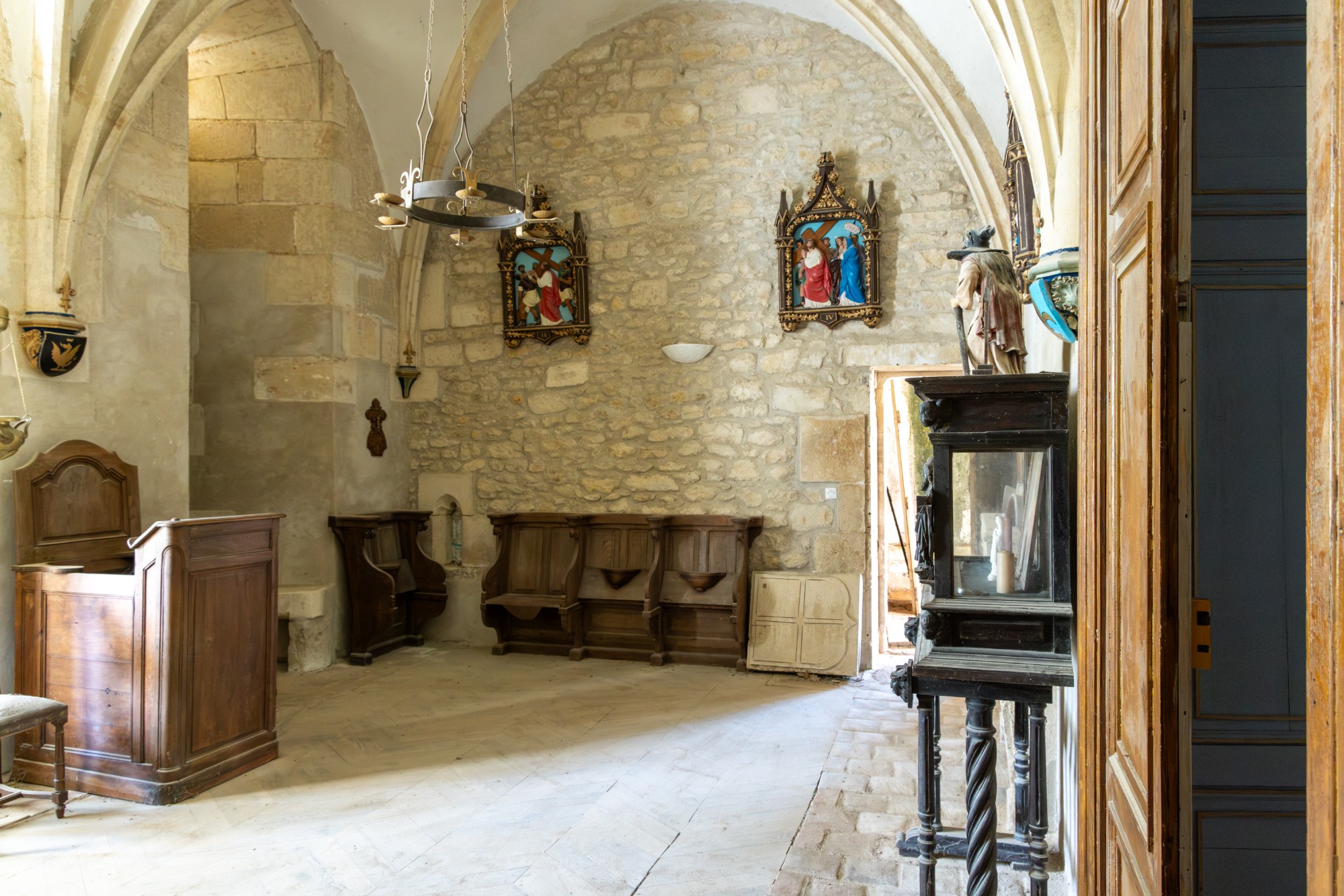
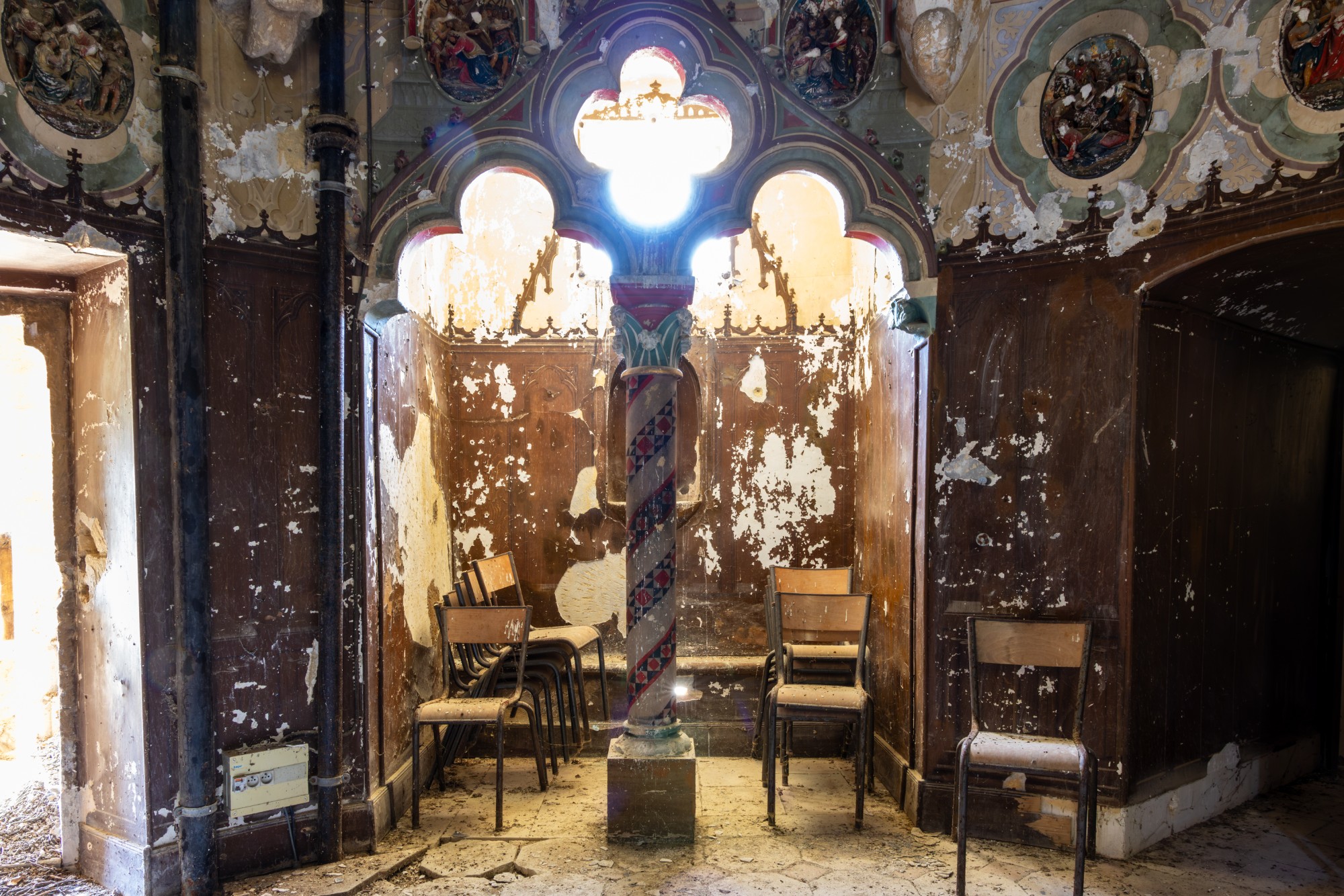
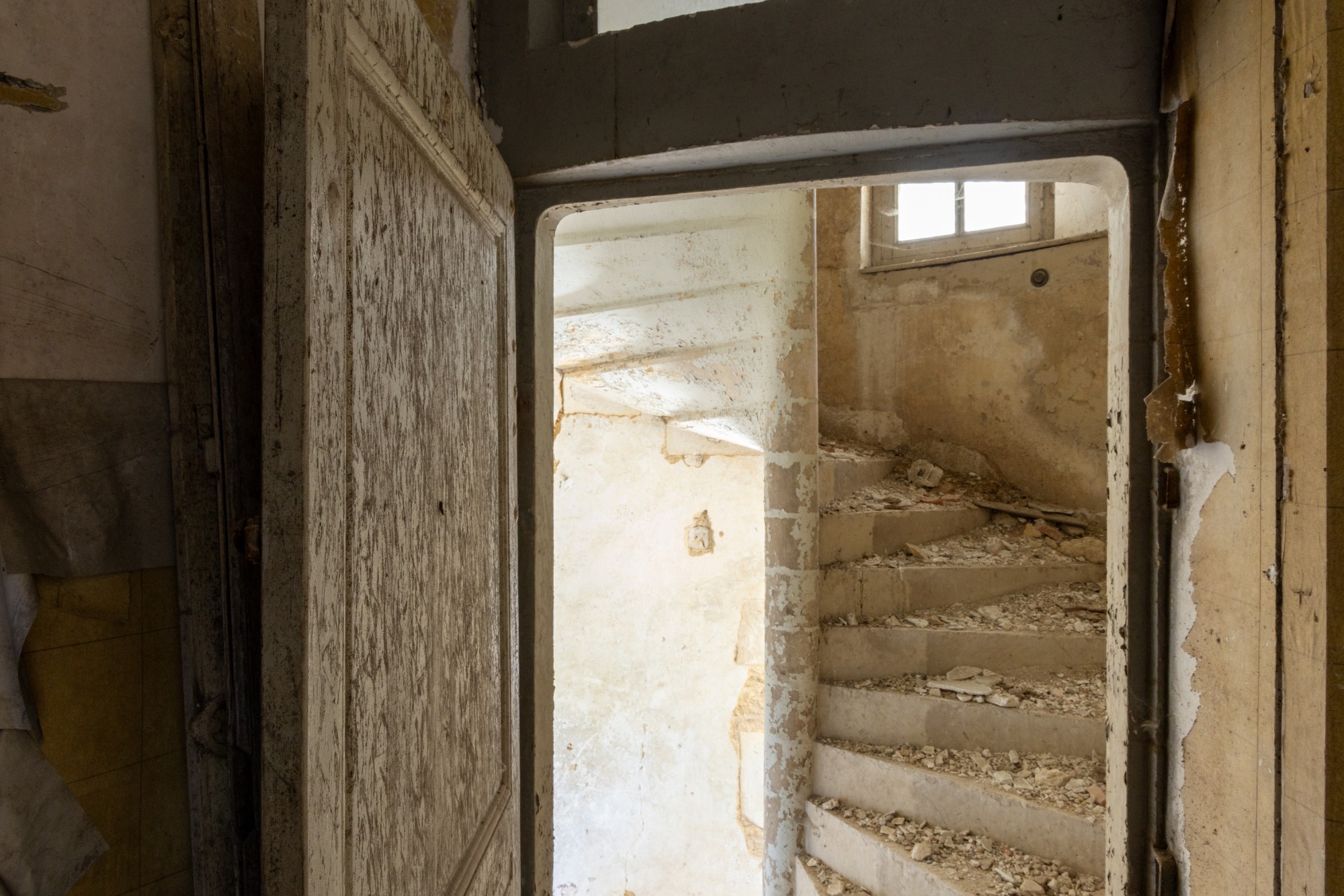
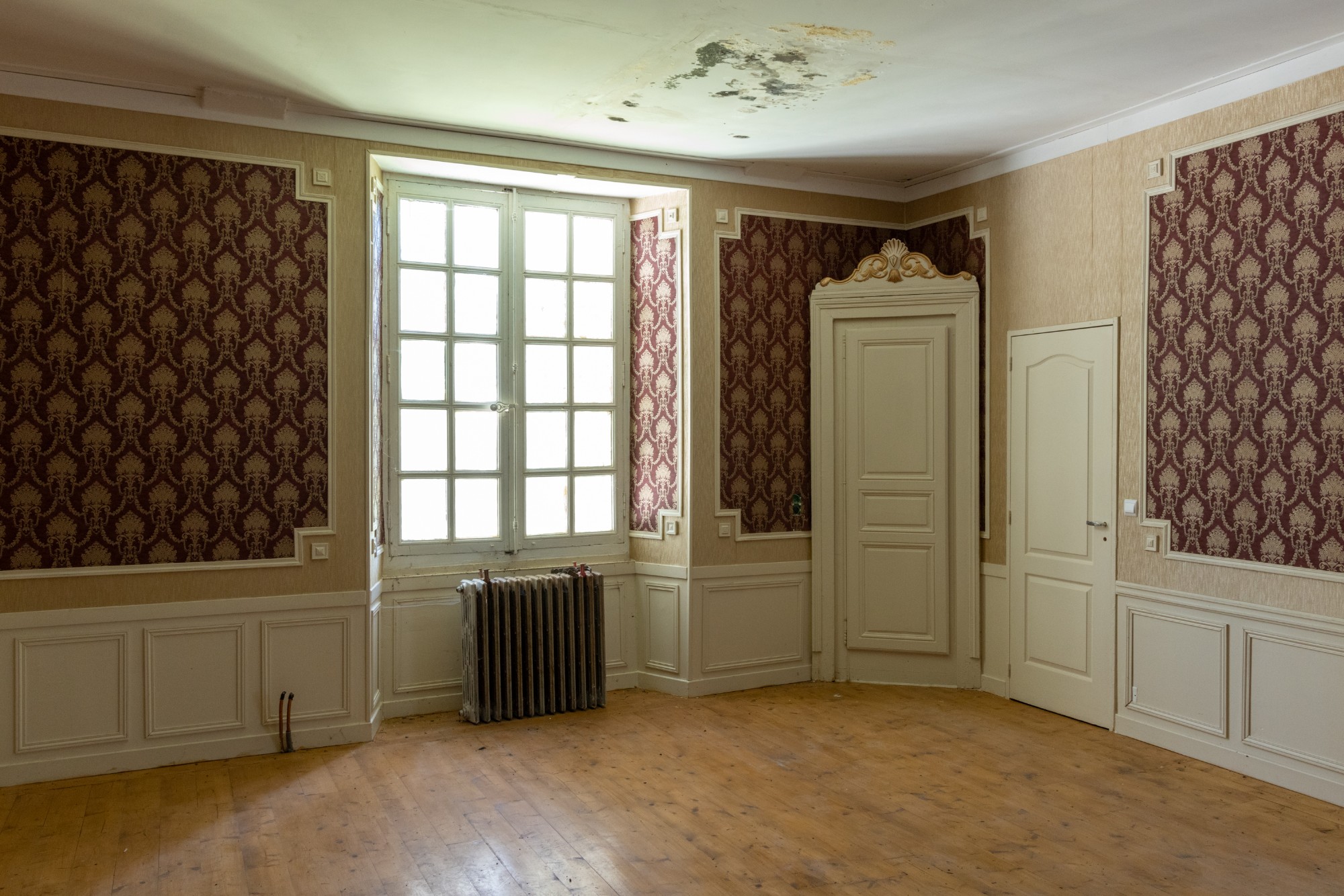
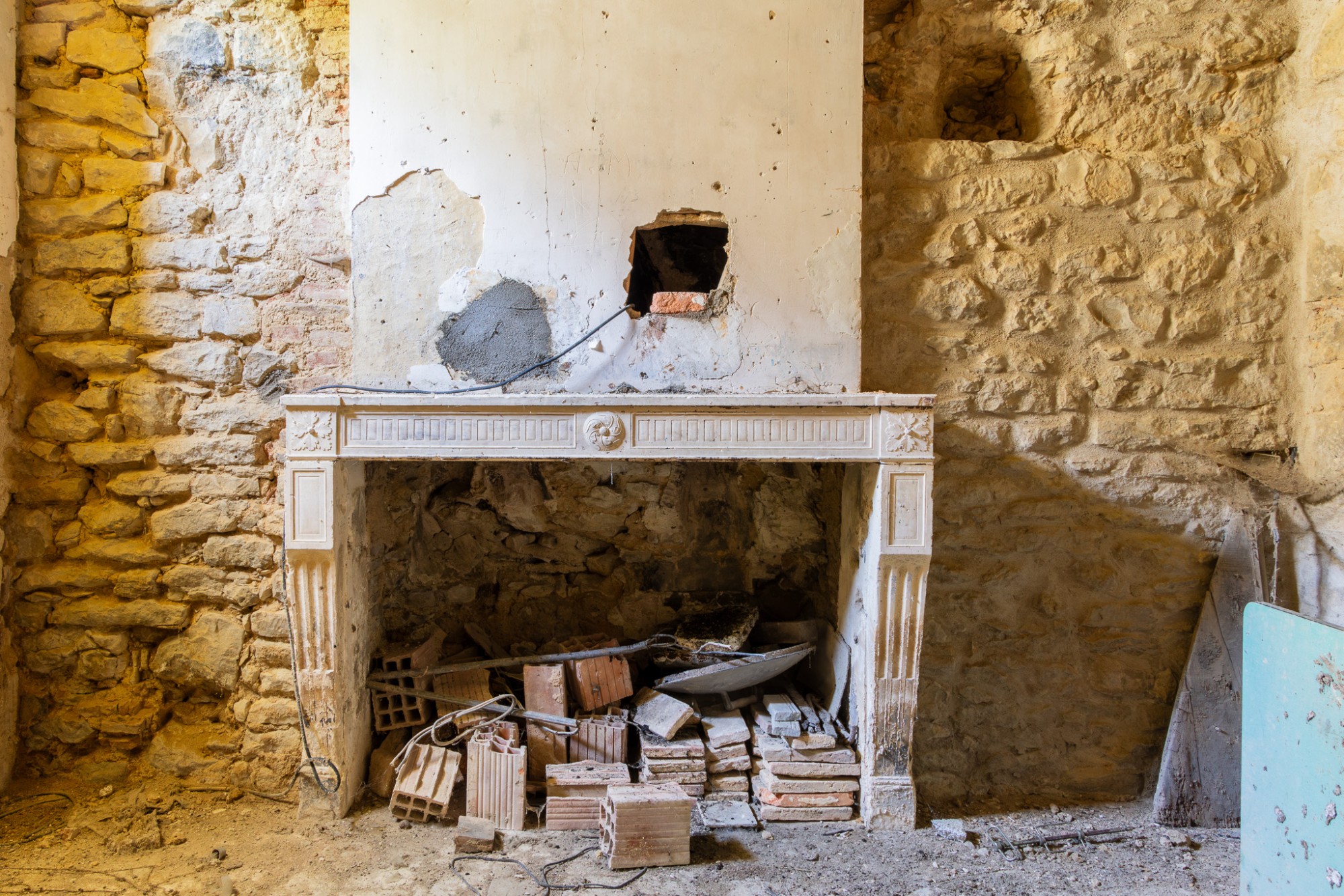
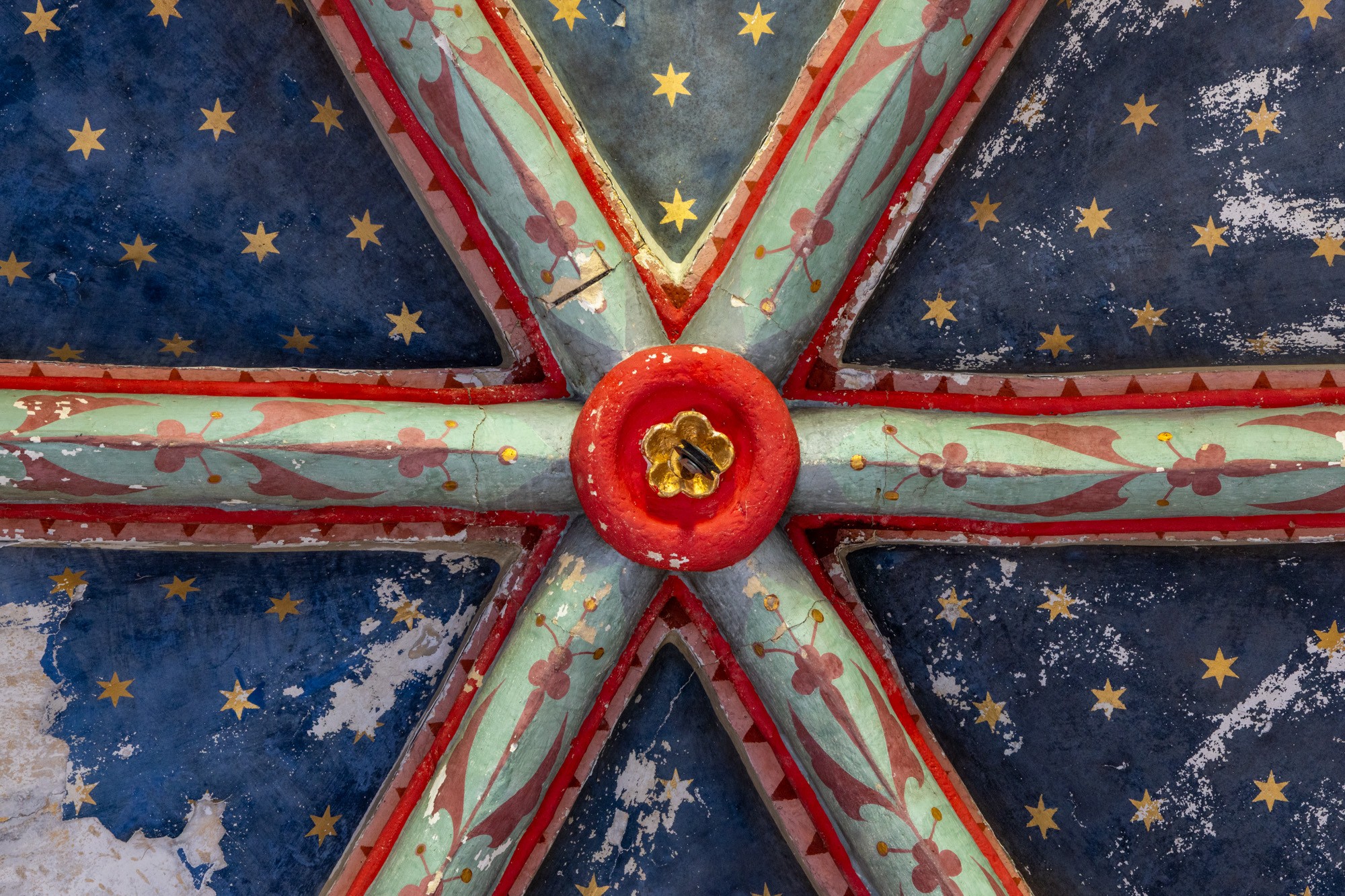
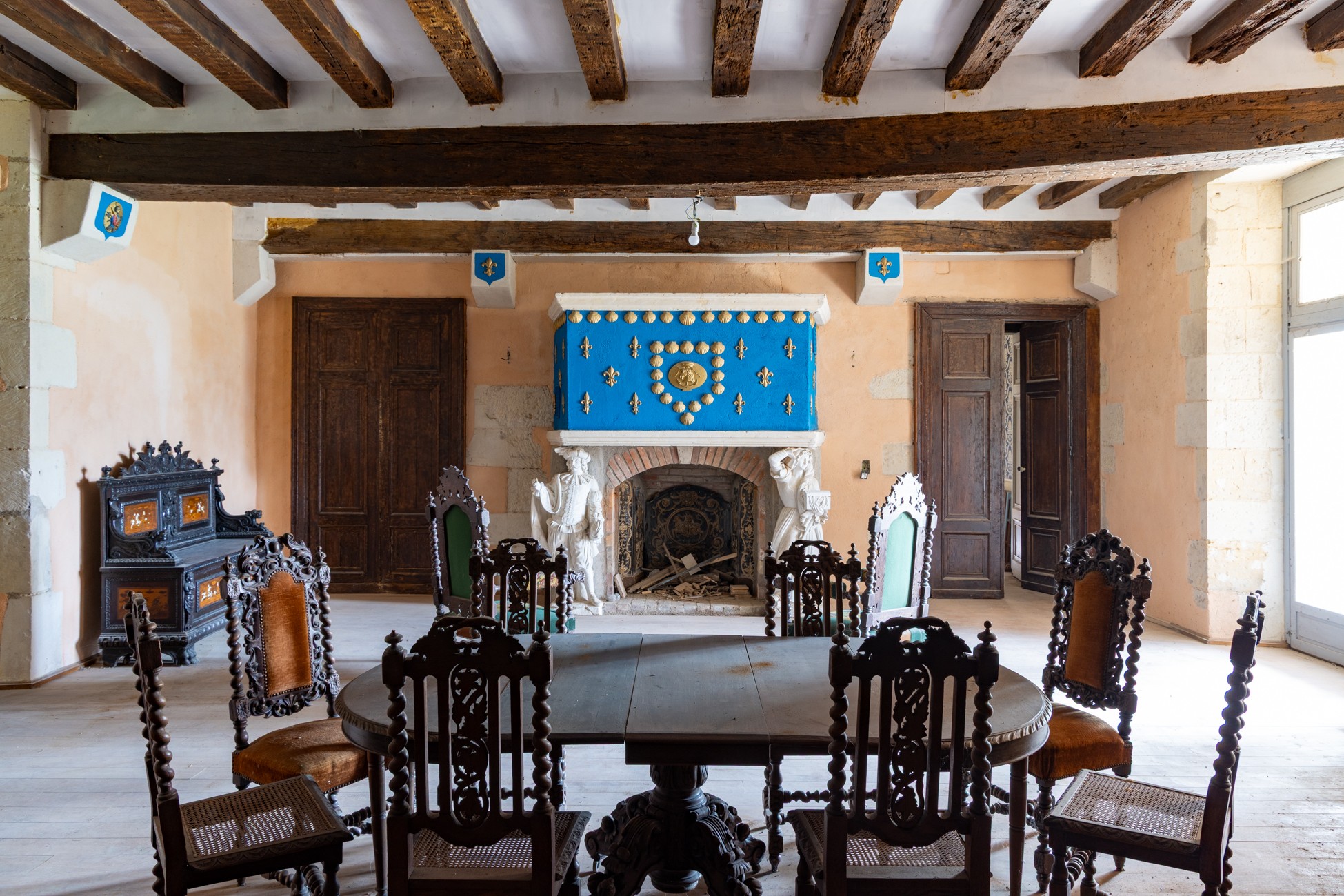
The interior retains a guardroom, a chapel, spiral staircases, carved fireplaces, frescoes and historic parquet flooring.
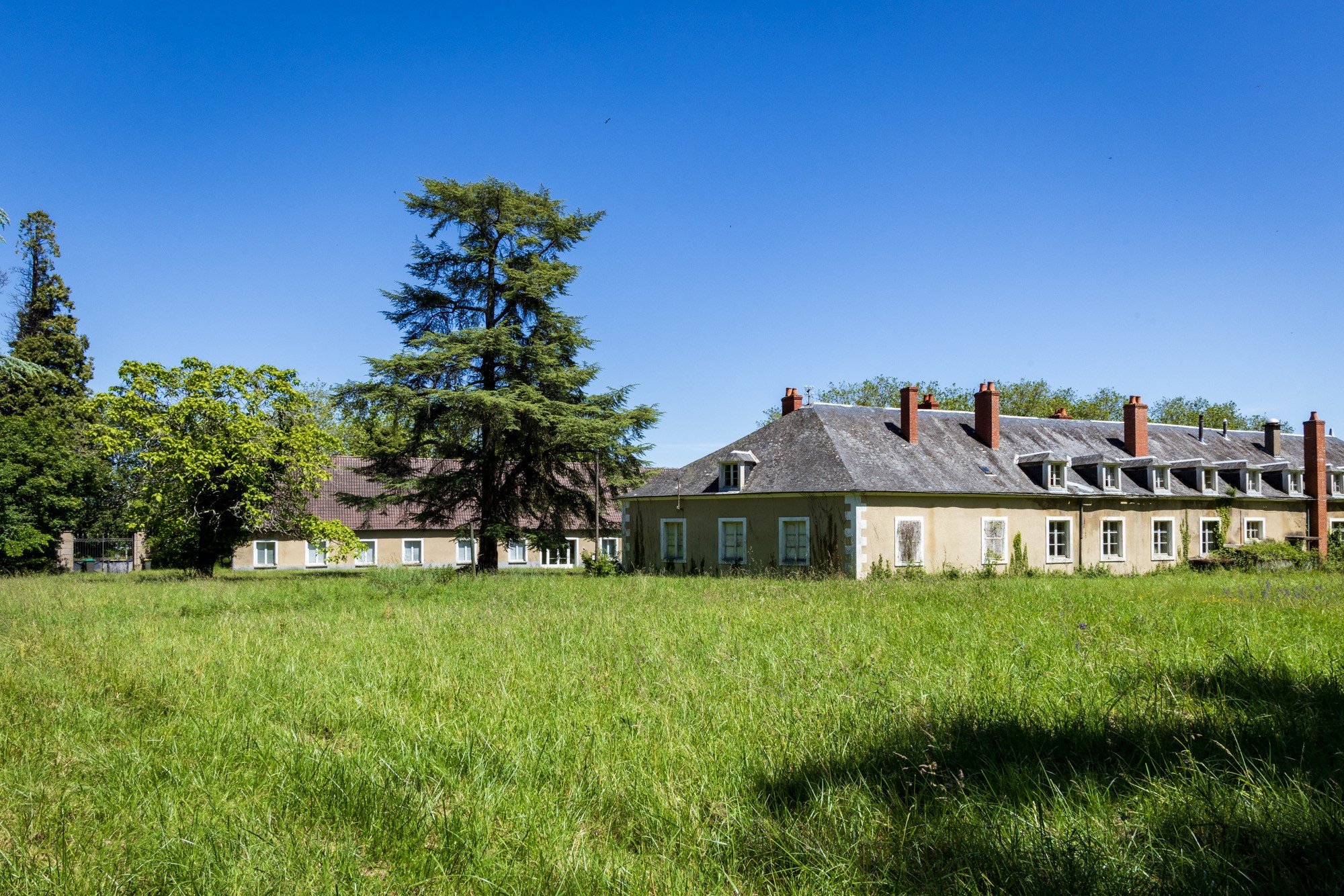
The outbuildings, some dating from the 18th century, include former agricultural buildings and a large hall once used for receptions.
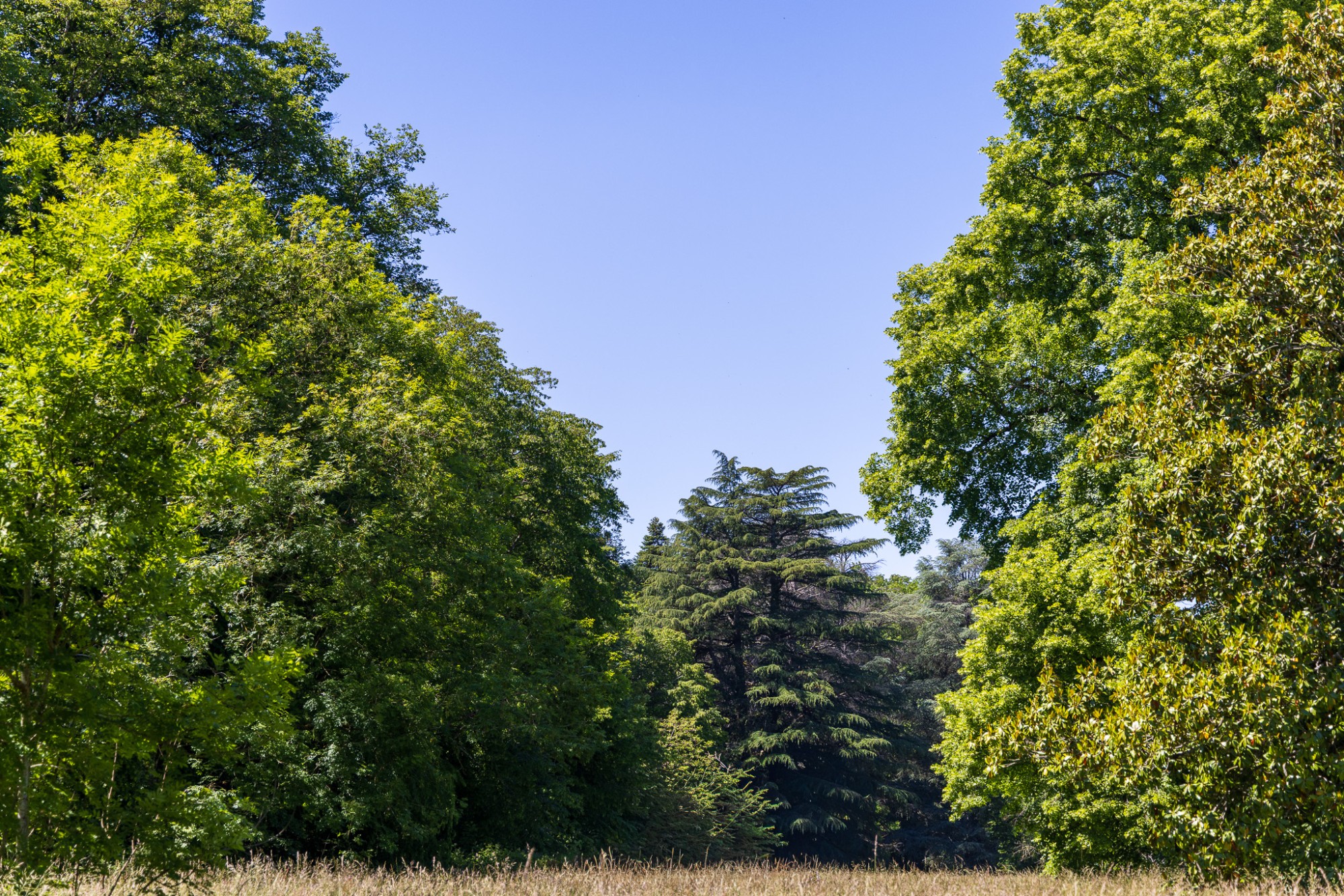
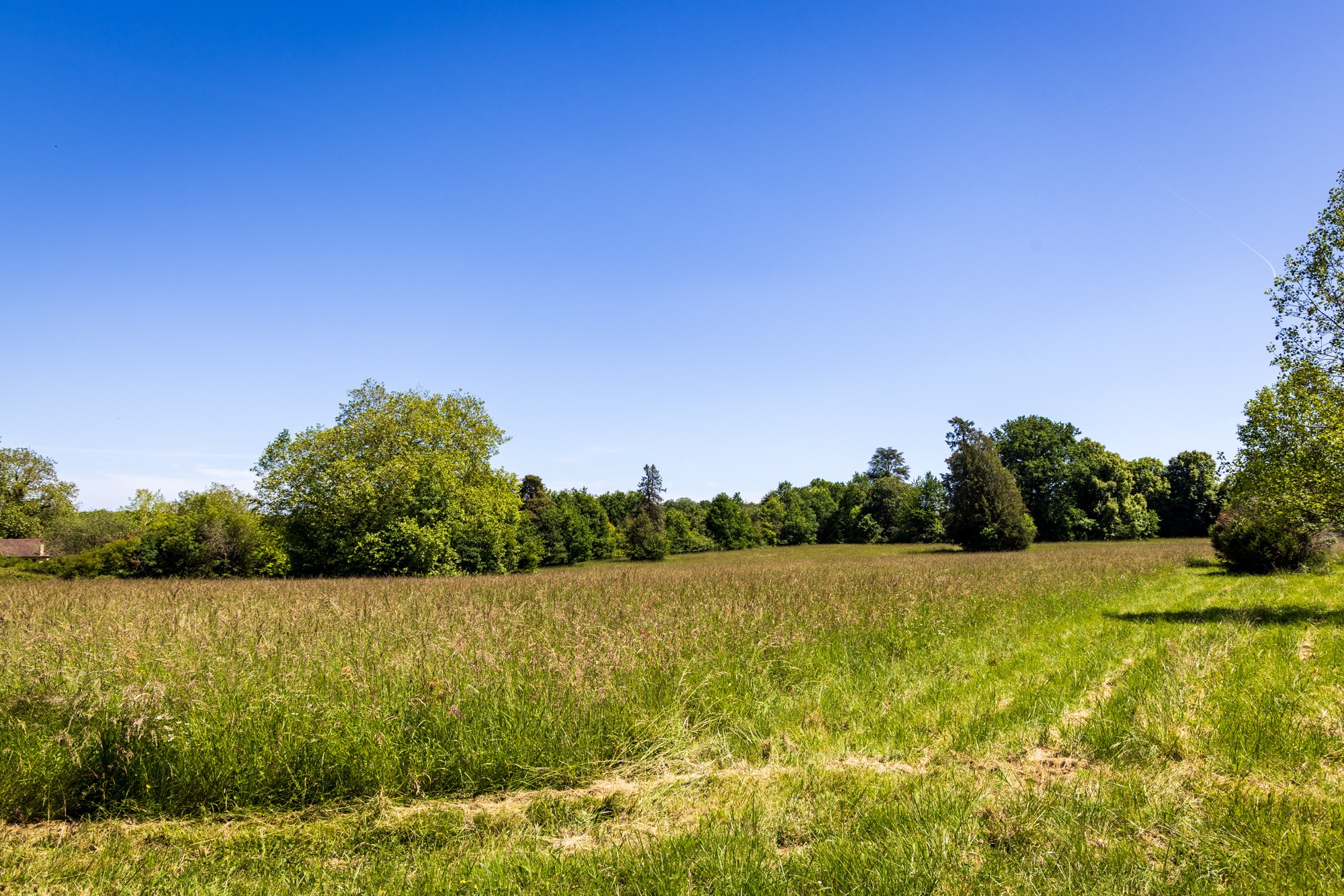
The 27-hectare park comprises meadows, gardens and woodland. Its trees include plane trees, giant sequoias and specimens several centuries old. Other surviving features include a pond, two lion sculptures and remnants of a former ornamental garden. A broad meadow offers views of the château.
Any future use must take account of heritage protection requirements. Further information on the history, condition and renovation needs is available on request.
The château is set in a rural location. Shops and local amenities can be reached in approximately 20 minutes by car.