 RTICO
RTICO
Romania’s architectural history is closely associated with the historic region of Transylvania, whose castles and legends continue to shape perceptions of the country.
The Romanian nobility, known as the boyars, did not originate in Transylvania but in the principalities of Wallachia and Moldavia, where they formed a landowning class from the Middle Ages onward. With the union of the two principalities in 1859, independence in 1878 and the establishment of the Kingdom of Romania in 1881, a new sense of national identity emerged, reflected architecturally in a growing orientation toward France and, in particular, Paris. In Bucharest and provincial cities, the nobility and the rising bourgeoisie built grand urban residences.
Craiova, the largest city in the Oltenia region of southwestern Romania, experienced this transformation as well. Merchants and landowners from the fertile plains along the Danube accumulated wealth through grain exports to Western Europe. By the early 20th century, the city became known as the City of a Thousand Millionaires
. The term is attributed to Romanian historian and politician Nicolae Iorga, who described Craiova as the city with the highest concentration of boyars and, after Bucharest, the wealthiest city in the kingdom.
Casa Băileșteanu at 4 Nicolae Titulescu Boulevard dates from this period. An earlier residence on the site was the birthplace of diplomat Nicolae Titulescu on March 4, 1882, after whom the boulevard is named.
One of the co-owners of the period mansion is Gabriel Nicolaescu, who has spent more than three decades in the international hotel industry and currently serves as an Assistant Front Office Manager. His connection to historic houses extends beyond Casa Băileșteanu: he was born in a historic boyar house in Bucharest, where he grew up with his parents and grandparents and still lives today.
Through his grandparents’ stories, he learned about the lives of boyar families before their properties and possessions were confiscated by the communist regime. His grandparents also told him that Dr. Ion Mamulea, a physician to the Romanian royal household, had once lived where he grew up.
The story of Casa Băileșteanu is marked by confiscation, loss and a surreal turn during the restitution process. At the time, it served as the headquarters of the Craiova Court of Appeal, meaning that the family had to assert its claim to the property in a court hearing held inside its own former home. In the interview, Gabriel Nicolaescu discusses his family legacy, the period when the house served as a state institution, the architectural heritage of Oltenia and the future of the grand house, which the family is now offering for sale by auction.
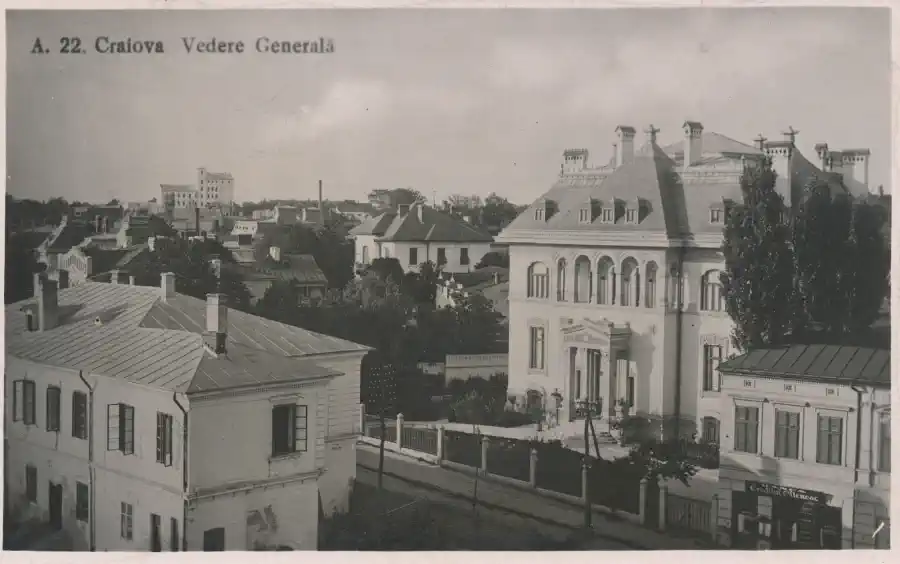
The palace in the 1920s
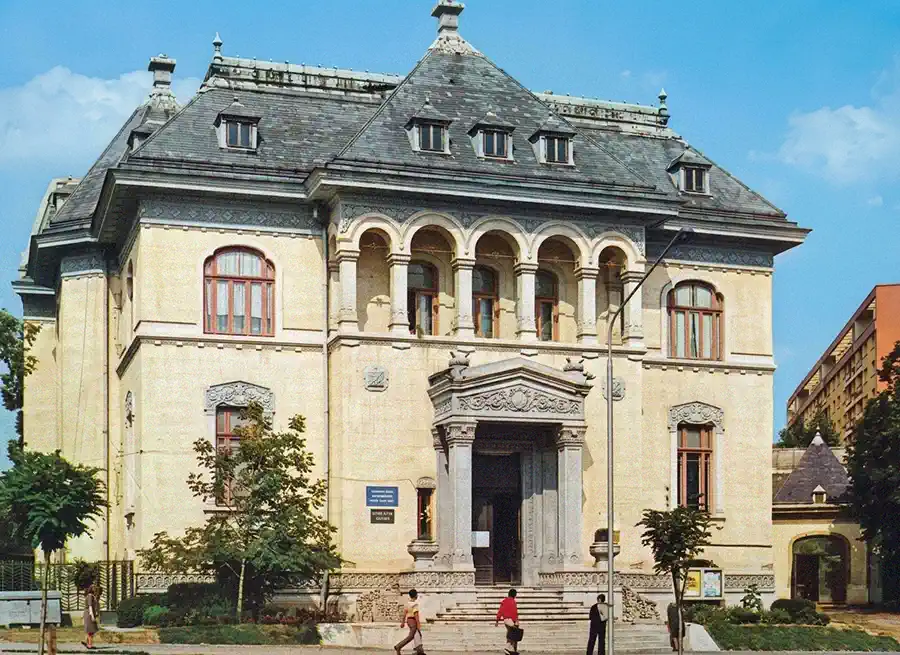
Archival photo from the 1990s during its use as a courthouse
- The architecture of Casa Băileșteanu
- A family history of confiscation and imprisonment
- A court hearing in their own house
- Traces of war, occupation and communist rule
- The boyar houses of Oltenia
- Boyar palace versus fortified castle
- Romania’s historic properties on the international market
- Hopes for the house’s next chapter
1. Casa Băileșteanu was designed by Romanian architect I.D. Berindei and completed in 1915. What can you tell us about its architecture and its place in Berindei's body of work and what does it represent architecturally for Craiova and the Oltenia region?
Casa Băileșteanu belongs to the mature period of I.D. Berindei’s career and reflects the architectural culture of Romania’s urban elite at the beginning of the twentieth century. Its composition combines monumentality with the more intimate scale of a private residence. The imposing façade, the carefully organised reception spaces, the high ceilings, the grand staircase and the interior balcony overlooking the main hall all suggest that the house was designed not only for family life, but also for representation and important social occasions.
Berindei was particularly skilled at adapting the ceremonial language of European academic architecture to the ambitions and identity of modern Romania. At Casa Băileșteanu, this can be seen in the balance between elegance, symmetry, decorative richness and functionality.
For Craiova and the wider Oltenia region, the house represents an important moment in the city’s transformation into a modern European urban centre. It is the work of a major Romanian architect and a surviving expression of the prosperity, confidence and cultural aspirations of Craiova’s leading families in the years before Romania entered the First World War.

Round-arched loggia and richly decorated stucco friezes reflect the influence of French Beaux-Arts architecture, which I.D. Berindei combined with Romanian representative design

Architectural focal point: Grand hall with upper gallery and central skylight
2. Your great-grandfather owned Casa Băileșteanu before it was confiscated during Romania's communist period. He was later imprisoned for political reasons and died in prison. What have you learned from your family about this history and how has it shaped your personal connection to it?
What I know about my great-grandfather’s fate has been passed down through our family, particularly through my grandmother and other close relatives. According to their account, he was arrested in a park in Calafat and accused of spreading rumours hostile to the communist government.
He was subsequently imprisoned for political reasons. According to the family account, one night he and several other prisoners were told to gather their belongings because they were being transferred. They were taken away by truck and stopped near a forest. Under the pretense that they were being allowed to step outside briefly, they were taken out of the vehicle and shot.
According to information that later reached the family, his death was officially attributed to a heart condition. However, the account consistently passed down through my grandmother and other relatives was that he had been executed. I present this here as family testimony, as I have not yet been able to verify every detail independently through archival research.
This history has shaped my connection to Casa Băileșteanu. For me, it is not simply a valuable historic asset or a former family residence. It is also connected to a period in which my family lost both its home and one of its members. Recovering the property could not undo what happened, but it restored a physical connection to this part of our family history.
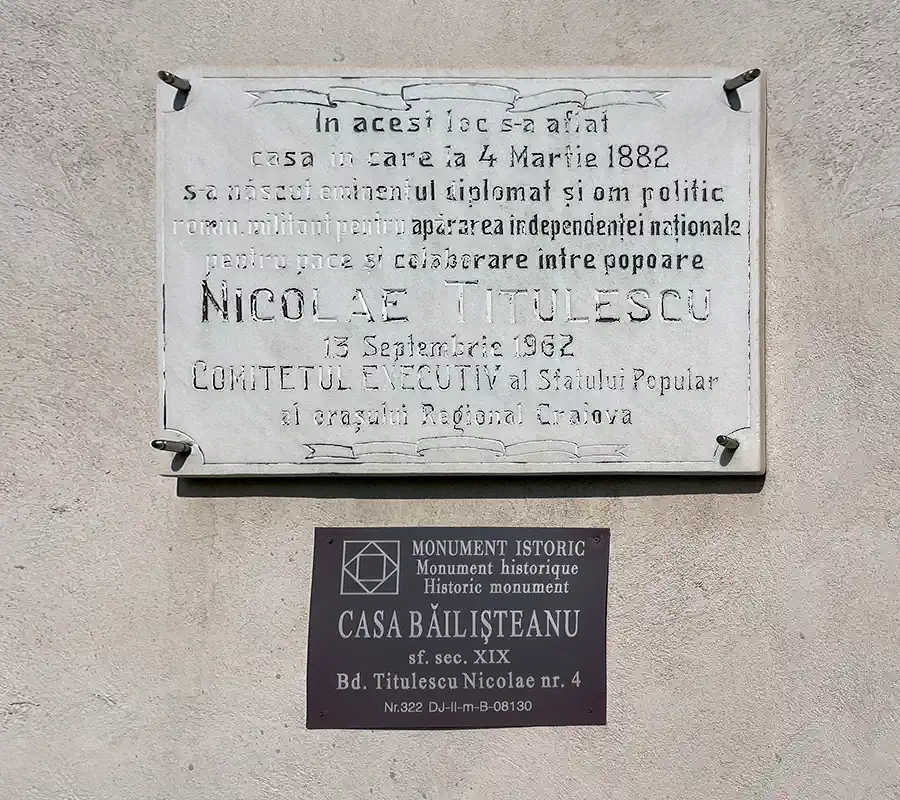
Official historic monument designation alongside a 1962 tribute to Nicolae Titulescu
3. Your family regained possession of the property in 2004. What did that moment mean for your family after so many decades and what was it like to step back into the house?
The property was returned to my family in 2004, following the efforts of my father, his brother and my grandmother’s sister, with the assistance of a lawyer.
There was an extraordinary historical irony in the restitution process: the legal proceedings through which my family sought to recover Casa Băileșteanu were heard inside Casa Băileșteanu itself. At that time, it served as the headquarters of the Craiova Court of Appeal. My family was therefore entering its former home not as its recognised owner, but as a party asking the court operating inside it to restore the property.
After ownership was recovered, the family agreed that the Craiova Court of Appeal could remain there as a tenant. The institution continued to use the property until 2012.
Shortly after the restitution, the members of the family who had fought for its recovery visited the house together. Crossing its threshold again was an intensely emotional moment for them, combining joy with a profound sense of loss. They found that the valuable furniture, carpets and two large Murano chandeliers remembered from the former family residence were no longer there.
As I was living in Bucharest, while the house is located in Craiova and I also had a young child and other personal responsibilities at the time, I was not able to join the family’s first visit after the restitution. I eventually visited Casa Băileșteanu for the first time in 2020. During that visit, I went up to the interior balcony overlooking the great hall. Standing there and looking down, I tried to imagine the house in its former splendour and the magnificent social gatherings and balls that may once have taken place beneath that balcony.
That moment made the history of Casa Băileșteanu feel tangible to me. I was no longer relating only to a building known through family stories, documents and photographs; I was standing inside the space where part of my family’s history had unfolded.


Courtroom during its active judicial period (above) and its current state with functional paneling alongside the original coffered ceiling
4. Casa Băileșteanu has survived the Second World War, the Soviet presence and decades under communist rule. Are there specific stories or physical traces that reflect these turbulent years?
According to the history passed down within my family, the house was taken over around 1945, during the period of the Soviet presence in Romania and was used for a time by a Soviet military command. I mention this as a family recollection, as I have not yet been able to confirm the precise date or the details of that use through independent archival research.
The most visible traces of those turbulent decades are, paradoxically, the things that are no longer there. The house itself was recognisable to the family after the restitution, but much of the interior world described and remembered by earlier generations had disappeared. Their absence illustrates how political upheaval can affect a historic house not only through physical alteration, but also by separating it from the objects, atmosphere and private memories that once gave it its identity.
Beyond these losses, the house's successive public uses also became part of its history. Casa Băileșteanu therefore carries several overlapping histories: that of a family residence, that of a property taken over by the state and that of a major civic institution.
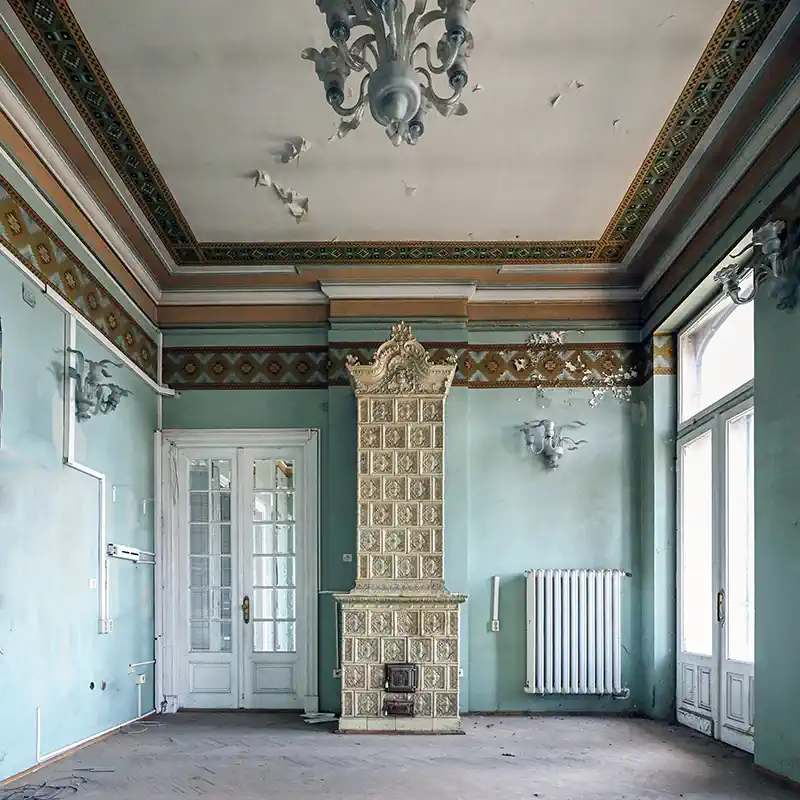
Despite many losses, traces of the house’s original identity remain: an ornate tiled stove and decorative ceiling friezes
5. Craiova and the wider Oltenia region have a rich heritage of boyar houses and historic residences. What makes the architecture and history of this part of Romania particularly interesting?
The historic residences of Craiova and Oltenia reflect a combination of local boyar traditions and the European influences that reached Romania during the nineteenth and early twentieth centuries.
These houses were not only private residences, but also expressions of the social position, education and cultural aspirations of the families who commissioned them. Their architecture often combined local identity with French Beaux-Arts and neoclassical influences, as well as elements of eclectic European architecture, adapted to the climate, customs and social life of Southern Romania.
Craiova was an important political, commercial and cultural centre and its representative residences tell the story of the families who contributed to the development of the city. Together, they form an architectural landscape that is distinct from Transylvania and from Bucharest, but remains comparatively little known internationally. For the historic property market, this relatively low international profile also means that Oltenia still offers considerable scope for investment, new uses and the revival of historic properties.

Casa Puiu Pleșia on Frații Buzești is another period mansion that helped earn Craiova its historic moniker, the city of a thousand millionaires
.
Photo: Andrei Stroe, CC BY-SA 3.0 ro
6. Romania’s castles, especially in Transylvania, shape the country’s international image of historic architecture. How would you describe the difference between a boyar palace like Casa Băileșteanu, built in early 20th-century Oltenia and the older fortified castles and Saxon manor houses typically associated with Romania?
The principal difference is one of purpose, period and relationship to the surrounding city. Many of the fortified castles and Saxon residences associated internationally with Romania developed within defensive, rural or semi-rural settings and reflect the political and security conditions of earlier centuries.
A boyar residence such as Casa Băileșteanu belongs to a different historical moment. Built in an important city at the beginning of the twentieth century, it was conceived primarily as a prestigious family home and a place of representation, hospitality and social life, rather than as a defensive structure.
Its architecture is therefore more open and ceremonial. The emphasis is on the façade, the sequence of reception rooms, the generous hall, the staircase, the interior balcony and the experience of receiving guests. While older castles often communicate power through fortification and isolation, Casa Băileșteanu communicates status through elegance, proportion and urban presence.
Both traditions are valuable, but they reveal different parts of Romania’s history. Casa Băileșteanu shows foreign visitors a more cosmopolitan and relatively little-known side of the country: the world of the urban boyar and bourgeois elites of Southern Romania in the years before Romania entered the First World War.
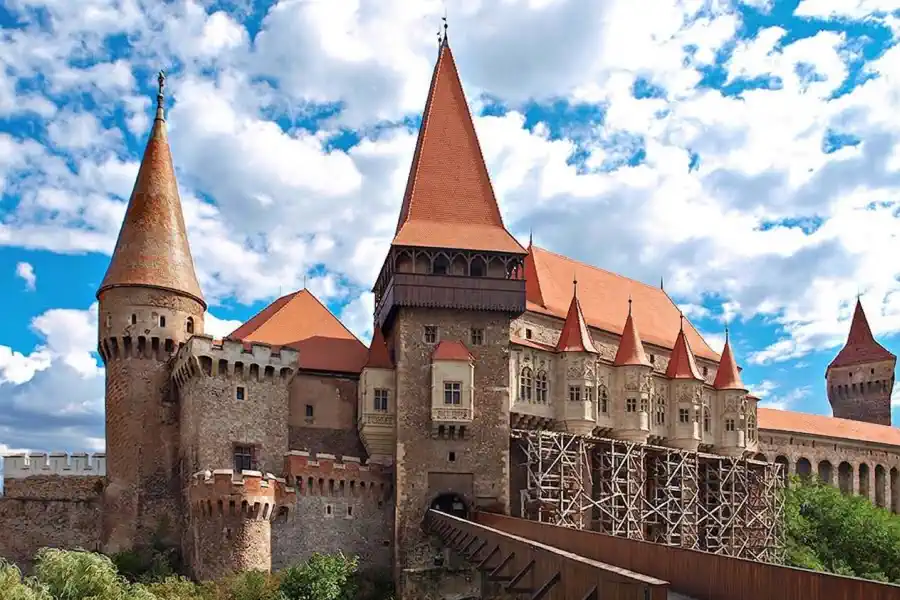
Alongside Bran, a symbol of Transylvania's castle landscape: Hunedoara Castle
Photo: Todor Bozhinov, CC BY-SA 4.0
7. How has the perception of historic properties in Romania changed over the past 15–20 years, particularly among international buyers and investors?
Over the past fifteen to twenty years, I believe the perception of historic properties in Romania has gradually changed. For a long time, many such places were viewed primarily as difficult assets, because restoration is expensive, ownership histories can be complex and the protection of a listed monument brings significant responsibilities.
Today, there is greater recognition that authenticity, architectural identity and historical character cannot be reproduced in a new development. Romanian and international investors are increasingly seeing historic properties not merely as relics of the past, but as places that can be adapted for use as hotels, cultural venues, corporate headquarters, medical or educational institutions, or private residences.
At the same time, interest alone is not enough. Successful restoration requires patience, specialist knowledge, adequate capital and a viable long-term use. Depending on the nature of the project, the intended use and the eligibility conditions applicable at the time, European or other public funding programmes may also provide support for the restoration and revitalisation of such assets in Romania. Any prospective owner would, of course, need to obtain specialist advice and assess the available programmes individually.
The most encouraging change is that more buyers now understand that preservation and economic use do not necessarily conflict. When approached responsibly, a new function can provide the resources needed to safeguard a historic property for future generations.

The entrance vestibule: Delicate historic details can be costly and demanding to restore, but experience shows that buyers generally prefer properties that retain such features over those that have lost their original decorative character
8. After everything Casa Băileșteanu has experienced throughout the generations, what are your hopes for it as it enters its next chapter?
My greatest hope is that Casa Băileșteanu will be acquired by someone who understands both its architectural value and the responsibility that comes with owning a historic monument.
I would like to see it carefully restored, with its historic character preserved. Its future use may be different from its original purpose, but I hope that any new function will respect the building’s character, history and dignity.
After everything the house has endured, the priority is to ensure its long-term preservation. A successful restoration would not only save a significant building, but also preserve an important part of Craiova’s architectural heritage.
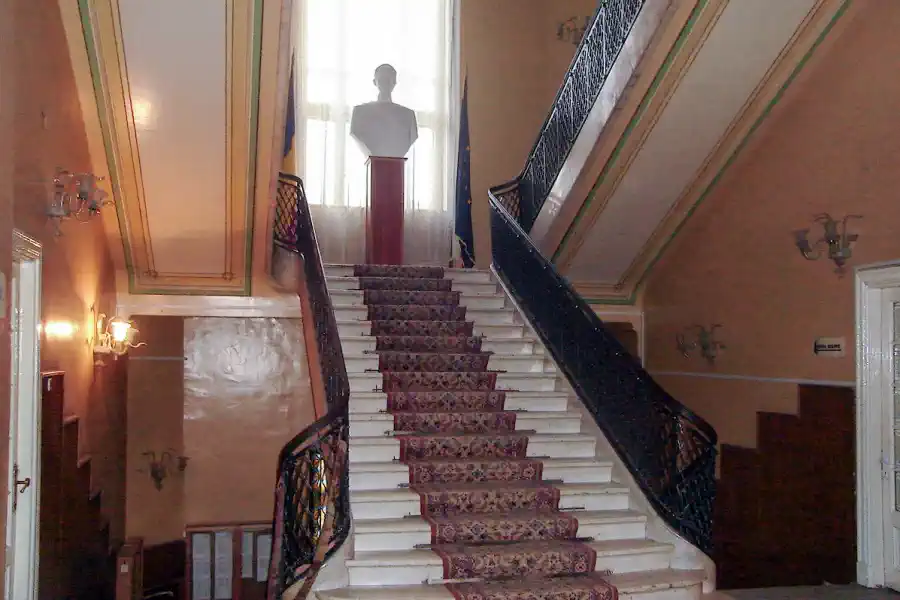

The central staircase during its active judicial use in 2006 compared to its present state


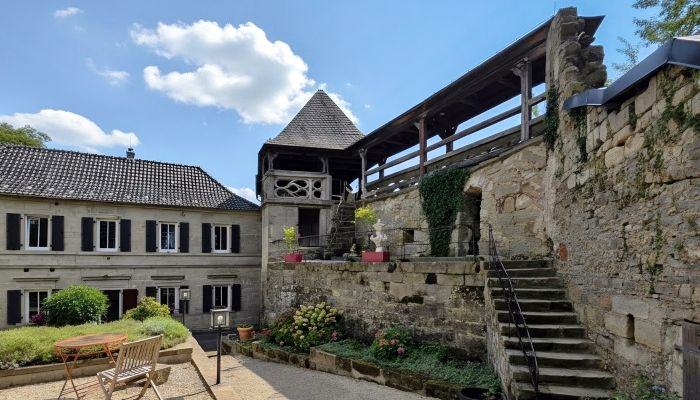
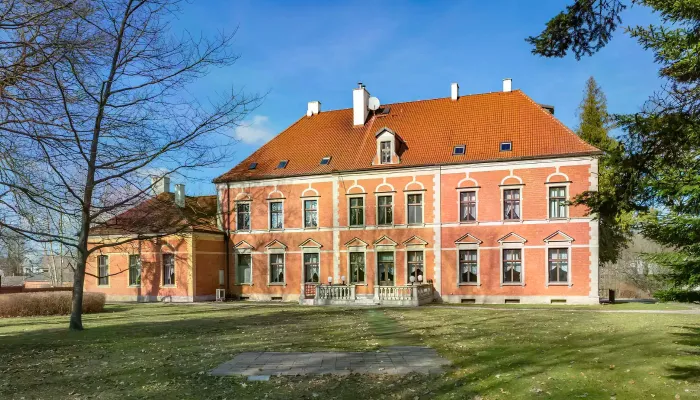

 Campulung, Arges

