RTICO
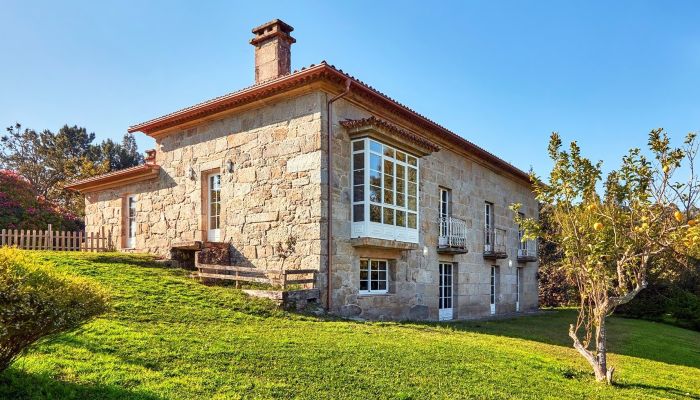
Pazo Brandariz in Galicia has been in the same family since 1586. The estate near Ortigueira includes a manor house, gardens, a chapel dating from 1630 and agricultural outbuildings. In this conversation, Mónica Zea Teijeiro talks about her family's history, life between the garden and the solana and the memories tied to the house. She speaks about leaving a place that was home for generations, about what may come next and about why the new owners should start by opening every drawer.


- 1586 to today: history and inheritance
- Everyday life on a film set
- A garden with indecent fruit
- San Miguel chapel: house calls since 1630
- Furniture and family history
- Why Brandariz never became a hotel
- Could world music come to Brandariz?
- A surprise for the successors
1. Ms Zea Teijeiro, we are just outside Ortigueira in Galicia, on an estate with a manor house, garden, chapel and granary. What is the economic and historical background of this ensemble and what is your place in the family history?
Brandariz has been in my family since 1586. One of my ancestors, Bartolomé Pardo de Cela, a sargento mayor and so a senior officer in the Spanish tercios, bought the land from the Hieronymite order. He kept building it up and gave it an increasingly stately character.
Bartolomé had only one daughter, Juana Pardo de Cela, who married Fernando Ponce de León. When the two of them inherited Brandariz, they settled here and made it the family seat. The Ponce de Leóns stayed tied to the property for generations.
The ensemble grew and changed with them. The chapel, dedicated to Saint Michael, was built in 1630. I don't think the choice of patron saint was an accident: Michael is the leader of the heavenly host. Both Bartolomé Pardo de Cela and his son-in-law Fernando Ponce de León were sargentos mayores of the tercios.
In the early eighteenth century another ancestor had the gardens laid out and they still shape the character of Brandariz today. And what is sometimes mistaken for a traditional hórreo is in fact a large panera. It also served as a grain store, but it is much bigger than the usual granaries of this kind.
The pazo came with lands and farms whose tenants paid rent. It was the centre of a larger estate and its income and administration were bound up with the family's standing. Whoever inherited such an entailed family estate took on a privileged position, but also the responsibility to keep the property and increase it, so it could be passed on to the next generation. Several of my ancestors enlarged it considerably while holding office as soldiers, councillors or castle commanders in the surrounding area. The lives of many people and the running of numerous holdings were closely tied to the pazo and its family.
One detail in the history of Brandariz I have always found especially lovely: in the early nineteenth century Andrés Ponce de León died childless and the estate went to his sisters. Since then, for various reasons, Brandariz has always passed down through the women of the family.
So it came to my grandmother, who bought out her siblings' shares and brought it back into one hand. Then my mother inherited it, an only child. We are four siblings, two brothers and two sisters. History repeated itself: when our mother's estate was divided, Brandariz went to my sister Marta and me.
We see ourselves as one more link in a family story that began more than four centuries ago. Like the women before us, we carry the responsibility of keeping the property for the next generation.
2. It is quiet here on the terrace, with a view across the garden to the ría and the gentle hills beyond. How much everyday life is there in this film set? Does the day start out here with breakfast?
This terrace has a name of its own: the solana. It is called that because its orientation keeps it in the sun for much of the day. You find solanas in other pazos and large manor houses in Galicia too.
An important part of our life at Brandariz has always revolved around the solana. In my childhood and youth we had breakfast here for many summers. I especially remember the quiet, the bay in the background and the birds. People tended to linger longer than they had planned.
The time of day most closely tied to the solana is the late afternoon, though. My mother loved it. When the sun is lower and losing its strength, we gather here bit by bit: back from the beach, a walk, a trip in the area or an afternoon on the water. Our family always had a small boat for the bay. Others spent the afternoon in the garden, as my mother did when she was tending her plants. Then we tell each other what everyone has been up to, have a glass of wine and watch the sun go down.
The quiet of the morning gives way to conversation, to the laughter of the younger ones and to our dogs charging about. Dogs have always been part of our family.
In fine weather, sometimes even on winter days, the solana becomes the centre of the house. In summer a large part of our life happens here, in that light and with that peaceful view, which we have never tired of.

Part of daily life: solana overlooking the bay
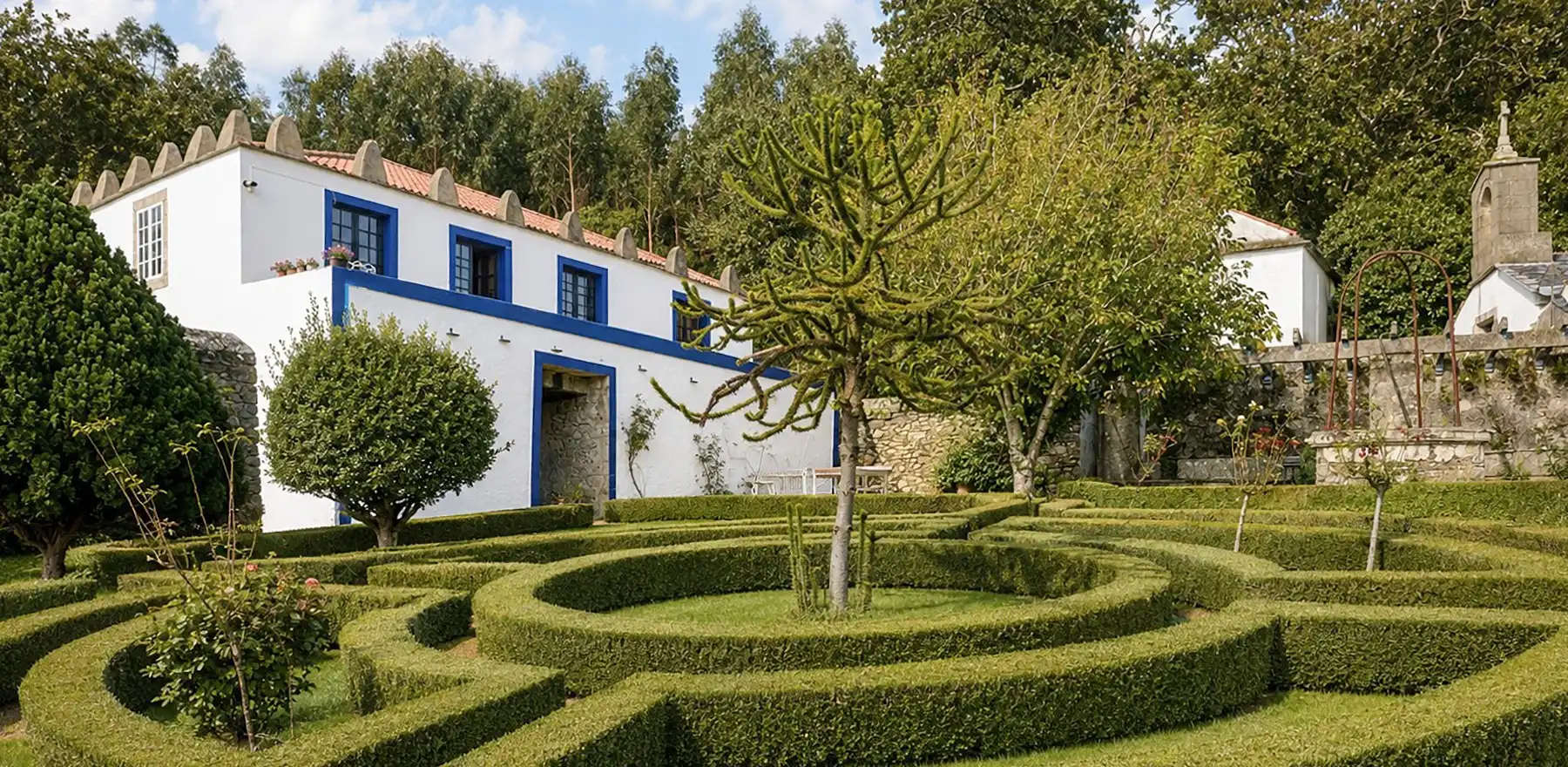
3. The garden with its box maze and a monkey puzzle tree at the centre is the leading actor in this setting. What does a gardening year look like, who works here and what does the garden mean to you personally?
The garden at Brandariz has a soul, just like the house. That is how I have always felt about it.
My ancestors were enthusiastic about botany and garden design. Plants and trees that have stood in the garden for generations are still growing here. That includes an unusual orange tree with odd-looking fruit. In the eighteenth century a bishop found the fruit indecent and demanded that one of my ancestors cut the tree down. He refused, arguing that the fruit was a work of nature and won the case against the church. That particular orange variety is still in the garden.
I grew up at my mother's side and she loved the garden above all else. She taught my siblings and me to respect nature and look after everything living: plants, trees, birds, small animals and even insects. Through her we got to know the garden and its inhabitants.
For many years gardeners looked after it under her direction. After my mother's death and during the pandemic years, disease hit parts of the box hedging. We had to simplify some areas but were able to keep the maze and other important parts. The garden still has its charm and is easier to maintain now. The Galician climate helps, because the rain takes care of the green lawns on its own.
Today one person looks after the box specifically. We bring in specialists for certain jobs. My sister and I do everything else together with our families.
Every season has its own beauty. Spring is the most impressive, with azaleas, magnolias and roses, followed by summer with roses, four o'clocks and hydrangeas.
After the handover I am happy to help find a good gardener if the new owners want that and to pass on what we know about looking after the garden. That way it can carry on with the next family.

Garden maze with a monkey puzzle tree (Araucaria) at the centre

and an indecent
fruit on the orange tree
4. A chapel is part of a pazo. On what occasions do you use the private chapel of San Miguel today? Is it a spiritual place for you or a more practical one?
Unlike some chapels that are built into the pazo itself, ours is a separate building on the grounds. It is dedicated to Saint Michael and is still a fixed part of family life.
We have celebrated weddings and baptisms here within the family. If we ask, the priest from Ortigueira comes to say Mass. At least once a year Mass is still celebrated in San Miguel.
The chapel also has a personal spiritual meaning for us. You can withdraw here for a moment, settle and think about whatever is on your mind. It is opened and aired every day and is simply part of our routine.

House calls since 1630
5. Wherever you walk in the house you meet old furniture, books and pictures. What can you tell us about individual pieces? What comes from the house itself and what stays for your successors?
Part of the original furnishings is still in Brandariz. From the end of the nineteenth century the pazo stood closed for many years, until my grandmother bought her siblings' shares and brought the property back together. During that time most of the furniture was taken out of the house and divided among various family members.
Some pieces stayed, including a desk, a console table, a mirror and a marble table, which we know have been in Brandariz since the nineteenth century.
When my grandmother took the property back, she and my grandfather furnished the house afresh. They bought furniture for it, mostly in the 1920s and 1930s. Later my mother added pieces from the antiques trade. Not everything originally came from the pazo, but a lot of it has been part of the furnishings for decades and so part of the family story.
Some of the most interesting elements belong to the house itself. In the dining room there is an old granite hand basin where people washed their hands before meals. It is shaped like a scallop shell. In a former study, now a bedroom, the original wall paintings can still be seen. One door has kept its painted decoration too.
We don't necessarily want to take the current furniture with us. If the new owners would like to keep it, I'm sure we can agree that a good part of it stays in the house.

Salon in the pazo with furniture from the 1920s
6. A pazo brings structural constraints and planning effort, whatever its heritage status. Which commercial uses alongside private living do you consider feasible and which not?
First and foremost I see a family home here. Although it is a pazo with several buildings and a large garden, the main house is not overly big and is pleasant to live in.
In the past we looked into whether a small hotel could work. In the end we dropped the project because it would have needed far-reaching structural changes. We weren't comfortable with the idea of altering the house that much just to suit that use.
Given its setting, Brandariz could also be used for film and television productions. Smaller gatherings, concerts or occasional events in the garden would be possible too, especially in summer and within the applicable rules.
Running costs are lower for a property like this than you might think. But the roofs need attention, because Galician winters can be harsh. And the garden has to be looked after all year round. When we are not here, someone comes in once a week to clean and air the house regularly.

Preserved in its original state: traditional kitchen with fireplace
7. Ortigueira has fewer than 6,000 inhabitants and is still world-famous for its Celtic music festival. What role could the pazo play in the cultural life of the town in future?
As a private family home, our house never had a direct link to the cultural life of Ortigueira. Because it is well known locally, it did attract interest, though. My mother often received requests from various organisations and societies in the Galician heritage field who wanted to visit the pazo and get to know it. What role it plays in future will of course depend on the instincts and interests of the new owners.
Ortigueira may be a small place, but the festival shows that people come here from far beyond the region. Whether Brandariz becomes involved in that will depend entirely on the new owners. The gardens could host small concerts or gatherings, while the house itself could be used for exhibitions or other cultural projects.
Opening up now and then for cultural events could root Brandariz more firmly in the public life of Ortigueira without giving up the private character of the house.

Festival Internacional del Mundo Celta: once a year Ortigueira becomes the stage for Celtic music
Photo: Quique-ast, CC BY-SA 4.0
8. Suppose you leave a letter for the next owner in the secretaire in the salon. What does it say?
I would be entrusting the new owners with a place that was one of our family's greatest treasures for generations. At the same time I belong to a generation that is now saying goodbye to it.
It doesn't come with pain, but with a sense of responsibility. Our time here has ended and a new chapter is beginning with other people.
We did our best to look after Brandariz and maintain the estate over all these years. The next owners should find their own way, live here and enjoy the place in their own manner. I don't want to dictate what their life here should look like. A house with centuries of history is allowed to change and develop with its inhabitants.
We were only one part of this long story. Now it is up to the next owners to carry it on and make Brandariz part of their own lives.

First task for new owners: open every drawer



 Araba/Álava, Ayala/Aiara, Ayala / Aiara, Llanteno