RTICO
RTICO
Torsten Krug, born in Thuringia, worked for major corporations around the world, including in Brazil and Japan. He later advised family-owned businesses as a management consultant and established his own foundation in 2015.
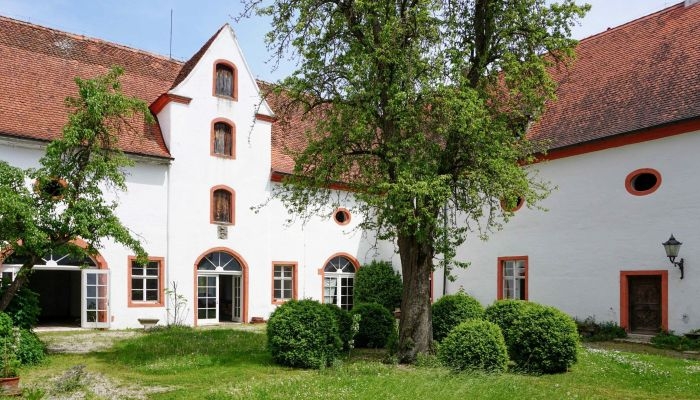
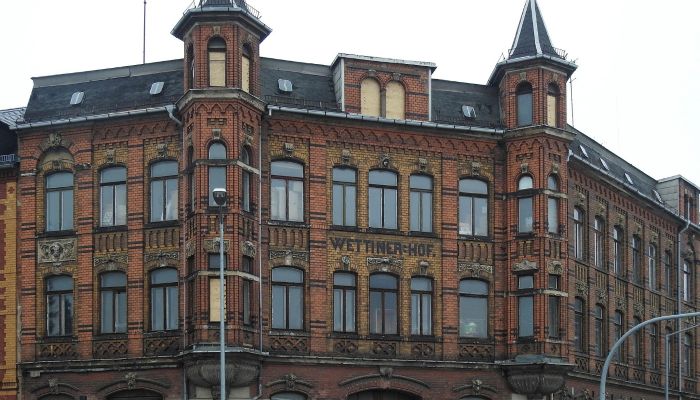
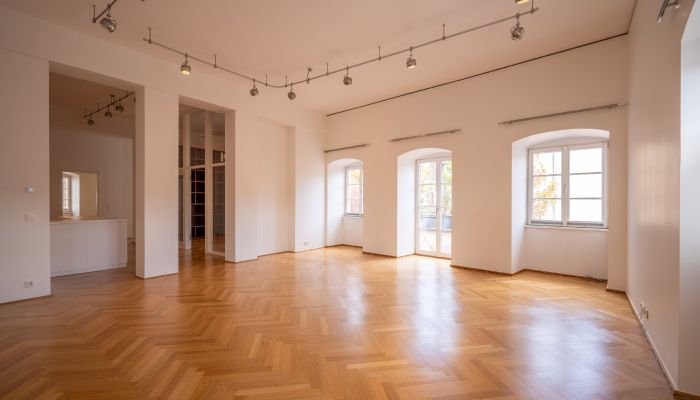
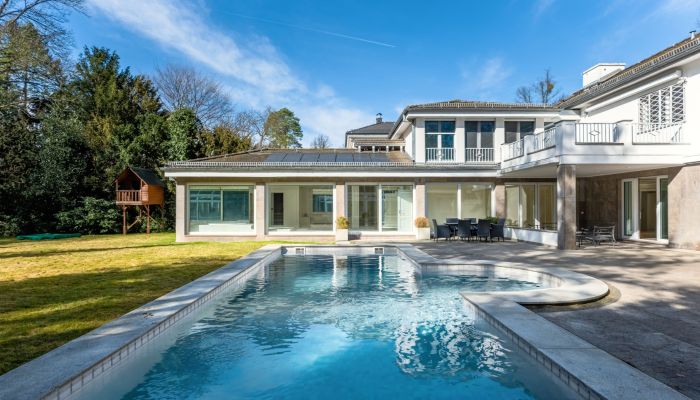
As a student in the turbulent years following German reunification, he bought a dilapidated four-sided farmstead near Jena for 5,000 euros. He restored it in accordance with historic preservation requirements and sold it five years later to his statistics professor. While working for Mercedes, he renovated several apartments in a Stuttgart building dating from the Gründerzeit era. In 2005, he returned to Thuringia. Near the Saale Dam, he bought a 19th-century industrialist's villa at auction that was in danger of collapse. He extensively restored the property and lived there with his family for more than ten years. In 2017, he bought Theisenort Castle. This is where we meet him today.
The owner welcomes us at the gate of Theisenort Castle with his daughter. Come! Out into the open, friend!
is written above the entrance in old German script. Wearing a Barbour jacket and boots, he looks like a member of the landed gentry. He isn't of noble birth. But he lives that life. And he greets us like old friends.

Not only German poet Friedrich Hölderlin invites us out into the open
- Arrived at the summit
- From discovery to project
- A first glimpse of the castle
- An old secret passage
- Theisenort Castle and German history
- A constant companion: the heritage authorities
- Glass, steel and water
- Living self-sufficiently in a castle
- Stay or go
1. Mr Krug, you’re from eastern Germany, have travelled the world and now live in a castle in Upper Franconia. Have you found your place here?
Theisenort Castle has been home to me and my family for almost ten years now. We feel very much at home here. That is of course partly due to the way we live, but especially to the people here and the wonderful surroundings.
On average, I have moved my base every seven years or so. In the beginning, this was mainly an economic necessity. I went wherever my work took me. There, initially on my own and later with my family, I would always fall in love with an old building and eventually buy it. For us, our home is an important part of our quality of life. As my wife also works a great deal, we always wanted to have that holiday feeling at home as well. Theisenort Castle is where we live, work and spend our holidays. So yes, we have found our place here.

Arriving at the summit
2. You’ve restored and lived in numerous historic properties before eventually moving them on. You’re currently selling a seaside apartment in Spain on REALPORTICO. What sparks the search for your next old house?
It really varies. I discovered the manor house in Thuringia by chance while out on my motorbike. It was a Sunday. There was a sign saying that the property was going to be auctioned. I called on Monday and was told that the auction was the following day. So I went along and won the bid. It was as if the house had chosen me.
My wife, our three children and I lived in Spain during the Covid pandemic. We knew we would only stay for one or two years, so we decided to buy an apartment right on the Mediterranean. We completely stripped it back and renovated it. It became a wonderful home. My wife couldn't bring herself to sell it when we returned to Germany. There were too many beautiful memories attached to it. As a family, we had never spent so much time together or been as close as we were in that penthouse.
That apartment found us, too. We already had a notary appointment for another property. The day before we were due to sign, an estate agent called my wife and told her she had found the right apartment for us: unrestored, completely uninhabitable, but in a prime location with 180-degree views of the Mediterranean. Rosana, that was her name, had understood what we were really looking for.
Theisenort Castle was an even more unlikely story. I studied in Jena and at the time had a girlfriend in Coburg, whom I would regularly visit by car. Theisenort Castle stands on a hilltop and is visible from a long way off. I remember thinking, “One day, I’ll buy the castle.” Twenty-five years later, I did. A local estate agent advertised the sale in a newsletter. I was the only interested party and won the bid. We then sold the manor house and moved from Thuringia to Bavaria.

A box seat overlooking Upper Franconia
3. What was going through your mind when you first arrived here?
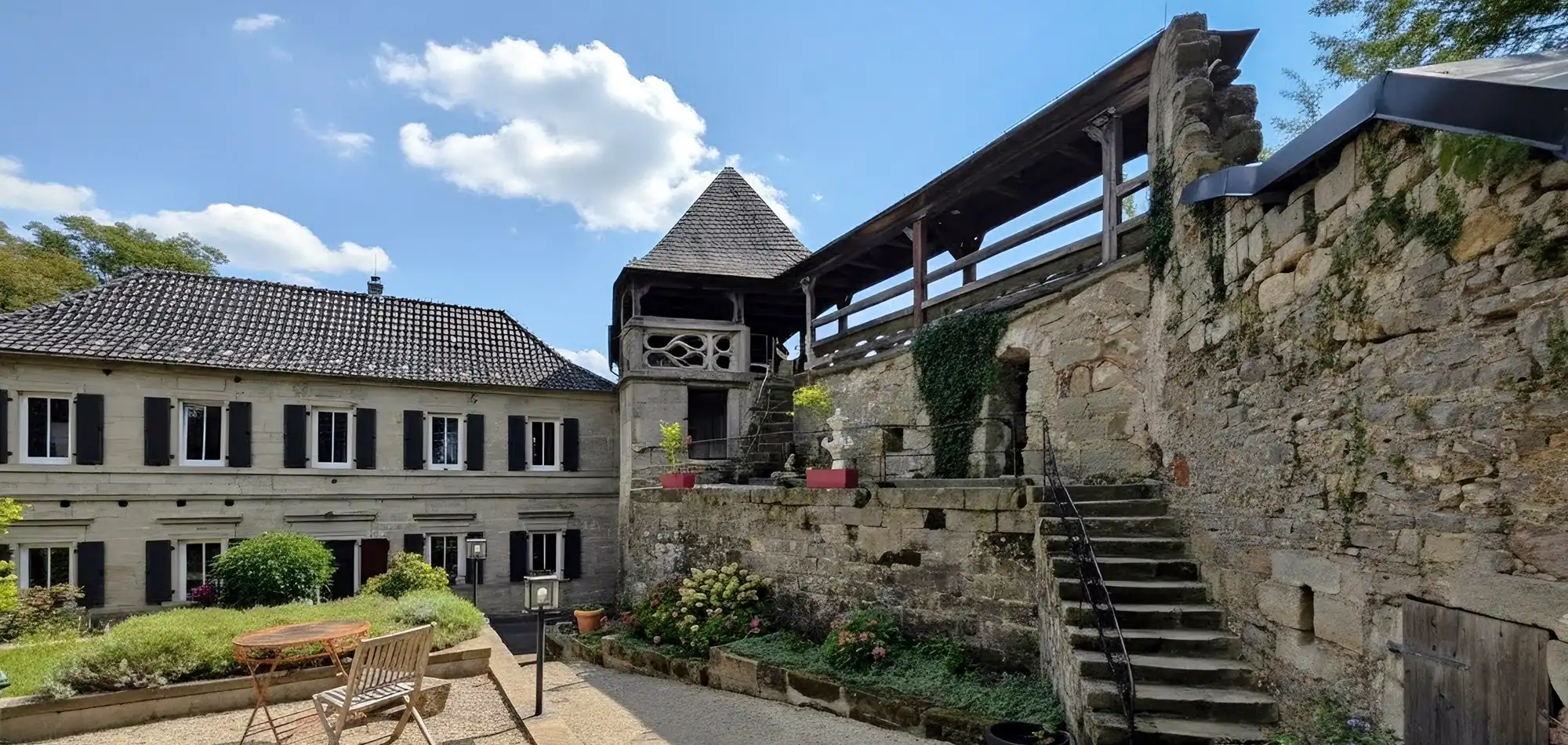
I told my wife I was going to have a look at an old castle in Bavaria, just out of curiosity. I recognised it immediately from the photos in the estate agent’s newsletter. I had only ever seen Theisenort Castle from a distance and had never been up the hill. I parked by the church, which was once part of the castle complex and walked the last few hundred metres. As you come around the bend behind the church, you could almost imagine yourself in the South of France. There was the ancient stone wall with the massive von Redwitz coat of arms, then the entrance portal with its battlemented walkway and Renaissance tracery. It took my breath away. Something so beautiful, right here in Germany!
At the time, the gate was only closed off by a small fence, so you could look straight into the courtyard. You could see the old guardhouse, the entrance to the wine cellar and all that beautiful sandstone. On my way back down, I met a local resident who spent quite some time trying to persuade me not to buy the place. But as he told me about all the work it needed and the costs involved, he also shared stories from the castle’s history. Instead of putting me off, it made me even more curious and determined.
He later told me that he knew right then that I would buy the castle. And that is exactly what happened. I called the estate agent and made an offer without even arranging a proper viewing. Before we went to the notary, however, my wife insisted on seeing the property for herself. She saw the potential too, as well as the costs. It was clear to both of us that we would have to sell the manor house to make the purchase possible.

Panoramic view featuring the historic castle core, pool and orangery
4. Had you already looked into the history of Theisenort Castle at that point?
At the time, my decision to buy the castle was based solely on its location and its potential after restoration. The previous owner was a local innkeeper and from 1970 until her death, Theisenort Castle operated as an inn with guest rooms. There is no trace of that part of its history today. We demolished the inn and guest rooms because they were not part of the historic fabric of the castle. Instead, we rebuilt the old orangery on the site.
We first began to discover the history of the castle when we came across an old secret passage and partially uncovered it.

The castle's inner courtyard with a battlement walk and hidden paths
5. What does Theisenort Castle reveal about German history?
As someone who grew up in East Germany, I still know what expropriation means. My grandparents were dispossessed and that remains a painful part of our family history. In a way, Theisenort Castle reflects the whole of German history within its walls. It was built in the 14th century by the Lords of Redwitz. The von Redwitz family owned numerous castles in Upper Franconia and became wealthy by imposing tolls on timber rafts passing through the region – classic robber barons. During the German Peasants’ War, the castle was completely destroyed by fire and rebuilt in 1528.
During the Thirty Years’ War, the castle’s owners sided with the Protestant Swedes. After the Swedish defeat, Wallenstein himself confiscated the property and presented the castle to the town of Kronach. Fortunately for the von Redwitz family, the transfer was never completed. In 1909, the estate passed into private ownership.
During the Second World War, the secret passages and cellars around the castle were used to hide works of art from Coburg Castle. Much of it is still considered missing. There are still stories of buried treasures and works of art somewhere on the grounds.
6. What did you learn from your previous restoration projects that proved useful at Theisenort and how did you work with the heritage authorities?
When we bought Theisenort Castle, we knew it would be our biggest investment to date. For most of my previous properties, I had worked with largely the same tradespeople. So I knew most of them and they knew me, which makes working together much easier. During the construction work, I was mostly not on site as I was working in Cologne and later in Vienna.
That familiarity makes a real difference, especially when, as we did here, you combine the historic fabric with steel and glass. Steelworkers, glaziers and carpenters all have to work closely together and they also need to understand the particular requirements and preferences of the person commissioning the work. All the drawings were produced by us. We didn't have an architect. It was also difficult to find local tradespeople at the time because they were already extremely busy with work in the region. For maintenance work and new construction, I now work with companies from the area. We rebuilt the orangery, for example, with local businesses. Their economic situation is not quite as strong as it was ten years ago, either.
We involved the heritage authorities at a very early stage. We were fortunate that the listing only covers the exterior of the castle. The only requirements were to install wooden windows and retain the existing roof forms. From previous experience, I knew how difficult it was to obtain funding from the heritage authorities for restoration work, so we didn't even apply. That, in turn, gave the heritage authorities a little more room to be accommodating. At least, we had never had any problems with heritage protection at our previous properties.

Inside the living space: precision steel and historic beams
7. At Theisenort, glass and steel meet historic fabric. And you clearly have a soft spot for water...
There is a story behind the water. During our time in Spain, we also spent a lot of time in Andalusia, where you can still see the influence of the Moors on the architecture. If you take an interest in that, you inevitably end up at the Alhambra in Granada. We were particularly impressed by the design of its gardens and water basins. That is why you now find so many fountains and water features at Theisenort. There is water bubbling and trickling everywhere. The pool, meanwhile, is modelled on the great basin at the Alhambra.
Another influence on our restoration came from museum architecture. The old guardhouse in particular draws heavily on the Crusader Museum in Acre, Israel. We replaced all the rotten beams with steel girders and added glass partition walls. So in a way, Theisenort brings together architectural influences from East and West.

What child doesn't see a castle as an adventure playground?
8. You live here almost like in Elysium and are largely self-sufficient. You generate your own heat, store drinking water and rainwater and have your own woodland. Would you consider yourselves self-sufficient?
We don't have enough time to be completely self-sufficient. But we do try to grow as much as we can ourselves. We hardly ever need to buy herbs, fruit or vegetables anymore. We have all of that here. A neighbour looks after the chickens. And every year we consider introducing fallow deer into an enclosure. But my wife and daughter would become deeply attached to every animal. And they were never intended to become zoo animals. So we'll have to continue buying our meat elsewhere.

A green retreat - botanical variety and a degree of self-sufficiency
9. Theisenort Castle has been your longest home so far. Will there be a new chapter?
We have lived here for ten years now, which is the longest we have stayed in one place. My wife speaks Italian and we both feel a strong connection to Italy. We have looked at properties there from time to time, with the idea of eventually living there for a longer period. We have grown just as attached to our current home as we did to the houses before it. But the desire to discover something new and move on is always there in the background. For us, part of the appeal is finding beautiful houses, living in them and eventually passing them on to someone else. So yes, we can imagine there being a new chapter at some point.

Taking a break before the next chapter

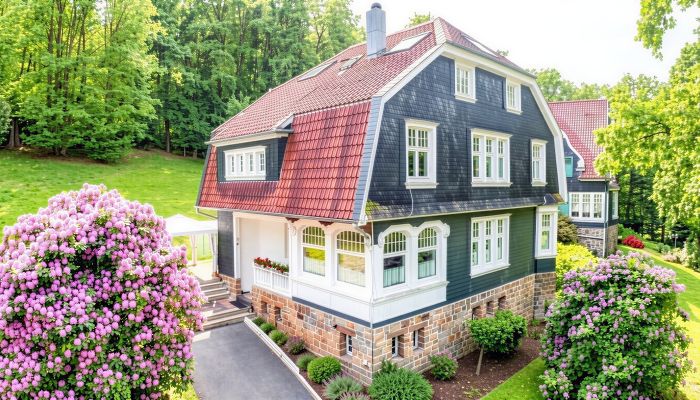
 42929 Wermelskirchen, North Rhine-Westphalia